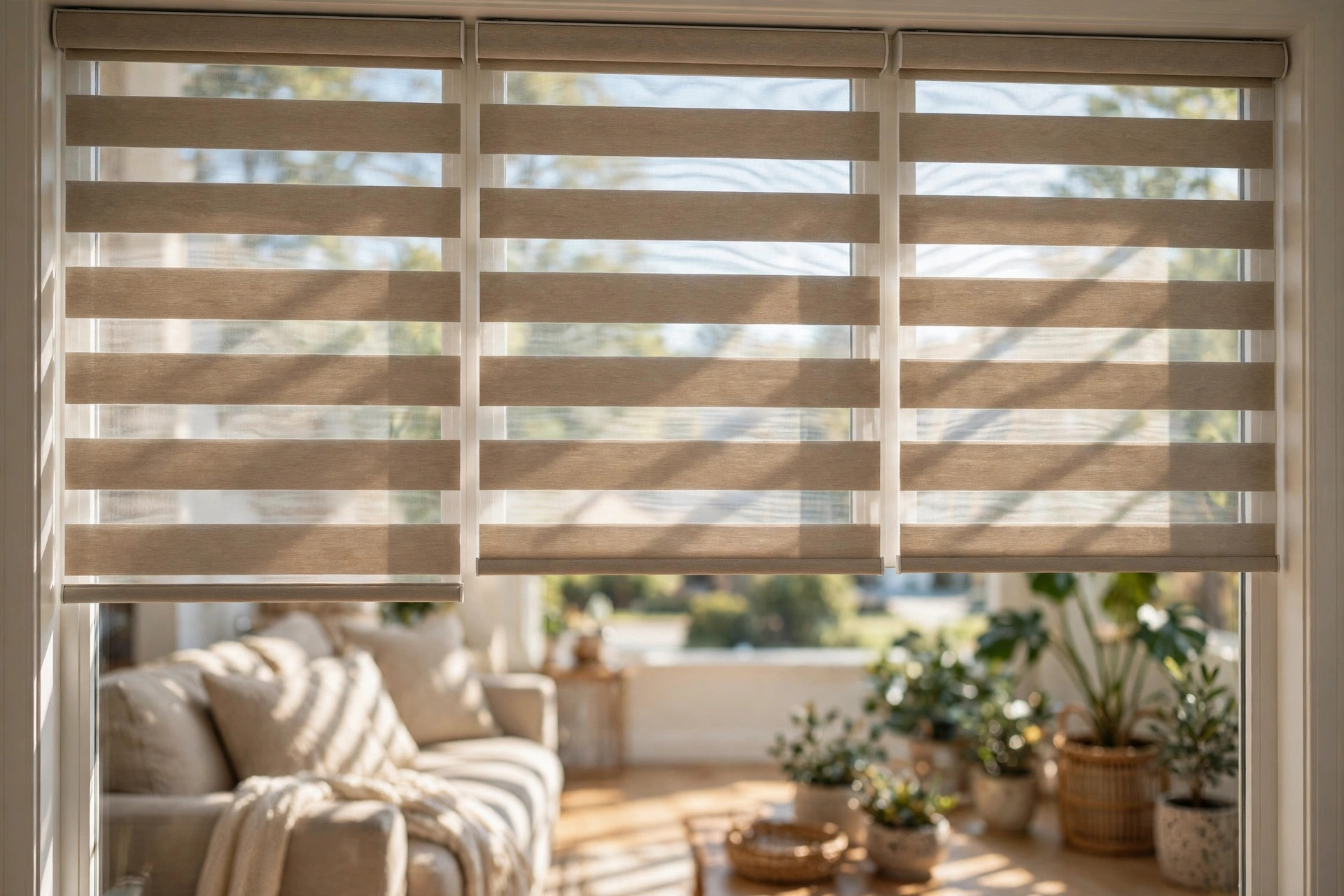

Window shopping can feel like hard work. There are so many styles, fabrics, and brands that a simple choice can take hours. This premium zebra dual layer shades buying guide is here to make the job easy. Zebra shades, also called dual layer or transitional shades, are one of the most popular window coverings in American homes today. They use two layers of fabric with stripes of sheer and solid cloth. A small pull moves the layers so that light comes in or stays out. They give the soft look of sheer curtains and the privacy of a roller shade in one unit.
If you are planning to buy zebra shades for your living room, bedroom, or office, this guide walks you through every step. You will learn what premium zebra dual layer shades are, why they matter, how to measure your windows, what to look for in fabric and hardware, how much you should expect to pay, and how to keep them clean for years. Read it once, and you will walk into any store or shop online with full confidence.
Why Zebra Shades Matter for Your Home
Good window coverings do more than dress a room. They control light, protect furniture from sun damage, save energy, and keep your private life private. Zebra shades do all of this while looking modern and neat.
The main reason people choose zebra shades is light control. In the morning you can line up the sheer stripes and let soft daylight fill the room. In the afternoon you can shift the solid stripes to block the glare. At night you can close them fully for privacy. No other single shade gives you this range with such a simple motion.
They also save space. A zebra shade rolls up into a small headrail at the top of the window. There is no stack of fabric to one side like curtains, and no bulky slats like wood blinds.
Premium models go one step further. The fabrics are thicker and hold their shape. The bottom rail hangs straight instead of curling. Many premium lines offer motorized controls so you can raise or lower the shade with a remote or a phone app.
How Zebra Dual Layer Shades Work: Premium Zebra Dual Layer Shades Buying Guide
A zebra shade has two pieces of fabric joined at the bottom rail. The fabric runs in a loop through the headrail, like a belt. One layer faces the room and the other faces the glass. Each layer has horizontal bands: a sheer band followed by a solid band, all the way down.
When you move the shade, the two layers slide past each other. When sheer bands sit over sheer bands, light passes through. When solid bands sit over sheer bands, light is blocked. A continuous cord loop or a cordless wand controls the shift. To raise the shade fully, you keep pulling and the whole loop winds up into the headrail.
This design comes from the world of roller shades, which use one solid roll of fabric. Zebra shades keep the simple roll-up idea but add the day-and-night feature. Many buyers who once looked at blackout roller shades price comparison usa end up choosing zebra shades for the same clean look with more light options.
What to Look for When You Buy
Fabric quality
Fabric is the heart of the shade. Hold a sample up to the light if you can. A good sheer band should look even and clear, not cloudy. A good solid band should block light well and feel firm, not thin like paper. Premium lines often use polyester or polyester blends that resist fading. Ask the seller if the fabric is treated for UV protection. South and west windows get strong sun, and cheap fabric can fade or turn brittle within two summers.
Opacity and privacy
Not all zebra shades block the same amount of light. Some are labeled light filtering. These give privacy during the day but may show shapes at night when lamps are on inside. Others are labeled dimout or room darkening. These block far more light and give strong night privacy. True blackout zebra shades exist but are less common, and they need side channels to seal the edges. Think about each room. A bedroom or a home office often needs more privacy than a hallway window.
Size and fit
Measure each window in three places: top, middle, and bottom for width, and left, middle, and right for height. Use the smallest width and the largest height. Shades can be mounted inside the frame for a clean look or outside the frame to cover trim and make the window look larger. Inside mounts need at least one and a half inches of depth in the frame. Outside mounts need a flat wall surface around the window.
For windows wider than about 72 inches, ask about rail strength. A weak headrail can bow in the middle and leave a gap at the sides. If your window is very wide, two shades side by side often work better than one giant shade.
Control options
Cord loop shades use a beaded chain on one side. They are simple and reliable. Cordless shades use a spring or a wand and are safer for homes with small children and pets. The U.S. Consumer Product Safety Commission has warned for years that window cords can strangle young children, and many safety groups now urge parents to choose cordless products. Motorized shades run on batteries or house power and open with a remote, a wall switch, or a smart home app. They cost more but are easy to use and clean to look at. If you want motorized shades, check battery life and how loud the motor is. A noisy motor can ruin the feel of a quiet bedroom.
Color and style
Zebra shades come in white, gray, beige, brown, and bolder colors. Light colors reflect heat and keep rooms cool. Dark colors add drama but absorb heat and can fade faster. Order free swatches and look at them in your room at different times of day. A color that looks perfect in a showroom can look wrong in your evening light.
Types and Options
Standard zebra shades use a simple cassette or an open roll at the top. A cassette is a slim cover that hides the roll. It looks neat and keeps dust off the fabric. An open roll costs less and shows the fabric tube, which some people like for a casual look.
Premium lines add choices. Some offer a fabric-wrapped cassette that matches the shade color. Some offer bottom-up operation, which is rare in zebra shades but useful for street-level windows. Some offer dual control where one side shifts the bands and the other side raises the shade.
Motorized options deserve a second look if you have tall windows that are hard to reach. Brands sold through major retailers like Home Depot and Lowe’s now carry battery motors that last a year or more on one charge. Smart models can join a morning routine so the shades open when your alarm rings.
If you like the striped look but need full darkness for sleep, compare zebra shades with top rated blackout curtains for bedrooms for sale. Curtains with a blackout liner give the darkest room, while zebra shades give better daytime light control. Some homes use both: zebra shades on the window and blackout curtains over them for the bedroom.
Cost and Price
Prices vary a lot by size, fabric, and brand. A basic zebra shade for a standard 36 by 48 inch window may cost between 40 and 90 dollars at large online stores. A premium custom shade in the same size may cost between 120 and 300 dollars. Motorized models add 100 to 200 dollars per shade for the motor and remote.
Custom shops like Blinds.com measure and cut each shade to your exact size. You pay more than for a stock size, but the fit is perfect and the fabric choices are wider. Big box stores carry stock sizes that fit many common windows and cost less. For odd sizes, such as arched tops or very wide sliders, custom is often the only good choice.
Do not forget the extras. Inside mount shades sometimes need no extra parts. Outside mounts may need extension brackets. Motorized shades may need a charger or a solar panel. Measure twice so you do not pay for a remake.
Watch for sales. Window coverings go on sale often, and many sites run 30 to 50 percent off promotions. Read the fine print on shipping and returns. A shade cut to your size is often final sale, so be sure of your measurements before you order.
Measuring and Installing
Good measuring takes ten minutes and saves a return. Use a steel tape measure, not a cloth one. Write down width first, then height. Round down to the nearest eighth of an inch for inside mounts.
Most zebra shades ship with brackets, screws, and a simple guide. A drill, a level, and a pencil are all you need. Mark the bracket spots, drill pilot holes, and snap the headrail into place. An average window takes twenty to thirty minutes. If you are not handy with tools, many local shops offer shutter installation services for homeowners and shade installers at fair rates. A pro visit for one room often costs less than people expect.
Care and Upkeep
Zebra shades are easy to care for. Dust them once a month with a soft cloth or a vacuum with a brush head. Work from top to bottom so dust falls away from the clean bands. For spots, dab with a damp cloth and mild soap. Do not scrub hard and do not soak the fabric. Water can leave marks on some fabrics.
Keep the mechanism smooth. Once a year, check that the cord loop moves freely and the bottom rail hangs level. If one side hangs lower, many headrails have a small adjustment screw. For motorized shades, charge or change the batteries on schedule so the motor does not strain.
Sun is the main enemy. Even good fabric fades slowly over the years. Closing the solid bands during peak heat helps. The U.S. Department of Energy notes that window coverings can cut heat gain in summer and heat loss in winter, so your shades pay you back in comfort and lower bills.
Safety
Safety comes first in any room where children or pets live. Corded shades have caused real harm. Choose cordless or motorized shades for nurseries, playrooms, and any room a small child uses. If you already own corded shades, keep cords high and out of reach with a cord cleat, and move cribs and beds away from windows. Never place a cord where a child can reach it while standing on furniture.
Fire safety matters too. Keep shades away from candles, heaters, and stoves. Most shade fabrics are not fire rated.
Design Ideas for Every Room
In the living room, warm white or light gray keeps the space bright while cutting glare on the television. In the bedroom, choose a dimout fabric and add side curtains for full darkness. In the kitchen, pick a fabric that wipes clean. Home offices gain a lot from zebra shades: you can kill screen glare during video calls and still keep daylight. Bathrooms need moisture resistant polyester blends, plus a fan during showers to protect the shade. Design sites like HGTV and The Spruce show zebra shades paired with simple side panels, which add softness while the shade does the daily work. Reviews and lab tests from Consumer Reports can help you compare brands on durability before you buy.
Shopping Tips
Start with swatches. Tape them to the window and watch them through a full day, in morning sun, noon glare, and evening lamplight. Read the warranty: premium brands often cover fabric and parts for five years or more, while cheap shades may carry only one year. Compare the full price, not just the shade price, since motors, remotes, and shipping add up. Large stores like IKEA and Wayfair carry ready made options at fair prices for standard windows. Ask about lead time: stock shades ship in days, but custom shades can take two to four weeks.
FAQ
Are zebra shades the same as sheer shades? They are close cousins. Both use sheer and solid bands. Sheer shades have soft fabric vanes between two sheer layers. Zebra shades use one loop of banded fabric. Zebra shades usually cost less and roll up smaller.
Do zebra shades provide privacy at night? Dimout and room darkening models give strong night privacy. Light filtering models may show shadows when indoor lights are on. For a bedroom facing the street, choose a darker fabric or add curtains.
Can I cut zebra shades to fit? Some stock shades can be trimmed, but it is risky. The fabric and the rail both need clean cuts, and a bad cut ruins the shade. Order the right size instead. Custom sizing is worth the extra cost.
Are zebra shades hard to clean? No. Monthly dusting keeps them fresh. Spot clean with a damp cloth. Avoid harsh cleaners and never put them in a washing machine.
Do motorized zebra shades need an electrician? Most battery models do not. You mount the shade and pair the remote. Hardwired models need an electrician, but battery and solar models suit most homes.
A Short Final Word
A premium zebra dual layer shade is one of the smartest buys for a modern home. It handles light, privacy, and style in one clean unit. Take your time with samples, measure with care, and choose cordless or motorized controls for safety and ease.
References
Blinds.com. (n.d.). Window blinds, shades, and shutters. https://www.blinds.com Consumer Reports. (n.d.). Product reviews and ratings. https://www.consumerreports.org HGTV. (n.d.). Home and garden ideas. https://www.hgtv.com IKEA. (n.d.). Home furnishings. https://www.ikea.com Lowe’s. (n.d.). Home improvement products. https://www.lowes.com The Home Depot. (n.d.). Home improvement products. https://www.homedepot.com The Spruce. (n.d.). Home and garden advice. https://www.thespruce.com U.S. Consumer Product Safety Commission. (n.d.). Product safety information. https://www.cpsc.gov U.S. Department of Energy. (n.d.). Energy efficiency and renewable energy. https://www.energy.gov Wayfair. (n.d.). Furniture and home goods. https://www.wayfair.com
Was this guide helpful?

About Sarah Mitchell
The My Garden US editorial team writes practical, in-depth home and garden guides for American homeowners — tested advice, no fluff.
You May Also Like
The Best Navy Blue Velvet Curtains for American Homes
May 30, 2026 0 views
Buy Plantation Shutters Online in Florida: A Simple Buying Guide
April 7, 2026 0 views
How to Buy Farmhouse Style Curtains Online in Florida
May 28, 2026 0 views