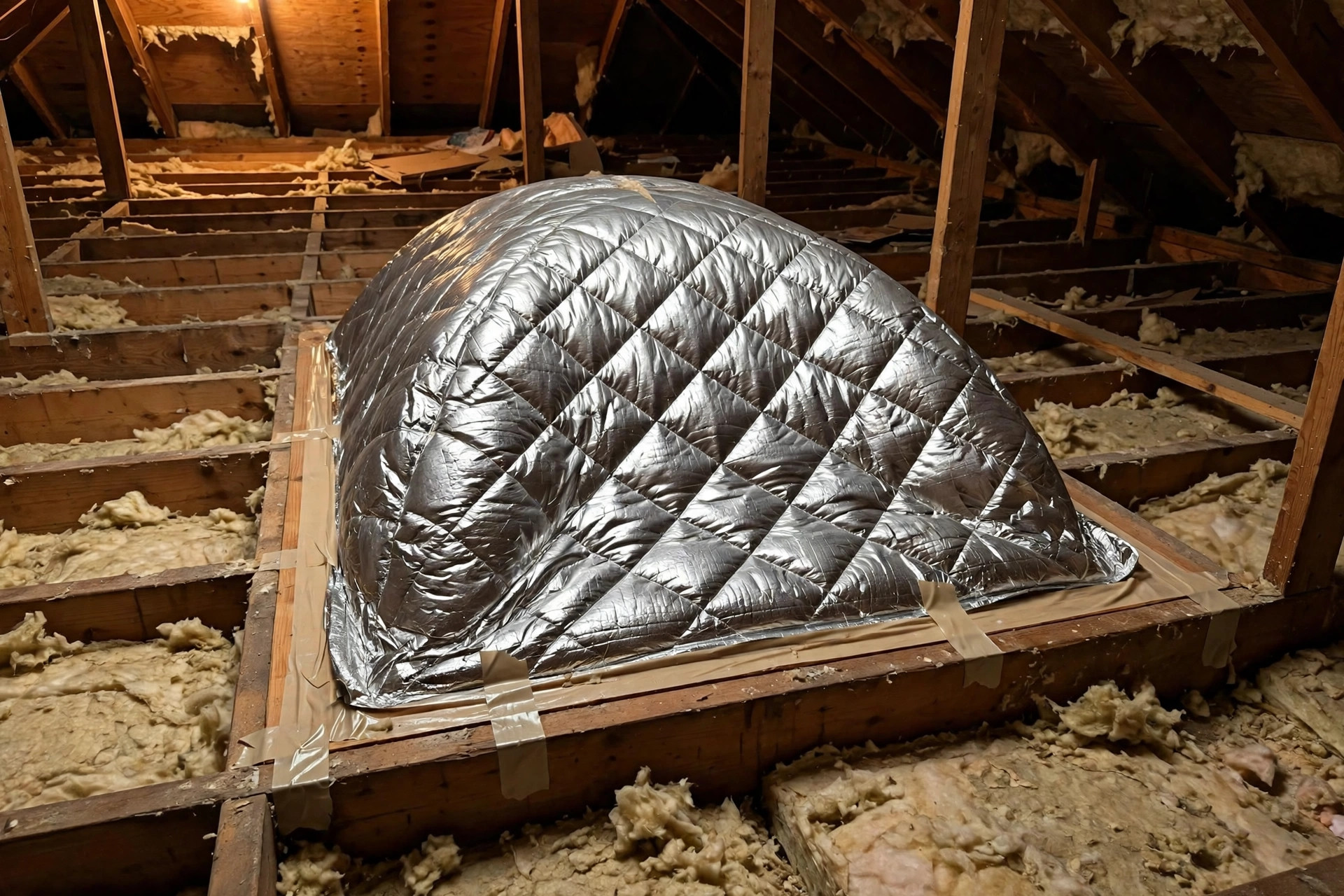

Pull down attic stairs are common in American homes. They are handy. They are also one of the largest holes in your home’s heat shield. The best attic tent for pull down stairs usa models cover that hole with insulation and a sealed lid. This article explains what these tents do, what to look for, how much they cost, and how to fit and care for one. It is written in plain terms so any homeowner can follow it.
Why an Attic Tent Matters
Most attic stairs are thin plywood panels with no insulation. A sheet of plywood has almost no resistance to heat flow. In winter, warm air from your living space rises straight through the gaps around the stair frame. In summer, hot attic air pushes down into the hallway below.
The United States Department of Energy notes that sealing air leaks is one of the most cost effective ways to cut energy waste in homes. Its home energy guidance places air sealing near the top of the list for savings. An attic tent attacks both problems at once. It adds insulation over the stair panel and closes the gaps around the frame.
Many homeowners find that this one fix makes a real difference. Drafts near the stair drop. Dust falls less. The furnace and air conditioner run shorter cycles. Before you buy, it helps to learn how much attic insulation do i need usa homes call for, since the tent is only one part of a well insulated attic.
What an Attic Tent Does: Best Attic Tent for Pull Down Stairs Usa
An attic tent is a fabric cover that sits over the attic stair opening from above. It looks like a small tent or box. You place it on the attic floor around the stair frame. The stairs can still open and close beneath it. The cover simply seals the opening from the attic side.
How Air Moves Through the Opening
Warm air rises. This is a law of physics, not a theory. When your heat runs in winter, warm air collects at the ceiling. Any gap around the stair panel acts like a chimney. Air escapes into the attic. Cold air then enters the house elsewhere to replace it. This is the stack effect, and the attic stair is often the largest leak in the stack.
In summer the flow reverses. A hot attic can reach 130 degrees or more. That heat pushes down through the thin stair panel into the rooms below. Your air conditioner must fight this load all day. A sealed tent breaks the path in both seasons.
Insulation Inside a Tent
The tent itself carries insulation. Most models give an R-value between R-19 and R-35. R-value measures resistance to heat flow. Higher is better. The fabric shell is usually foil faced, which reflects radiant heat as well.
This insulation is not meant to replace attic floor insulation. It covers the stair hole, which is the weak point. Think of it as a patch on a warm coat. The rest of the coat still needs its own thickness. If the rest of your attic needs more fill, read a full attic stairs insulation cover reviews usa comparison before you decide.
What to Look for When You Choose One
Buying the best attic tent for pull down stairs usa homes will take depends on four factors. Fit comes first. R-value comes second. Build quality comes third. The zipper and seal come fourth.
Size and Fit
Measure the stair frame from the attic side before you shop. Most pull down stairs fit a rough opening of about 22 by 54 inches or 25 by 54 inches. Some are larger. Measure width and length at the floor frame. Write the numbers down.
Tents come in standard sizes that match common stair models. A tent that is too small will not seal the edges. A tent that is much too large will sag and gap. The ENERGY STAR program offers homeowner efficiency guidance that stresses sealing and fit over raw insulation numbers. A well fitted R-19 tent beats a poorly fitted R-35 one.
R-Value and Heat Resistance
R-value tells you how well the tent resists heat flow. For most homes, R-19 to R-25 is enough for this one spot. Homes in very cold states may prefer R-30 or more. Do not pay extra for an extreme R-value that you do not need. Match the tent to your climate zone the way you match the rest of your attic insulation.
Material and Build
Good tents use a fire resistant fabric shell with foil on one or both faces. The foil reflects radiant heat. The insulation layer inside is usually fiberglass batt or a thick quilted mat. Stitching should be tight and even. Seams are the weak points, so look at them first.
Some brands also note whether the fabric meets common fire safety standards for attic use. This is worth checking. The tent sits in a hot space near electrical boxes and vents. A fire resistant shell is cheap insurance.
Zipper, Seal, and Trims
The tent must open so you can use the stairs. It must close tight when you are done. A full length zipper is the common design. Look for a large pull that you can grip with work gloves. Look for a flap that covers the zipper when it is closed. This flap blocks the air path along the zipper teeth.
The base of the tent needs a way to seal against the attic floor or the stair frame. Some models use a wide fabric flange with adhesive tape. Others use a foam gasket. Either works if it is installed with care. Gaps at the base undo all the good the tent does.
Types of Attic Stairs Tents
There are three main types. Each has strengths and tradeoffs.
Flexible Fabric Tents
These are the most common. They are light, fold flat for shipping, and cost the least. You unfold the tent, set it over the stair frame, and seal the base. The sides are soft, so they conform to slight bumps in the attic floor. Most homeowners install one in under an hour. This is the type most guides mean when they say the best attic tent for pull down stairs usa stores sell.
Rigid Insulation Boxes
These are hard shell boxes made from rigid foam boards with a fabric skin. They cost more and weigh more. They give a higher R-value per inch and hold their shape in a crowded attic. Some come with a hinged lid instead of a zipper. A rigid box is a good choice if you store boxes near the stair opening, since the hard walls resist bumps.
Shop Built Covers
A handy homeowner can build a cover from rigid foam boards and foil tape. The cost is low and the R-value can be high. The fit is only as good as your measuring and cutting. The seal at the base takes care. A shop built cover is a fair option if you have the tools and the time. Most people buy a ready made tent for the better zipper and the guaranteed fire resistant shell.
Cost and Price
Prices in 2026 run in a clear range. A basic flexible tent costs between 60 and 120 dollars. A mid range model with a higher R-value and better zipper runs 120 to 200 dollars. A rigid box or a premium tent can cost 200 to 350 dollars. Shop built covers cost 30 to 60 dollars in materials.
These are one time costs. There are no moving parts and no power use. The payback comes from lower heating and cooling bills. A simple tent can pay for itself in one or two heating seasons in a cold climate. Even in mild climates, the comfort gain near the stair is worth the price.
Watch for cheap models that skimp on the zipper or the fire resistant rating. A tent that falls apart in three years is no bargain. Carrier, Trane, and other HVAC brands remind homeowners in their care guides that small envelope fixes like this support the whole heating and cooling system. A tight tent means your furnace and air conditioner work less hard.
How to Install an Attic Tent
Installation is a simple job for most adults. Plan on one hour. You will need a tape measure, a staple gun or adhesive, foil tape, and a dust mask. Work on a cool morning if you can. Attics are hot places.
First, measure the stair frame from the attic side. Check that the tent size matches. Next, clean the area around the frame. Sweep away loose insulation and dust. The base seal sticks best to a clean surface.
Set the tent over the frame. Center it so the flange sits flat all around. Fasten the flange to the attic floor or the frame with staples, or press the adhesive strip down firm. Then run foil tape along the flange edge for a full seal. Test the zipper twice. Open and close the pull down stairs once to make sure the panel does not catch on the tent.
Do not pile stored items against the tent. Do not lean on it. The soft sides can tear if you force them. If you plan to keep radiant barrier for attic pros cons usa improvements in mind as well, install the tent first, then fit the barrier sheets around it. The tent stays accessible either way.
Care and Upkeep
An attic tent needs almost no care. Check it twice a year when you check the rest of the attic. Look at the zipper. Look at the base seal. Look for tears in the fabric. Press the foil tape back down if an edge has lifted.
Keep the tent dry. Most shells shed a little moisture, but standing water will ruin the insulation inside. If a roof leak drips onto the tent, fix the roof first, then replace the tent if the insulation inside got wet.
Replace a tent when the zipper fails, the fabric tears in more than one place, or the insulation has gone flat. A good tent lasts ten years or more with this small amount of care.
Safety
Work in an attic calls for care. Wear a dust mask and gloves. Old insulation can irritate skin and lungs. Step only on the joists or on a walkway board. Never step on the drywall ceiling between joists. You can fall through into the room below.
Turn off any attic fan or light circuit you might touch. Use a headlamp rather than a loose lamp. Keep the tent away from bare bulbs and hot flue pipes. Fire resistant does not mean fire proof. Give it the same clear space you would give any insulation.
If your stairs are old or damaged, fix the stairs before you add a tent. A tent cannot make a broken stair safe. When in doubt, have a contractor look at the frame and springs first.
FAQ
Will an attic tent stop all air leaks at the stair?
It stops the large leaks at the stair opening. It will not seal the rest of the attic. For a full job, seal all attic bypasses and make sure floor insulation is deep enough. The tent is the most important single patch, but it is still one patch.
Do I need to remove the tent to use the stairs?
No. You unzip the tent, pull the stairs down, and climb through. When you come back down and push the stairs up, you zip the tent closed from inside the attic. It adds less than a minute to each trip. Most people get used to it fast.
Can an attic tent work with a radiant barrier?
Yes. The foil face on the tent reflects radiant heat. A radiant barrier on the rafters or floor reflects it too. The two work on different surfaces and do not fight each other. Fit the tent first and seal it well. Then add the barrier around it.
What R-value do I really need?
For most of the country, R-19 to R-25 at the stair is fine. Cold northern states and high mountain areas may want R-30 or more. Check your local building code for attic insulation targets and match the tent to your climate. More than you need adds cost without adding comfort.
Does the tent make the stairs hard to open?
A fitted tent does not touch the stair panel, so it does not add weight to the pull. If the panel catches, the tent is off center or too small. Re center it and test again. The stairs should open and close exactly as before.
How long does an attic tent last?
Ten years or more is normal for a quality tent. The zipper is the part that wears first. Keep the tent dry, keep storage boxes off it, and check the base seal twice a year. Replace it when the fabric tears or the zipper will no longer close.
A Short Final Word
A pull down stair is a hole in your home’s heat shield. The best attic tent for pull down stairs usa homeowners can buy closes that hole with insulation and a tight seal. It is a small job, a small price, and a real gain in comfort and energy savings. Measure your frame, pick a tent that fits, seal the base with care, and check it twice a year. Your furnace and your air conditioner will thank you with shorter run times and lower bills. Guides from Goodman, Rheem, and veteran do it yourself sources like This Old House and Family Handyman all point to the same truth. The cheapest energy is the energy you never lose.
References
Carrier. (n.d.). Heating and cooling systems. https://www.carrier.com ENERGY STAR. (n.d.). Energy efficient products. https://www.energystar.gov Family Handyman. (n.d.). DIY home repair and maintenance. https://www.familyhandyman.com Goodman. (n.d.). Heating and cooling equipment. https://www.goodmanmfg.com Lennox. (n.d.). Heating and cooling systems. https://www.lennox.com Rheem. (n.d.). Heating, cooling, and water heating. https://www.rheem.com This Old House. (n.d.). Home renovation guidance. https://www.thisoldhouse.com Trane. (n.d.). Heating and air conditioning. https://www.trane.com U.S. Department of Energy. (n.d.). Energy efficiency and renewable energy. https://www.energy.gov
Was this guide helpful?

About Sarah Mitchell
The My Garden US editorial team writes practical, in-depth home and garden guides for American homeowners — tested advice, no fluff.
You May Also Like
Blown In vs Batt Insulation Cost Comparison
September 21, 2026 0 views
Pool Heat Pump Reviews for Inground Pools: A Buyer’s Guide
March 20, 2026 0 views
Ground Source Heat Pump Installation Cost USA: A Plain Guide for Homeowners
June 27, 2026 0 views