When people search for solar pool heater reviews for usa homes, they want one thing above all else. They want to know if a solar heater will warm their pool, save them money, and last through the years. This guide answers that question in plain terms. It looks at how solar pool heaters work, what the reviews say, what to check before you buy, and what it costs to own one. It also covers simple upkeep and safety, so you can swim in warm water from spring to fall without high fuel bills.
Why Solar Pool Heating Matters
A pool loses heat every night. It loses heat on cloudy days and in the wind. Most home pools in the United States sit between 65 and 75 degrees without any heater. That is fine for a quick dip, but it is not warm enough for a long, easy swim. A heater raises the water to 78 or 82 degrees, which is the range most swimmers enjoy.
The problem is cost. A gas heater burns fuel every time it runs. A heat pump uses a lot of power. Both can add hundreds of dollars a year to the home budget. A solar heater works in a different way. It uses free sunlight. Once the panels are in place, the heat costs nothing. That is why reviews of solar pool heaters are often full of praise from owners in sunny states like Florida, Texas, Arizona, and California.
Solar heat also fits well with the way American homes use pools. Many families want a longer swim season. They want warm water in April and May, and again in September and October. A solar heater stretches the season by months. In the far south, it can keep a pool warm nearly all year. Reviews from these owners often say the same thing: the system paid for itself, and the water stayed pleasant.
Not every review tells the full story. Some reviews come from makers who want to sell. Some come from owners in one state and do not apply to another. Here is how to read reviews with a clear head.
First, check the climate. A solar heater works best where the sun is strong. An owner in Phoenix will have a better result than an owner in Seattle. Look for reviews from your part of the country. If most good reviews come from the sun belt, and you live in the north, ask your seller if the system still makes sense for you.
Second, check the size of the system. Reviews often name the number of panels and the pool size. A system that warms a small pool may not warm a large one. Look for a match. If your pool is 16 by 32 feet, give weight to reviews from owners of pools that size.
Third, look at the age of the review. A review written one month after install tells you about the sale and the first warm days. A review written three or five years later tells you about life and wear. The best reviews span years.
Fourth, watch for common complaints. If many reviews name the same leak or the same poor part, take note. One bad review may be bad luck. Ten bad reviews about the same fault point to a real flaw.
There are three main types of solar pool heaters for homes. Each has its own strengths.
Flat Panel Collectors
Flat panels are the most common type. They are boxes with a glass top and a dark plate inside. The sun warms the plate, and pool water runs through tubes behind it. These panels work well and last a long time. Reviews often praise their steady heat. They cost more than other types, but they are tough. You can find solid background on panel types at This Old House and Family Handyman, which both cover home heating projects.
Tube Collectors
Tube collectors use rows of dark tubes that soak up the sun. Water flows through the tubes and picks up heat. These are light and often cheaper than flat panels. Many above-ground pool owners pick them. Reviews say they are easy to set up. Some reviews note that tubes can wear out faster than flat panels in very hot sun.
Do It Yourself Kits
Some sellers offer kits with rolled mats or strips of dark tubing. These are the cheapest choice. They suit small pools and warm states. Reviews are mixed. Owners like the low price. They sometimes report that the mats warm the pool only a few degrees. For a large in-ground pool, a kit may be too small to make a real change.
Most American homes do well with a full panel system. For above-ground pools, tube kits are a fair start. If you are also weighing an electric option, read our pool heat pump reviews for inground pools to compare heat gain and running cost.
How the System Works in a Real Yard: Solar Pool Heater Reviews for Usa Homes
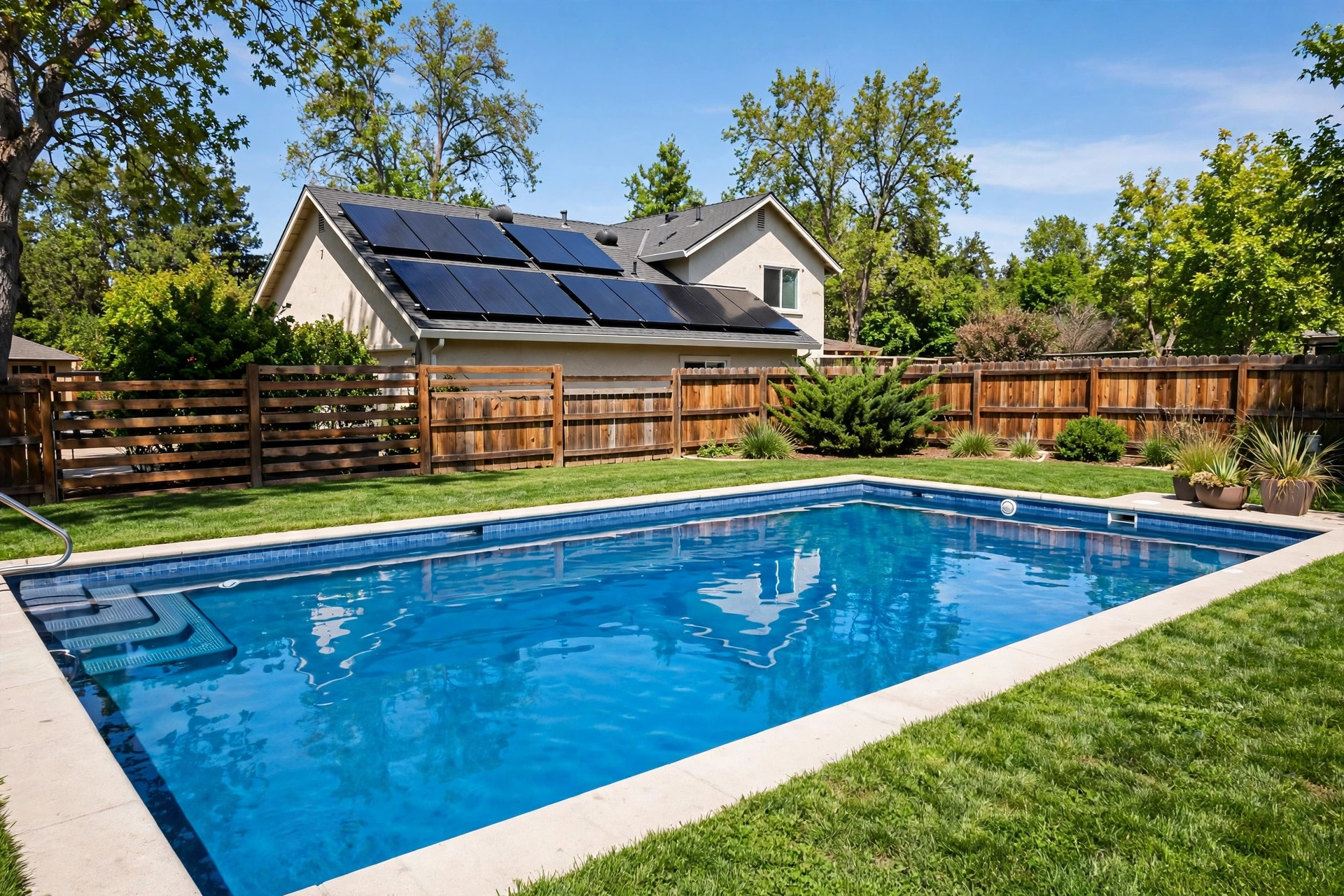
The layout is simple. A small pump moves pool water up to the collectors on the roof or on a rack by the pool. The water warms as it passes through the dark tubes. It then flows back to the pool. A small control box or valve sends water to the roof only when the sun is strong enough. At night or on cold days, the water stays low and skips the roof.
Good placement matters a great deal. Reviews stress this point over and over. Panels must face the sun. In most of the United States, that means facing south. A roof with no shade from trees is best. Panels laid flat work, but a tilt toward the sun works better. Many owners who left good reviews say the dealer helped them pick the right spot.
Pool size sets the number of panels. A common rule says the panels should cover about half to three quarters of the pool surface. A 15 by 30 foot pool has 450 square feet of surface. That means 225 to 340 square feet of panels. Larger panels mean warmer water and a longer season.
Price is where reviews help the most. A solar pool heater for a home pool often costs between 2,500 and 7,000 dollars installed. Small kits for above-ground pools can cost far less, often under 500 dollars. Flat panel systems for large in-ground pools sit at the top of the range.
Owners in reviews often break the cost into parts. Panels make up the largest share. The pump, valves, pipes, and control box add more. Labor adds the rest. Roof work can raise the bill if the crew must add rails or frames.
Running costs are low. The system uses your pool pump, which you run anyway. Many owners report no real rise in their power bill. That is the main draw of solar. A gas heater might cost 500 to 1,500 dollars a year in fuel. A solar heater costs close to nothing once it is paid for.
Payback time depends on your state and your pool use. In Florida or Arizona, many owners say the system paid for itself in two to four years through fuel savings. In the north, payback can take longer, because the sun is weaker and the season is short. Read reviews from your state for a fair view.
Some states and power firms offer rebates or tax credits for solar gear. These can cut the price by a large share. Check with your local energy office before you buy. The U.S. Department of Energy posts clear guides on solar heating and ENERGY STAR notes how home heating gear earns its rating.
Care and Upkeep Through the Years
Solar pool heaters ask for little care, which is one reason reviews stay warm. The main tasks are simple.
Keep the panels clean. Leaves, dust, and dirt block the sun. A rinse with a hose a few times a year is enough for most owners. Do not use strong cleaners or scrub pads, which can hurt the tubes.
Check for leaks each spring. Look at the joints where pipes meet the panels. Look for drip spots on the ground below the roof or rack. Small leaks can often be fixed with a patch kit from the maker. Large leaks may call for a service visit.
Watch the water chemistry. Pool water that is too acidic can wear the tubes from the inside. Keep your pH and chlorine in the normal range. Your pool test kit will show you. Many makers note this in their manuals, and owners who skip this step sometimes report early wear.
In states with hard frost, drain the system before winter. Water left in the panels can freeze and split the tubes. Most systems have a drain valve for this job. If you are not sure how to drain it, call your installer the first time and watch what they do.
Replace worn straps and mounts when they age. Wind and sun wear the plastic parts that hold panels down. A yearly look from the ground or a short ladder is enough to spot trouble.
Safety Points to Keep in Mind
Solar pool heaters are among the safest heaters you can buy, but a few rules still apply.
Roof safety comes first. Panels add weight to a roof. Have your roof checked before install if it is old. Let trained workers climb the roof and set the mounts. Do not let children or pets play near loose panels during the job.
Water safety does not change. A solar heater does not make a pool safer to swim in. Keep gates shut, keep a fence up, and watch young children at all times. These are the same rules that apply to any pool.
If your system shares a pump timer with other gear, learn the controls. The control box decides when water goes to the roof. Do not change the settings unless you know what they do. Wrong settings can leave the water cold or strain the pump.
Storm damage can happen. High wind can lift panels that are not mounted well. After a strong storm, look at the system before you turn it on. Call the installer if anything looks loose.
If you live where winters are hard, pick a heater built for cold. Our guide to the best pool heater for cold climates usa looks at options that hold up when the air turns cold. Some owners also pair a solar heater with a solar attic fan for usa homes to cut heat in the house while the pool stays warm.
Reading the Big Brand Names
Many home brands make or sell heating gear, and their names turn up in reviews. Carrier, Trane, Lennox, Goodman, and Rheem are known for whole-home heating and cooling. Solar pool collectors often come from smaller firms that make only pool gear. Do not judge a pool collector by the fame of a home furnace brand. Judge it by its pool reviews, its warranty, and its years in the pool trade.
Warranties matter. Good panels often carry a ten or twelve year warranty. Cheaper kits may carry one or two years. A long warranty shows that the maker trusts the product. Keep your proof of purchase and the warranty card in a safe place.
FAQ
How many degrees will a solar pool heater raise my pool?
Most owners report a gain of 8 to 15 degrees over an unheated pool. On hot, still days, the gain can be more. Wind, shade, and night air pull heat out. A pool cover used at night will hold the gain and is one of the best small buys you can make.
Will a solar heater work in a northern state?
It can, but the gain is smaller and the season is shorter. Reviews from the north are fair but less glowing. In states like Minnesota or Maine, owners say the heater adds a few warm weeks in spring and fall. For year-round warm water up north, many owners pair solar with a heat pump.
How long do solar pool panels last?
Good flat panels often last 10 to 20 years. Tube systems often last 5 to 10 years. Cheap kits may last only a few seasons. Reviews from long-term owners give the best view. Ask sellers for the warranty in writing and read the fine print on what it covers.
Does a solar heater work on cloudy days?
It works at a lower level. The sun still gives some heat through light cloud. Heavy cloud and rain cut the gain a great deal. The control box stops flow to the roof when the sun is too weak, so you lose nothing on gray days.
It depends on your goal. Solar wins on running cost and quiet use. Gas wins on speed and on cold, dark days. A heat pump sits in the middle. Many reviews say solar is the best first choice in sunny states, while owners in mixed climates like a solar and heat pump pair.
A Short Final Word
Solar pool heaters have earned their good name in solar pool heater reviews for usa homes for simple reasons. They use free sun, cost little to run, need little care, and last for years. They suit sunny states best, and they can still help in cooler states when sized right. Read reviews from your own state. Size the system to your pool. Keep the panels clean and the water chemistry right. Do that, and you will likely join the many owners who say their solar heater was one of the best buys they made for the home.
References
Carrier. (n.d.). Heating and cooling systems. https://www.carrier.com ENERGY STAR. (n.d.). Energy efficient products. https://www.energystar.gov Family Handyman. (n.d.). DIY home repair and maintenance. https://www.familyhandyman.com Goodman. (n.d.). Heating and cooling equipment. https://www.goodmanmfg.com Lennox. (n.d.). Heating and cooling systems. https://www.lennox.com Rheem. (n.d.). Heating, cooling, and water heating. https://www.rheem.com This Old House. (n.d.). Home renovation guidance. https://www.thisoldhouse.com Trane. (n.d.). Heating and air conditioning. https://www.trane.com U.S. Department of Energy. (n.d.). Energy efficiency and renewable energy. https://www.energy.gov
Was this guide helpful?

About Lisa Anderson
The My Garden US editorial team writes practical, in-depth home and garden guides for American homeowners — tested advice, no fluff.