
An inground pool is a large asset. It costs real money to build and real money to keep. Water that sits at sixty degrees is water that no one swims in. Pool heat pump reviews for inground pools help owners decide how to warm that water without waste. A heat pump pulls warmth from the air and moves it into the pool water. It does not burn gas. It does not fire an element all day. It uses power to shift heat from one place to another. This guide walks through how these units work, what the reviews say, and how to pick one that fits your pool.
Why a Heat Pump Matters for Your Inground Pool
Most inground pools lose heat at night. Wind takes it off the surface. Cool air steals it hour by hour. A heater fights that loss. Without one, the swim season in most states lasts from June to August. With one, the season can stretch from April to October. That is months of use added to a pool that costs thousands of dollars to build.
Reviews of pool heat pumps stress one fact again and again. These units run at lower cost than gas heaters. They take longer to warm the water. But once the water is warm, they hold the temperature for less money. For an owner who swims often, the savings add up fast.
How Pool Heat Pumps Work: Pool Heat Pump Reviews for Inground Pools
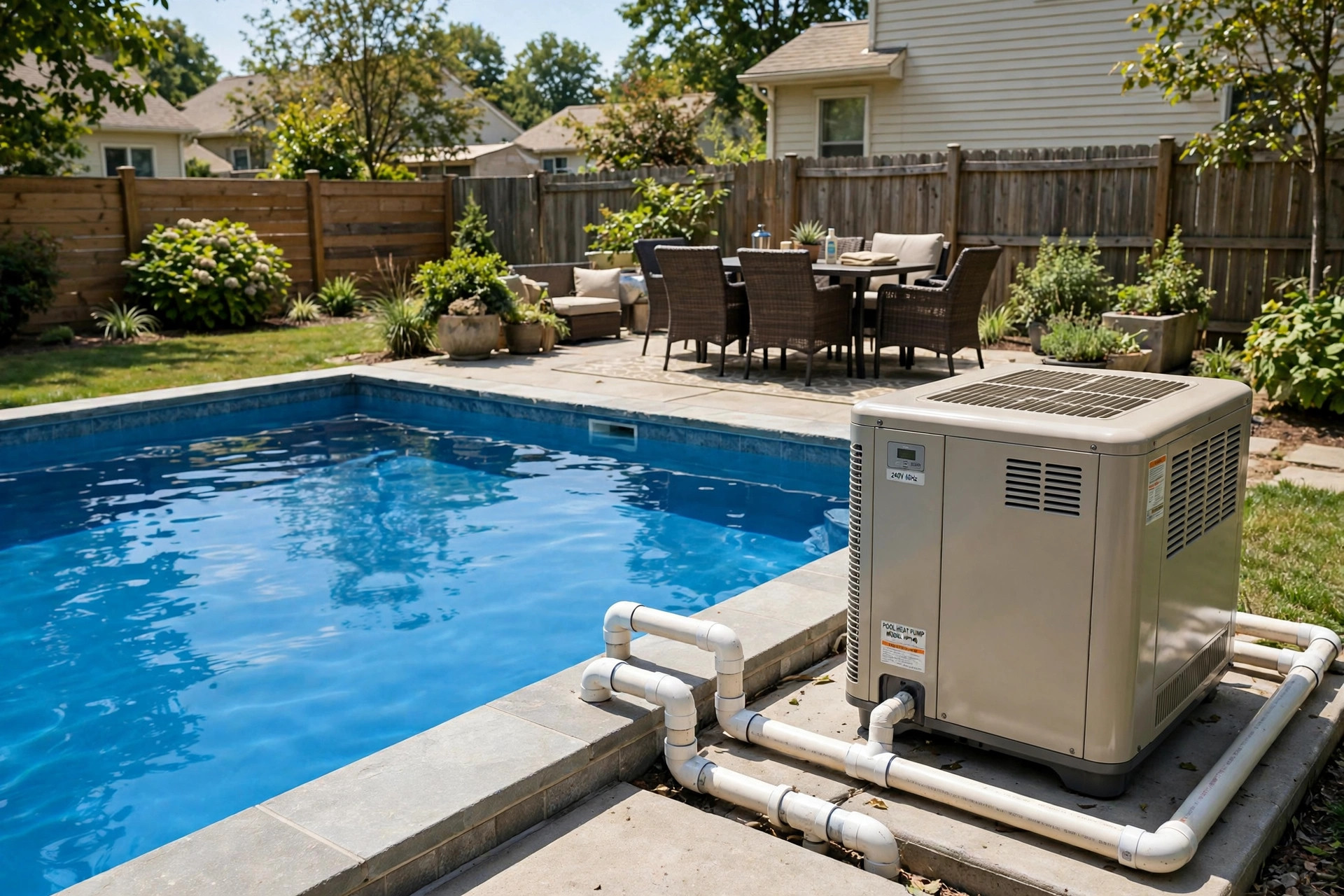
A pool heat pump looks like an air conditioner. It stands on a concrete pad near the pool equipment. Inside, a fan draws in outside air. A coil filled with refrigerant takes heat out of that air. A compressor squeezes the refrigerant and makes it hotter. Then pool water runs through a heat exchanger and picks up the heat. The warm water goes back to the pool.
The unit works best when the air is warm. Most models run well from fifty degrees up. Below that, output drops. Some new models claim to work down to forty degrees. In cold states, owners often pair a heat pump with a best pool heater for cold climates or a solar cover.
The key term in reviews is the coefficient of performance, or COP. A COP of 5 means the unit gives five units of heat for each unit of power it uses. Higher is better. Good units post COP ratings from 4.5 to 6.5.
What to Look for in Pool Heat Pump Reviews
Reviews for inground pool heat pumps follow a set pattern. They rate the same points. Learn these points and you can read any review with sense.
Sizing and BTU Output
BTU output is the first number that matters. An inground pool of twenty thousand gallons needs about one hundred thousand BTU to warm at a fair rate. A thirty thousand gallon pool needs closer to one hundred forty thousand BTU. Reviews test warm-up time. A good unit raises water temperature two to four degrees in eight hours of run time.
If the unit is too small, it will run all day and never reach the set point. If it is too large, you pay for capacity you do not use. Match the BTU to your pool volume. Makers like Carrier and Trane publish sizing guides for heat pump equipment, and the same logic applies to pool units.
Energy Efficiency
Efficiency is the second point in every review. Look for the COP and the HSPF style ratings. Reviews compare power draw in watts against heat output. A unit that draws five thousand watts and gives thirty thousand watts of heat is strong. Check your local power rate to learn the real cost per month.
The federal government sets plain standards for heat pump technology. The Department of Energy explains how heat pumps move heat rather than make it, and the Energy Star program lists equipment that meets high efficiency marks. These pages give solid background before you shop.
Noise Level
Heat pumps run for hours. A loud unit can spoil a quiet yard. Reviews measure decibels at ten feet. The best units run near fifty decibels. That is close to light rain. Cheaper units can hit sixty decibels. That is close to normal talk. If your pool sits near bedrooms or a neighbor’s fence, low noise is worth the price.
Build Quality and Cabinet
Pool equipment sits in sun, rain, and pool chemicals. The cabinet must stand up to all three. Reviews check the coil material. Titanium coils resist salt and chemical damage far better than copper coils. Reviews also check the fan guard, the drain pan, and the control panel. A sealed control box keeps rain and bugs out.
Types and Popular Options
Most reviews cover the same class of machine. Still, the market has a few types worth knowing.
Standard Electric Heat Pumps
This is the main type. It runs on 220-volt power. It heats water well in mild weather. It costs between three thousand and six thousand dollars installed. Most pool heat pump reviews for inground pools test this class.
Inverter-Driven Heat Pumps
These are newer. The compressor speeds up and down as needed. It does not run at full speed all the time. Reviews praise them for low noise and high COP. They cost more up front. They save more over time. If you run your pool daily, an inverter model is worth a close look.
Hybrid and Dual Systems
Some owners pair a heat pump with a solar pool heater reviews setup or a small gas unit. The heat pump does the daily work. The backup heater fires on cold days. Reviews of these combos show the lowest bills of all. The install is more complex. It suits owners who want the longest swim season.
Brand Names That Appear in Reviews
Pool heat pump reviews name a small set of brands again and again. These names also sell filters, pumps, and chlorinators. A few of the most reviewed makers follow.
Hayward is one of the oldest pool equipment names in the country. Its heat pumps show up in most review roundups. Hayward offers units from eighty thousand to one hundred forty thousand BTU. Reviewers note solid cabinets and clear digital controls.
Pentair is another giant of the pool trade. Its UltraTemp line draws strong marks for quiet fans and high COP. Pentair sells through pool dealers, so prices move with local labor rates.
Rheem is best known for home heating gear, but it also builds pool heat pumps. Rheem units score well for build quality and service support.
Lennox has long made home comfort systems. Lennox offers pool heat equipment in some markets. Reviews note clean installs and steady output.
For install tips and owner advice, home sites like This Old House and Family Handyman carry guides on pool equipment upkeep and pad placement. They are good reading before the crew arrives.
Cost and Price
Price is where reviews turn honest. The sticker price is only part of the bill. Here is what owners pay in most states.
A unit alone runs from two thousand five hundred to five thousand dollars. The price moves with BTU size and brand. Install adds one thousand to two thousand dollars. The install covers the concrete pad, the wiring, and the plumbing tie-in. Permits and local fees can add a few hundred more.
Running cost is where the heat pump wins. At an average power rate of fifteen cents per kilowatt hour, a mid-size unit costs about eighty to one hundred fifty dollars per month to hold eighty-two degree water. A gas heater can cost two to four times that. Reviews of gas vs electric pool heater cost comparison show the same gap in most markets.
The payback period is the time it takes the savings to cover the price. For a heat pump, that is often two to four swim seasons. Owners who keep pools for ten years or more come out well ahead.
Care and Upkeep
A pool heat pump needs little care. But small tasks keep it strong for years. Most units last twelve to fifteen years with plain upkeep.
Keep the coil clean. Leaves, grass, and dust choke the air flow. Rinse the coil with a garden hose each month in swim season. Do not use a pressure washer. The fins bend easy.
Keep the drain clear. The unit pulls water out of the air. That water must drain away. A blocked drain can flood the control box.
Check the water flow. The heater needs steady flow to work. Clean the pool filter on schedule. A dirty filter starves the unit of water and can trip the pressure switch.
Cover the unit in winter. If you close the pool for the season, drain the heater and cover it. Freezing water can crack the heat exchanger. Reviews of cold state installs stress this step every time.
Call a tech for odd sounds. Grinding, loud buzzing, or short cycling are signs of trouble. A yearly check by a pool tech costs little and catches small faults early.
Safety
Heat pumps are safe machines. But they mix water and power. Respect both.
Keep the disconnect switch clear. The unit needs a shutoff within sight. Do not stack gear against it. A tech must reach it fast in trouble.
Bond and ground the unit. Local code calls for proper bonding wire. The installer must tie the unit into the pool bonding grid. This stops stray current in the water.
Keep clearances. The fan needs air. Leave at least two feet of space on all sides. Do not plant shrubs against the cabinet. They block air and rot the metal.
Watch the drain line. The unit makes water. If the drain points at a walkway, it can freeze in cold snaps. Aim the drain to a bed or a gravel pit.
Shut it down for storms. If lightning is near, cut power at the disconnect. A surge can kill the control board. A surge protector on the panel is cheap insurance.
Frequently Asked Questions
How fast will a heat pump warm my inground pool?
Most reviews show one to two degrees per day in mild weather. A fifty degree rise from cold takes about a week. Once warm, the unit holds the set point with short runs each day.
What size heat pump do I need for a twenty thousand gallon pool?
A one hundred ten to one hundred twenty thousand BTU unit suits most twenty thousand gallon pools. For a thirty thousand gallon pool, step up to one hundred thirty to one hundred forty thousand BTU. Wind and shade push the need higher.
Do heat pumps work in cold weather?
They work best above fifty degrees. Below forty degrees, output drops hard. In cold states, owners use a solar cover at night and run the unit in the day. Some pick a dual system with gas backup for spring and fall.
How much power does a pool heat pump use?
A mid-size unit draws four thousand to six thousand watts while running. Monthly cost depends on your rate and run hours. Most owners report eighty to one hundred fifty dollars per month in season.
Is a heat pump better than a gas heater?
It depends on the goal. A gas heater warms water fast. It suits spas and short swims. A heat pump warms water slow and cheap. It suits daily pool use over a long season. Most reviews favor the heat pump for inground pools.
How long does a pool heat pump last?
Twelve to fifteen years is normal with plain care. Titanium coils last longer than copper in salt pools. Units kept clear of debris and drained in winter reach the top of that range.
A Short Final Word
Pool heat pump reviews for inground pools point to one clear story. These machines trade speed for savings. They ask for patience in the warm-up week. They pay back in low bills for years. Pick the right size. Keep the coil clean. Cover it in winter. Do that, and your pool will stay warm from spring to fall without a fight.
References
Carrier. (n.d.). Heating and cooling systems. https://www.carrier.com ENERGY STAR. (n.d.). Energy efficient products. https://www.energystar.gov Family Handyman. (n.d.). DIY home repair and maintenance. https://www.familyhandyman.com Hayward. (n.d.). Pool equipment and automation. https://www.hayward.com Lennox. (n.d.). Heating and cooling systems. https://www.lennox.com Pentair. (n.d.). Pool and spa equipment. https://www.pentair.com Rheem. (n.d.). Heating, cooling, and water heating. https://www.rheem.com This Old House. (n.d.). Home renovation guidance. https://www.thisoldhouse.com Trane. (n.d.). Heating and air conditioning. https://www.trane.com U.S. Department of Energy. (n.d.). Energy efficiency and renewable energy. https://www.energy.gov
Was this guide helpful?

About Emily Rodriguez
The My Garden US editorial team writes practical, in-depth home and garden guides for American homeowners — tested advice, no fluff.
You May Also Like
Geothermal Heat Pump Cost Per Ton USA: A Plain Guide for Homeowners
May 6, 2026 0 views
The Best Wood Stove for 2000 Sq Ft: Reviews and a Buyer’s Guide
February 21, 2026 0 views
Oil to Gas Boiler Conversion Cost in the USA: A Full 2026 Guide
January 27, 2026 0 views