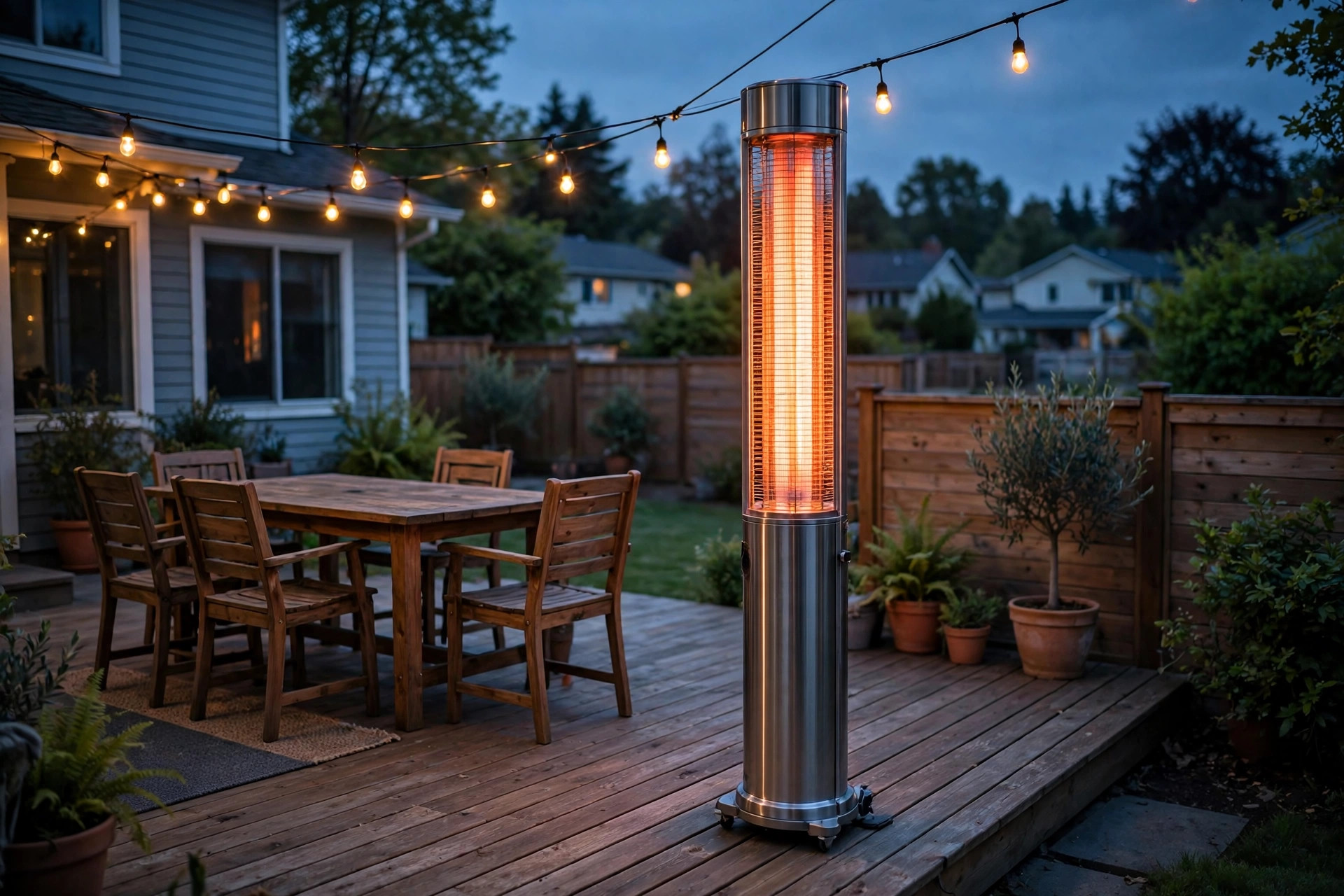

Cold evenings end too many outdoor plans. The sun sets early. The air turns sharp. Guests move inside. A good patio heater can change this pattern. This guide to infrared patio heater reviews 2026 usa looks at how these heaters work, what to buy, and what they cost to run. It also covers safety and care. By the end, you will know which model fits your patio and your budget.
Why an Infrared Patio Heater Matters
Most outdoor heaters work by convection. They heat the air around them. The warm air then rises and blows away. This is wasteful on an open patio. Infrared heaters work in a different way. They send out invisible heat rays. These rays warm people and objects, not the air. You feel warmth on your skin in seconds. The effect is much like sunlight on a cool day.
Even Heat Without Wasted Air
Infrared heat travels in straight lines. It does not depend on still air. Wind has less effect on it than on warm air. That makes it ideal for open decks, patios, and yards. You sit under or near the heater. The heat reaches you directly. You do not need to heat the whole night sky to stay warm.
Longer Outdoor Seasons
With a good infrared patio heater, spring starts earlier and fall lasts longer. Even winter nights can feel pleasant. Many owners in the USA use their patios through all four seasons. A dining set that once sat cold for five months now gets used all year. If you love winter patio gatherings, an infrared heater is one of the best upgrades you can make.
What to Look for When You Shop: Infrared Patio Heater Reviews 2026 Usa
The market is full of choices. Prices range from under one hundred dollars to over one thousand. The guides at Consumer Reports and This Old House stress that heat output, fuel type, and safety features matter most. Here is what to check.
Heat Output and Coverage
Heat output is measured in BTU for gas models and watts for electric models. A small tabletop unit may give off 10,000 BTU. A large tower heater can reach 40,000 BTU. Electric models often run from 1,500 to 6,000 watts. Higher numbers mean more heat and a larger warm zone. For a small patio of about 100 square feet, 20,000 to 30,000 BTU is often enough. For larger decks, plan on more output or two units.
Electric Versus Gas
Infrared patio heaters come in electric and gas versions. Electric models use quartz or carbon heating elements. They give steady heat with no fumes. They cost little to maintain. They need a power outlet or a wired circuit. Gas models burn propane or natural gas. They give strong heat and need no cord. They do need tank refills or a gas line. Our guide to the propane versus electric patio heater comparison walks through this choice in full detail.
Mounting Style and Size
Think about where the heater will live. Freestanding towers need floor space. Wall-mounted units free up the floor but need a sturdy wall. Hanging heaters work well over dining tables. Measure your space before you buy. Leave clear space around the unit for safe use.
Heat Settings and Controls
Good models offer more than one heat setting. A low, medium, and high switch lets you adjust to the night. Some electric models add a remote control or a timer. A timer saves energy. It turns the heater off when you forget. Smart plugs add the same trick to basic models. They let you set schedules from your phone. These small features make daily use much easier.
Safety Features
Look for an automatic shut-off switch. This switch cuts the heat if the unit tips over. A weighted base adds stability in wind. A protective grill keeps hands and pets away from the hot element. For gas models, a flame failure device is a must. It stops gas flow if the flame goes out. Safety guidance from the U.S. Consumer Product Safety Commission reminds buyers to read the manual and keep fuel away from open flame.
Build Quality and Materials
Outdoor gear must face rain, sun, and snow. Stainless steel resists rust and lasts longer. Aluminum is lighter but less rugged. Powder-coated finishes help in coastal areas. Check the warranty. A one-year warranty is common. Better brands offer two or three years.
Types of Infrared Patio Heaters
Each type has a place. The right one depends on your space and habits.
Freestanding Tower Heaters
Tower heaters are tall and portable. They stand on the patio floor. Most use propane. Some use electric power. They warm a wide circle of seats. They are easy to move and store. They also take up floor space. In windy spots, a heavy base matters.
Hanging and Pendant Heaters
Hanging heaters hang from a ceiling or beam. They are common on covered patios and porches. They save floor space. They warm dining tables well. Installation takes more work. They are often electric and may need a dedicated circuit.
Wall-Mounted Heaters
Wall-mounted heaters attach to a wall or post. They tilt to aim heat where you want it. They suit small patios and balconies. They stay out of the way. Electric models dominate this group. Retailers such as The Home Depot and Lowe’s carry many options in this style.
Tabletop Models
Tabletop heaters are small. They sit on a patio table. They warm one or two people. They are good for balconies and small decks. They use small propane canisters or electric cords. They cost less than full-size units.
Cost and Price
Purchase Prices
Tabletop models cost about 80 to 150 dollars. Basic freestanding towers cost 150 to 400 dollars. Well-built stainless steel towers cost 400 to 800 dollars. Premium hanging and wall-mounted electric models cost 300 to 1,000 dollars. Commercial-grade units cost more. Prices shift by season. Late winter and early spring often bring sales.
Running Costs
Electric heaters are simple to price. Take the wattage and divide by 1,000. Multiply by your electric rate. A 1,500-watt heater at 16 cents per kilowatt-hour costs about 24 cents per hour. A 6,000-watt heater costs about 96 cents per hour. Propane costs more per hour in most areas. A standard 20-pound propane tank holds about 4.6 gallons. A 40,000 BTU heater burns through it in about nine or ten hours. Refill prices vary, but plan on two to four dollars per hour of run time. Natural gas is often the cheapest fuel if you already have a gas line. The energy-saving advice at ENERGY STAR can help you plan efficient use.
What Raises or Lowers the Bill
Cold nights raise costs. A heater works harder when the air is near freezing. Wind also raises costs. More wind means more heat lost from your skin, so you run the unit on high. Short sessions save money. Many owners warm the patio for one or two hours instead of all night. A cover for the seating area helps too. Walls, roofs, and wind screens trap heat. They let a smaller heater do the job of a larger one. If you only need warmth for a small dinner table, a tabletop model may cut your fuel bill by half.
Care and Upkeep
Infrared patio heaters need little care. Still, a few habits keep them safe and strong for years.
Clean the emitter and reflector once or twice a season. Dust and soot cut heat output. Use a soft cloth. Do not use harsh cleaners. For gas models, check the burner and pilot light. Spiders and insects like to nest in burner tubes. A blocked tube can cause poor flame or soot. Check the gas hose for cracks. Replace old hoses at once.
Store the heater in a dry place in winter if you do not use it. Many owners use a cover. Covers are cheap and extend life. For propane models, disconnect the tank and store it upright outdoors, never in the house. The repair guides at The Spruce and Bob Vila offer more seasonal maintenance tips.
When to Replace Parts
The heating element is a wear part. Electric elements lose strength after three to five seasons of steady use. You may notice weaker heat or slow start times. Replacement elements cost 30 to 100 dollars for most models. Swapping one takes a screwdriver and ten minutes. For gas models, watch the pilot assembly and the thermocouple. A weak pilot flame often points to a dirty or old thermocouple. Replacement parts are cheap and widely sold. Keep the model number on file. It makes ordering parts simple.
Safety
Heat and fuel demand respect. Follow these rules every time you use your heater.
– Keep the heater at least three feet from walls, railings, furniture, and plants. – Never use a propane or gas heater indoors or in a closed garage. Carbon monoxide can build up fast. – Turn the heater off when you leave the patio. Never leave it running while you sleep. – Keep children and pets away from the hot surfaces. – Check for gas leaks with soapy water on connections before each season. – Do not hang laundry, lights, or decor on or above the heater.
For electric models, keep cords off walkways. Do not overload a circuit. If the plug feels hot, stop use and call an electrician. When in doubt, review the safety checklists from heating experts such as Carrier and Trane.
Frequently Asked Questions
Do infrared patio heaters work in wind?
They work better in wind than standard convection heaters. The rays warm you directly instead of warming the air. Strong wind still cools your skin, so some heat is lost. A sheltered spot gives the best result.
Are infrared patio heaters cheaper to run than propane tower heaters?
Electric infrared models often cost less per hour than propane. Propane runs about two to four dollars per hour. A 1,500-watt electric model costs under 30 cents per hour in most states. High-wattage electric models narrow the gap.
Can I use an infrared patio heater under a covered patio?
Electric models are usually safe under a covered patio if the ceiling is high enough. Check the manual for clearance rules. Most gas models need open ventilation. Never use a propane heater under a low or closed roof.
How long does an infrared patio heater last?
A well-built unit lasts five to ten years with basic care. Stainless steel models last longer than cheap painted ones. Electric elements may need replacement after a few seasons of heavy use.
Do I need a permit for a natural gas patio heater?
Many cities require a permit for a new gas line. Check with your local building office before you install. A licensed plumber should run the line. The rules vary by state and county.
Are infrared patio heaters safe for wooden decks?
They can be safe if you follow clearance rules. Keep heat away from railings and the deck surface. A heat shield or mat adds protection. If you prefer an open flame look instead, see our smokeless fire pit reviews for 2026 for backyard-safe options.
A Final Word
An infrared patio heater is a simple way to win back cold evenings. Choose the right size for your space. Pick the fuel that fits your home. Follow the safety rules. With those steps done, your patio stays warm long after the sun goes down. The 2026 models are efficient, well built, and easy to use. Pick one, set it up, and enjoy the season.
References
Bob Vila. (n.d.). Home improvement advice. https://www.bobvila.com Carrier. (n.d.). Heating and cooling systems. https://www.carrier.com Consumer Reports. (n.d.). Product reviews and ratings. https://www.consumerreports.org ENERGY STAR. (n.d.). Energy efficient products. https://www.energystar.gov Lowe’s. (n.d.). Home improvement products. https://www.lowes.com The Home Depot. (n.d.). Home improvement products. https://www.homedepot.com The Spruce. (n.d.). Home and garden advice. https://www.thespruce.com This Old House. (n.d.). Home renovation guidance. https://www.thisoldhouse.com Trane. (n.d.). Heating and air conditioning. https://www.trane.com U.S. Consumer Product Safety Commission. (n.d.). Product safety information. https://www.cpsc.gov
Was this guide helpful?

About Sarah Mitchell
The My Garden US editorial team writes practical, in-depth home and garden guides for American homeowners — tested advice, no fluff.
You May Also Like

Energy Star HVAC Rebate Finder by State: A 2026 Guide
June 13, 2026 0 views
Gas Furnace Installation Cost for 2000 Sq Ft Homes: 2026 Prices and What to Expect
September 4, 2026 0 views
Range Hood CFM Calculator for Gas Stove: Size Your Ventilation Right
August 5, 2026 0 views