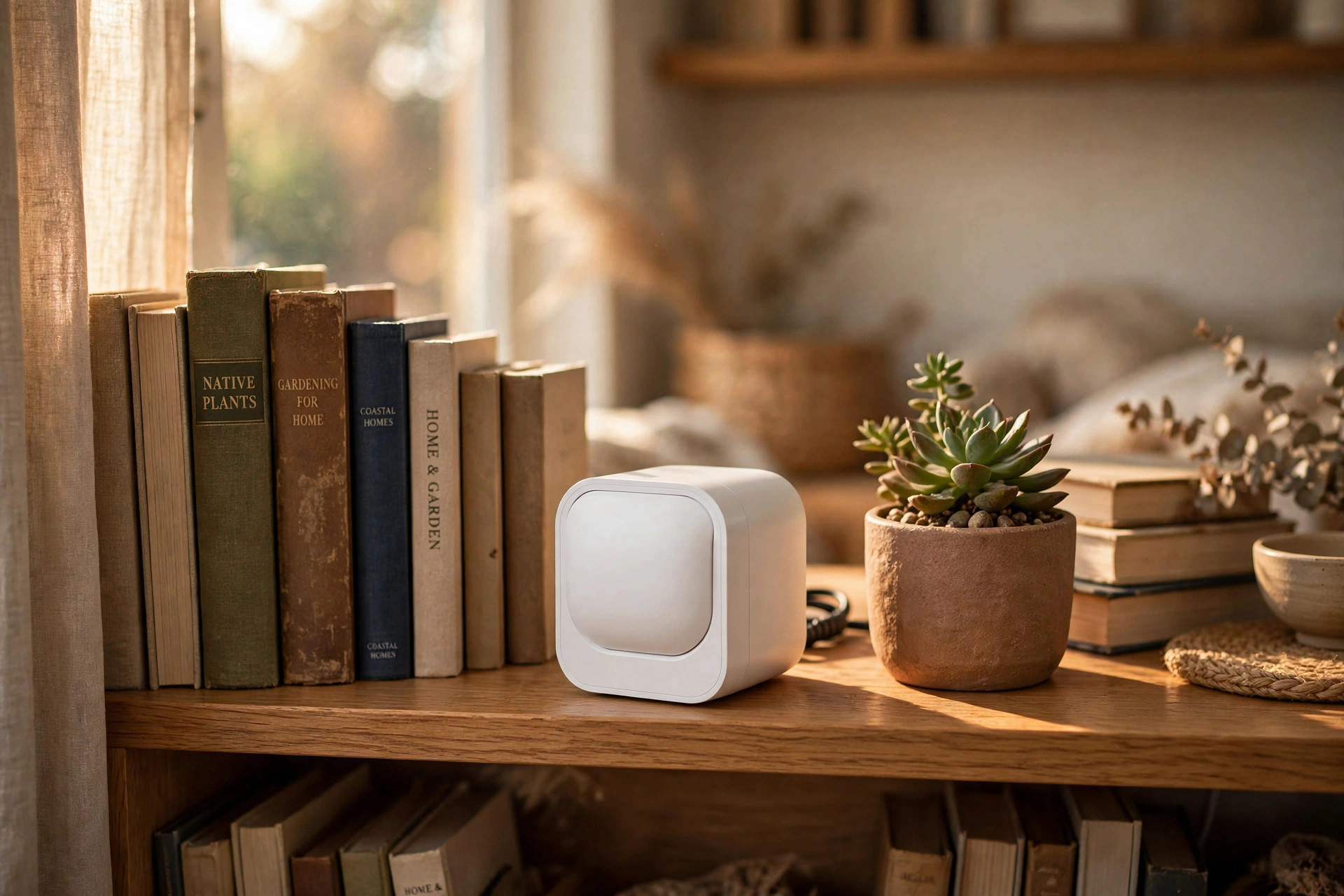

Many families want a camera inside the home. They want to see who walks in the front door. They want to check on a pet during the work day. They want to know the children came home safe from school. But they do not want a camera watching them at all hours. The best indoor security camera with privacy shutter solves this worry. A small cover closes over the lens when you want privacy. You can see at once that no one can see you. This guide explains what to look for, what these cameras cost, and how to keep one in good working order.
Why a Privacy Shutter Matters
An indoor camera is a helpful tool. It can catch a break-in on video. It can show you if a package was left at the door. It can let you speak to a visitor through your phone. But it also sits in your living room or hallway all day and night. If it is hacked, a stranger can watch your daily life. If a software bug turns it on by mistake, it can record private moments.
A privacy shutter is a physical cover over the camera lens. You close it by hand or with a button in the phone app. When the shutter is closed, the camera cannot see anything. No software trick can open it. No hacker can turn it on from far away. A closed shutter also blocks the microphone on some models.
This gives you a simple choice. Keep the shutter open when you are away from home. Close it when you are home and want privacy. Many people close it at night. Some close it when guests visit. The choice is yours, and the control is in your hand.
Privacy laws also matter. In most states, you can use a camera in your own home. But you should not record in bathrooms or bedrooms where guests sleep without telling them. Consumer Reports often notes that home camera owners should read local rules before they place a camera. A shutter helps you follow good manners even where the law is not clear.
What to Look for When You Choose: Best Indoor Security Camera with Privacy Shutter
The best indoor security camera with privacy shutter is not one single model. It is the one that fits your home, your needs, and your budget. Look at these points before you buy.
Video Quality
Look for a camera with at least 1080p video. This is clear enough to see faces and read labels across a room. Some cameras offer 2K or 4K video. These show more detail but need more storage and a faster internet link. Night vision is also important. Good night vision lets the camera see in a dark room. Some models use infrared light that is invisible to the eye. Others use a soft white light that turns on when motion is found.
How the Shutter Works
There are two kinds of shutters. A manual shutter is a small cover you move with your finger. It is simple and never fails. You always know its state because you can see it. An automatic shutter closes when you tap a button in the app or when the camera follows a schedule. Some cameras close the shutter when your phone is near the house. Both kinds work well. A manual shutter is harder to hack. An automatic shutter is easier to use every day.
Two-Way Audio
Two-way audio lets you hear the room and speak through the camera. You can tell a delivery driver to leave a box by the door. You can soothe a pet that barks. But a microphone also picks up private talks. Pick a camera that lets you turn the microphone off. Some cameras link the microphone to the shutter. When the shutter closes, the microphone stops too. CNET reviews often point out that a mute button is as important as the lens itself.
Storage Options
Camera video must go somewhere. Many cameras store video in the cloud. You pay a monthly fee, and you can watch old video from your phone. Others store video on a memory card inside the camera. This has no monthly fee, but the video stays in the house. If a thief takes the camera, the video goes with it. Some cameras offer both. PCMag tests storage plans and notes that free plans are often limited to a few days of video.
Smart Home Features
Many indoor cameras work with smart home systems. They can turn on when your alarm is set. They can send you a phone alert when they see motion. They can work with voice helpers so you can check the feed on a screen with a voice command. If you already own a smart speaker or a hub, pick a camera that works with it. The Google Store lists cameras that work with its home system. Ring sells cameras that work well with its own alarms and doorbells.
Power and Wi-Fi
Most indoor cameras plug into a wall outlet. This is simple and reliable. Some use batteries, which lets you move them but means you must charge them. Check that the camera uses your home Wi-Fi band. Most homes use 2.4 GHz or 5 GHz. If your router is far from the camera spot, the signal may be weak. A weak signal can cause broken video and missed alerts.
Types of Indoor Cameras With a Privacy Shutter
There are several kinds of indoor cameras on the market. Each fits a different home.
Fixed cameras point in one direction. They are small and easy to hide on a shelf. They work well for a front door or a single room. They are the cheapest option.
Pan-and-tilt cameras can turn left and right and look up and down. You can follow motion with your phone. One camera can watch a whole room. They cost a bit more.
Cameras with smart displays show the video on a small screen in the home. You can watch the feed without your phone. These are nice for kitchens and offices.
Cameras from full security brands come from companies like ADT and SimpliSafe. They work as part of a full alarm system. They can call for help if an alarm goes off. They often need a monthly plan. If you already use a monitored alarm, a matching camera may be the easiest choice. For a look at how these systems compare on price, see our security system cost comparisons.
Cost and Price
An indoor camera with a privacy shutter can cost as little as forty dollars. Basic models have 1080p video, a manual shutter, and a memory card slot. They have no monthly fee. They are a good start for a small apartment.
Mid-range cameras cost eighty to one hundred fifty dollars. They add 2K video, better night vision, two-way audio, and smart home support. Many come with an automatic shutter. Some include a short free cloud plan.
High-end cameras cost one hundred fifty to two hundred fifty dollars. They add 4K video, wider viewing angles, and strong build quality. Cloud plans for these cameras cost five to ten dollars per month for full features. Some plans cover many cameras for one price.
Remember the full cost, not just the price of the camera. Add the monthly cloud fee if you want cloud storage. Add the cost of a memory card if you store video at home. Think about how many cameras you need. A whole home may need three or four. A monitored alarm with cameras can be part of a larger budget, and you can read our door reinforcement kits guide for other low-cost ways to harden your entry points before you spend on cameras.
Care and Upkeep
An indoor camera needs little care, but a few habits keep it working well.
Keep the lens clean. Dust on the lens makes the video blurry. Wipe the lens with a soft dry cloth once a month. Do not use wet wipes with strong chemicals.
Check the shutter often. Open and close it to make sure it moves freely. If a manual shutter feels stuck, do not force it. Clean the edge with a dry cloth.
Update the software. Camera makers release updates that fix bugs and close security holes. Turn on automatic updates if the app offers them. If not, check for updates each month.
Restart the camera now and then. A restart clears small glitches. Many apps let you restart from your phone. If the camera acts strange, unplug it for thirty seconds and plug it back in.
Test your Wi-Fi signal. Walk to the camera spot with your phone and check the Wi-Fi strength. If it is weak, move your router closer or add a Wi-Fi extender. A strong signal means smooth video and fast alerts.
Check where the camera points twice a year. A bumped shelf can aim the camera at a wall. A new piece of furniture can block the view. Make sure the camera still sees what you want it to see.
Safety Tips
Safety starts before you buy. Pick a camera from a known brand. Known brands fix security bugs and protect your data. Cheap cameras from unknown brands may send your video to unknown servers.
Use a strong password for the camera app. Do not reuse a password from another site. Turn on two-step verification if the app offers it. This asks for a code from your phone when someone logs in.
Keep your home Wi-Fi safe too. Use a strong Wi-Fi password. If your router lets you make a guest network, put the camera on the guest network. This keeps the camera separate from your phones and computers.
Tell your household about the camera. Let family members and regular visitors know where it is. Show them how the shutter works. People feel safer when they know what is watching and when it is off.
The Consumer Product Safety Commission warns that small cameras with cords can be a hazard for young children and pets. Keep cords out of reach. Mount cameras high on a shelf or wall where little hands cannot grab them. The Verge has also covered recalls of home cameras with faulty parts, so it pays to check that your model has no open recall.
For outdoor areas, a camera is only one layer. A perimeter alarm for the yard can alert you before anyone reaches the door, and a camera indoors then records what happens next.
FAQ
Do all indoor cameras have a privacy shutter?
No. Many indoor cameras have no shutter at all. You turn them off in the app. But a software off-switch can fail or be hacked. A physical shutter is the safest way to be sure the lens is covered. Always check the product page for the word “shutter” before you buy.
Can a hacker open a privacy shutter from far away?
A manual shutter cannot be opened from far away. You must move it by hand. An automatic shutter moves with a motor. In theory, a skilled hacker could trigger the motor. In practice, this is very hard if you keep the software updated and use a strong password. A manual shutter gives the most peace of mind.
Does the shutter also stop audio recording?
It depends on the model. Some cameras turn off the microphone when the shutter closes. Others keep the microphone on. Read the manual or product page to be sure. If privacy matters to you, pick a model where the shutter and microphone work together.
Where is the best place to put an indoor camera?
Good spots are the front hallway, the living room, and the room by the back door. These are the paths a burglar would use. Put the camera high, about seven to eight feet off the floor. Aim it at doors and walkways, not at sofas and beds where people rest. Avoid bathrooms and bedrooms.
Do I need a cloud plan?
Not always. If the camera takes a memory card, you can store video at home with no monthly fee. A cloud plan is useful if you want to watch video when you are away or if you worry a thief might take the camera. Many people start with a memory card and add a cloud plan later.
How long do these cameras last?
A good indoor camera lasts four to six years. The hardware rarely breaks. Makers may stop software updates after a few years. When updates stop, think about replacing the camera to stay safe.
Final Word
The best indoor security camera with privacy shutter is the one you will actually use. A shutter you trust is a shutter you will close. A camera you can reach is a camera you will keep updated. Pick a model with clear video, a shutter you can see and feel, and honest storage terms. Set it up with care, tell your household how it works, and let it watch your home only when you want it to. Privacy and security do not have to fight each other. With the right camera, you can have both.
References
ADT. (n.d.). Home security and automation. https://www.adt.com CNET. (n.d.). Technology news and reviews. https://www.cnet.com Consumer Reports. (n.d.). Product reviews and ratings. https://www.consumerreports.org Google Store. (n.d.). Smart home devices. https://store.google.com PCMag. (n.d.). Technology product reviews. https://www.pcmag.com Ring. (n.d.). Smart home security devices. https://www.ring.com SimpliSafe. (n.d.). Home security systems. https://www.simplisafe.com The Verge. (n.d.). Technology news and reviews. https://www.theverge.com U.S. Consumer Product Safety Commission. (n.d.). Product safety information. https://www.cpsc.gov
Was this guide helpful?

About Michael Thompson
The My Garden US editorial team writes practical, in-depth home and garden guides for American homeowners — tested advice, no fluff.
You May Also Like
Pet Friendly Indoor Camera Reviews 2026 USA: Best Picks for Your Home
January 9, 2026 0 views
Philips Hue vs LIFX Comparison 2026 USA: Which Smart Bulb Is Right for Your Home
January 2, 2026 0 views
Home Security System Installation Cost USA: A Plain Guide for Homeowners
January 10, 2026 0 views