
Introduction
The best perimeter alarm for yard reviews usa matter to anyone who wants to know when someone steps onto their land. A yard alarm does not wait for a door to open. It watches the fence line, the gate, and the driveway, and it speaks up the moment the border of the property is crossed. Reviews from American homeowners show that these systems bring real peace of mind, and they do it for far less money than a full monitored alarm.
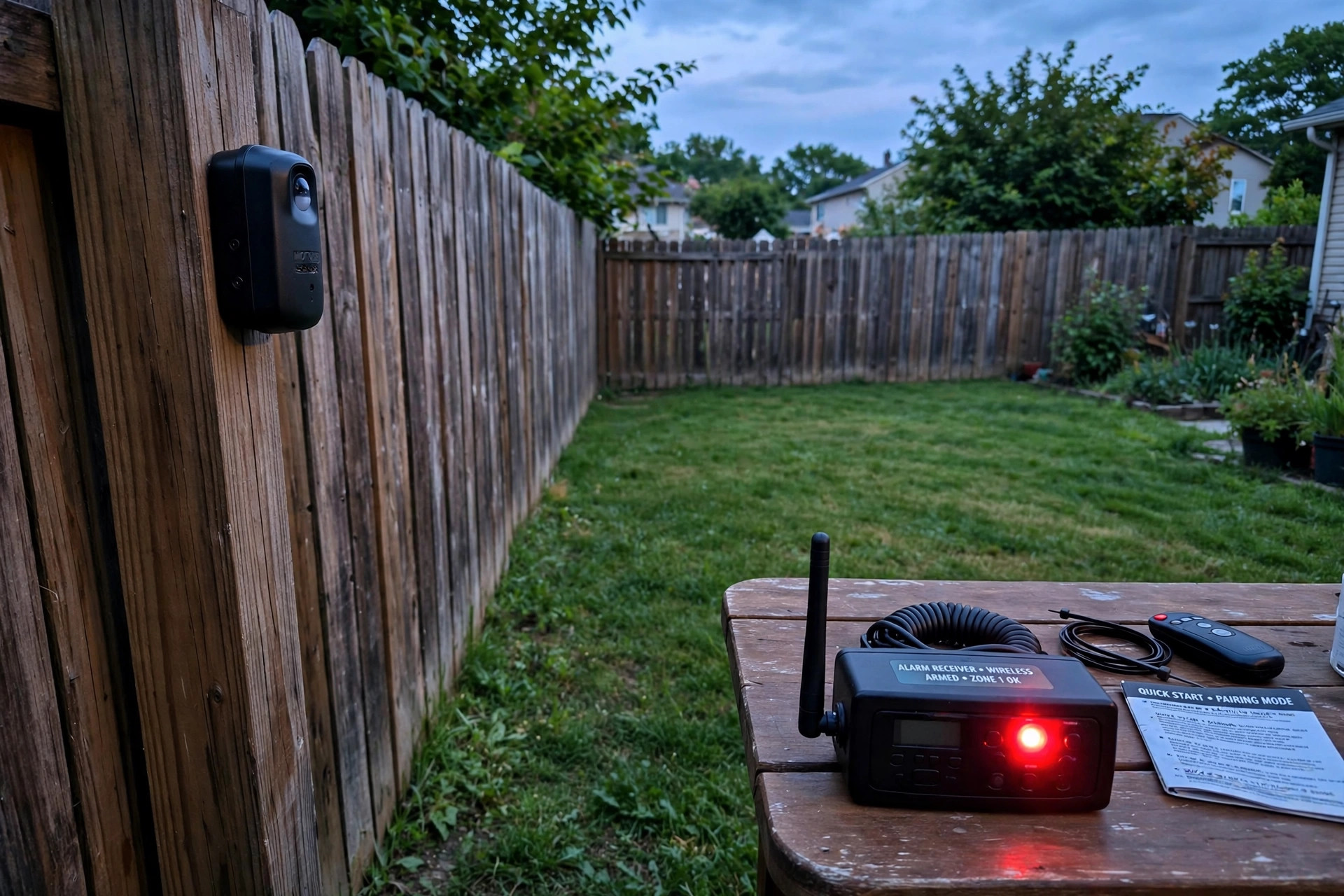
A perimeter alarm is a simple idea. Small sensors sit at the edges of the yard. When a sensor feels motion, a break in a beam, or a fence shake, it sends a signal to a receiver inside the house. The receiver sounds a chime or an alarm. Some systems call a phone.
This guide walks through the reviews and the facts. It covers why these systems matter, what to look for, the main types on the market, what they cost, how to care for them, and the safety rules that come with them. It also answers the questions buyers ask most often.
Why a Perimeter Alarm Matters: Best Perimeter Alarm for Yard Reviews Usa
A house is usually guarded at its shell. Doors and windows carry the sensors, and the alarm sounds when one is forced open. By that point, the intruder is already inside. A perimeter alarm pushes the guard line out to the yard. It warns the homeowner while the stranger is still on the lawn.
Reviews from across the USA point to the same benefit again and again. Early warning gives a family time. Time to turn on the lights. Time to look at a camera. Time to call for help. A loud outdoor siren also changes the mind of many intruders before they take another step. Most break-ins are crimes of chance. A yard that talks back is a yard most thieves leave alone.
For homes on large lots, the value is even clearer. A big backyard cannot be watched from one window. A gate at the far end of a driveway cannot be heard from a bedroom. The best perimeter alarm for yard reviews also praise setups that place eyes and ears where the homeowner cannot be. They turn a blind property into a watched one.
Many families also use the daily chime to know when children wander too far from the door or when a side gate is left open.
What to Look for When You Choose
Reviews of the best perimeter alarm for yard reviews usa agree on a handful of points. A buyer who checks these points ends up with a system that fits the property.
Range. Every system has a maximum distance between sensor and receiver. Small lots need a few hundred feet. Long driveways and acreage need a half mile or more. Walls and trees cut the real range down, so buyers are wise to buy more range than the paper number suggests.
Power. Most outdoor sensors run on batteries. Some run on solar panels. Solar units save battery money but need real sunlight to stay charged. Battery units are steady but need fresh cells once or twice a year. A buyer should know which chore is easier for them.
False alarms. Wind, pets, falling branches, and passing trucks set off weak systems. Reviews spend the most ink on this subject. The best units let the owner adjust the sensitivity. Some use dual technology, such as motion plus heat, so a blowing leaf cannot fool them. A system that cries wolf is a system that gets turned off, and that defeats the purpose.
Sound and alert style. Some receivers chime softly. Some blast a siren. Some send a notice to a phone. Many do all three. A buyer should match the alert to the home. A quiet neighborhood may prefer a phone notice over a screaming siren at three in the morning.
Weather rating. Outdoor sensors face rain, heat, and frost. Good units carry a clear weather rating on the box. Cheap units rust or fill with water, and reviews of failed systems almost always trace the failure to water inside the case.
Ease of setup. Most modern yard alarms are wireless and need no trenching or wiring. Reviews praise systems that pair with one button and mount with two screws. Systems that need an electrician belong to a different class of product.
A smart shopper also checks how the system talks to the rest of the home. Some units tie into a smart security system through an app, so the yard alert appears on the same phone screen as the doorbell camera. Others stand alone, which suits owners who want one job done well.
Types of Perimeter Alarms
Reviews group yard perimeter alarms into four broad types. Each type fits a different property and a different budget.
Motion Sensor Systems
These are the most common. Small battery powered boxes detect moving heat and body mass. They mount on fence posts, trees, and walls. When something warm moves across their field of view, the receiver chimes. They are cheap, easy to place, and easy to move. Their weakness is wildlife. Deer, raccoons, and large dogs trigger them, so owners in wooded areas often look elsewhere.
Infrared Beam Systems
These work in pairs. One box sends an invisible beam to a second box across a path or gate. When the beam breaks, the alarm sounds. Reviews praise them for driveways and gates, where a clear line must be guarded. They ignore animals walking under the beam line if mounted high enough. Their weakness is alignment. A bumped post or a heavy snow can shift a box and break the beam, setting off the alarm until someone walks out to fix it.
Fence Disturbance Sensors
These mount directly on the fence fabric. They feel vibration and flexing, so a hand climbing the fence or a tool cutting the wire sets them off. They suit homes with long fence runs. Reviews say they work best on taut, well built fences. A loose, sagging fence shakes in the wind and produces false alarms, so the fence itself must be in good repair first.
Driveway Pressure and Probe Sensors
These sit in or beside the driveway. A probe buried at the side detects the metal mass of a passing car. A rubber hose across the drive rings a bell when a tire rolls over it. They tell the owner a vehicle has arrived. They do not detect people on foot, so they work best as one part of a larger setup.
Cost and Price
Prices in the USA spread wide, and reviews cover the full spread.
A basic wireless motion sensor kit with one receiver and two or three sensors costs between 40 and 120 dollars. These suit small yards and first time buyers. They do the core job and ask for little.
A mid range infrared beam pair or a four sensor motion set runs between 150 and 350 dollars. These cover larger yards, long driveways, and side gates. Most reviewers land in this band and report that the extra money buys fewer false alarms.
A full fence line system with multiple vibration sensors, a strong siren, and phone alerts can run between 400 and 900 dollars. These suit large properties and owners who want serious coverage.
Beyond the box price, owners should count the running costs. Batteries for a sensor set cost 10 to 25 dollars a year. Solar units cost nothing to run but may need a replacement battery pack every few years, at 15 to 40 dollars. Systems with cellular or app based alerts may charge a monthly fee of 5 to 20 dollars, though many send alerts over the home Wi-Fi for free.
A monitored option from a company such as ADT costs far more, often 30 to 60 dollars a month, but adds a human being who answers the alert. Reviews suggest this is worth it for owners who travel often. For everyone else, a self monitored yard alarm gives most of the benefit at a small fraction of the cost.
One cost surprise that reviews warn about is mounting hardware. Cheap kits include flimsy brackets that break in the first storm, so owners often spend another 20 to 40 dollars on solid posts and stainless screws.
Care and Upkeep
A yard alarm is an outdoor worker. It needs a little care to keep working.
Twice a year, the owner should walk the line and look at every sensor. Check that the mounts are tight and the boxes point where they should. Clear grass, bushes, and spider webs from the face of each sensor, because anything that grows over the eye of the unit blinds it or trips it.
Batteries deserve a calendar mark. Many owners change all sensor batteries in spring and fall, when the clocks change, and wipe the small solar panels clean of dust.
After a big storm, walk the line again. Wind moves mounts. Flood water reaches low boxes. A quick check after bad weather catches most problems before night falls.
Test the system once a month. Walk the boundary and listen for the chime inside the house. A system that is never tested is a system the family stops trusting. Reviews from long term owners all share this habit, and it costs nothing but a few minutes.
Keep the receiver clean and plugged in. Receivers often sit near a door or a kitchen window, where they collect dust and get knocked behind furniture. A receiver that cannot be heard cannot help.
Safety
Yard alarms bring safety, but they also carry duties.
Siren volume. Outdoor sirens are loud enough to hurt hearing up close. Mount them high, away from windows and play areas, and never test them with children or pets standing nearby.
Electrical safety. Most sensors are low voltage and safe to handle. Any unit that plugs into household power should be mounted by someone who understands wiring, or by an electrician. Keep power lines dry and off the ground.
False sense of security. An alarm is a warning, not a wall. Reviews and safety agencies agree that no single device makes a home safe. Good locks, bright lighting, and a fence gate lock for privacy fence work together with the alarm. Owners who depend on the alarm alone are disappointed.
Neighborhood rules. Some towns and homeowner associations limit siren noise and outdoor fixtures. A quick check of local rules before buying saves the trouble of taking a new system down. In quiet streets, a phone alert is often a better choice than a siren.
Wildlife and pets. A yard alarm should not harm animals. Beam systems and motion sensors are passive; they only watch. Fence sensors only feel. Avoid any device that promises to shock or spray, as these raise legal and ethical problems that a plain alarm never does.
Frequently Asked Questions
How far can a wireless yard sensor reach? Most consumer kits reach 300 to 1,000 feet in open ground. Walls, trees, and hills cut that number down. For a long driveway, look for systems rated at a half mile or more, and test the signal before final mounting.
Do yard alarms work in rain and snow? Good ones do. Look for a clear weather rating on the box and sealed cases. Owners in cold states often prefer battery units over solar, because short winter days starve solar panels.
Will pets set off the alarm? Sometimes. Motion sensors set to high sensitivity will catch large dogs. Reviews suggest mounting the sensor higher or switching to a beam system across paths where people walk.
Can I add a yard alarm to my existing security system? Often, yes. Many brands sell add-on sensors that join an app the owner already uses. Standalone kits also work fine beside a smart dimmer switch era smart home, since they do not need to connect to anything. Check the brand’s compatibility page before buying, or keep the yard system independent and simple.
Do I need a monthly subscription? Not for most kits. Basic systems chime and flash for free. A fee appears only when alerts travel by cellular network or through a paid monitoring service. Wi-Fi based phone alerts from brands like Wyze and eufy usually cost nothing extra.
Are beam alarms better than motion alarms? They are better for gates and driveways, where a clean line must be guarded. They are worse for wide open lawns, where many pairs would be needed. Reviews show the best results when owners mix types: beams on the gates, motion on the lawn, as covered by in-depth guides at Arlo, SimpliSafe, Google Store, and tech reviewers such as CNET and PCMag.
A Short Final Word
The best perimeter alarm for yard reviews usa is not the most expensive one. It is the one that fits the land, the weather, and the family. A small city yard needs one good motion kit. A long country driveway needs beams and patience. Read the reviews, count the gates, walk the fence line, and buy a little more range than the paper says. The system will pay for itself the first night it speaks up, and after that it simply becomes part of the home, like the lock on the door. Pair it with a smart pool pump with app control style habit of checking alerts on the phone, and the whole yard stays under a watchful eye.
References
ADT. (n.d.). Home security and automation. https://www.adt.com Arlo. (n.d.). Smart home security cameras. https://www.arlo.com CNET. (n.d.). Technology news and reviews. https://www.cnet.com eufy. (n.d.). Smart home security products. https://www.eufy.com Google Store. (n.d.). Smart home devices. https://store.google.com PCMag. (n.d.). Technology product reviews. https://www.pcmag.com Ring. (n.d.). Smart home security devices. https://www.ring.com SimpliSafe. (n.d.). Home security systems. https://www.simplisafe.com U.S. Consumer Product Safety Commission. (n.d.). Product safety information. https://www.cpsc.gov Wyze. (n.d.). Smart home devices. https://www.wyze.com
Was this guide helpful?

About David Wilson
The My Garden US editorial team writes practical, in-depth home and garden guides for American homeowners — tested advice, no fluff.
You May Also Like
Best Video Doorbell Without Subscription USA: A Practical Guide
August 3, 2026 0 views
Security Camera With Local Storage Reviews USA: A Plain Buyer Guide
August 18, 2026 0 views
Robot Vacuum for Hardwood Floors Reviews USA: An Honest Buyer’s Guide for 2026
July 21, 2026 0 views