
Introduction
A home is the largest purchase most people will ever make, and protecting it has become easier than ever. Today a homeowner can order professional grade outdoor security cameras with free shipping and have them at the door within a week. No special trip to the store is needed. No delivery fee is added at the checkout. The cameras arrive ready to mount, and a simple app shows live video on a phone.
This guide explains what professional grade means, which features matter, how much to pay, and how to set the cameras up. It also covers care, safety, and answers to common questions. Whether the house is a small ranch or a two story colonial, the same basic rules apply.
Why Outdoor Security Cameras Matter: Professional Grade Outdoor Security Cameras with Free Shipping
Burglars look for easy targets. A dark yard and an unwatched door invite trouble. A visible camera changes the calculation. Most break-ins happen through the front or back door, and a camera at either spot cuts the risk. The footage also gives the police something to work with if a crime does take place.
Beyond crime, cameras solve daily problems. They show when a package arrives and record storm damage for an insurance claim. For a family that travels, a phone alert means the home can be checked from far away.
What Professional Grade Means
Not every camera sold online is built the same. A professional grade outdoor security camera is made for real weather, long hours, and clear evidence. It is not the same as a small indoor camera moved outside.
Key signs of professional grade
– Weather rating of IP65 or higher. The letters IP stand for ingress protection. IP65 means the camera resists rain, snow, dust, and garden hose spray. Many top models carry IP66 or IP67. – Wide operating temperature range. A true outdoor camera works from well below freezing to above one hundred degrees. – Night vision of at least 50 feet. Professional cameras see in full dark, either with infrared light or with a small spotlight. – Resolution of 2K or 4K. Cheap cameras give 720p, which blurs faces at thirty feet. Two K or four K keeps faces and plates readable. – Reliable storage. Professional cameras save video to a secure cloud plan, a local memory card, or a home recorder. One copy is never enough. – Strong mounting hardware. Metal brackets and tamper proof screws make the camera hard to steal or knock down.
When a retailer describes a camera as professional grade, check the box for these specs. Retailers like Lowe’s list them in the product details for every model.
Types of Outdoor Security Cameras
Bullet cameras
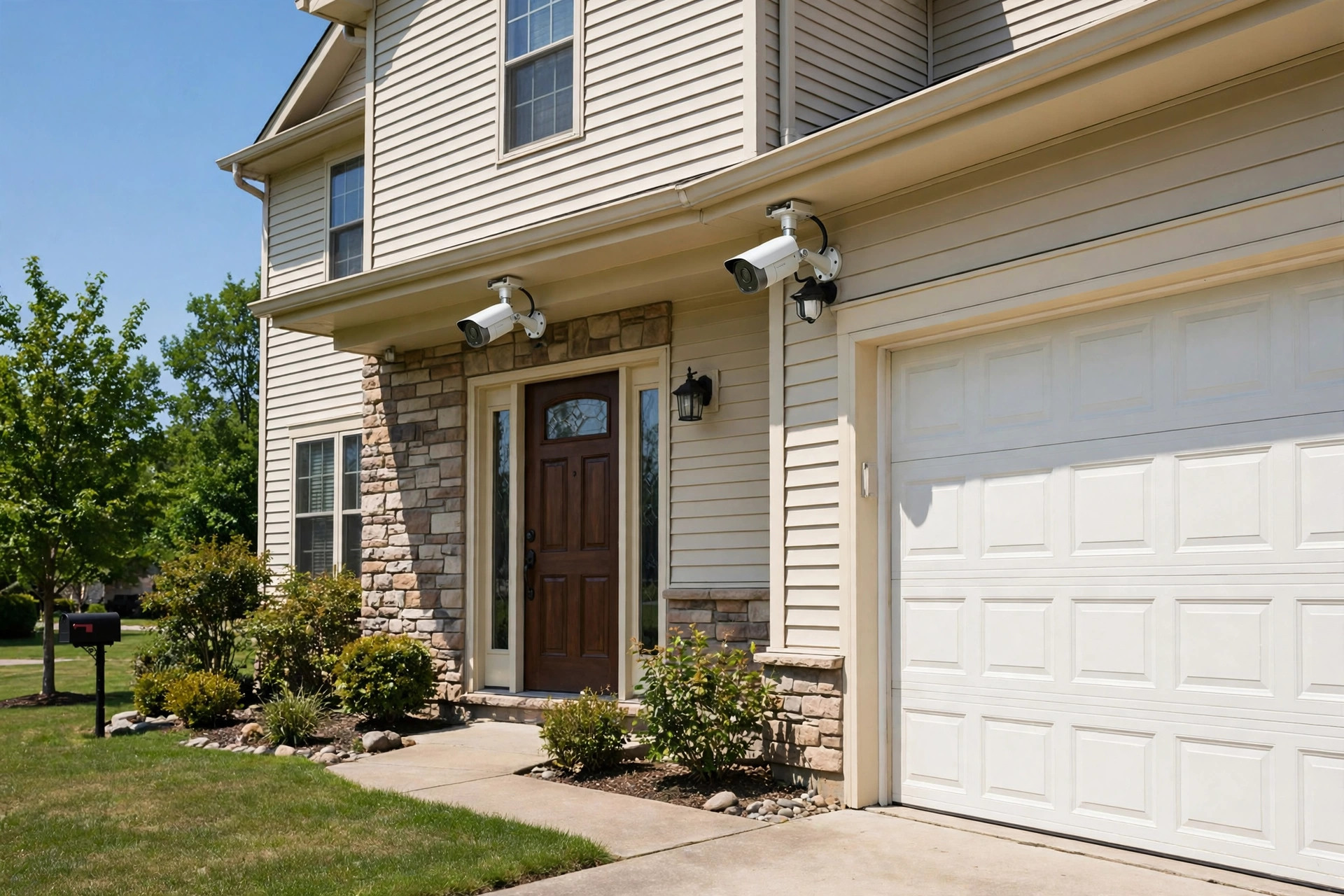
Bullet cameras are long and narrow. They mount on a wall or under an eave and point in one direction. Their shape is easy to see, which warns off intruders. They suit long driveways and side yards.
Dome cameras
Dome cameras sit under a clear round cover. Passersby cannot tell which way the lens points, which adds doubt. They are common above porches and garages. The cover needs cleaning now and then, since dust builds up on it.
Floodlight cameras
A floodlight camera joins a bright motion light with a camera in one unit. When motion is seen at night, the light turns on and the camera records in color. This is a popular choice for backyards.
Doorbell cameras
A video doorbell watches the front door from chest height. It records visitors, packages, and cars in the drive. Most doorbells need the wiring of an old doorbell or a rechargeable battery.
PTZ cameras
PTZ stands for pan, tilt, zoom. These cameras turn, look up and down, and zoom in on detail. They cost more and suit large lots or small businesses run from home.
Guides from Family Handyman walk through the pros and cons of each type for a typical suburban home.
How to Choose: What to Look For
Start with the problem. A family worried about package theft needs a doorbell camera and one aimed at the porch. A home on a corner lot with a big yard needs two or three bullet cameras on the sides.
Power
Cameras get power in three ways. Wired cameras plug into the home and never need charging, but they need a wire run through the wall. Battery cameras stick anywhere and charge every few months, yet they can die at a bad time. Solar panel add-ons keep battery cameras charged in sunny spots.
Connection
Most cameras use home Wi-Fi. Check that the signal is strong at each mounting spot before buying. A weak signal means missed video. Some professional systems use a cable connection called Power over Ethernet, which carries both power and video in one line.
Storage and monthly fees
Read the storage terms with care. Some cameras include free basic cloud storage for a few days of clips. Others need a paid plan of three to fifteen dollars a month per camera. Local storage on a memory card avoids the fee but can be stolen with the camera. Many homeowners use both.
Smart features
Motion alerts, person detection, and package detection are now standard. Person detection tells a dog from a stranger and cuts false alerts. Two way talk lets the homeowner speak through the camera.
Brand reliability
Large security brands publish clear warranties and keep spare parts for years. Ring is one widely used name in home security, and its product pages explain camera specs in plain terms. Independent test labs like Consumer Reports rate cameras for image quality, ease of use, and data privacy, which helps when comparing brands.
Where to Mount the Cameras
Mount each camera eight to ten feet high. That height is out of reach but low enough to see faces. Angle the lens slightly down. Keep the camera out of direct sun when possible, since glare washes out video.
Good spots include:
– Above the front door, aimed at the porch and walkway. – Over the back door or patio door. – Facing the driveway from the garage eave. – On a side wall that covers a fence gate. – Near any ground floor window hidden by bushes.
Avoid pointing a camera straight at a neighbor’s window or yard. Local laws on recording vary by state, and good manners matter too. Aim at your own property line and no farther.
Cost and Price
Professional grade outdoor security cameras cost more than toy cameras, but prices have fallen over the years. A single good camera runs from about eighty to two hundred fifty dollars. A four camera wired set with a recorder runs from about three hundred to seven hundred dollars. Video doorbells run from about one hundred to two hundred fifty dollars.
This is where free shipping matters. Camera sets are heavy. A four camera kit can weigh fifteen pounds with the recorder and cables. Standard shipping on such a box can add twenty to forty dollars. Ordering professional grade outdoor security cameras with free shipping wipes out that cost. Many large retailers, including The Home Depot, offer free delivery on most orders over a set amount, which nearly every camera set reaches.
Watch for total cost, not just the sticker price. Add the monthly cloud plan, extra memory cards, and mounting brackets. A two hundred dollar camera with a ten dollar monthly plan costs three hundred twenty dollars in the first year.
Sales cluster around spring, when home projects start, and around Black Friday in late November. Buying off season can save twenty to thirty percent.
Installing the Cameras
Most homeowners can install a battery or Wi-Fi camera in an afternoon. Wired systems take longer and may need a professional.
Step by step for a basic setup
1. Charge each camera and add it to the phone app indoors first. This is easier than doing it on a ladder. 2. Hold the camera at the planned spot and check the phone for the view. 3. Drill pilot holes, set the anchors, and screw the bracket to the wall or eave. 4. Mount the camera, tighten it, and aim the lens at the target area. 5. Walk the property while a helper watches the live view. Adjust until every entry point is covered. 6. Set motion zones in the app. Mask out the street so alerts stay useful. 7. Test at night. Walk through each zone and confirm the alert and the recording.
For wired runs through walls and attics, many homeowners call an electrician. The labor often runs one hundred to two hundred dollars per camera. Bob Vila offers step by step installation guides for common mounts and wiring jobs.
Cameras and the home exterior
Cameras mount to siding, brick, stucco, or wood, and the right anchor matters. Vinyl siding needs a special mounting block so the panel does not crack. Fiber cement siding, such as the products described by James Hardie, needs a masonry bit and a slow drill speed. Brick needs a hammer drill and sleeve anchors. A camera is only as strong as its mount, and a loose mount is a gift to a thief.
This is also a good time to look at the rest of the exterior. A camera sees better when the area around it is sound. Loose trim, cracked caulk, and rotting wood near a mount should be fixed first. Homeowners planning bigger exterior work sometimes pair camera installation with new siding or windows, and guides on topics like top rated vinyl replacement windows for usa homes can help with that research.
Care and Upkeep
Outdoor cameras need little care, but a small routine keeps them sharp.
– Wipe the lens every two to three months with a soft cloth. Pollen and dust blur night video. – Check mounts each spring and fall. Wind and ice loosen screws over time. – Trim bushes and tree limbs that grow into the view. – Update the camera software when the app asks. Updates fix bugs and close security holes. – Replace batteries before they die in cold weather. Cold drains batteries fast.
If the camera stops connecting, restart the home router before calling support. Most connection problems are router problems, not camera problems.
Safety Notes
Security cameras are safe devices, but a few cautions apply. The U.S. Consumer Product Safety Commission reminds homeowners to follow the maker’s instructions for any electrical product used outdoors.
– Use only outdoor rated power adapters and extension cords. Indoor cords crack in the sun and rain. – Keep wires out of gutters and away from sharp metal edges. – Do not mount a camera on a power line mast or near overhead wires. – Use a stable ladder and a helper. Falls from ladders send thousands of people to the hospital each year. – Choose a strong, unique password for the camera account and turn on two factor authentication. A camera with a weak password can be watched by strangers.
Privacy laws differ by state. Recording video of your own yard is legal almost everywhere. Recording audio has stricter rules in some states. Check local law before turning on the microphone.
Pairing Cameras With Other Exterior Upgrades
A camera works best as part of a full exterior plan. Good lighting doubles the value of a camera, and guides at The Spruce cover the basics well. Outdoor lighting resources such as buy landscape lighting transformers online in colorado explain how to power a full yard lighting plan. Clear sight lines matter too: trim tall hedges near windows and doors so cameras get clean shots and burglars have nowhere to hide. For homeowners comparing big ticket exterior projects, price research like carriage style garage doors price comparison usa shows how security upgrades fit into a wider budget.
Siding makers such as CertainTeed publish care guides that help homeowners keep the walls behind their cameras in good shape for years.
Frequently Asked Questions
How many outdoor cameras does a typical home need?
Most single family homes need three to five. One covers the front door and porch, one covers the back door, one covers the driveway or garage, and one or two cover side yards or gates.
Do outdoor security cameras need Wi-Fi?
Most do, but not all. Wi-Fi cameras are the easiest to install. Wired Power over Ethernet cameras need no Wi-Fi at all and are more reliable. Cellular cameras use a cell signal and suit barns, gates, and cabins far from the router.
Will the cameras work in a power outage?
Battery cameras keep working until the battery dies. Wired cameras stop unless they are on a backup battery, called a UPS. The home router also needs backup power, or the cameras cannot send video to the phone.
Can I install the cameras myself?
Yes, for most battery and plug in models. A drill, a ladder, and the phone app are enough. Wired systems that run cable through walls are harder and often worth hiring out. If the plan calls for drilling into brick or running wire through an attic, get quotes from two local pros.
Is free shipping really free on heavy camera sets?
On most large retail sites, yes. Free shipping offers usually cover the whole cart once the order passes a minimum, and camera kits pass it easily. Very remote addresses may see longer times but rarely a fee.
How long do outdoor security cameras last?
A good camera lasts five to seven years. Sun, rain, and heat wear down seals and batteries over time. Brands that sell replacement batteries and mounts stretch that life. When night video turns grainy and cleaning does not fix it, the sensor is likely worn.
A Final Word
Professional grade outdoor security cameras with free shipping give a homeowner real protection without a real hassle. Pick cameras with strong weather ratings, clear night video, and honest storage terms. Mount them high, aim them at the doors, and keep the lenses clean. Order from a trusted retailer, take the free shipping, and spend the savings on the rest of the yard.
References
Bob Vila. (n.d.). Home improvement advice. https://www.bobvila.com CertainTeed. (n.d.). Building materials and exterior products. https://www.certainteed.com Consumer Reports. (n.d.). Product reviews and ratings. https://www.consumerreports.org Family Handyman. (n.d.). DIY home repair and maintenance. https://www.familyhandyman.com James Hardie. (n.d.). Fiber cement siding and exterior products. https://www.jameshardie.com Lowe’s. (n.d.). Home improvement products. https://www.lowes.com Ring. (n.d.). Smart home security devices. https://www.ring.com The Home Depot. (n.d.). Home improvement products. https://www.homedepot.com The Spruce. (n.d.). Home and garden advice. https://www.thespruce.com U.S. Consumer Product Safety Commission. (n.d.). Product safety information. https://www.cpsc.gov
Was this guide helpful?

About Emily Rodriguez
The My Garden US editorial team writes practical, in-depth home and garden guides for American homeowners — tested advice, no fluff.
You May Also Like

Best Stucco Exterior Repair Near Me: How to Find a Trusted Contractor
May 26, 2026 0 views
Best Garage Door Replacement Near Me: A Homeowner Guide
February 19, 2026 0 views
Top Rated Soffit and Fascia Repair Reviews: How to Find a Contractor You Can Trust
July 23, 2026 0 views