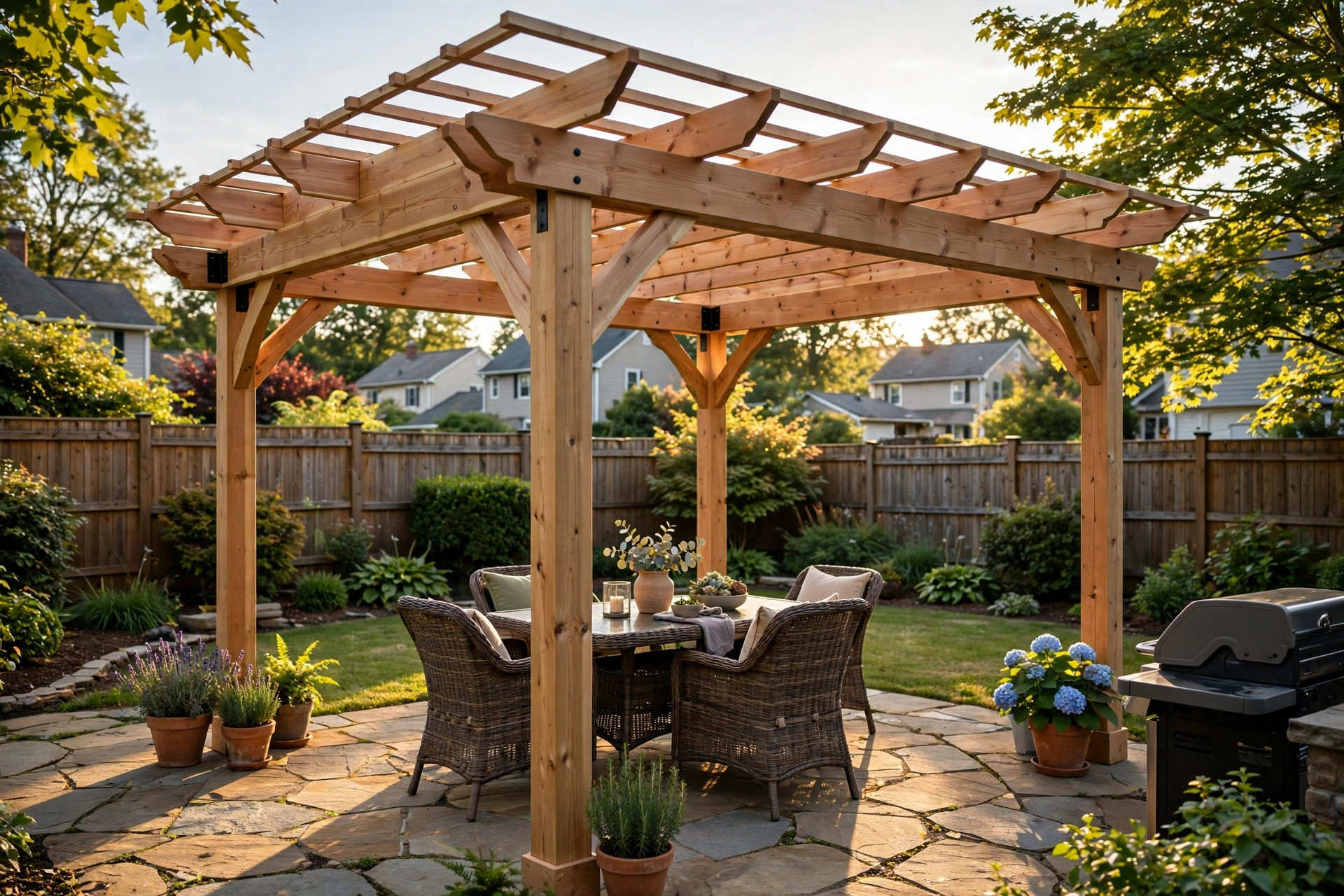

A pergola turns an open yard into a place where people want to sit. It gives shade. It gives shape to a patio. It adds value to a home. Many American homeowners now buy a pergola installation kit instead of building from raw lumber. A kit comes with cut posts, beams, rafters, and all the hardware in one box. The hard part is knowing what a fair price looks like. This pergola installation kits price comparison usa guide walks through real price ranges, the things that drive cost up or down, and how to pick a kit that fits both your yard and your budget.
Why This Pergola Installation Kits Price Comparison USA Matters
Prices for pergola kits vary more than most shoppers expect. Two kits that look the same in a picture can differ by two thousand dollars or more. The gap comes from the material, the size, the finish, and the brand. Without a clear price picture, it is easy to overpay for thin lumber or to underpay and get a kit that warps in the first summer.
A pergola is also a long term buy. A good one stands for fifteen to twenty years with basic care. That makes the price per year quite small even for a mid range kit. Shoppers who compare prices before they buy tend to get better wood, stronger brackets, and clearer instructions. The rest of this article gives you that comparison in plain numbers.
What to Look For When You Compare Pergola Installation Kits: Pergola Installation Kits Price Comparison Usa
Before you look at price tags, know what you are comparing. Not all kits include the same things.
Materials
Most kits use one of three materials. Pressure treated pine is the cheapest. It resists rot and insects, and it can last a decade or more if you stain or seal it each few years. Cedar is the middle ground. It smells good, it ages to a soft gray if you leave it alone, and it resists decay on its own. Vinyl and aluminum kits cost the most up front. They need almost no care. They do not rot, and they never need paint.
The materials used in vinyl siding kits show the same trade off between price and upkeep, and the lesson carries over here: pay more now for less work later, or pay less now and plan for maintenance.
Size
Kits come in standard footprints. A ten by ten foot kit fits a small patio or a corner of a deck. A twelve by twelve is the most popular size in the United States. Larger kits, sixteen by twelve or twenty by twelve, shade a full dining set and then some. Bigger means more wood and more money, but the price per square foot often drops as kits get larger.
Hardware and Brackets
Good kits ship with galvanized or powder coated brackets, screws, and anchor plates. Cheap kits sometimes use plain steel that rusts in two seasons. Read the parts list. Count the brackets. Rusty hardware is the first thing to fail on a budget pergola.
Instructions
A clear manual matters more than most people think. The best kits include step by step drawings, a full parts count, and a help line. Reviews from other buyers will tell you quickly whether the instructions are clear or a puzzle.
Types of Pergola Installation Kits on the USA Market
Shoppers in the United States will run into four main kit types. Each has a normal price band.
Wood Pergola Kits
Wood kits are the classic choice. A ten by ten pressure treated pine kit often sells between four hundred and nine hundred dollars. Cedar kits in the same size run eight hundred to one thousand eight hundred dollars. A twelve by sixteen cedar kit can reach two thousand five hundred dollars. Wood looks natural and takes stain well. It needs the most care of any option.
Vinyl Pergola Kits
Vinyl kits start near one thousand two hundred dollars for a ten by ten and rise to three thousand five hundred for larger footprints. They arrive in white or tan, and they keep that color without paint. They feel less solid than wood in high wind, so check the post sizes and anchoring system.
Aluminum and Steel Kits
Metal kits are the newest trend. Prices run one thousand five hundred to five thousand dollars depending on size and brand. Many have louvered roofs that open and close. They weigh less than wood and last a very long time. The look is modern rather than rustic.
Shade Sail and Canopy Style Kits
Some kits pair four simple posts with a fabric shade sail instead of wooden rafters. These are the cheapest full kits, often two hundred to six hundred dollars. They give deep shade but do not look or feel like a true pergola. They suit renters and tight budgets.
When you compare these options side by side, think about your climate the way you would when choosing house plaques for cold regions or any exterior product: buy for the weather you actually get, not the weather you wish for.
Cost and Price: The Full Comparison
Here is where the numbers sit for most kits sold in the United States in recent years.
| Kit type | 10 x 10 ft | 12 x 12 ft | 12 x 16 ft or larger | |—|—|—|—| | Pressure treated pine | $400 – $900 | $700 – $1,400 | $1,100 – $2,000 | | Cedar or redwood | $800 – $1,800 | $1,300 – $2,500 | $2,000 – $4,000 | | Vinyl | $1,200 – $2,200 | $1,800 – $2,800 | $2,500 – $3,800 | | Aluminum or steel | $1,500 – $3,000 | $2,200 – $4,000 | $3,000 – $5,500 | | Shade sail kits | $200 – $450 | $300 – $600 | $400 – $800 |
These are kit prices only. They do not include the tools, the concrete, or the labor if you hire help.
Installation Costs
Most handy homeowners install a kit in one to two weekends with a helper. If you hire a carpenter or a handyman, labor adds five hundred to one thousand five hundred dollars depending on size and your local rates. A concrete pad or footings add two hundred to eight hundred dollars in materials. Delivery fees run zero to two hundred dollars; many large retailers ship big kits free.
What Drives the Price Up
Five things push a kit toward the top of its band. Thicker posts and beams cost more but hold up better in wind. Kiln dried lumber costs more but warps less. Factory stain or finish adds several hundred dollars but saves a weekend of work. Louvered or retractable roofs add a thousand dollars or more. Brand name kits carry a premium of ten to twenty percent over store brands.
How to Read a Bargain
A low price is not always a deal. Divide the kit price by the square footage of shade it gives. A twelve by twelve kit for one thousand two hundred dollars costs about eight dollars per square foot. If a cheaper kit uses thinner posts and skips the anchors, the real cost shows up later in repairs. Compare the warranty too. Two to five years is normal for wood kits. Ten years or more is normal for vinyl and aluminum.
Care and Upkeep by Material
A pergola asks little of you, but it asks something.
Wood pergolas need a fresh coat of stain or sealer every two to three years. Wash the wood each spring with mild soap and a soft brush. Check screws and brackets each year and tighten what has worked loose. Replace any board that shows soft spots from rot before it spreads.
Vinyl pergolas need a wash with a garden hose and a mild cleaner once or twice a year. That is nearly all they ask. Check the anchors after heavy storms.
Aluminum and steel pergolas need an occasional wash and a look at the moving parts on louvered models. Oil the hinges once a year. Touch up any paint chips so bare metal does not rust.
Fabric shade sails need to come down before winter in snowy states. Wash the fabric each fall and store it dry. Sun weakens the fabric over time, so plan on a new sail every five to seven years.
Regular care is the same habit that keeps vinyl siding projects looking sharp for years: a little work on schedule beats a big repair later.
Safety Notes
A pergola is a structure, and structures have rules. Check with your city or county before you build. Many places require a permit for a pergola over a certain size, often around one hundred twenty square feet. Some neighborhoods have rules about height and setback from the property line.
Anchor every post. Wind is the enemy of a tall open frame. Concrete footings below the frost line are the standard in cold states. In warm states, heavy duty ground anchors may pass code. Never hang a swing, a hammock, or heavy planters from a kit pergola unless the maker says the beams are rated for it.
Call 811 before you dig any post holes. Buried power, gas, and water lines run under more yards than people expect. The call is free, and the visit is free.
Frequently Asked Questions
How much does a pergola installation kit cost in the USA?
A basic pine kit starts near four hundred dollars. A popular twelve by twelve cedar kit runs one thousand three hundred to two thousand five hundred dollars. High end aluminum kits reach five thousand dollars. Most American buyers spend between one thousand and two thousand five hundred dollars on the kit itself.
Are pergola kits cheaper than custom builds?
Yes, in most cases. A custom built pergola of the same size costs thirty to sixty percent more than a kit because of design time and full price lumber. A kit also comes with precut parts, which cuts labor hours sharply.
Can one person install a pergola kit alone?
It is not wise. Posts and beams are long and heavy. Most makers call for two adults at a minimum, and three is better for the day the beams go up. A helper also holds the level while you set the anchors.
How long does installation take?
Plan one full weekend for a ten by ten kit if the ground is ready. Larger kits take two weekends. Add a day if you must pour concrete footings and let them cure.
Do I need a permit for a pergola kit?
It depends on your town and the size of the pergola. Many cities ask for a permit above one hundred twenty square feet. Some ask for any attached structure. A quick call to the local building office settles it before you buy.
Which kit material lasts the longest?
Aluminum and steel last the longest, often twenty five years or more with little care. Vinyl is close behind. Cedar lasts fifteen to twenty years with regular sealing. Pressure treated pine lasts ten to fifteen years with care.
A Short Final Word
The right pergola kit is the one that fits your yard, your climate, and your budget at the same time. Compare price per square foot, read the parts list, and buy for the weather you actually get. Shoppers who take an hour to compare kits side by side almost always end up happier than shoppers who buy the first one they see. Use the price bands in this pergola installation kits price comparison usa guide as your starting point, and let the numbers do the talking.
For more background, see The Spruce, The Home Depot, and Lowe’s. For more background, see James Hardie, CertainTeed, and This Old House. Buying guides are also published by Bob Vila and Family Handyman.
References
Bob Vila. (n.d.). Home improvement advice. https://www.bobvila.com CertainTeed. (n.d.). Building materials and exterior products. https://www.certainteed.com Family Handyman. (n.d.). DIY home repair and maintenance. https://www.familyhandyman.com James Hardie. (n.d.). Fiber cement siding and exterior products. https://www.jameshardie.com Lowe’s. (n.d.). Home improvement products. https://www.lowes.com The Home Depot. (n.d.). Home improvement products. https://www.homedepot.com The Spruce. (n.d.). Home and garden advice. https://www.thespruce.com This Old House. (n.d.). Home renovation guidance. https://www.thisoldhouse.com
Was this guide helpful?

About Lisa Anderson
The My Garden US editorial team writes practical, in-depth home and garden guides for American homeowners — tested advice, no fluff.
You May Also Like
Top Rated Soffit and Fascia Repair Reviews: How to Find a Contractor You Can Trust
July 23, 2026 0 views
Where to Buy Stone Veneer Panels in California: A Practical Guide
June 1, 2026 0 views
Top Rated Vinyl Replacement Windows for USA Homes: A Plain Guide
January 16, 2026 0 views