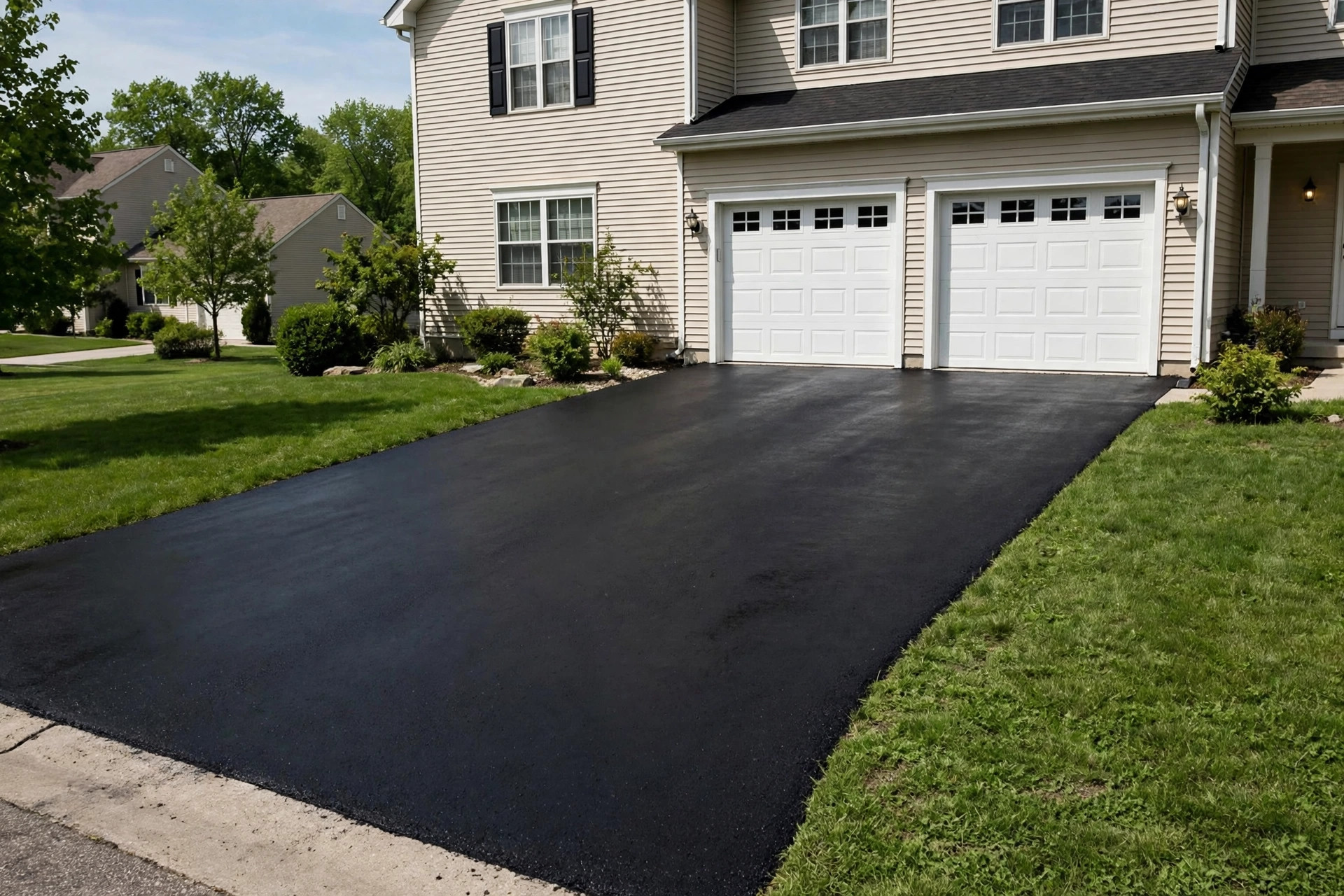

A driveway is one of the first things a visitor sees. When it turns gray, cracks, or starts to crumble at the edges, the whole house looks tired. That is why so many homeowners search for the best asphalt driveway sealing near me every spring and fall. A good sealcoat protects the asphalt, restores the deep black color, and can add years to the life of the pavement.
This guide walks through how asphalt driveway sealing works, what a fair price looks like, and how to choose a contractor you can trust. It is written in plain terms, the way a neighbor who has done the job a dozen times might explain it over the fence.
Why Sealing Your Asphalt Driveway Matters
Asphalt is tough, but it is not permanent. Sun, rain, frost, and the oil that drips from cars all wear it down. Ultraviolet light dries out the binder that holds the stones together. Water seeps into small cracks, freezes, and pries them wider. Over time the surface fades to a pale gray and begins to ravel — that is the loose gravel you see collecting along the edges.
Sealcoating puts a thin protective skin over the pavement. It blocks the sun and the water. It resists gasoline and oil stains. And it turns an old, tired driveway back to a deep, even black. Most paving experts say a properly sealed driveway lasts several years longer than one left bare, which means you postpone the far greater cost of a full repave or replacement.
There is a real difference between a driveway that gets sealed on schedule and one that does not. A sealed drive stays smooth, sheds water, and looks cared for. An unsealed drive develops the alligator cracks — the web of fine lines that looks like cracked leather — that signal the asphalt is breaking down from the inside. Once alligatoring sets in, sealcoat alone cannot fix it.
How Asphalt Driveway Sealing Works: Best Asphalt Driveway Sealing near Me
The process is simple in outline, but each step matters. A careful crew will not rush any of them.
Cleaning and Preparation
First the crew sweeps the driveway with power blowers and wire brooms. Then they wash away dirt, moss, and loose stones, often with a pressure washer. Oil spots get a special treatment — a degreaser or a primer — because sealcoat will not stick to grease. Weeds growing in the cracks are pulled or sprayed. This is the step where a good crew shows its quality and a bad crew cuts corners. A sealcoat laid over dirt will peel off within a season.
Crack Filling
Cracks wider than about a quarter inch are filled with a hot or cold rubberized crack filler. Small hairline cracks can be left, since the sealcoat will bridge them. This step is sometimes priced separately, so ask about it when you get a quote. Filling the cracks first keeps water out of the base and stops the cracks from reflecting through the new coat.
Applying the Sealcoat
Most contractors spray or squeegee on two thin coats of coal-tar or asphalt-emulsion sealer, letting the first coat dry before the second. Two thin coats last longer than one thick coat. Edging is done by hand with a brush so the line where the driveway meets the lawn stays neat. The driveway needs about 24 to 48 hours without traffic — and no rain — while it cures. Plan the timing around your schedule, since you will need to park on the street.
What to Look for When Choosing a Contractor
The phrase “best asphalt driveway sealing near me” will return plenty of names. Sorting them takes a little care.
Ask how long they have been in business. A crew that has been sealing driveways in your county for years has seen every kind of asphalt and every kind of weather your area offers. Fly-by-night operators — the ones who knock on doors offering “leftover sealer at a discount” — rarely have a local address or a warranty.
Ask what sealer they use. Professionals use commercial-grade products, often from major home improvement retailers or paving supply houses, mixed to the right ratio. The bucket of sealer from a bargain store is thinner and wears faster. A good contractor will tell you the brand and type without hesitation.
Get the details in writing. A written quote should list the cleaning method, whether crack filling is included, how many coats will be applied, and what the warranty covers. If a bid is far lower than the others, it usually means one of these steps is missing.
Check their reputation. Read reviews on trusted home advice sites like Bob Vila and The Spruce, where real homeowners share how their driveways held up a year or two after sealing. Ask neighbors who had work done recently. A contractor who does good work in your area will have a trail of good driveways to point to.
Confirm insurance and timing. The crew should carry liability insurance. Ask when they can do the work, how long the driveway will be closed, and what happens if rain is forecast. Serious pros watch the weather and will reschedule rather than lay sealer under a gray sky.
Types of Asphalt Sealers and Options
Not all sealers are the same. The two main types are coal-tar emulsion and asphalt emulsion.
Coal-tar sealer has been the industry standard for decades. It is very dark, tough, and highly resistant to oil and gas stains. Some towns and states have limited its use for environmental reasons, so check your local rules before insisting on it. Guides at This Old House explain the trade-offs in plain language.
Asphalt-emulsion sealer is made from the same basic material as the pavement itself. It is the choice in areas where coal-tar products are restricted, and modern formulas perform well. It tends to be a little less glossy but still gives that fresh black look.
There are also additives: silica sand for traction on slopes, and fast-dry agents that shorten the curing time. A sloped driveway benefits from a traction additive, since fresh sealer can be slippery when wet. Ask the contractor whether your drive needs it.
Some homeowners consider sealing the driveway themselves with a bucket of store-bought product and a squeegee. For a small, simple drive in good shape, that can work and save money. But the do-it-yourself job rarely matches a professional’s equipment and materials, and the cost gap is often smaller than people expect. Advice from Family Handyman can help you judge whether your driveway is a good candidate for the do-it-yourself route.
Cost and Price: What Sealing Usually Costs
Price is the first question most homeowners ask, and the honest answer is that it depends on size, condition, and where you live. That said, there are useful ranges.
A typical residential driveway — two cars wide, two cars deep — often costs between $200 and $500 to have sealed professionally. Larger drives, circular drives, and drives with heavy cracking cost more. Crack filling may add $1 to $2 per linear foot if it is priced separately. Most contractors charge by the square foot, with rates commonly between 15 and 30 cents per square foot for a two-coat job.
Do-it-yourself sealing costs far less in materials — a five-gallon pail of sealer covers roughly 250 to 400 square feet and costs $20 to $40 — but count the value of your time and the rented or borrowed equipment too. For many people, the professional price is fair for a job that should last two to four years.
Prices vary by region. Driveways in the Sun Belt face more ultraviolet damage and may need sealing more often; northern drives face freeze and thaw. Local guides on sites like Lowe’s often carry regional pricing notes worth reading before you collect bids.
When to Seal and How Often
Most asphalt driveways need sealing every two to three years. The calendar is less important than the signs. If water no longer beads on the surface, if the color has faded to gray, or if fine cracks are spreading, it is time. New asphalt should cure for about six months to a year before its first sealcoat — the fresh pavement needs time to harden.
The best seasons are late spring and early fall. Sealer needs air temperatures above about 50 degrees and a dry forecast for at least 24 hours. Mid-summer heat can make the sealer dry too fast, which weakens the bond. Late fall brings the risk of an early frost. A contractor who watches the forecast and schedules around it is doing you a favor.
Care and Upkeep After Sealing
A fresh sealcoat is an investment worth protecting. The rules are simple.
Keep cars off the drive for at least 24 to 48 hours after sealing — ask your contractor for the exact time. Avoid turning the steering wheel while the car is standing still during the first few weeks, since power steering can scuff the new surface. Clean up oil drips and gas spills quickly with a degreaser; the sealer resists stains but it is not armor.
Sweep the driveway regularly so grit does not grind into the coating. In winter, use a plastic shovel rather than a metal one where you can, and go easy on harsh de-icing salts, which can wear the surface over time. With this kind of care, a good sealcoat will look sharp for two years or more.
Safety Notes for Homeowners
Sealcoat products have a strong smell while they are wet, and wet sealer is slippery. Keep children and pets indoors while the crew is working and until the surface is fully dry. If your driveway slopes toward a storm drain or a garden bed, mention it to the contractor — most crews dam the edges to keep sealer out of plantings and waterways.
If you are sealing the drive yourself, wear gloves, long sleeves, and old shoes. Work on a calm day so wind does not carry the spray onto your siding or your neighbor’s car. And store leftover sealer out of reach of children, the way you would any household chemical.
Manufacturers like James Hardie and CertainTeed remind homeowners that exterior products all perform best when applied in the right conditions — the same common-sense rule applies to sealcoat.
Common Mistakes to Avoid
The most common mistake is sealing too often. A fresh coat every year builds up layers that can peel and crack. Every two to three years is plenty.
The second mistake is sealing a damaged driveway. Sealcoat is a surface treatment, not a repair. If the asphalt is crumbling, sinking, or covered in alligator cracks, the money is better spent on patching or resurfacing first. A contractor who will seal over a ruined drive without warning you is not doing you a favor.
The third mistake is skipping the preparation. Dirt, moss, and oil spots left under the sealer will cause it to flake within months. Ask every bidder how they clean and prepare, and favor the one with the most thorough answer.
Related Projects Around the Home
A driveway is part of the home’s whole exterior, and sealing often goes hand in hand with other upkeep. If your roof needs attention too, our guide on metal roofing installation costs walks through pricing across the USA. Entry doors take the same weather beating as the pavement; see our exterior door replacement guide for what to expect. And if the concrete apron or walkway has seen better days, our concrete driveway resurfacing guide covers your options.
Frequently Asked Questions
How long does asphalt driveway sealing last? A professional two-coat seal typically lasts two to four years, depending on traffic, weather, and sun exposure. Driveways in hot, sunny climates wear faster than shaded northern ones.
Can I drive on the driveway right after sealing? No. Wait at least 24 hours, and 48 is safer. Driving too soon leaves tire marks and can pull up the fresh coat. Your contractor will give you a time based on the weather.
Is sealing really necessary, or just cosmetic? It is both. The fresh black look is the visible part, but the real value is protection — the sealer blocks the sun and water that break asphalt down from the inside.
What is the difference between sealing and resurfacing? Sealing adds a thin protective skin over sound asphalt. Resurfacing lays a new layer of asphalt over the old one and fixes structural wear. If your drive has deep cracks or is sinking, resurfacing is the right fix.
Can sealcoat be applied in cold weather? Not well. Sealer needs air temperatures above about 50 degrees Fahrenheit and dry weather to cure properly. Cold or damp application leads to poor bonding and early failure.
Will sealing fix my cracked driveway? Small hairline cracks, yes — the sealer bridges them. Wider cracks should be filled first, and driveways with widespread alligator cracking need patching or resurfacing before any sealcoat.
A Final Word
Finding the best asphalt driveway sealing near me comes down to the same virtues as any home project: good preparation, honest materials, and a contractor who stands behind the work. Seal on schedule, keep up with the small care steps, and your driveway will repay you with years of solid service and a look that lifts the whole house. The search for a good local crew is worth the effort — a driveway sealed well is a driveway you will not have to think about again for years.
References
Bob Vila. (n.d.). Home improvement advice. https://www.bobvila.com CertainTeed. (n.d.). Building materials and exterior products. https://www.certainteed.com Family Handyman. (n.d.). DIY home repair and maintenance. https://www.familyhandyman.com James Hardie. (n.d.). Fiber cement siding and exterior products. https://www.jameshardie.com Lowe’s. (n.d.). Home improvement products. https://www.lowes.com The Home Depot. (n.d.). Home improvement products. https://www.homedepot.com The Spruce. (n.d.). Home and garden advice. https://www.thespruce.com This Old House. (n.d.). Home renovation guidance. https://www.thisoldhouse.com
Was this guide helpful?

About Michael Thompson
The My Garden US editorial team writes practical, in-depth home and garden guides for American homeowners — tested advice, no fluff.
You May Also Like

Buy Siding Color Visualizer Tools Online in Florida: A Practical Homeowner Guide
July 25, 2026 0 views
Budget Friendly Vinyl Replacement Windows Buying Guide
May 27, 2026 0 views
Reliable Stucco Exterior Repair in Arizona: A Homeowner’s Guide
September 8, 2026 0 views