
Introduction
A good walkway greets every guest. When you type best paver walkway installation near me into a search box, you want more than a list of names. You want a local pro who will build a path that lasts for years. Paver walkways add charm and value to a home. This guide will help you find the right installer, choose the right paver, and know what a fair price is.
Why a Paver Walkway Matters: Best Paver Walkway Installation near Me
A walkway is one of the first things people see. Cracked concrete or worn gravel can make a fine house look tired. A neat paver path makes the whole front yard look planned and cared for. Real estate agents often say that curb appeal sells homes. A paver walkway is one of the simplest ways to lift curb appeal without a full remodel.
Pavers are also practical. Each paver is a separate block. If one cracks or sinks, a worker can lift that one block and fix it. A concrete slab cannot be fixed so easily. It must be torn out and poured again. Pavers also drain better than solid concrete in many designs. Gaps between pavers let water pass through to the soil below.
Durability is another reason. Quality pavers can last 25 years or more. They hold up under foot traffic, rain, and snow. They resist stains better than plain concrete. For all these reasons, many homeowners now search for the best paver walkway installation near me instead of choosing poured concrete.
How to Choose the Right Installer
Finding a good installer is the most important step. A skilled crew can make modest pavers look grand. A poor crew can ruin costly stone. Use the steps below to find a local pro you can trust.
Check Local Reputation
Start with reviews from people in your town. Look for companies that specialize in hardscapes and walkways, not just general handyman work. A firm that lays pavers every week will do better work than one that does it once a year. Ask neighbors who had paver work done. A walkway you can see in person tells you more than any photo online.
Verify License and Insurance
A real contractor should carry liability insurance and workers’ compensation. Ask for proof. If a worker is hurt on your property and the company has no insurance, you may be held responsible. Many states also require a contractor license for this type of work. Check with your state office before you sign anything. You can also read buying guides and contractor ratings to learn what questions to ask before you hire.
Ask for References and Photos
Ask each bidder for three recent references. Call them. Ask if the crew arrived on time, kept the site clean, and finished on schedule. Ask to see photos of past walkways, or better yet, drive by a finished job. Look at the edges. Straight, tight edges show good work. Gaps and crooked lines show poor work.
Get Three Written Bids
Always get at least three written bids. Each bid should list the total price, the paver brand and color, the depth of the base, the type of sand, and the timeline. Do not accept a bid that just says “install walkway, $3,000.” Vague bids lead to fights later. A detailed bid shows that the installer plans the work with care.
Ask About the Base and Warranty
The base is what your walkway sits on. It is the key to a long life. Ask how deep the base will be and what material will be used. Most good jobs use 4 to 6 inches of crushed stone under 1 inch of bedding sand. Ask if the company offers a written warranty on labor. One to two years is common. A company that stands behind its work will put that in writing.
Homeowners who take time to compare installers almost always get a better result. If you are also planning other exterior projects, you may want to read about retaining wall builders or concrete driveway resurfacing before you schedule the work.
Types of Pavers and Walkway Options
Pavers come in three main kinds. Each has its own look, price, and strengths. Your installer can show you samples. Seeing them in daylight is the best way to choose.
Clay Brick Pavers
Clay brick pavers are made from baked clay. They have a warm, classic look that suits older homes and colonial styles. They hold their color well because the color runs through the whole brick. They are very hard and resist wear. Their main drawback is price. They often cost more than concrete pavers. They can also be slippery when wet unless you choose a textured type.
Concrete Pavers
Concrete pavers are the most common choice. They come in many shapes, colors, and patterns. Makers press color and texture into them to look like brick or stone. They cost less than clay or natural stone. They are strong and uniform, which makes them easy to lay in neat patterns. Some owners feel they look less natural than stone. Modern styles have closed much of that gap. For help comparing paver styles and patterns, many homeowners consult DIY walkway guides before they meet with a bidder.
Natural Stone Pavers
Natural stone includes flagstone, bluestone, and slate. Each piece is unique, which gives the walkway a rich, organic feel. Stone fits well with gardens and rustic homes. It is the most costly option. It also varies in thickness, which can make the surface less even. A skilled installer can still make it safe and level. Stone needs sealing more often than concrete to resist stains.
Permeable Pavers
Permeable pavers are a special type of concrete paver with wide joints filled with small stone. Rain passes through the joints into the ground instead of running off into the street. They help reduce puddles and ease the load on storm drains. Some cities give credits or rebates for permeable paving. The stormwater guidance from federal sources explains how permeable surfaces help manage runoff around homes.
Patterns and Layout Choices
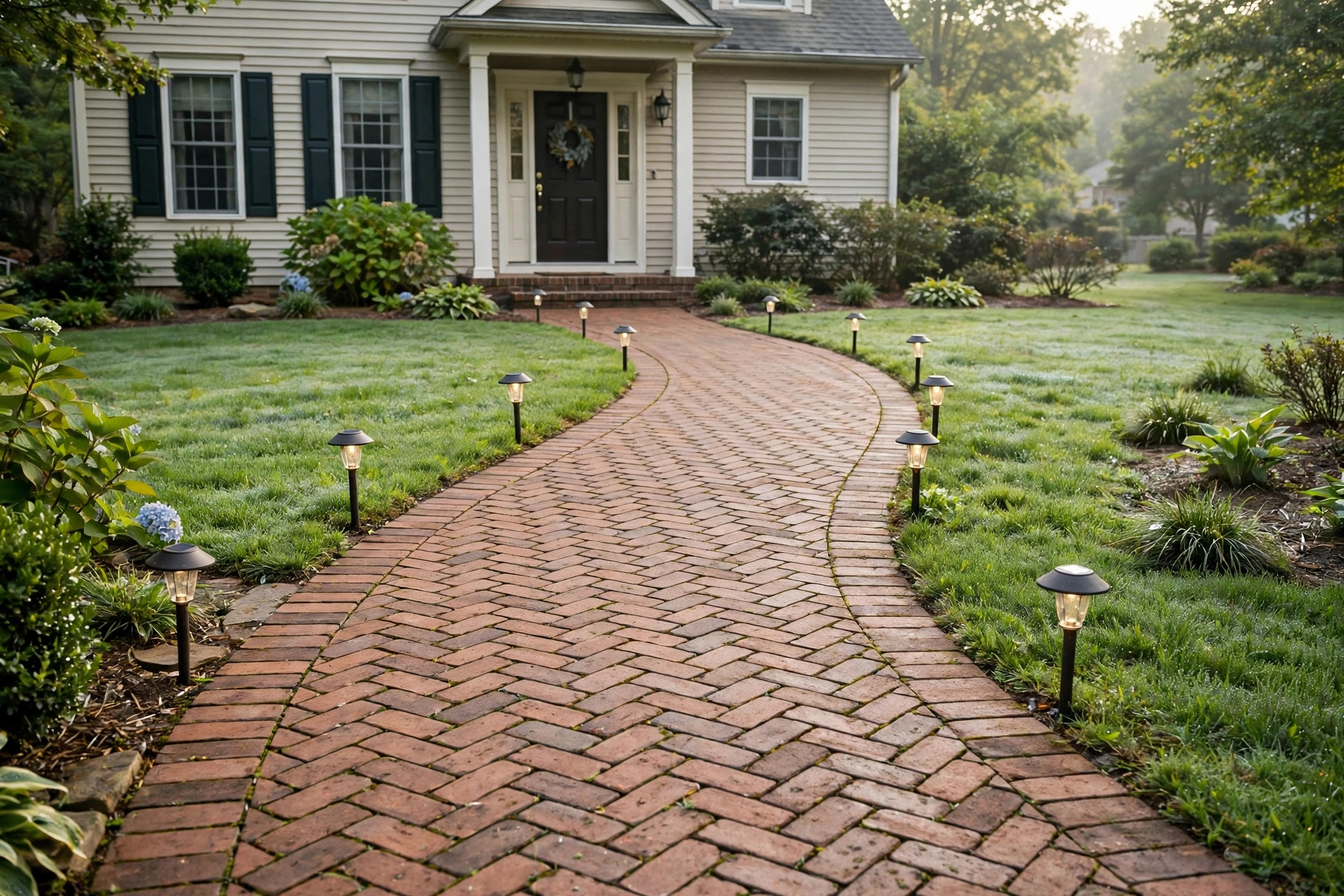
The pattern of the walkway changes its look a lot. A running bond pattern looks classic and simple. A herringbone pattern looks formal and rich. A basket weave pattern suits cottage styles. Curved walkways feel soft and natural. Straight walkways feel formal and direct.
Think about the path people take now. Do guests cut across the lawn? Your new walkway should follow the natural line of foot traffic. A walkway that ignores how people walk will be ignored. It should also be wide enough. Three to four feet is a good width for a front walk. Two people should be able to walk side by side with ease.
Cost and Price of Paver Walkway Installation
Cost is the question every homeowner asks first. Prices vary by region, paver type, and job size. In most parts of the United States, a paver walkway costs between $10 and $25 per square foot installed. A simple 4-by-20-foot walkway of 80 square feet may cost $1,200 to $2,000 with basic concrete pavers. A larger or curved walkway with natural stone can cost $4,000 or more.
Labor is the largest part of the price. Digging out the old path, hauling away soil, laying the base, and setting each paver takes real skill and time. Materials are the next largest part. Clay brick and natural stone cost more than concrete. Extras add up too. Edging restraints, weed fabric, and sealant each add to the bill.
Get the price in writing. Make sure the bid covers removal of the old walkway, all materials, and cleanup. Ask how payment is split. A common plan is one third down, one third at the halfway point, and the rest when the job is done. Never pay the full price before the work starts. Retail project guides and outdoor project tips can help you build a rough budget before you call for bids.
Watch out for bids that are far lower than the rest. A very low bid often means a thin base, cheap pavers, or no warranty. A walkway with a poor base will sink and shift within a year or two. Paying a fair price for good work costs less in the long run than fixing a bad job.
Care and Upkeep
Paver walkways need little care, but they do need some. Sweep the walkway often. Leaves and dirt hold moisture, which can stain pavers over time. Rinse the path with a garden hose a few times each year. For tough stains, use a mild soap and a stiff brush.
Weeds can grow in the joints. Pull them when they are small. Polymeric sand in the joints hardens when wet and blocks most weeds. If weeds return year after year, ask your installer about refilling the joints with polymeric sand.
Sealing is optional but helpful. A sealer deepens the color and blocks stains from oil and rust. Most sealers last two to three years. Do not seal a new walkway too soon. Let it settle for at least 60 to 90 days first. When the whole house exterior needs a wash, many owners schedule house power washing services at a gentle setting so the paver joints are not blasted out. You can read more exterior home care guides and home design and upkeep ideas to plan a full season of maintenance.
If a paver sinks or cracks, fix it soon. Lift the paver, add sand under it, and set it back. This is a simple job that takes less than an hour. Fast repairs keep small problems from spreading.
Safety
A walkway must be safe for everyone who uses it. The surface should be level, with no paver sticking up more than a quarter inch above its neighbors. High spots cause trips, and trips cause falls. This is very important for older guests and small children.
Good drainage keeps the walkway safe too. The path should slope slightly away from the house, about one quarter inch per foot. This moves rain away from the foundation and keeps the surface from holding water. Standing water turns to ice in winter, and ice on pavers is very slick.
Lighting adds safety after dark. Low-voltage path lights along the edges make the walkway easy to see at night. Solar lights cost little and need no wiring. Make sure lights do not shine into the eyes of people walking. Aim them down at the pavers.
In cold regions, use sand or a paver-safe ice melt. Rock salt can damage some pavers and harm nearby plants. Ask your installer which ice melt is safe for your paver type. Keep the walkway clear of snow so melt water does not refreeze into a sheet of ice. For broader safety advice on home exteriors, this old house guides cover walkways, steps, and lighting in depth.
Frequently Asked Questions
How long does paver walkway installation take?
Most walkways take two to four days. A small straight path may be done in two days. A large curved path with steps or walls can take a week. Weather can add time. Rain stops base work because wet soil cannot be packed firm. Ask your installer for a written schedule before the job starts.
Can I install a paver walkway myself?
A handy homeowner can lay a small paver path. It takes digging, hauling stone, and careful leveling. The work is heavy. A 100-square-foot walkway needs about two tons of base stone. Many owners start the job themselves and then call a pro to finish it. If you want a large or curved walkway, hire the work from the start. The result will look better and last longer.
What is the best paver material for a walkway?
Concrete pavers are the best pick for most homes. They cost less, come in many styles, and last for decades. Clay brick is best for classic homes where the warm color matters. Natural stone is best when you want a one-of-a-kind look and can pay more. Ask your installer to show samples next to your house so you can see how each looks in real light.
How much does a paver walkway cost per square foot?
Expect $10 to $25 per square foot installed in most U.S. markets. Basic concrete pavers sit at the low end. Clay brick and natural stone sit at the high end. Curves, steps, and old-walkway removal raise the price. Always get three written bids to learn the fair price in your town.
Will a paver walkway match my home’s siding?
Yes, if you plan the colors together. Bring a piece of your siding or a photo to the paver showroom. Warm brick pavers suit warm siding tones. Gray stone pavers suit cool siding tones. Exterior material makers such as James Hardie and CertainTeed publish guides on matching exterior colors, which can help you pick a paver shade that fits the whole house.
Do paver walkways need to be sealed?
Sealing is not required, but it helps. A sealer blocks stains and keeps colors rich. It lasts about two to three years. Wait 60 to 90 days after installation before the first coat. If you dislike the glossy look, choose a matte sealer. Your installer can suggest the right product for your paver type.
A Final Word
A paver walkway is a project you will enjoy every day. It guides guests to your door, lifts the look of your home, and holds up for decades with simple care. The key is to choose the installer with care. Check reviews, verify insurance, get three detailed bids, and ask about the base and the warranty. Do that work up front, and the search for the best paver walkway installation near me will end with a path you are proud of for years to come.
References
Bob Vila. (n.d.). Home improvement advice. https://www.bobvila.com CertainTeed. (n.d.). Building materials and exterior products. https://www.certainteed.com Consumer Reports. (n.d.). Product reviews and ratings. https://www.consumerreports.org Family Handyman. (n.d.). DIY home repair and maintenance. https://www.familyhandyman.com James Hardie. (n.d.). Fiber cement siding and exterior products. https://www.jameshardie.com Lowe’s. (n.d.). Home improvement products. https://www.lowes.com The Home Depot. (n.d.). Home improvement products. https://www.homedepot.com The Spruce. (n.d.). Home and garden advice. https://www.thespruce.com This Old House. (n.d.). Home renovation guidance. https://www.thisoldhouse.com U.S. Environmental Protection Agency. (n.d.). Protecting human health and the environment. https://www.epa.gov
Was this guide helpful?

About Sarah Mitchell
The My Garden US editorial team writes practical, in-depth home and garden guides for American homeowners — tested advice, no fluff.
You May Also Like

Energy Efficient Exterior Lighting Fixtures Buying Guide: Light Your Home for Less
May 14, 2026 0 views
Professional Grade Exterior Door Replacement Near Me: A Homeowner’s Guide
January 31, 2026 0 views
Energy Efficient Exterior Stair Railings With Free Shipping: A Complete Guide
March 4, 2026 0 views