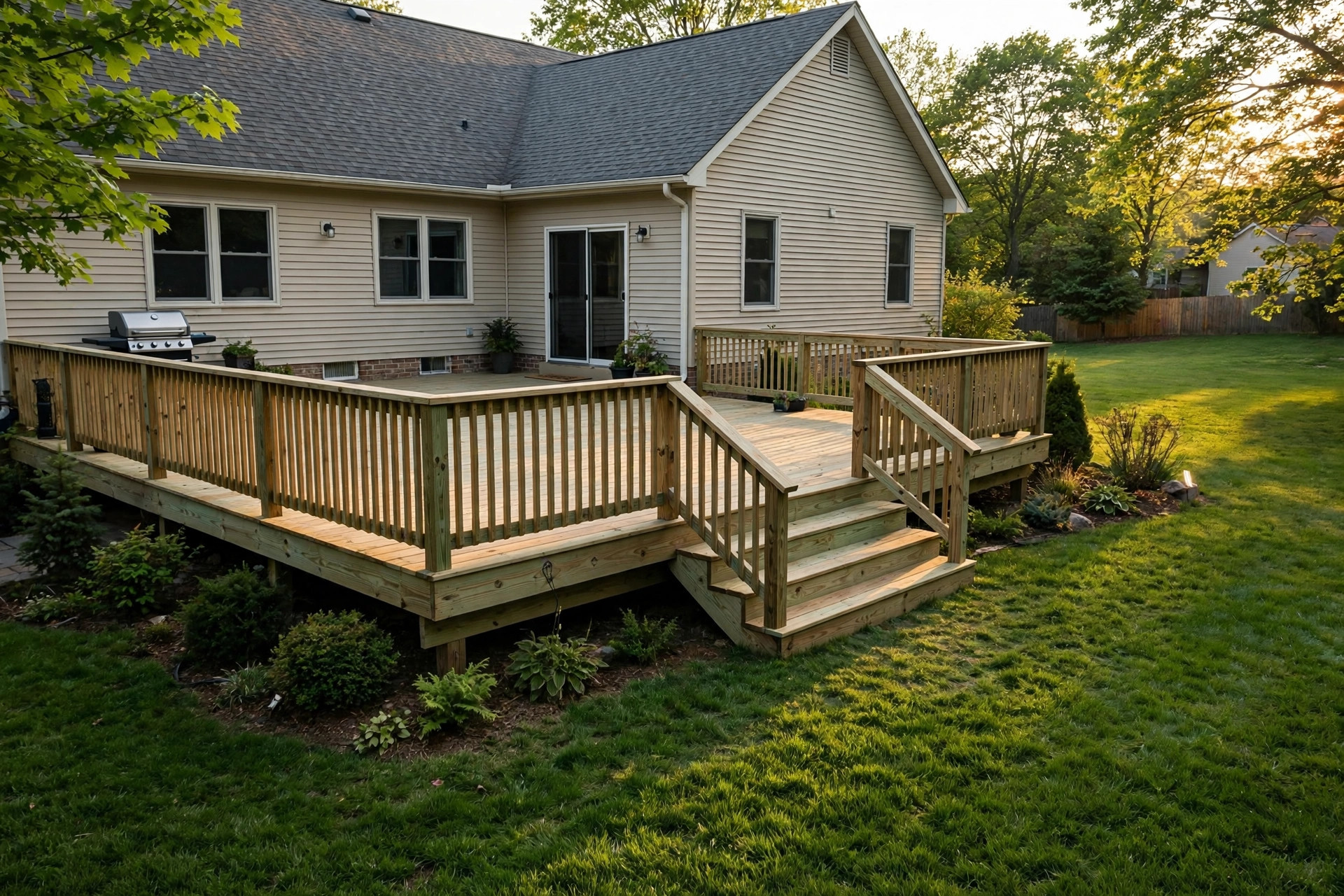

A new deck can change the way a family uses its back yard. It gives a place to eat, to rest, and to gather with friends. But most homeowners do not build decks themselves. They hire a pro. This deck building contractors cost guide USA is written for those homeowners. It explains what contractors charge, what shapes the final bill, and how to choose a builder with care. The numbers here are honest averages for the American market. Your town may run higher or lower, but the pattern will hold.
Why a Good Contractor Matters
A deck looks simple, yet it is a small piece of engineering. The posts must sit on proper footings. The frame must carry the weight of people, grills, and snow. The railings must hold when someone leans on them. A deck that fails can injure people badly. In some cases, it can collapse.
A good contractor knows the local building code. He pulls the permit. He sets the posts below the frost line. He uses the right fasteners in the right places. He spaces the joists the way the wood or composite maker requires. A poor contractor skips these steps. The work may look fine on the day he leaves. The trouble shows up a year or two later, in a soft rail, a sagging step, or a cracked ledger.
There is also the question of insurance. If a worker is hurt on your property, you want the builder to carry his own coverage. If the deck fails and damages your house, you want a written warranty. These are the things a solid contractor gives you without argument. They are worth more than a low bid.
How to Choose a Deck Building Contractor: Deck Building Contractors Cost Guide Usa
Take this part slow. The cheapest quote is rarely the best one. The most expensive is not always worth it either. Here is a plain method that works.
Check the License and Insurance
Ask for the contractor license number. Check it with your state or county. Ask for proof of general liability insurance and workers compensation. A true professional shows these papers without delay. If a builder gets upset by the question, move on.
Look at Past Work
Ask for the addresses of three decks built in the last two years. Drive by them. Look at the lines and joints. Look at the railings and steps. Ask the owners if the builder kept his schedule and his price. People are usually glad to talk about a job well done, and they are honest about a bad one.
Get Three Written Bids
Invite three contractors to walk the yard. Give each one the same plan: the same size, the same material, the same stairs and rails. Ask each for a written bid that lists the materials, the labor, the permit fee, and the clean-up. When the three bids arrive, you can compare them line by line. You will see at once who is guessing and who has done the math. This step is also how you learn what a fair local price is, which matters when you read any best deck building contractors near me list with a careful eye.
Watch for Red Flags
Be wary of a builder who asks for the full payment up front. A fair down payment is one third or less. Be wary of bids far below the others. The money comes out of the work somewhere. Be wary of a contractor with no written contract. A handshake is not enough for a project worth thousands of dollars.
Types of Decks and the Materials Contractors Use
Contractors in the United States build decks from a few main materials. The choice shapes the price, the look, and the upkeep.
Pressure treated lumber. This is the most common decking in the country. Pine boards are forced full of preservative so they resist rot and insects. They cost less than other options and look warm and natural. They need a stain or sealer every two or three years. Learn more about pricing in this pressure treated lumber decking price comparison usa guide.
Cedar and redwood. These woods resist decay on their own. They are lighter in color and smell pleasant when cut. They cost more than pressure treated pine but less than composite. They also need regular sealing, though they age to a silver gray if left alone.
Composite decking. Composite boards mix wood fiber with plastic. They cost the most up front, but they need almost no upkeep beyond washing. They do not splinter, and they keep their color for years. Many homeowners with busy lives choose composite for that reason.
PVC decking. PVC boards are all plastic. They are light, strong, and fully free of wood. They work well in damp climates. They run close to composite in price.
Most contractors also offer aluminum or steel railings, which cost more than wood railings but last longer. Skirting, stairs, lighting, and built-in benches all add to the bill.
What Deck Building Contractors Charge in the USA
Now the heart of this guide: the money. Prices vary by region, by material, and by the size of the deck. The ranges below cover most American markets.
Average Total Cost
A typical 12-by-16 foot deck, about 190 square feet, runs from 8,000 to 18,000 dollars when built with pressure treated lumber. The same deck in composite runs from 15,000 to 30,000 dollars. A small simple platform deck can cost as little as 4,000 dollars. A large multi-level deck with stairs, rails, and lighting can pass 40,000 dollars.
Cost per Square Foot
Contractors often quote by the square foot. Expect 35 to 60 dollars per square foot for pressure treated wood, installed. Composite decks run 60 to 100 dollars per square foot, installed. Labor alone is usually 15 to 35 dollars per square foot. The rest is lumber, hardware, and permits.
What Changes the Price
Several things push the price up or down:
* Size and height. Bigger decks cost more. Decks high off the ground cost more too, because they need more framing and taller railings. * Stairs and landings. Each stairway adds hundreds of dollars in lumber and labor. * Railings. A long run of railing with metal balusters can add thousands to the total. * Footings. Deep footings in cold states cost more than shallow ones in warm states. * Demolition. Tearing out an old deck adds 500 to 2,000 dollars. * Permits. A building permit costs 150 to 500 dollars in most towns.
When Quotes Seem High
If you want a premium finish or a complex design, compare notes with premium deck building contractors near me listings and ask those builders what drives their prices. You will often find that the extra money goes to heavier framing, hidden fasteners, and wider boards. Whether that is worth it is a fair question to ask yourself.
Care and Upkeep After the Build
A new deck will last 20 years or more with simple care. Here is a short routine.
Sweep the deck each week during the seasons you use it. Leaves and dirt hold water against the boards, and standing water shortens the life of wood. Wash the deck once a year with a garden hose and a deck cleaner. A pressure washer is fine if you keep the pressure low and hold the wand well back. Too much pressure chews up the wood fiber.
Re-stain or re-seal pressure treated and cedar decks every two to three years. Test by sprinkling water on the boards. If the water beads up, the sealer still works. If it soaks in, it is time to recoat. Composite and PVC decks need no sealer, but wash them twice a year to keep mold away.
Check the fasteners each spring. Tighten any loose screws. Look at the ledger board where the deck meets the house. This joint carries the whole deck, and it must stay solid. Look under the deck for soft or cracked posts. Fix small problems early, before they grow.
Safety Around Decks
Decks deserve the same respect as any part of the house. Keep grills and fire pits at least three feet from the railings and the house wall. Never use a charcoal grill under a covered roof. Make sure stair railings are tight and handrails run the full length of the stairs.
If your deck is high off the ground, keep the space under it clear for children and pets. Check that balusters are spaced no more than four inches apart, so a small child cannot slip through. The U.S. Consumer Product Safety Commission offers free home safety information that every homeowner should read.
Frequently Asked Questions
How long does it take a contractor to build a deck? A standard 12-by-16 foot deck takes one to two weeks of steady work. Rain, permit delays, and complex designs can stretch that to three weeks. Ask your contractor for a written schedule before he starts.
Do I need a permit to build a deck? In most American towns, yes. Any deck over 30 inches above the ground, or any deck attached to the house, needs a building permit and an inspection. A good contractor handles the permit for you. Do not skip it. Unpermitted work can cause trouble when you sell the house.
Should I build the deck myself or hire a contractor? If you are skilled with tools and the deck is low and simple, doing it yourself can save half the cost. If the deck is high, attached to the house, or larger than 200 square feet, hire a professional. The Family Handyman site has honest guides that help you judge your own skill level before you decide.
What is the cheapest deck material? Pressure treated lumber is the cheapest by a wide margin. It costs about half of what composite costs. It needs more care over the years, but the low up front price makes it the choice for most American back yards. Retailers like The Home Depot and Lowe’s stock it in every size you will need.
How long will my new deck last? A pressure treated deck lasts 15 to 20 years with regular sealing. Cedar lasts about the same. Composite and PVC decks last 25 to 30 years or more. The frame often outlasts the surface boards, so some homeowners re-deck an old frame and save money.
Can a contractor build a deck in winter? Yes, in most states. Cold weather does not harm wood or composite work. The hard part is digging footings in frozen ground. Contractors in cold states plan for this, and some even prefer winter work because schedules are open. Ask for a winter discount if you are flexible.
A Final Word
A deck is one of the few home projects that pays you back twice. You enjoy it every day, and it adds value when you sell. The key is to hire well. Get three written bids. Check the license and insurance. Choose a material that fits your budget and your patience for upkeep. The Spruce home section and Bob Vila offer solid reading if you want to learn more before you call a builder. For siding and other exterior work around the same project, makers like James Hardie and CertainTeed publish useful product guides. And if you want step by step building wisdom, This Old House remains a steady teacher. When product reviews matter to your choice of materials, Consumer Reports tests decking the way it tests everything else: without fear.
References
Bob Vila. (n.d.). Home improvement advice. https://www.bobvila.com CertainTeed. (n.d.). Building materials and exterior products. https://www.certainteed.com Consumer Reports. (n.d.). Product reviews and ratings. https://www.consumerreports.org Family Handyman. (n.d.). DIY home repair and maintenance. https://www.familyhandyman.com James Hardie. (n.d.). Fiber cement siding and exterior products. https://www.jameshardie.com Lowe’s. (n.d.). Home improvement products. https://www.lowes.com The Home Depot. (n.d.). Home improvement products. https://www.homedepot.com The Spruce. (n.d.). Home and garden advice. https://www.thespruce.com This Old House. (n.d.). Home renovation guidance. https://www.thisoldhouse.com U.S. Consumer Product Safety Commission. (n.d.). Product safety information. https://www.cpsc.gov
Was this guide helpful?

About David Wilson
The My Garden US editorial team writes practical, in-depth home and garden guides for American homeowners — tested advice, no fluff.
You May Also Like

Best Home Exterior Design Services Near Me: A Plain Guide to a Better-Looking House
June 7, 2026 0 views
Premium House Number Plaques With Free Shipping: A Complete Guide
July 19, 2026 0 views
Paver Walkway Installation Cost Guide for USA Homeowners
February 12, 2026 0 views