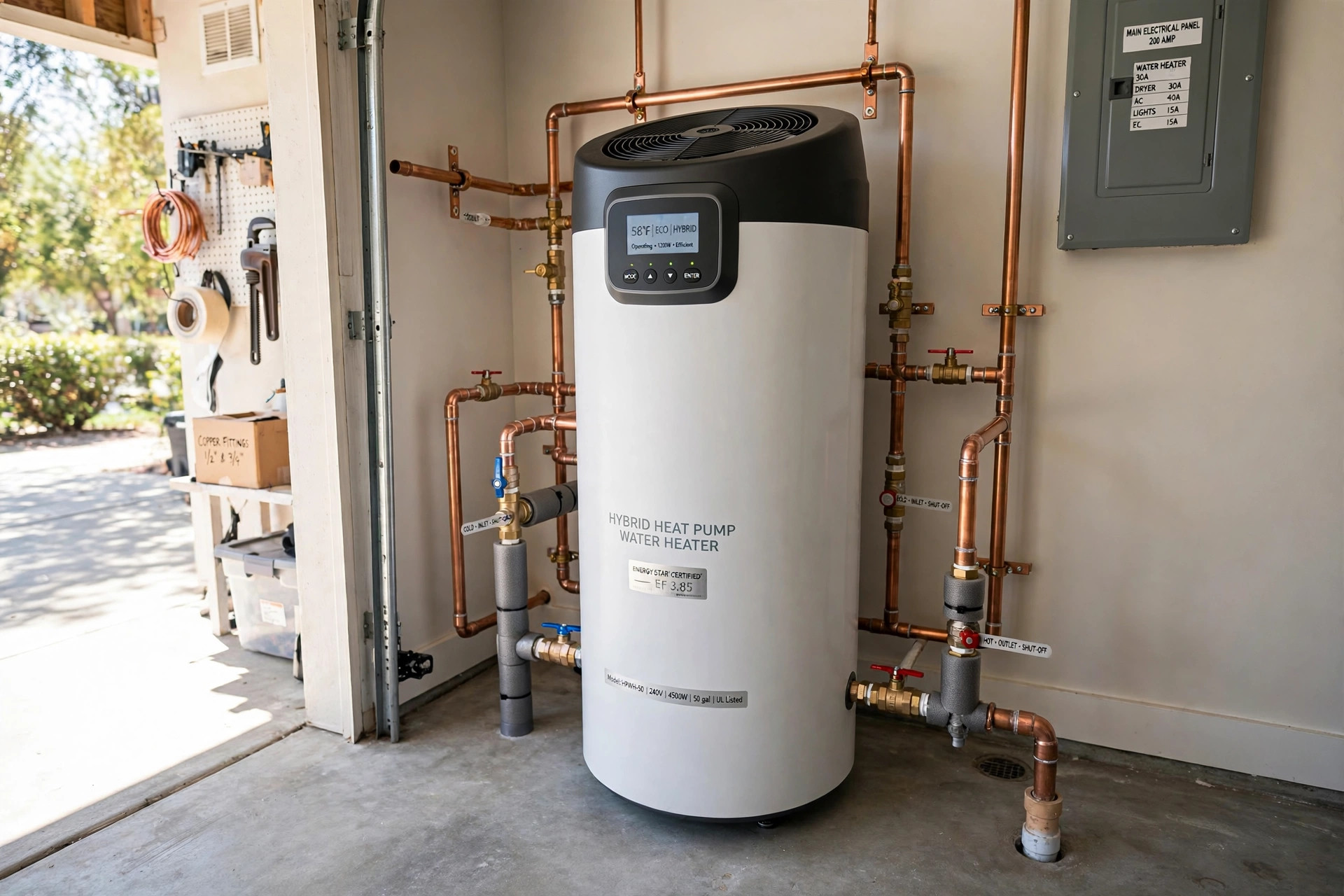

A heat pump water heater vs gas cost usa comparison is one of the first steps many homeowners take before they replace an old tank. Hot water is the second largest energy user in most American homes. The choice you make today will affect your monthly bills for the next ten to fifteen years. This guide lays out the two options.
You will learn how each system works. You will see the price to buy and install each one. You will see the cost to run each one month by month. You will also see how long each system lasts and how much care it needs. By the end, you will have a clear picture of which choice fits your home and your budget.
Both systems heat water well, but they do it in very different ways, and those ways lead to very different costs. A heat pump water heater moves heat from the air into the water. A gas water heater burns natural gas or propane to make heat. This basic difference shapes the price, the monthly bills, the safety notes, and the upkeep. The next sections walk through each point so you can compare them side by side.
Why This Comparison Matters
A water heater runs every day of the year. It keeps water hot for showers, for the washing machine, and for the kitchen. The U.S. Department of Energy notes that water heating is a large part of the average home energy bill. When you cut this cost, you save money every month without doing anything different in your daily life.
A heat pump water heater vs gas cost usa review also matters because energy prices move over time. Gas prices can rise fast. Electric rates can rise too, but they tend to move in smaller steps. The system you pick locks in your exposure to one of these price paths for the life of the tank.
The third reason is the rebate money now on offer. Many states and power companies give rebates for ENERGY STAR certified heat pump water heaters. These rebates can cut the upfront price by hundreds of dollars. Gas models rarely get such rebates. If you skip this comparison, you may miss money that is waiting for you.
How Each System Heats Water: Heat Pump Water Heater vs Gas Cost Usa
To compare costs in a fair way, it helps to know how each machine works.
Heat Pump Water Heater
A heat pump water heater works like a refrigerator in reverse. A fan pulls warm air from the room into the unit. A refrigerant cycle captures heat from that air and moves it into the water tank. No heat is made from fuel; heat is only moved. Because of this, the unit uses far less electric power than a normal electric water heater.
Most models are hybrids. They have electric backup elements that switch on when hot water demand is very high. The heat pump does most of the work on normal days. You can read Trane’s guides to heat pump efficiency to see why moving heat uses less energy than making heat.
One side effect is that the unit blows cool, dry air into the room. In a warm basement or garage, this is a free bonus in summer. In a cold utility closet in winter, the space gets cooler, and the unit has to work a bit harder.
Gas Water Heater
A gas water heater burns natural gas or propane under or around a tank. A flame heats the tank wall, and the wall heats the water. A flue or vent carries the exhaust gases out of the house. Tankless models work the same way, but they heat the water as it flows through a pipe instead of storing it.
Gas burners heat water fast. A tank can recover in less than an hour after a heavy draw. But the flame loses heat up the flue even when the burner is off. This standby loss is one reason gas tanks cost more to run than their label efficiency suggests. Manufacturers such as Carrier publish efficiency data that shows these standby losses in plain numbers.
What to Look For When You Compare
Start with the energy factor or the newer uniform energy factor rating. This number tells you how much of the fuel becomes hot water. A heat pump model often has a rating near 3.0 to 4.0 because it moves heat instead of making it. A standard gas tank is often near 0.60 to 0.70. Higher is better.
Next, look at the first hour rating. This tells you how many gallons of hot water the unit can supply in one busy hour. A family of four that runs showers and a dishwasher needs a bigger rating than a couple in a small home. Size the tank to your real use, not to the sale price.
Check the noise level. A heat pump water heater has a compressor and a fan. It makes about as much noise as a small window air conditioner. Do not put it next to a bedroom wall. You can find noise and placement notes in practical guidance from Family Handyman.
Finally, check the warranty and the parts support. Major equipment makers like Goodman and makers like Rheem back their tanks with multi-year warranties. A long warranty is a sign that the maker trusts the design.
Types and Options
Both camps offer several models. The right one depends on your fuel supply, your space, and your budget.
Hybrid Heat Pump Models
The hybrid is the most common heat pump water heater in the USA. It pairs a heat pump with electric backup elements. It has modes for efficiency, hybrid, and high demand. Many models add a vacation mode that saves energy while you are away. A 50-gallon hybrid suits most families of three to five. Lennox explains heat pump sizing for homes in plain language if you want a second source on sizing rules.
Tank Gas Models
The classic gas tank comes in 30, 40, and 50 gallon sizes. A 40-gallon gas tank suits a family of three. Power vent models can vent through a side wall instead of a chimney. Direct vent models draw outside air for the flame, which helps in tight houses. These tanks cost the least to buy, but they cost the most to run over time.
Tankless Gas Models
Tankless gas units hang on a wall and heat water on demand. They save floor space and never run out of hot water. But they cost more to buy and install. They may need a larger gas line. They also need regular flushing to fight mineral scale. In hard water areas, this yearly flush is not optional.
Before you pick a fuel, look at your whole home. A portable AC vs window AC comparison can cut your summer electric load. Corn stove reviews for home heating show other ways families lower heating bills. A blown-in vs batt insulation cost comparison may save more per dollar than any new water heater. Sealing the home first makes every system choice cheaper.
Cost and Price
This is the heart of the heat pump water heater vs gas cost usa question. There are three costs to weigh: the upfront cost, the monthly running cost, and the lifetime cost.
Upfront Purchase and Installation
A heat pump water heater tank costs more to buy than a gas tank. Typical store prices in the USA run from about $1,400 to $2,500 for a 50-gallon hybrid model. A standard 40 or 50-gallon gas tank often costs $600 to $1,200 for the unit alone.
Installation flips the picture in part. A heat pump unit needs a 240-volt circuit, a condensate drain, and enough air space. If your panel is full or far away, the electric work can add $300 to $800. A gas tank may need vent work or a gas line extension, which can add similar costs. Advice from This Old House walks through what a typical water heater swap costs in labor.
Rebates change the math a lot. Federal tax credits, state programs, and utility rebates for heat pump water heaters can total $500 to $2,000 or more in some areas. Gas tanks get little of this support. Always check local rebates before you sign a quote.
Monthly Operating Cost
Here the heat pump water heater savings are clear. A heat pump water heater uses about one third of the electric power of a normal electric tank. For a family of four, the yearly running cost often lands between $120 and $250, depending on local electric rates and hot water use.
A gas tank costs more to run. Yearly fuel cost often lands between $250 and $450 for a family of four, depending on gas prices in your state. In areas with high gas prices, the gap is even wider. Tankless gas models run a bit cheaper than tanks, but they still burn fuel every time you draw water.
In short, the heat pump unit usually costs $100 to $250 less per year to run than a gas tank. Over a ten-year life, that adds up to $1,000 to $2,500 in savings.
Payback and Lifetime Cost
Payback is the time it takes for the monthly savings to repay the higher upfront price. A common case looks like this. The hybrid costs $1,000 more to buy after rebates are counted. It saves $180 a year on bills. The payback is about five to six years. The tank lasts ten to fifteen years, so you earn a clear profit for the rest of its life.
Lifetime cost is the fairest number of all. Add the upfront price, ten to fifteen years of energy, and one or two service visits. The heat pump model often wins by $1,500 to $3,000 over a full life. Gas prices would have to fall a long way to change this result. If your gas bill is very low today, run the numbers for your own rates before you decide.
Care and Upkeep
A heat pump water heater needs the same basic care as any tank: flush the tank once a year, check the anode rod every few years, and keep the air filter clean. The air filter is a new habit. Dust on the filter makes the fan work harder and slows the heat pump. A quick rinse every three months keeps it clean.
Gas tanks need yearly checks of the burner, the vent, and the gas connections. Look for a steady blue flame. Yellow or lazy flames mean it is time to call a service tech. Tankless gas units need a yearly flush with vinegar solution to remove scale, or the flow rate will fall.
Both types last ten to fifteen years with good care. Heat pump models have more parts, but they also have backup elements for busy days. Gas models have fewer parts, but the burner faces more heat stress. A good warranty and a trusted installer matter for both.
Safety
Gas water heaters burn fuel inside your home. This brings three risks: carbon monoxide from bad venting, gas leaks from loose fittings, and fire from the open flame. Keep a carbon monoxide detector near the unit and store no paint or cleaners near the burner. Let a licensed tech handle gas line work.
Heat pump water heaters carry none of these risks because they burn no fuel. They do need proper wiring and a working pressure relief valve like any tank. They also need a drain for condensate. A blocked drain can spill water on the floor, so check the drain line once a year.
Frequently Asked Questions
Which costs less to run, a heat pump water heater or a gas water heater?
In most of the USA, the heat pump water heater costs less to run. It uses about one third of the power of a normal electric tank. A gas tank burns fuel each time it reheats water, and heat escapes up the flue. Most families save $100 to $250 a year with the heat pump model.
How long until a heat pump water heater pays for itself?
The usual payback is four to seven years. Lower monthly bills repay the higher upfront price. Strong local rebates can cut the payback to about three years.
Does a heat pump water heater work in a cold garage?
It works, but it runs less efficiently in cold air. Most models need air above about 40 degrees Fahrenheit to work well. In very cold spaces, the backup electric elements take over. A basement, a warm garage, or a utility room is the best spot.
Can I replace my gas water heater with a heat pump model myself?
The swap is a job for a licensed pro in most cases. You need a 240-volt circuit, a condensate drain, and safe handling of the old tank. Gas line capping also needs a pro. A poor install can void the warranty.
Will a heat pump water heater cool my house in winter?
It blows a little cool air while it runs. In a large basement, you may not notice it. In a small closet, the air gets cooler, which lowers efficiency a bit. Plan for good air space around the unit and you will avoid most of this effect.
Are there rebates for heat pump water heaters in the USA?
Yes. Federal tax credits, state programs, and many power companies offer rebates. The amounts change often, so check current offers in your area before you buy. The ENERGY STAR rebate finder is a good place to start.
Final Word
The heat pump water heater vs gas cost usa answer is clear for most homes. The heat pump unit costs more at the store and less every month after. Rebates narrow the upfront gap. Over a full tank life, the heat pump model usually saves $1,500 to $3,000. Gas still fits homes with very cheap gas, tight spaces, or no easy path for a 240-volt line.
References
Carrier. (n.d.). Heating and cooling systems. https://www.carrier.com ENERGY STAR. (n.d.). Energy efficient products. https://www.energystar.gov Family Handyman. (n.d.). DIY home repair and maintenance. https://www.familyhandyman.com Goodman. (n.d.). Heating and cooling equipment. https://www.goodmanmfg.com Lennox. (n.d.). Heating and cooling systems. https://www.lennox.com Rheem. (n.d.). Heating, cooling, and water heating. https://www.rheem.com This Old House. (n.d.). Home renovation guidance. https://www.thisoldhouse.com Trane. (n.d.). Heating and air conditioning. https://www.trane.com U.S. Department of Energy. (n.d.). Energy efficiency and renewable energy. https://www.energy.gov
Was this guide helpful?

About Michael Thompson
The My Garden US editorial team writes practical, in-depth home and garden guides for American homeowners — tested advice, no fluff.
You May Also Like

Pellet Stove Installation Cost Near Me: A Plain Guide for 2026
April 8, 2026 0 views
Best Oil Furnace Reviews for Northeast USA: What to Know Before You Buy
January 18, 2026 0 views
The Best Boiler for Radiant Floor Heat in the USA: A Plain Guide
July 23, 2026 0 views