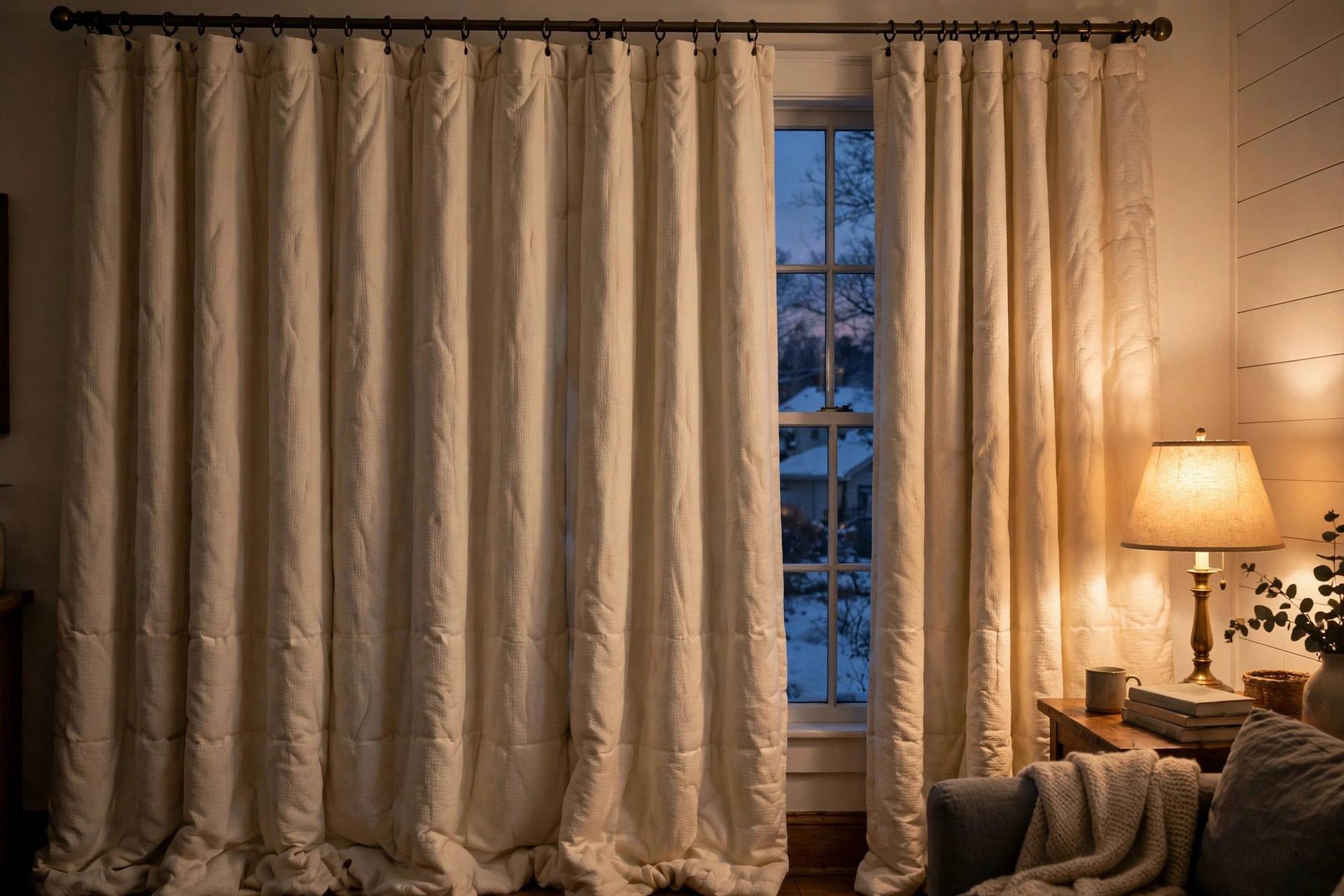
Winter drafts come through windows before they come through walls. Glass is thin. A single pane lets heat escape fast. Even double panes leak some warmth. The best thermal curtains for winter reviews USA show one clear fact. Heavy insulated curtains can cut that loss. They are cheap. They hang in minutes. They make a cold room feel warm again. This guide gives plain facts. It covers how they work, what to buy, what they cost, and how to care for them. Every claim is plain and original. No sales talk. Just honest help.
Why Thermal Curtains Matter in Winter
Windows are the weak point of a house. Walls hold heat. Roofs hold heat. Glass gives it away. On a cold night the air near a window sinks. Cold glass pulls warmth from the room. The result is a draft. You feel it on your neck. You turn the thermostat up. The furnace runs longer. The bill climbs.
Insulating window treatments are one of the simplest ways to cut this loss. Government guidance notes that windows can be a major source of heat loss in a home. Energy.gov offers plain advice on how window coverings reduce that loss. ENERGY STAR also lists ways to seal a home and lower heating bills. Curtains are not as strong as new windows. But they cost a fraction of the price.
Reviews from buyers across the United States agree on the main benefit. Rooms feel warmer. Cold spots near windows fade. The furnace cycles less. Savings vary. A room with large or leaky windows gains the most. A well-sealed new home gains less. Still, almost no buyer reports regret. The curtains pay for themselves in comfort alone.
Thermal curtains also help in other ways. They block noise from the street. They darken a bedroom for sleep. They give privacy at night. One purchase serves four needs. That is why they appear in so many winter reviews.
How Thermal Curtains Work: Best Thermal Curtains for Winter Reviews Usa
A thermal curtain is a thick curtain with layers. The outer layer is the face fabric. Behind it sits a lining. The lining may be foam, felt, or a reflective sheet. Some curtains have three layers. The layers trap air. Trapped air slows heat flow. That is the whole trick. It is the same reason a down coat works.
Fit matters as much as fabric. A curtain that sits tight to the wall stops cold air from sliding behind it. Cold air sinks. It falls off the glass and creeps into the room. A tight curtain blocks that path. The warm air stays in front. The cold air stays behind.
Length matters too. A curtain that reaches the floor holds back more cold air than one that stops at the sill. For the best result, hang the rod close to the ceiling. Let the fabric reach the floor. Add a few extra inches of width on each side of the window. Wide curtains cover the frame. That stops leaks at the edges.
What to Look For
Buyers in winter reviews praise a few traits again and again. Weight comes first. A heavy curtain feels thick in the hand. It drapes straight. It blocks light at the edges. Light curtains let heat pass. Choose the heaviest fabric you can manage.
Lining comes second. Look for foam backing or a thick thermal lining. Some linings reflect heat back into the room. Others simply add bulk. Both help. Avoid curtains that claim to be thermal but feel like thin bed sheets. The label means nothing without the weight.
Fit and size come third. Measure the window before you shop. Write the numbers down. Buy panels wider than the frame. Buy panels long enough to reach the floor. A rod that sits close to the wall gives the best seal.
Color and style come last for warmth, but first for the home. Dark colors block more light. Light colors show less dust. Choose what suits the room. The warmth works either way.
How to Choose
Start with the worst windows. The big living room window. The drafty bedroom window. The sliding glass door. These leak the most heat. Cover them first. Then move to the rest of the house if the budget allows.
Decide how you will hang them. A wrap-around rod is best. It bends back to the wall at the ends. That seals the sides. A simple straight rod works too. Push the curtains as close to the wall as they will go.
Think about day and night. Thermal curtains work best when closed. At night, close them all. On a sunny winter day, open south-facing curtains. The sun warms the room for free. Close them again when the sun sets. This habit adds real savings.
Types of Thermal Curtains
Shops sell several kinds. Each suits a different need.
Foam-backed thermal curtains. These have a layer of white foam on the back. The foam is soft. It adds bulk. These are the most common type in American reviews. They are cheap. They work well. The foam can crack with age. Gentle washing extends its life.
Three-layer thermal curtains. These sandwich a middle layer between two fabric layers. The middle may be felt, flannel, or batting. They are heavier than foam-backed types. They block more cold. They also cost more. Buyers rate them high for very cold climates.
Reflective thermal curtains. These have a shiny backing. The shiny layer bounces heat back into the room. They suit people who want a slim curtain. They do not look heavy. They still cut drafts. They can feel stiff to the touch.
Blackout thermal curtains. These combine light blocking with insulation. They suit bedrooms. They keep a room dark and warm. Many parents buy them for nurseries. Many shift workers buy them for daytime sleep.
Window insulation film kits are a related option. They are not curtains. They are clear plastic sheets taped over the glass. They add a still air layer. Some buyers use film and curtains together. The pair blocks more cold than either alone. See our guide to window insulation film kit reviews usa for details.
Cost and Price
Thermal curtains cost less than almost any other heating fix. A standard panel sells for about twenty to sixty dollars. A pair for one window runs forty to one hundred twenty dollars. Large panels and long lengths cost more. Premium brands charge more still.
Compare that with the cost of new windows. A single new window can cost hundreds of dollars. Whole-house window replacement runs into the thousands. Curtains cost a small fraction. That is why reviews call them the best value in winter proofing.
Heating savings are hard to measure exactly. They depend on the home, the climate, and the habit of closing the curtains. A room with old single-pane windows saves the most. Homeowners in the cold north report the biggest drops in drafts. Homeowners in mild states report less. But comfort gains are certain everywhere.
The price of heat keeps rising. Furnace makers track this trend closely. Carrier and Trane both publish guidance on lowering heating costs. Smaller makers like Lennox and Goodman do the same. Rheem also advises homeowners on efficient heating. Every source agrees on one point. Sealing heat leaks is the cheapest way to cut a bill. Curtains are part of that plan.
Shop around before you buy. Big stores run winter sales. Online sellers cut prices in the fall. Buy early. Stocks run thin in deep winter. Measure first so you order the right size the first time. Returns waste time and shipping money.
Care and Upkeep
Thermal curtains need little care. Dust them once a month. A vacuum with a soft brush works. Hold the fabric steady as you go. Foam-backed curtains tear if pulled hard.
Wash them only when needed. Read the label first. Many thermal curtains wash on a gentle cycle. Use cold water. Use mild soap. Skip the bleach. Hang them to dry. Heat from a dryer can crack the foam backing.
Iron with care. Foam backing melts under a hot iron. Use a low setting. Iron from the front side only. Better yet, steam out the wrinkles. A handheld steamer does the job fast.
Check the lining each fall. Hold the curtain to the light. Thin spots mean wear. Foam that crumbles means age. Replace panels when the lining fails. New lining restores full warmth.
Rehang rods firmly. Heavy curtains pull on rods. Check the brackets once a year. Tighten loose screws. A sagging rod leaves a gap at the top. That gap lets cold air in. Fix it before winter comes.
Pair curtains with other small fixes for the best result. Seal gaps around doors too. Weatherstripping for doors stops drafts at the frame. Insulate the garage if it shares a wall with the house. Garage insulation kits for metal doors help there. Small fixes add up to a warm home.
Safety
Thermal curtains are safe when used with sense. Keep them away from heat sources. Do not let fabric touch a space heater. Keep curtains clear of a fireplace. Heavy fabric near heat is a fire risk.
Check the label for fire ratings if the room has a heater nearby. Some fabrics resist flame better than others. Nothing beats distance. Keep at least three feet between a curtain and any heater.
Hang rods and brackets firmly. Heavy curtains can pull a weak rod down. A falling rod can strike a child or a pet. Use wall anchors in drywall. Find a stud when you can. Test the hold by tugging the rod before you hang the full weight.
Choose cordless tops when children or pets live in the home. Long cords pose a strangling risk. Grommet tops and tab tops need no cords. They look clean. They are safer. Many brands now sell only cordless styles.
Frequently Asked Questions
Do thermal curtains really keep a room warmer?
Yes. They slow heat loss through glass. Rooms feel warmer. Drafts fade. The gain is largest on old or single-pane windows. They do not replace insulation in walls. They are one layer of defense.
What is the best fabric for thermal curtains?
Heavy, tightly woven fabrics work best. Look for thick polyester, velvet, or triple-weave cloth. The lining matters more than the face fabric. A good foam or felt lining beats a pretty but thin face.
Should thermal curtains touch the floor?
Yes, or come close. Floor-length curtains trap cold air behind them. Short curtains let cold air spill out at the bottom. A gap of an inch or two is fine. Puddling fabric collects dust, so keep the hem just at or above the floor.
Can I use thermal curtains in summer?
Yes. They block heat from entering too. Closed curtains keep a room cooler on a hot day. The same trapped-air layers slow heat in both directions. Many buyers use them year-round for this reason.
How many panels do I need per window?
Most windows need two panels. The combined width should be one and a half to two times the window width. This gives full coverage when closed. Wide coverage seals the edges. One panel can serve a narrow window.
Are expensive thermal curtains worth it?
Not always. Price and warmth do not match perfectly. Mid-range curtains with thick lining often beat costly designer ones. Read reviews. Feel the weight if you shop in a store. Trust thickness over brand names.
Final Word
The best thermal curtains for winter reviews USA point to one lesson. Small changes beat big spending. A few heavy panels over drafty windows can change how a home feels in January. The cost is modest. The work takes an hour. The payoff lasts for years. Measure the windows. Buy thick panels. Hang them tight. Close them at night. Open them to the winter sun. Home repair experts at This Old House have long advised this simple habit. Family Handyman offers the same plain advice for cold climates. Pair the curtains with sealed doors and tuned heating, and the whole house stays warm for less. Winter is long. Warmth is worth it.
References
Carrier. (n.d.). Heating and cooling systems. https://www.carrier.com ENERGY STAR. (n.d.). Energy efficient products. https://www.energystar.gov Family Handyman. (n.d.). DIY home repair and maintenance. https://www.familyhandyman.com Goodman. (n.d.). Heating and cooling equipment. https://www.goodmanmfg.com Lennox. (n.d.). Heating and cooling systems. https://www.lennox.com Rheem. (n.d.). Heating, cooling, and water heating. https://www.rheem.com This Old House. (n.d.). Home renovation guidance. https://www.thisoldhouse.com Trane. (n.d.). Heating and air conditioning. https://www.trane.com U.S. Department of Energy. (n.d.). Energy efficiency and renewable energy. https://www.energy.gov
Was this guide helpful?

About Emily Rodriguez
The My Garden US editorial team writes practical, in-depth home and garden guides for American homeowners — tested advice, no fluff.