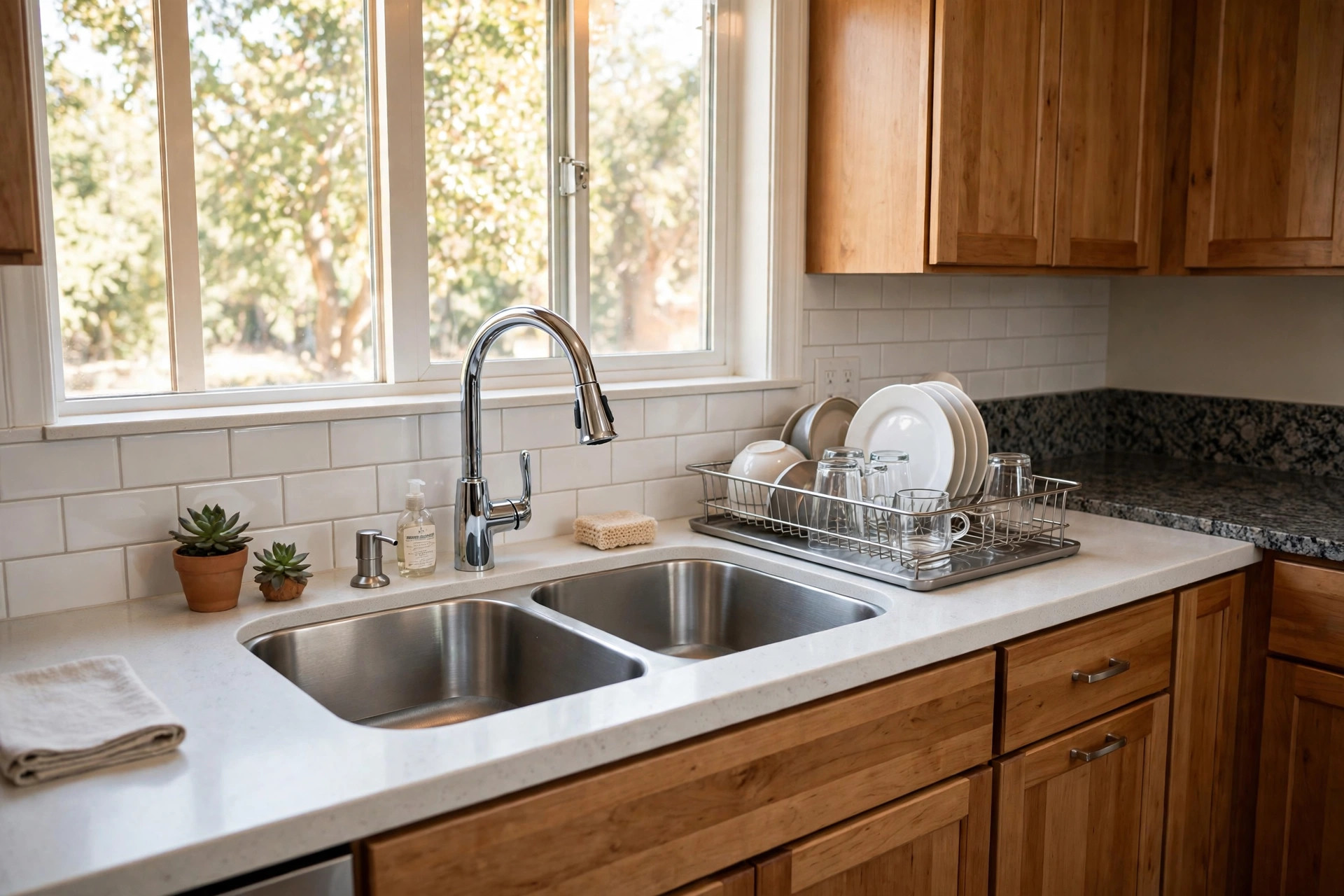

Every week, thousands of Americans type “undermount stainless sinks deals near me” into a search box. They want a new sink, a fair price, and no wasted drive across town. The search is simple, but the answer takes some work. Prices change by store, by week, and by region. A model that sells for two hundred dollars in one city may cost three hundred in another. This guide explains what an undermount stainless sink is, what a deal really looks like, where to look near your home, and how to buy with confidence.
An undermount sink is fixed below the countertop, not dropped in from above. The edge of the counter runs clean over the lip of the sink. Crumbs and water sweep straight into the basin with one motion of a cloth. Stainless steel has been the most common sink material in American kitchens for decades. It resists stains, takes hot pots without complaint, and costs less than stone or copper.
Why an Undermount Stainless Sink Matters
The sink is the hardest-working fixture in the kitchen. It sees water, soap, grease, heat, and sharp edges every day. An undermount design removes the rim where the sink meets the counter. On a top-mount sink, that rim traps food and water and needs constant wiping. On an undermount sink, the joint sits below the counter edge, sealed and out of the way.
Stainless steel earns its place for plain reasons. It does not chip like enamel or crack like fireclay, and it costs far less than an integrated stone sink. A well-made stainless sink can serve for twenty years or more. Cheaper models may dent sooner, but even a modest sink will outlast most faucets in the same kitchen.
There is also the matter of looks. An undermount sink gives the counter a smooth line that designers have favored since the 1990s. In a kitchen with granite, quartz, or solid-surface counters, the undermount sink reads as part of the stone, not an appliance bolted on top.
What to Look for When You Shop: Undermount Stainless Sinks Deals near Me
Not all stainless sinks are equal. Three facts matter more than the brand name on the box: the gauge, the grade of steel, and the finish.
Gauge measures the thickness of the steel. The scale runs backward: lower numbers mean thicker metal. A 16-gauge sink is thick and quiet. An 18-gauge sink is the common middle ground. A 20-gauge sink is thinner and cheaper, but it may flex and ring loudly when water hits it. When you compare undermount stainless sinks deals near me, check the gauge first. A low price on a thin sink is no bargain.
The steel grade is usually 304 or 316. Grade 304 is the standard for kitchen sinks in the United States and resists rust under normal use. Grade 316 costs more and is rare in home kitchens. Most shoppers should aim for 304 and move on.
The finish is what you see. A brushed or satin finish hides small scratches and water marks better than a mirror shine. Many sinks also carry a sound-deadening treatment: pads or a coating on the underside that cut noise and reduce condensation.
Check the drain placement. An offset or rear drain leaves more room under the sink for storage. Check the corners: tight square corners look modern but are harder to clean than gently rounded ones. Check what comes in the box. Some deals include a bottom grid, a cutting board, or a strainer that can save forty or sixty dollars. Buying guides from The Spruce often walk through these small details before a purchase.
Types and Options
Undermount stainless sinks come in a few shapes, and each fits a different kitchen.
Single Bowl
One large basin, usually 30 inches wide or more. It holds sheet pans and roasting trays with ease. The drawback is simple: you cannot soak a pan on one side while you rinse vegetables on the other.
Double Bowl
Two basins, sometimes equal and sometimes split into a large bowl and a small one. The split design is popular in American homes and lets two tasks run at once. Each bowl is shallower in practice than a single bowl, so large pans may not fit.
Bar and Prep Sinks
Small round or square sinks for an island or wet bar. They cost less but do not replace the main sink.
When you search undermount stainless sinks deals near me, most local stock will be single-bowl and split-bowl models in 304 stainless. These are the workhorses of the American kitchen, and the deals tend to center on them. Homeowners planning a full remodel sometimes pair the sink with stainless range hoods for a matched look across the cooktop wall.
Where to Find Deals Near You
The phrase “near me” points to local buying, and local buying has real advantages. You can see the sink before you pay. You can check the gauge and finish with your own hands. And you can bring a damaged sink back to a person, not a shipping label.
Start with the large home-center stores. The Home Depot and Lowe’s both carry undermount stainless sinks in stores across the country, and both run weekly price changes on kitchen fixtures. Check their sites for local stock before you drive. Many stores let you buy online and pick up at the counter the same day, which locks in the sale price even if the shelf tag has not caught up.
Next, look at local plumbing supply houses and kitchen-and-bath showrooms. These shops serve contractors and walk-in buyers alike. Their prices may not beat the big stores on the cheapest models, but they often carry mid-range sinks with thicker steel at fair prices, and their staff know the products. Ask about open-box units and floor samples. A showroom sink with a small scratch on the underside may sell for half price, and the scratch will never be seen once it is mounted.
Watch the calendar. Kitchen fixtures go on sale in waves. The weeks around major holidays bring some of the deepest cuts of the year. End-of-model-year clearances, often in late fall, can beat holiday prices on discontinued lines. If you are not in a hurry, sign up for store flyers and wait for the right week. Reviews and price histories on Consumer Reports can tell you whether a “deal” price is truly lower than the usual street price.
Do not forget the makers themselves. Brands such as Whirlpool, Bosch, and GE Appliances sell through wide dealer networks, and factory-authorized dealers sometimes run rebates that stack with store sales. A rebate of fifty dollars can turn a fair price into a real deal.
Online sellers matter too, even in a “near me” search. Many national sites ship a sink to your door in days, and some price-match local stores. But shipping a heavy steel sink is not free, and returns are awkward. A local deal you can carry home in your car has a value that a screen price cannot show.
Cost and Price
Prices for undermount stainless sinks spread wide. Here is what American shoppers can expect in 2026.
A basic single-bowl sink in 20-gauge steel sells for roughly 90 to 150 dollars. These models work, but they are loud and thin. At the low end of the deals near me search, this is what you will find most often.
A mid-range sink in 18-gauge steel, with sound pads and a decent finish, runs about 180 to 350 dollars. This is the sweet spot for most kitchens. The steel holds its shape, the noise is moderate, and the finish ages well. A 280-dollar sink marked down to 199 is a genuine saving.
A premium sink in 16-gauge steel, with full sound insulation and accessories, costs 400 to 800 dollars or more. For a busy family kitchen that will see hard use for decades, the extra cost can be justified.
Installation is a separate cost. If your counters are already cut for an undermount sink, a plumber may charge 150 to 300 dollars to set and connect a new one. If the countertop must be cut or modified, add 200 to 500 dollars. Some shoppers bundle the sink with a quartz countertop installation to get one bid for the whole job. Always get the install price in writing before the sink arrives.
Beware of deals that hide costs. A sink priced twenty dollars below the market is no deal if the store charges eighty dollars for delivery while the shop across town delivers free. Compare the full cost: sink, fittings, delivery, and installation.
Care and Upkeep
Stainless steel is easy to keep, but it is not carefree. A few habits will keep your sink bright for years.
Rinse the sink after heavy use and wipe it dry when you can. Standing water leaves mineral spots, especially in homes with hard water. A soft cloth and a mild dish soap handle most cleaning. For dull areas, a paste of baking soda and water, rubbed with the grain of the brushed finish, restores the shine.
Avoid harsh chemicals. Bleach and strong acids can pit stainless steel if left to sit. Chloride-based cleaners are the most common cause of small rust spots on an otherwise sound sink. If you must disinfect, rinse well afterward. Never leave steel wool pads or wet cast-iron pans sitting in the sink overnight. The iron can leave rust marks on the steel.
Scratches will happen. On a brushed finish, most scratches blend in over time and can be softened with a non-abrasive pad. Deep scratches on a mirror finish are harder to hide, which is another reason most buyers choose brushed.
Check the seal once a year. The caulk or silicone where the sink meets the counter keeps water out of the cabinet. If it pulls away or darkens, cut it out and reapply. Ten minutes of work prevents a swollen cabinet floor. Practical upkeep advice like this appears regularly in the project guides at This Old House and Bob Vila, where plumbers walk through the small jobs that protect a kitchen.
Safety
A sink is a safe fixture, but the work around it deserves care.
Hot water scalds. If your water heater runs above 120 degrees Fahrenheit, turn it down. Scalding is a real risk for children and older adults, and the sink is where most hot-water contact happens. Energy guidance from Energy Star notes that 120 degrees is also the efficient setting for most homes.
Heavy sinks need support. An undermount sink hangs from clips and the counter edge. A large 16-gauge sink full of water weighs a great deal. The mounting must be sound, and the cabinet must be built to carry it. If you are replacing a light sink with a heavy one, have the installer check the support.
Sharp edges are part of kitchen life, but a damaged sink can add new ones. If a sink dents badly or a mounting clip fails, the rim can shift and expose a sharp edge. Fix mounting problems promptly rather than living with them.
For renters, note that swapping a sink usually needs the landlord’s written approval. An undermount change touches the counter and the plumbing, and it is not a reversible afternoon project.
Families upgrading several fixtures at once sometimes add pot filler faucets over the range during the same remodel. If you do, have one plumber handle both jobs so the water lines and shutoffs are planned together.
Frequently Asked Questions
Can an undermount sink go in any countertop?
No. Undermount sinks need a solid, waterproof counter material such as granite, quartz, marble, or solid-surface acrylic. They do not work with standard laminate counters, because the exposed edge of laminate swells when wet. If you have laminate counters and want the undermount look, plan a counter replacement at the same time.
What gauge should I buy?
For most kitchens, 18 gauge is the right balance of price and strength. Choose 16 gauge if the budget allows and the sink will see heavy daily use. Avoid 20 gauge unless the price is very low and the kitchen sees light use, such as a guest-house bar.
Do I need a garbage disposal with a new sink?
Not always. Most standard sinks accept common disposals, but check the drain size before you order. A plumber can confirm the fit in minutes.
How long does installation take?
A straight swap takes two to four hours for a professional. If the countertop needs cutting, add a day for the fabricator. Plan for the kitchen to be without a working sink for the length of the job.
Are cheap stainless sinks safe for food?
Yes, as long as the steel is food-grade 304 and the sink is cleaned normally. Price affects thickness and finish, not food safety.
Where is the best place to catch a local deal?
Check the big home centers weekly, call two or three local plumbing supply houses, and ask about open-box and clearance stock. Stack a store sale with a maker rebate when you can. The best deal is usually found, not advertised: it takes a few phone calls and one trip to see the sink in person.
A Final Word
The search for undermount stainless sinks deals near me is really a search for value close to home. The best deal is not always the lowest price on a screen. It is a solid 18-gauge sink, in the shape your kitchen needs, bought from a seller you can reach if something goes wrong, at a price you checked against two other sources. Take an hour to compare. Look at the gauge, the steel, and the finish. Ask about installation. Then buy with confidence and enjoy a sink that will serve your kitchen for decades.
References
Bob Vila. (n.d.). Home improvement advice. https://www.bobvila.com Bosch. (n.d.). Home appliances. https://www.bosch-home.com Consumer Reports. (n.d.). Product reviews and ratings. https://www.consumerreports.org ENERGY STAR. (n.d.). Energy efficient products. https://www.energystar.gov GE Appliances. (n.d.). Kitchen and home appliances. https://www.geappliances.com Lowe’s. (n.d.). Home improvement products. https://www.lowes.com The Home Depot. (n.d.). Home improvement products. https://www.homedepot.com The Spruce. (n.d.). Home and garden advice. https://www.thespruce.com This Old House. (n.d.). Home renovation guidance. https://www.thisoldhouse.com Whirlpool. (n.d.). Home appliances. https://www.whirlpool.com
Was this guide helpful?

About Jennifer Lee
The My Garden US editorial team writes practical, in-depth home and garden guides for American homeowners — tested advice, no fluff.
You May Also Like

Under Sink Filters: American Homes Guide
March 5, 2026 0 views
Quartz Countertop Installation for Sale USA: A Plain Guide for Homeowners
May 9, 2026 0 views
French Door Refrigerators for Florida Homes: A Buyer Guide
March 8, 2026 0 views