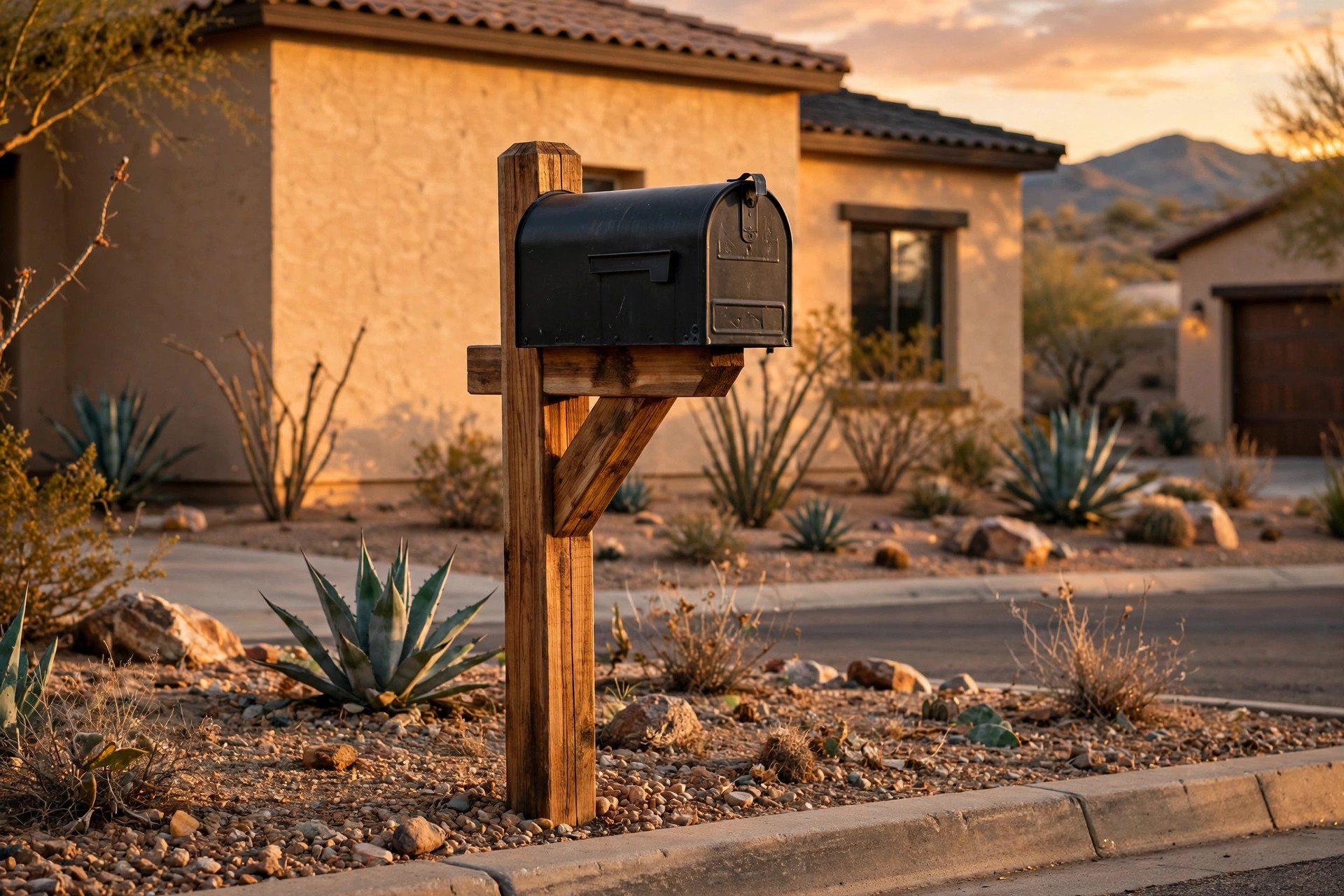

If you live in the state, you may ask where to buy mailbox posts in Arizona. The desert brings heat, strong sun, and dry soil. A post that lasts ten years in a mild state may fail in five years here. This guide tells you which stores to check, what materials to buy, and how to set the post so it stays straight for years.
Why It Matters
A mailbox post does more than hold your mail. It faces the street. Neighbors and drivers see it every day. A leaning or rotted post makes the whole front yard look tired. The United States Postal Service also has rules for mailbox height and position. A new post gives you the chance to get the placement right.
Arizona sun breaks down wood fast. Temperatures pass 110 degrees in the summer. Wood dries, cracks, and warps. Paint peels. In the monsoon season, sudden storms soak the base of the post and then the heat bakes it again. This cycle is hard on soft wood. Good mailbox hardware lasts longer when the post itself is sound.
Many homeowners also wonder about related repairs. Posts and trim work go hand in hand on the front of a house. Our guide on weather resistant soffit and fascia repair for homeowners covers the trim boards that frame the roof line, and many of the same sun rules apply.
Where to Buy Mailbox Posts in Arizona
The short answer to where to buy mailbox posts in Arizona is that you have four main choices: big-box home improvement stores, local lumber yards, online retailers, and farm or ranch supply stores. Each one suits a different buyer.
Big-Box Stores
The Home Depot and Lowe’s carry mailbox posts in nearly every Arizona store. You will find them in the lumber aisle and near the mailboxes display. Choices include pressure-treated pine posts, cedar posts, and metal posts. Big-box stores also sell complete kits that include the post, the arm, and the mounting plate. If you want to see the post in person before you buy, start here. Check the Home Depot or Lowe’s websites for stock at the store near you. Rural stores may carry fewer styles than stores in Phoenix or Tucson.
Prices run from about fifteen dollars for a basic wood post to sixty dollars for a cedar or vinyl-wrapped model. Kits with a mailbox included cost more. Many Arizona homeowners buy the kit because it saves a second trip.
Local Lumber Yards
Local lumber yards are worth a visit. They often stock higher-grade wood than the big-box stores. In Arizona, ask for western red cedar or redwood if it is in stock. These woods handle dry heat better than common pine. The yard staff can also cut the post to the exact height you need. Some yards deliver. Call first to ask what they keep on hand. Local suppliers know the soil. Caliche, the hard desert soil found in many Arizona yards, can make digging hard. Yard staff can tell you which auger or tool works best in your area.
Online Retailers
Online shopping works well if you want a style that local stores do not carry. Sellers on Amazon list wooden, vinyl, and cast aluminum mailbox posts. Some ship free. Vinyl and plastic posts are popular online because they never rot and never need paint. Read the reviews with care. Check the shipping weight. A solid cedar post is heavy, and freight charges can add up.
Farm and Ranch Supply Stores
Stores like Tractor Supply serve rural Arizona. They carry rough-hewn cedar posts and steel posts that suit country properties. If your home sits on a large lot outside town, these stores may be closer than a big-box retailer. Prices are fair, and the posts are tough.
What to Look For
The best mailbox post in Arizona shares a few traits. Look for wood rated for ground contact. The tag on the end of the board should say so. Ground-contact lumber has more preservative pushed into the fibers. This matters because the base of the post sits in the soil.
Cedar and redwood are natural choices. They resist rot without chemical treatment. They cost more up front but last longer in dry heat. Pressure-treated pine is cheaper and widely sold. It works fine if you seal the cut ends with a preservative and keep the post painted.
Metal posts deserve a look. A steel or aluminum post will not rot, crack, or attract termites. Powder-coated models hold their color in the sun. Metal posts cost more than wood, but they can last for decades. Vinyl-wrapped wood posts offer a middle path. The wood core gives strength, and the vinyl sleeve keeps sun and water off the wood.
Check the postal rules before you build. The U.S. Postal Service asks that the bottom of the mailbox sit forty-one to forty-five inches above the road. The post should sit six to eight inches back from the curb. These details are easy to find on the U.S. Postal Service site. Good guidance from This Old House and Bob Vila also walks through curb-side projects step by step.
Types and Options
You can buy just the post, or you can buy a kit. A basic 4×4 wood post is the most common choice. An arm-style post has a horizontal arm that holds the mailbox away from the street. Swing-arm posts let the mailbox swing out of the way if a car clips it. This is a smart feature on narrow streets.
Some homeowners mount two mailboxes on one post. This is common on shared driveways. Make sure the post is sturdy enough. A double box catches more wind in a dust storm.
If you want curb appeal, look at cedar posts with a cap or a decorative bracket. Stain the post rather than painting it. Stain lets the wood breathe and shows the grain. A dark walnut stain looks fine against stucco, the most common home finish in Arizona. For more ideas on dressing up the front of the house, see our piece on professional grade exterior door replacement for homeowners.
Cost and Price
Here is what to expect in 2026. Prices shift by city and season, so treat these as ranges.
– Basic pressure-treated 4×4 post: fifteen to twenty-five dollars – Cedar post: forty to seventy dollars – Vinyl-wrapped post: forty-five to eighty dollars – Steel or aluminum post: sixty to one hundred twenty dollars – Full kit with mailbox: fifty to one hundred fifty dollars – Concrete mix for the footing: eight to twelve dollars per bag
A do-it-yourself job costs little beyond the materials. Hiring a handyman adds fifty to one hundred fifty dollars for labor. Reviews on The Spruce and the Family Handyman site note that most homeowners finish the job in an afternoon.
Where to buy mailbox posts in Arizona also affects price. Big-box stores compete hard and often run sales in the spring. Local yards may match prices if you ask. Online prices look low until you add shipping.
Installation Tips for Arizona Soil
Digging in Arizona can be tough. Caliche soil is nearly as hard as rock. Rent a gas-powered auger for stubborn ground. Dig the hole at least two feet deep. The old rule is one third of the post in the ground. For a six-foot post, bury two feet.
Set the post in concrete. Pour dry mix into the hole, add water, and stir with a stick. Keep the post level while the concrete sets. Leave the concrete a few inches below the soil line and cover it with dirt. This hides the gray ring at the base.
Keep the bottom of a wood post from sitting in water. In the monsoon season, grade the soil so water runs away from the base. Do not pile mulch against the post. Mulch holds moisture and invites termites. Termites are common in Arizona, and a treated post at grade is a target. A metal post base or a concrete footing that lifts the wood above the soil helps.
Let the concrete cure for a day before you mount the mailbox. Use stainless steel or coated screws. Plain screws rust in one season.
Care and Upkeep
A mailbox post needs little care, but it needs some. Check it once a year. Look for cracks at the base, loose screws, and peeling paint. Tighten the mounting plate screws each spring. The heat expands and shrinks the hardware, and screws work loose.
If you bought a wood post, seal or stain it every two to three years. The sun strips the finish fast in Arizona. A fresh coat of stain takes an hour and adds years of life. Paint lasts longer than stain but shows chips. Pick the finish you are willing to touch up.
Vinyl and metal posts need only a wash. A garden hose and a soft brush remove dust and bird droppings. Check the mounting plate on metal posts. Sand and touch up any spot where the coating has chipped, or rust will start.
Some homeowners plan bigger outdoor projects at the same time. If you are adding shade to the yard, our guide on pergola installation kits price comparison usa may help you plan the budget.
Safety
Call 811 before you dig. This free service marks buried gas, electric, and water lines. In Arizona, many lines run shallow in front yards. Hitting a gas line is dangerous and costly. Call at least two business days before you plan to dig.
Wear gloves and eye protection when you cut wood or mix concrete. Concrete dust irritates the lungs, so mix it outside and stand upwind. Lift with care. A bag of concrete weighs eighty pounds.
If your post sits near a road, be careful with traffic while you work. Set out cones if cars pass close. Keep children and pets away from the open hole and the wet concrete.
Check your local city rules. Some Arizona cities and homeowner associations have rules about mailbox style and color. A quick call to the city or a look at the HOA handbook avoids a forced redo. The CertainTeed and James Hardie sites, while known for siding, show how makers publish clear product guides, and makers of mailbox products do the same.
FAQ
How deep should a mailbox post go in Arizona?
Two feet is the minimum for most posts. The hard desert soil helps, but depth fights the wind. Monsoon gusts are strong. If your soil is loose or sandy, go deeper and use more concrete.
Can I install a mailbox post in caliche?
Yes, but rent a power auger. Hand digging in caliche is slow and hard. Some homeowners use a digging bar and water to soften the soil. Take breaks. The work is heavy in summer heat.
Does the post need to meet postal rules?
Yes. The mailbox bottom should sit forty-one to forty-five inches above the road, and the post should stand six to eight inches back from the curb. Your mail carrier can refuse delivery to a box that sits too low or too far back.
What is the longest-lasting post for Arizona heat?
Metal posts last longest. Powder-coated aluminum or steel will not rot, crack, or burn up in the sun. Cedar runs second among wood choices. Pressure-treated pine lasts well if you keep it sealed.
Should I use concrete or gravel at the base?
Concrete is best in Arizona. It locks the post against wind and keeps it from shifting in loose soil. Gravel drains well but lets the post shift over time. Use concrete for a post you want to set once.
Can I replace just the post and keep my mailbox?
Yes. Remove the screws from the mounting plate and lift the box off. Check the box for rust and dents while it is down. If the box is sound, mount it on the new post with fresh screws.
A Short Final Word
The question of where to buy mailbox posts in Arizona has a simple answer. Start at the big-box store near you, compare the wood grade at a local yard, and check online for styles the stores skip. Buy ground-contact lumber or metal. Set the post two feet deep in concrete. Follow the postal height rules. Do that, and your new post will stand straight through years of desert sun and summer storms.
References
Amazon. (n.d.). Online shopping. https://www.amazon.com Bob Vila. (n.d.). Home improvement advice. https://www.bobvila.com CertainTeed. (n.d.). Building materials and exterior products. https://www.certainteed.com Family Handyman. (n.d.). DIY home repair and maintenance. https://www.familyhandyman.com James Hardie. (n.d.). Fiber cement siding and exterior products. https://www.jameshardie.com Lowe’s. (n.d.). Home improvement products. https://www.lowes.com The Home Depot. (n.d.). Home improvement products. https://www.homedepot.com The Spruce. (n.d.). Home and garden advice. https://www.thespruce.com This Old House. (n.d.). Home renovation guidance. https://www.thisoldhouse.com U.S. Postal Service. (n.d.). Mailbox guidelines. https://www.usps.com
Was this guide helpful?

About Sarah Mitchell
The My Garden US editorial team writes practical, in-depth home and garden guides for American homeowners — tested advice, no fluff.
You May Also Like

Top Rated Wood Siding Replacement Reviews: A Plain Guide for Homeowners
March 24, 2026 0 views
Where to Buy Double Hung Windows in Florida: A Homeowner’s Buying Guide
July 31, 2026 0 views
Reliable Storm Door Installation in Florida: What Homeowners Need to Know
August 25, 2026 0 views