Every pool owner who uses chlorine should know how to add cyanuric acid to pool water. Cyanuric acid is the chemical that keeps chlorine from burning away in the sun. Without it, a bright summer day can eat most of your chlorine in a few hours. With too much of it, chlorine turns weak and algae takes over. This guide shows you the safe steps, the right dose, and the mistakes to avoid.
Why It Matters
Chlorine kills germs in pool water. Sunlight breaks chlorine down. The sun works fast. On a clear day, an outdoor pool can lose most of its free chlorine in two hours. That is why pool owners add cyanuric acid. It acts like a shield. It bonds with chlorine and slows the burn-off from ultraviolet light.
Pools with the right level of cyanuric acid hold chlorine longer. The water stays clear. Algae has less chance to grow. Owners buy less chlorine over the season. That saves money and time.
But the level must stay in range. Too little means chlorine vanishes. Too much means chlorine gets “locked” and cannot kill germs well. The ideal range for most outdoor pools is 30 to 50 parts per million. Indoor pools need little or none, since no sun hits the water.
What to Know Before You Start: How to Add Cyanuric Acid to Pool
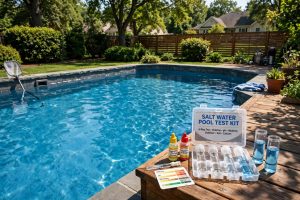
Test your water first. Never guess. A pool stabilizer test kit or a full test kit gives you the current level. Test strips work for quick checks, but a liquid drop test is more exact. Write the number down.
Also test chlorine, pH, and alkalinity. Balance those first. Add stabilizer only after pH sits between 7.2 and 7.6. If pH is too high, you may want to read about how to lower pool ph levels safely before you move on. Chemical order matters. Stabilizer added to wild water can give a false reading later.
Know your pool volume. Dose depends on gallons. A round above-ground pool holds far less than a big in-ground pool. Check the maker plate or your pool guide. A rough guess can lead to a large error. Many pool owners keep the gallon figure on a card near the filter.
Read the product label. Cyanuric acid comes in two common forms. Granular powder is the classic form. Liquid stabilizer costs more but mixes fast. Both do the same job. The label tells you how much raises the level by 10 parts per million in a set number of gallons. Follow that chart.
Forms of Cyanuric Acid
Granular Stabilizer
Granular cyanuric acid is dry and white. It is sold in bags and buckets. It is the cheapest form per dose. The weak point is speed. It dissolves slowly. Full mixing can take four to seven days. That is normal. Do not add more during that wait. Patience protects you from overdoing it.
Liquid Stabilizer
Liquid stabilizer is pre-dissolved. It pours like a thin milk. It mixes in hours, not days. The cost is higher. Some owners pick it at pool opening when they want a fast result. The label math is different from granular, so read it with care.
Step by Step: How to Add Cyanuric Acid to Pool Water
Step 1: Test and Balance
Test the water with a fresh kit. Note the cyanuric acid level, pH, and chlorine. Balance pH and alkalinity first. Run the pump. Water should be moving before you add anything.
Step 2: Measure the Dose
Use the label chart. Aim for the middle of the 30 to 50 range, not the top. If your level reads 10 parts per million, add enough to reach 40. It is safer to land a little low. You can always add more next week. You cannot take it out except by draining water.
Step 3: Pick a Method
There are two common ways to add granular stabilizer. Pick one and stick with it.
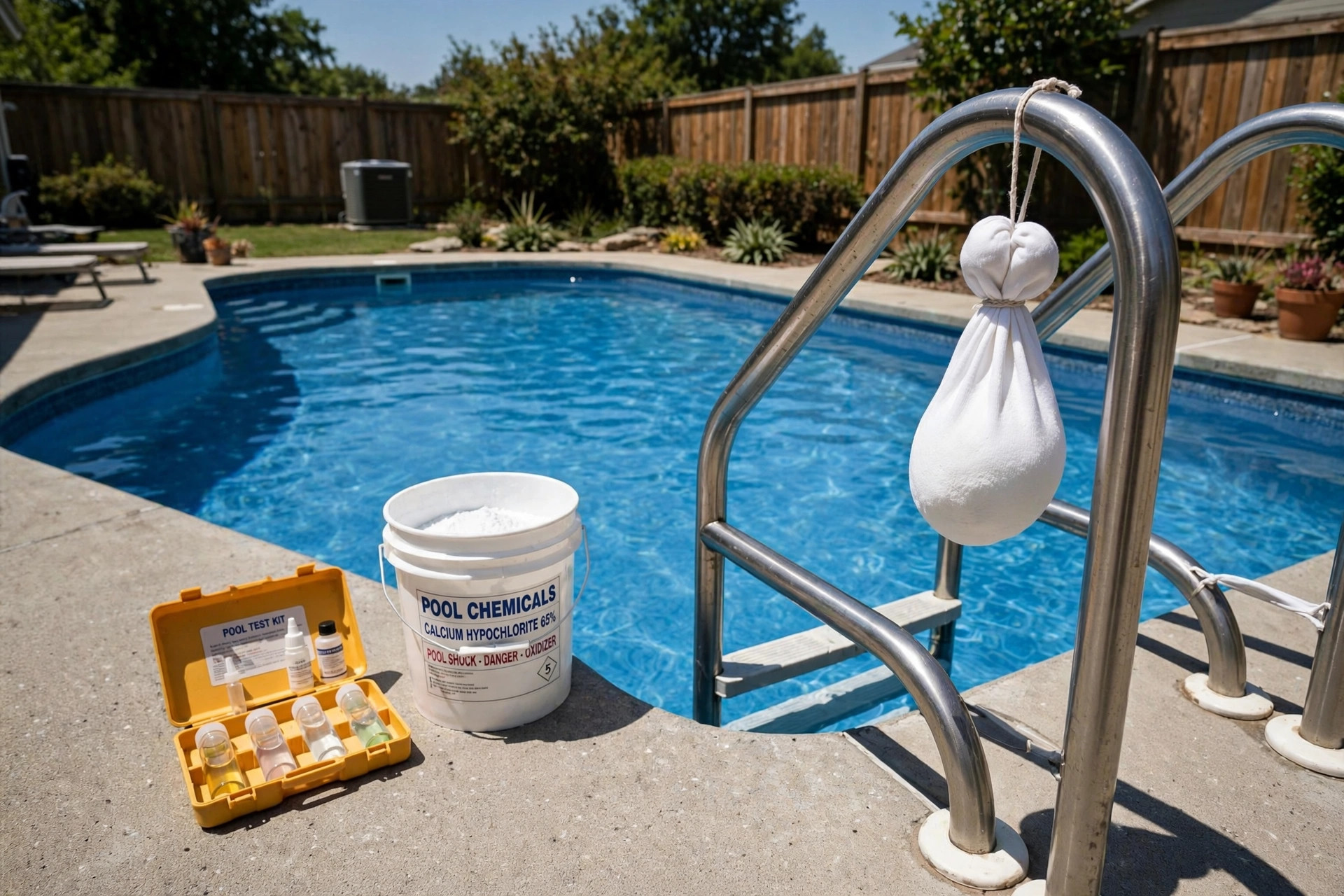
The sock method. Pour the measured powder into a clean sock or a mesh bag. Tie the sock to a pool ladder or a rail near a return jet. Let the flow of water pass over it. Give the sock a squeeze every few hours to help it dissolve. Keep the pump running day and night until the powder is gone. This method is slow but safe. It keeps undissolved grains off the pool floor.
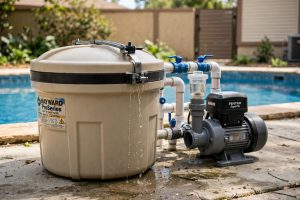
The skimmer method. Pour the powder slowly into the skimmer basket with the pump running. The water pulls it into the filter, where it dissolves over several days. Do not backwash the filter for at least a week after this. Backwashing too soon washes the powder out before it dissolves. Some pool makers warn against this method for certain filters, so check your filter guide first.
For liquid stabilizer, shake the bottle well. Pour it slowly in front of a return jet with the pump running. Walk the bottle around the pool edge for an even spread.
Step 4: Run the Pump
Keep the pump running for at least 24 hours after adding. For granular powder in the skimmer, run the pump nonstop for several days if you can. Moving water is what dissolves the powder. Still water leaves grains sitting on the liner, and those grains can bleach vinyl.
Step 5: Wait, Then Retest
Wait five to seven days after granular addition. Then test again. The number will have moved. Only then decide if more is needed. Fast retesting leads to overdosing. That is the most common error new owners make.
How Much to Add: Dosing Examples
Dose math sounds hard, but the label does the work. Here are plain examples to show how it goes.
A small above-ground pool of about 10,000 gallons with a level of 10 parts per million needs enough stabilizer to add about 30 more. A common label might say one pound raises 10,000 gallons by 10 parts per million. So three pounds would do it. Many owners would add two and a half pounds first, test, then adjust.
A medium in-ground pool of 20,000 gallons starting near zero needs more. Using the same chart, six pounds would lift the level by 30 parts per million. An owner might add five pounds and retest in a week.
A large pool of 30,000 gallons needs still more. The pattern is the same: volume times gap, divided by what one pound does. Always round down on the first dose. The second dose can fix a shortfall. Draining water is the only fix for an excess.
Keep a log. Write the date, the dose, and the test numbers. A simple notebook beats memory every time. Next season you will thank yourself.
Cost and Price
Cyanuric acid is one of the cheapest pool chemicals. A four-pound bag of granular stabilizer often costs between ten and twenty dollars at a home pool supply store. Liquid stabilizer costs more per dose, often twice as much. Pool care brands sold through specialty pool retailers price in the same range.
A full season of stabilizer for a home pool often costs less than fifty dollars. Compare that with chlorine wasted without it. One month of lost chlorine can cost more than a year of stabilizer. It is a small line in the pool budget with a large effect.
Buy from a trusted source. Old product that sat in damp storage may clump. Clumps dissolve poorly. A fresh bag from a busy store is worth the trip.
Care and Upkeep Through the Season
Cyanuric acid does not burn off like chlorine. It leaves the pool only through splash-out, backwashing, and rain overflow. That means the level falls slowly over the season. Test once a month. Add small doses as needed.
Heavy rain dilutes everything, including stabilizer. After a storm, test before you treat. You may need both chlorine and a small stabilizer bump. Many owners also give the pool a shock after a rainstorm to clear the wash of dirt and germs.
Watch for creep. Stabilized chlorine products, like tablets and dichlor shock, add a little cyanuric acid with every dose. Over a long season of tablet use, the level can climb on its own. If your level keeps rising with no powder added, your chlorine tablets are the source. Switch to unstabilized chlorine for a while.
If the level climbs past 100 parts per million, partial draining is the fix. Drain a foot or two of water and refill. Then retest. Repeat until the number lands in range. There is no chemical that removes it.
Safety
Cyanuric acid is an acid. Treat it with respect. Wear gloves and eye coverings when you handle the powder. Do not breathe the dust. Measure in the open air, not in a closed shed.
Store the bag or bottle in a cool, dry place away from children and pets. Keep it away from chlorine products on the shelf. Mixing dry pool chemicals can start a fire or release gas. That rule comes from every pool safety guide and it is worth taking to heart.
Never let children handle the product. Add chemicals when the pool is empty of swimmers. Wait until the powder is fully dissolved and the water is balanced before anyone swims. The public health guidance on pool chemicals backs the same habit: add, circulate, test, then swim.
If powder lands on the deck, sweep it up. Do not hose it into the garden. If it spills on skin, rinse with plain water. If it gets in eyes, rinse for many minutes and get help. The label lists first aid steps. Read them before you open the bag.
Spas and Hot Tubs
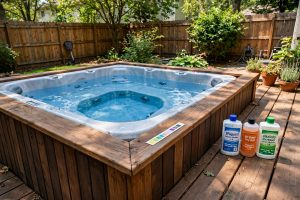
Spas use chlorine or bromine in hot water. High heat and covers change the math. Most covered spas need little stabilizer, and some makers say to skip it. Too much in a small spa locks chlorine fast. If you keep a spa, read a guide on how to maintain hot tub water chemistry and follow the spa maker notes. Brands like Hot Spring print clear water care steps for their tubs.
Common Mistakes to Avoid
Adding before testing is mistake one. Guessing the level leads to guessing the dose. Two guesses stacked make a bad result.
Adding too much at once is mistake two. The level takes days to settle. Owners who add, test the next day, and add again often overshoot. Wait the full week.
Pouring powder on the pool floor is mistake three. Grains sit on vinyl and bleach white spots. Always use the sock or the skimmer, and keep the pump running.
Backwashing too soon is mistake four. The powder you sent to the filter needs days to dissolve. A backwash on day two throws it away. You lose the dose and the money.
Ignoring tablet creep is mistake five. Stabilized tablets raise the level all season. Test monthly and catch the climb early.
FAQ
How long does cyanuric acid take to dissolve?
Granular powder takes four to seven days to dissolve fully, even with the pump running. Liquid stabilizer mixes in a few hours. Test only after the wait, or the reading will be wrong.
Can I swim right after adding cyanuric acid?
Wait until the powder is gone and the water tests in balance. For the sock method, that means the sock is empty. For the skimmer method, give it a day of pumping. Clear water and right numbers are the green light.
What happens if cyanuric acid is too high?
Chlorine weakens. The pool may look clear but fail to kill germs. Algae can bloom even with chlorine present. The only fix is to drain some water and refill with fresh water, then retest.
Do saltwater pools need cyanuric acid?
Yes, most outdoor salt pools need it. The salt cell makes chlorine, and the sun still burns that chlorine off. Keep the level near 60 to 80 parts per million for many salt systems, but check your cell maker guide first.
Can I add cyanuric acid and chlorine at the same time?
You can, but order matters. Balance pH first. Then add stabilizer by the sock or skimmer method. Add chlorine as normal after. Do not mix the dry powders together in one bucket. Each chemical goes in on its own.
Does cyanuric acid raise or lower pH?
On its own it is mildly acidic, so a large dose can nudge pH down a bit. Test pH again after the stabilizer dissolves and adjust if needed. Small doses in balanced water cause little change.
A Final Word
Learning how to add cyanuric acid to pool water is a skill every chlorine pool owner needs. Test first, measure with care, add by the sock or skimmer, and wait before you retest. Keep the level between 30 and 50 parts per million. Your chlorine will last longer, your water will stay clear, and your season will cost less. Keep a log, test each month, and let patience do the rest. Good pool care is mostly small steps done in the right order.
Buying guides are also published by The Spruce and Swim University.
References
Centers for Disease Control and Prevention. (n.d.). Cleaning and disinfecting your home. https://www.cdc.gov Hot Spring Spas. (n.d.). Hot tubs and spas. https://www.hotspring.com Leslie’s Pool Supplies. (n.d.). Pool supplies and equipment. https://www.lesliespool.com Pool Warehouse. (n.d.). Pool equipment and supplies. https://www.poolwarehouse.com Swim University. (n.d.). Pool and hot tub care guides. https://www.swimuniversity.com The Home Depot. (n.d.). Home improvement products. https://www.homedepot.com The Spruce. (n.d.). Home and garden advice. https://www.thespruce.com U.S. Consumer Product Safety Commission. (n.d.). Product safety information. https://www.cpsc.gov
Was this guide helpful?

About Sarah Mitchell
The My Garden US editorial team writes practical, in-depth home and garden guides for American homeowners — tested advice, no fluff.