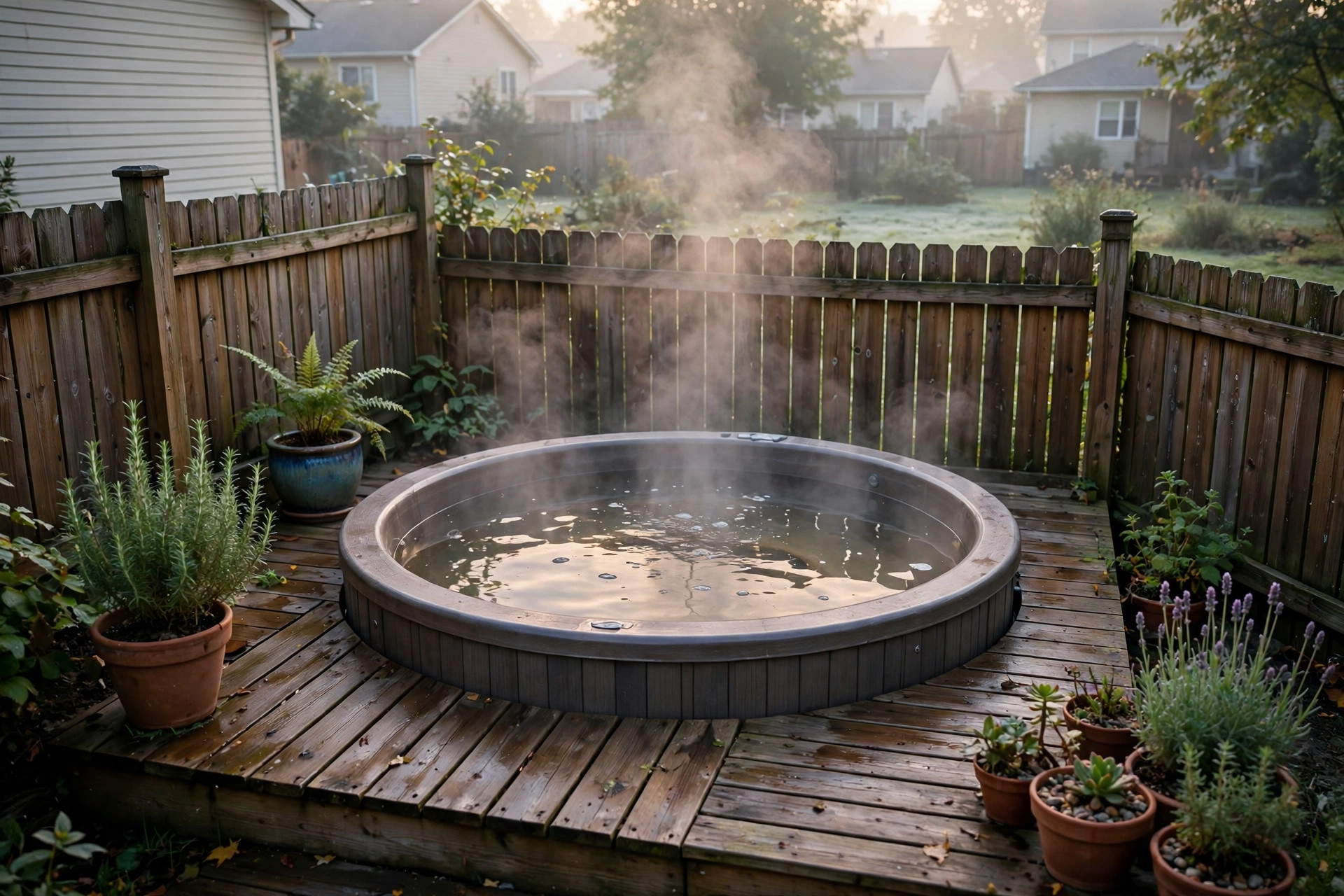
A small yard does not have to mean giving up the pleasure of warm water under the open sky. The best hot tub for small backyard owners is one that fits the space, fits the budget, and fits the way a family lives. A large spa can fill a whole patio and leave no room for a table or a grill. A small model can turn a narrow side yard or a corner of a deck into a quiet retreat. This guide explains how to pick one.
Why a Compact Hot Tub Makes Sense
Space is the most common reason people give up on a hot tub. They picture a big eight-seat shell that eats up the whole lawn. But most hot tubs come in small sizes too. A two- or three-seat tub can be as little as five feet across. That is small enough to sit on a patio, a deck, or a gravel pad.
A small hot tub also costs less to run. It holds less water, so it heats faster and uses less power. It needs fewer chemicals. It weighs less, which matters for a deck or a rooftop. And it is easier to keep clean. For a couple or a small family, a compact spa gives most of the comfort of a big one with fewer headaches.
A small tub also fits better into the look of a yard. A big shell can look like a boat parked on the lawn. A small one can sit beside plants, under a tree, or behind a fence where it feels like part of the garden.
How to Choose: What to Look For: Best Hot Tub for Small Backyard
Measure Your Space First
Before you shop, measure the spot where the tub will go. Write down the length and width. Add one foot of working room on each side for service access. Also measure the path the tub must travel to reach that spot. Gates, side yards, and doorways all have limits. A tub that will not fit through the gate is no use.
Check the ground too. A filled hot tub is heavy. A small tub can weigh more than two thousand pounds with water and people in it. The base must be level and firm. A poured slab is best. A well-built deck can work if it was built to hold the load. Ask the dealer to check.
Seats and Size
Think about how many people will use the tub at one time. Two people most nights? A two- or three-seat model is plenty. Kids and guests on weekends? A four-seat tub may be better. Do not buy seats you will never use. Extra seats mean extra water, extra heat, and extra cost.
Look at the shape too. Round tubs fit tight corners well. Square tubs pack seats more tightly. Some small models have a bench instead of full seats, which gives more room for feet.
Jets and Power
More jets do not always mean a better soak. The pump power matters more. A small tub with a strong pump and well-placed jets will beat a cheap tub covered in weak jets. Sit in a filled floor model if you can. Feel where the jets hit. Note which seats get the strongest flow.
Power supply matters too. Small hot tubs often run on a standard 110-volt outlet. Larger ones need a 220-volt line and a special breaker. A 110-volt tub is easier to install. A 220-volt tub heats faster while the jets run. Check with an electrician before you decide.
Insulation and Energy Use
A tub that leaks heat will raise your power bill all winter. Look for full-foam insulation on the shell and a tight cover with a good seal. Ask for the monthly running cost estimate. Reviews on sites like Consumer Reports often cover energy use in detail.
Types of Small Hot Tubs
Traditional Hard-Shell Spas
These are the classic hot tubs. A molded acrylic shell sits in a wood or plastic cabinet. They come in sizes down to about two seats. They cost the most up front but last the longest, often fifteen years or more with care. For a permanent setup in a small backyard, a hard-shell model is the gold standard. Brands such as those sold through Hot Spring and Bullfrog Spas offer compact models worth a look.
Inflatable Hot Tubs
Inflatable models are made of tough vinyl and fill with air. They seat two to six people and cost a few hundred dollars. They plug into a normal outlet. They are a fine choice if you want to try hot tub life before you commit, or if you rent your home and may need to move the tub. They do lose heat faster than hard-shell tubs, and the vinyl wears out in a few years. If you live in a mild climate and want a simple soak, an inflatable hot tub for couples can be a good low-risk start.
Plug-and-Play Models
Plug-and-play tubs are hard-shell spas that run on 110 volts. They ship in one piece and need no special wiring. They are light enough for a sturdy deck. The trade is slower heating, often one or two degrees per hour. For small tubs this is less of a problem, since there is less water to heat.
Wood-Fired Tubs
A wood-fired tub is a barrel or cedar tub heated by a stove, with no electric parts. It suits a rustic yard. It needs more work: you split wood, light a fire, and wait a few hours. It also needs more space for the stove and wood pile. In a truly tiny yard, it may not fit.
Cost and Price
Prices for small hot tubs fall into clear bands.
– Inflatable models: about 300 to 700 dollars. – Plug-and-play hard-shell models: about 2,500 to 5,000 dollars. – Small traditional spas: about 5,000 to 10,000 dollars. – High-end compact spas: 10,000 dollars and up.
Delivery and setup add to the price. Crane delivery, if the tub must be lifted over a house, can cost 500 to 1,500 dollars. A new electrical line can cost several hundred dollars. The slab or pad can cost a few hundred more. Ask for the total out-the-door price before you sign.
Running costs matter as much as the sticker price. A well-insulated small tub may add 20 to 40 dollars a month to the power bill. A poorly insulated one can double that. Chemicals run about 20 to 30 dollars a month. A new cover every three to five years is normal. Budget for these before you buy.
Care and Upkeep
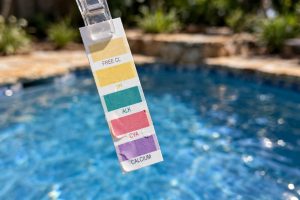
A small hot tub is easier to care for than a big one, but it still needs a routine. Water chemistry works the same in any size. Test the water two or three times a week. Keep the sanitizer level in range. Small tubs need small doses, so use a kit made for spas and follow the label. A hot tub chemicals starter kit made for small volumes will keep you from over-dosing.
Drain and refill the tub every three to four months, or sooner if the water turns dull or foamy. Clean the filters once a month with a hose, and deep-clean them with filter cleaner each quarter. Keep the cover clean and the straps snug. A waterlogged cover is heavy and wastes heat.
Learn the basics of water balance early. Guides on sites like Swim University and Leslie’s walk through pH, alkalinity, and sanitizer levels in plain terms. If you keep up with testing, most problems never start.
Safety in a Small Backyard
A hot tub in a small yard sits close to the house, the fence, and the neighbors. A few safety steps go a long way.
Always use a locking cover when the tub is not in use. A cover keeps children out and keeps the heat in. Check your town rules. Many towns require a fence or a locking cover around any standing water. The U.S. Consumer Product Safety Commission publishes plain guides on pool and spa barriers and safe use.
Keep the water temperature at or below 104 degrees. Soak for no more than 15 to 20 minutes at a time. Never use a hot tub alone, and keep alcohol away from the water. Hot water and alcohol are a bad mix.
Give the tub room to breathe. Leave service access to the equipment side. Keep the ground around the tub free of ice in winter and clutter all year. In a tight yard, it is easy for leaves and tools to pile up against the shell. Clear them so air can move.
Where to Buy a Small Hot Tub
You can buy from a local dealer or from a big retailer. A local dealer offers delivery, setup, and service after the sale. That help is worth a lot when a pump fails in January. Big-box stores such as The Home Depot carry plug-and-play and inflatable models at fair prices, and you can read many owner reviews on their site. Pool supply shops like Pool Warehouse also stock small spas and accessories online.
Home and yard sites like The Spruce publish buying guides that compare models side by side. They are a good place to narrow your list before you visit a dealer. Just note that prices and models change, so use the guides as a starting point, not the final word.
Getting the Best Fit for a Cold Climate
If you live where winters are hard, pick your tub with the cold in mind. A hot tub for cold climates needs full-foam insulation, a heavy cover, and enough heater power to hold temperature in the wind. Inflatable tubs struggle below freezing, so a hard-shell model is the safer pick in the north. Place the tub near the house if you can, where it gets some shelter and the walk is short on cold nights.
Frequently Asked Questions
What is the smallest hot tub you can buy?
Two-seat tubs start at about five feet across and two and a half feet deep. Inflatable models come in similar sizes. That is about as small as a real hot tub gets. Anything smaller is really just a deep soaking tub.
How much room does a hot tub need around it?
Plan on one foot of clear space on each side for service, plus room to lift the cover off. For a five-foot tub, a seven-foot square pad is about right.
Can a hot tub go on a wooden deck?
Yes, if the deck is built for the load. A filled small tub can weigh over two thousand pounds. Have a builder or the dealer confirm the deck framing before delivery.
How much does it cost to run a small hot tub?
A well-insulated small tub usually adds 20 to 40 dollars a month in power and 20 to 30 dollars a month in chemicals. Poor insulation can push the power bill much higher.
Do I need a 220-volt line for a small hot tub?
Not always. Many small tubs run on a standard 110-volt outlet. They heat more slowly, especially with the jets on. If you want faster heating, a 220-volt line is the better choice. Ask an electrician.
How long does a small hot tub last?
A hard-shell spa can last 15 years or more with care. Inflatable models usually last two to five years. The cover, pump, and heater are the parts most likely to need replacement.
Final Word
The best hot tub for small backyard living is not the biggest or the fanciest. It is the one that fits your space, your wiring, and your budget, and that you will actually use. Measure first. Sit in a floor model if you can. Count the full cost, not just the price tag. Then pick the small tub that turns your tight yard into the best seat in the house.
References
Bullfrog Spas. (n.d.). Hot tubs and spas. https://www.bullfrogspas.com Consumer Reports. (n.d.). Product reviews and ratings. https://www.consumerreports.org Hot Spring Spas. (n.d.). Hot tubs and spas. https://www.hotspring.com Leslie’s Pool Supplies. (n.d.). Pool supplies and equipment. https://www.lesliespool.com Pool Warehouse. (n.d.). Pool equipment and supplies. https://www.poolwarehouse.com Swim University. (n.d.). Pool and hot tub care guides. https://www.swimuniversity.com The Home Depot. (n.d.). Home improvement products. https://www.homedepot.com The Spruce. (n.d.). Home and garden advice. https://www.thespruce.com U.S. Consumer Product Safety Commission. (n.d.). Product safety information. https://www.cpsc.gov
Was this guide helpful?

About Lisa Anderson
The My Garden US editorial team writes practical, in-depth home and garden guides for American homeowners — tested advice, no fluff.