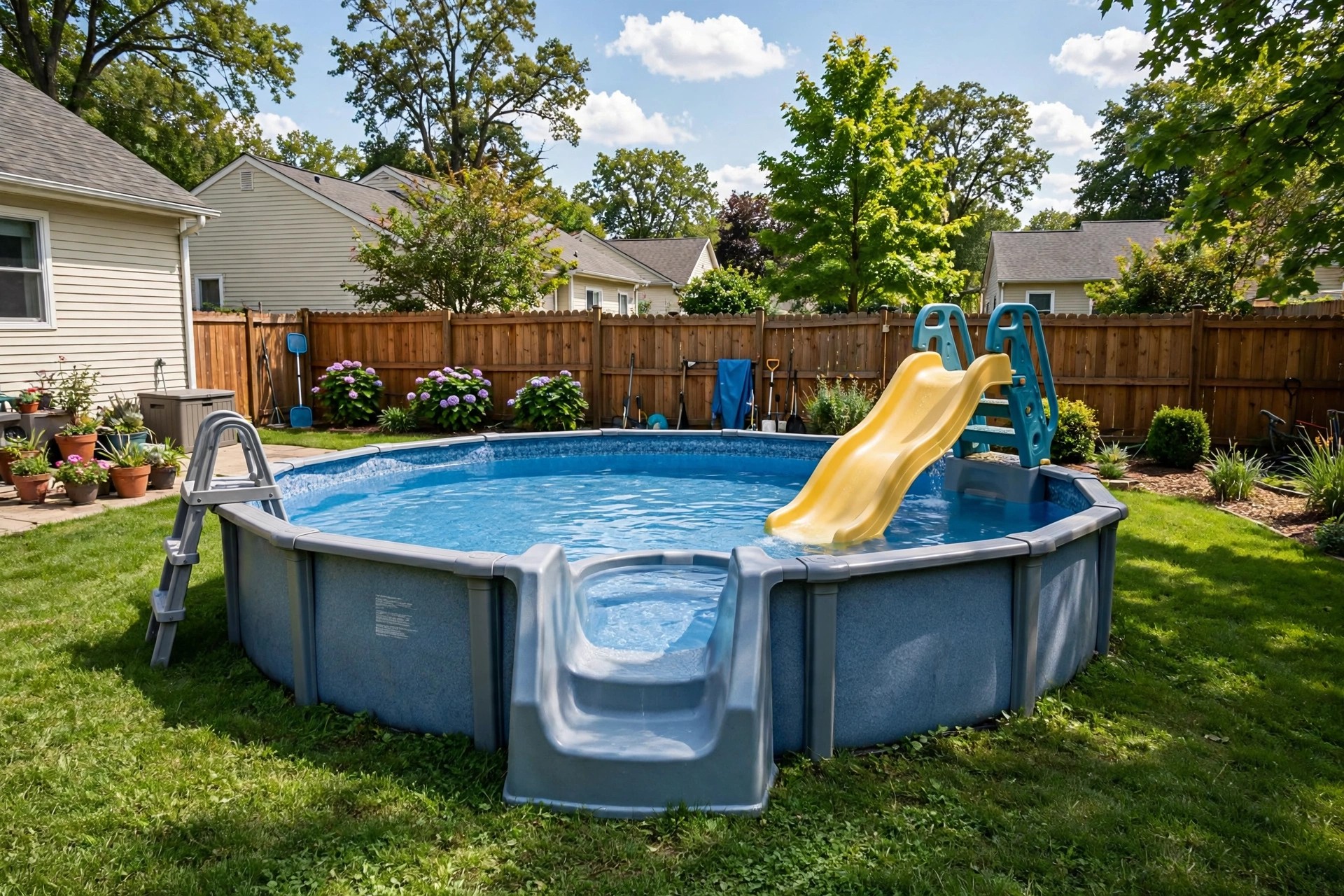
Every summer, parents across the country face the same happy problem. Their children want to swim, splash, and play in the water. A trip to the public pool takes time, costs money, and often ends with tired kids and tired parents. The best pool for kids with slide changes that picture. It brings the water park feeling right into the backyard. Children can climb, slide, and swim for hours under your watchful eye.
But not every pool with a slide is a good choice. Some are too deep for small children. Some have slides that wobble. Some use thin vinyl that tears in the first month. This guide will help you choose wisely. It covers the types of pools, what to look for, how much they cost, and how to keep them safe.
Why a Pool with a Slide Makes Sense for Kids
Children love water. That much has always been true. A simple pool gives them a place to cool off. A slide adds something more. It gives them a reason to move, climb, and play with their whole body. Climbing the slide steps builds leg strength. Going down the slide builds courage. Parents often notice that shy children become bold after a few days of sliding practice.
A pool with a slide also keeps children close to home. You can see them from the porch or the kitchen window. You do not need to drive anywhere. Siblings and neighbors can play together, which builds friendships. On hot days, the pool becomes the center of the afternoon. Many parents say it is the best money they ever spent on summer fun.
There is one more benefit that matters. Children who play in water at home learn to respect it. They learn to walk, not run, near the edge. They learn to wait their turn. These small lessons add up over time. Still, no pool can replace adult supervision. That rule never changes.
Types of Pools with Slides for Kids: Best Pool for Kids with Slide
The market offers three main kinds of pools built for children and fitted with slides. Each kind suits a different age, budget, and yard.
Inflatable Pools with Slides
These are the most common choice for young children. They are made of thick vinyl and inflated with an electric air pump. The slide is part of the inflatable structure. Some models also have a small wading area, a sprayer, or a ball pit. They are cheap, light, and easy to store in winter.
Inflatable pools suit children from about three to six years old. The water is usually shallow, between eighteen and thirty inches deep. Setup takes under an hour. When summer ends, you drain it, dry it, fold it, and put it in a bag.
The weak point is the material. Vinyl can be punctured by sticks, rocks, or pet claws. Buy a repair patch kit and keep it handy. Also, the slide on an inflatable pool is gentle. Older children may find it boring after one season.
Frame Pools with Attached Slides
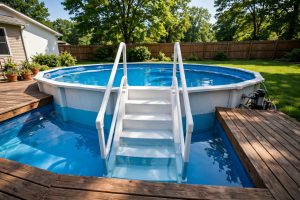
Frame pools have a metal frame and a liner. They are stronger and deeper than inflatable pools. Some brands sell slides that attach to the frame. These slides are taller and faster than inflatable slides. They suit children from six to twelve years old.
A small frame pool can hold several thousand gallons of water. That means more splashing and more room to play. The attached slide usually clamps to the pool wall. You must follow the weight limit printed on the slide. Most slides allow children up to one hundred pounds.
Frame pools cost more and take longer to set up. You need flat ground. You also need a small pump and filter, which adds to the price. But they last longer. A good frame pool can serve your family for three to five summers.
Play Centers and Water Parks
These are large inflatable structures that look like small water parks. They have a pool area, one or two slides, climbing walls, and sprinklers. They are the most fun choice for children under eight. Parties and play dates become easy.
Play centers need a garden hose connected to keep the water flowing. They use more water than simple pools. They also need a flat area of grass or a soft mat. Most last one to three seasons with careful use.
What to Look for When Choosing
Shopping for the best pool for kids with slide can feel confusing. The boxes in the store all look bright and fun. Keep these points in mind and you will make a better choice.
Age range. Check the age printed on the box. A pool made for ages three and up may be too shallow for a ten-year-old. A tall slide made for big kids may be unsafe for a toddler. Match the pool to your youngest swimmer.
Water depth. For children under five, water should be no deeper than two feet. Older children can handle three feet or a little more. Shallow water is safer and warms up faster in the sun.
Slide height and slope. A good slide for young kids is low and gentle. The slope should be wide enough that small children do not tip sideways. Look for high sides on the slide. They keep children centered.
Material thickness. Pool makers measure vinyl in gauge. A higher gauge number means thicker vinyl. Look for at least twenty gauge for inflatable pools. Thicker vinyl resists punctures and lasts longer.
Pump and filter. Small inflatable pools often have no filter. You must change the water often. Frame pools should come with a pump and filter. A filter keeps the water clean between uses. Read reviews to learn which brands include a decent pump.
Safety labels. Look for labels from groups like the American Society for Testing and Materials. These labels mean the product passed certain tests. They are not perfect, but they are a good sign.
Cost and Price Ranges
Prices vary widely. Here is what you can expect to pay in the United States.
Inflatable pools with slides start around eighty dollars. Most popular models cost between one hundred and two hundred fifty dollars. These include the pool, the slide, and sometimes a pump. You will also pay for water. Filling a small pool costs a few dollars on most city water bills.
Play centers cost between two hundred and five hundred dollars. The larger ones with two slides cost more. They also use more water because the hose runs all day.
Small frame pools with an attached slide cost between three hundred and eight hundred dollars. The slide alone may cost one hundred fifty to three hundred dollars. You will also need a filter pump, a ground cloth, and a cover. Plan for an extra one hundred dollars for these items.
Remember the hidden costs. You may need a repair kit, test strips, and chlorine or salt for frame pools. An electric air pump, if not included, costs about twenty-five dollars. These small items add up. Make a full list before you buy.
Setting Up Your Kids Pool
A good setup makes the pool safer and longer lasting. Take these steps.
First, pick a flat spot. Grass is best. Clear away stones, sticks, and sharp toys. A ground cloth under the pool protects the vinyl.
Second, read the manual. Every pool is different. The manual shows how much water to add and how to attach the slide. Do not skip this step.
Third, inflate or build the pool before you add water. For inflatable pools, inflate all chambers fully. For frame pools, build the frame on level ground and check that every joint clicks into place.
Fourth, fill the pool slowly. Watch how the walls take shape. Stop at the water line marked on the inside. Overfilling makes the walls lean and the slide unstable.
Fifth, test the slide. Climb up and sit down before the children use it. Make sure it feels firm. Check that the landing area in the water is deep enough. Most small slides need at least eighteen inches of water at the bottom.
The United States Consumer Product Safety Commission offers guidance on pool safety for families. You can read their tips at CPSC. Local pool supply stores also sell test strips and chemicals. Large retailers like Home Depot and Lowe’s carry pumps, filters, and repair kits.
Care and Upkeep
A kids pool needs regular care. Without care, the water turns green and the vinyl wears out.
Change the water in small inflatable pools every three to five days. In hot weather, change it more often. Drain the pool with a garden hose or a small pump. Wipe the inside with a soft cloth before refilling.
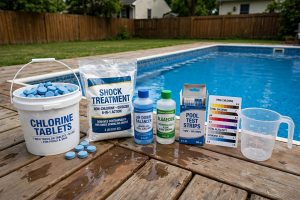
For frame pools with filters, run the pump every day. Test the water twice a week with test strips. Keep the chlorine level in the range printed on the strip bottle. Brush the walls once a week to stop algae. A pool cover keeps leaves and dirt out when the pool is not in use.
Dry the pool at the end of the season. Fold it loosely and store it in a dry place. Mice and dampness can ruin stored vinyl. A plastic bin with a lid works well.
Inflatable pools from brands like Intex and Bestway come with repair kits. Patch small holes right away. A small leak becomes a big tear if you ignore it.
Safety Rules Every Family Should Follow
Water safety is the most important part of owning a kids pool. The slide makes the pool more fun, but it also adds risk. Set clear rules and follow them every day.
Always watch. An adult must watch the pool when children are in it. Put the phone down. Stay within arm’s reach of small children. Most drowning accidents happen in seconds, in silence.
One child on the slide at a time. Children love to slide together. Do not allow it. The slide is built for one body. Two children can collide and get hurt.
Slide feet first. Teach children to slide sitting down, feet first. No standing, no headfirst slides. Repeat the rule until it becomes habit.
Add a barrier. If local law requires a fence around the pool, build one. Even if it does not, a barrier keeps toddlers out when no adult is watching. Pool alarms add another layer of protection. For more on alarms, see our guide on the best pool alarm for child safety.
Learn the signs of trouble. Children who cannot swim may slip under the water without a sound. They do not splash and shout like in the movies. Watch for a child who is still, with eyes wide and mouth at water level.
Keep rescue gear close. A phone, a reaching pole, and a life ring should sit near the pool. Every adult in the house should know how to call for help.
Swim safety experts at Swim University publish plain guides on pool care and safety. The pool care team at Leslie’s also answers common questions from new pool owners.
Where to Shop
You have many places to buy. Big box stores like Walmart and Target carry inflatable pools in spring and summer. Their prices are low, but stock runs out fast.
Online shops give you more choice and reviews from other parents. Reading reviews is one of the best ways to judge a pool. Look for comments about leaks, slide strength, and how long the pool lasted.
For advice on styles and trends, home guides like The Spruce review many pool models each year. Their writers test pools with real families.
Related Guides
If you are still choosing, these guides may help:
– Best above ground pool for families – Best pool alarm for child safety – Best pool cover for safety kids – Best pool for kids safety features
Frequently Asked Questions
What age is best for a pool with a slide?
Children from three to twelve enjoy pools with slides. Toddlers under three should use only very shallow wading pools with a low slide, and only with an adult holding them. Older children need taller slides and deeper water to stay interested.
How deep should the water be under the slide?
For small slides, at least eighteen inches of water should catch the child at the bottom. For taller frame-pool slides, follow the maker’s guide. Never let children slide into water that is too shallow. Head injuries happen when the landing spot is too shallow.
Are inflatable pool slides safe?
They are safe when used as directed. Use the pool on flat ground. Keep the slide fully inflated. Follow the weight limit. Always watch the children. Most injuries come from misuse, not from the product itself.
How long does an inflatable kids pool last?
With good care, one to three seasons. Sun, heat, and rough play wear down vinyl. Store the pool dry and out of the sun in winter. Patch small holes quickly. A cover slows wear from leaves and dirt.
Can I leave the pool up all summer?
Yes. Many families leave small pools up from June to August. Change the water often or use a small filter. Drain the pool after heavy rain if it overfills. Take the pool down before the first freeze.
Do I need a permit for a kids pool?
Most small pools do not need a permit. Large frame pools and anything deeper than two feet may need one in some towns. Check your city rules before you buy. Some home owner groups also have rules about pools in front yards.
A Short Final Word
The best pool for kids with slide is the one that fits your children, your yard, and your budget. Start with safety. Pick the right size for the youngest swimmer. Set clear rules from day one. Then let the children play.
A backyard pool gives your family something rare. It gives you slow afternoons, loud laughter, and tired, happy children at dinner. That is worth every gallon of water.
References
Astm. (n.d.). Home and garden information. https://www.astm.org Bestway. (n.d.). Pools and inflatables. https://www.bestwayusa.com Intex. (n.d.). Above ground pools and inflatables. https://www.intex.com Leslie’s Pool Supplies. (n.d.). Pool supplies and equipment. https://www.lesliespool.com Lowe’s. (n.d.). Home improvement products. https://www.lowes.com Swim University. (n.d.). Pool and hot tub care guides. https://www.swimuniversity.com Target. (n.d.). Retail store. https://www.target.com The Home Depot. (n.d.). Home improvement products. https://www.homedepot.com The Spruce. (n.d.). Home and garden advice. https://www.thespruce.com U.S. Consumer Product Safety Commission. (n.d.). Product safety information. https://www.cpsc.gov Walmart. (n.d.). Everyday low prices. https://www.walmart.com
Was this guide helpful?

About Michael Thompson
The My Garden US editorial team writes practical, in-depth home and garden guides for American homeowners — tested advice, no fluff.