
Every year, backyard pools bring joy to millions of families. They also bring danger. A pool that sits open and unwatched is a serious risk for small children. Toddlers can slip out of a door and reach the water in seconds. That is why many parents search for the best pool cover for safety kids. A true safety cover is not just a piece of plastic laid across the water. It is a strong barrier that holds weight, locks in place, and keeps a child from falling into the pool.
A safety cover is one of the most reliable layers of protection you can buy. It works when no one is watching. But not all covers are equal. Some are made only to keep leaves out or to hold heat in. Those covers will not hold a child. This article explains what makes a cover safe, which types exist, how much they cost, and how to choose the right one for your family.
Why a Safety Pool Cover Matters
Drowning is fast and quiet. It does not look like the movies. A small child can slip under water in under a minute. Experts say that most pool accidents involving young children happen during brief lapses in watchfulness. A child pool alarm can add a warning, but a physical barrier adds something better. It adds time.
A safety cover acts as a floor over the water. When it is fastened correctly, a child who walks onto it will not sink through. The cover holds the weight and keeps the child out of the water until an adult can help. That is the core difference between a safety cover and an ordinary cover. An ordinary solar blanket or winter tarp will sink under weight and trap a child in water. A true safety cover is rated to hold hundreds of pounds without touching the water.
Parents often ask whether a fence is enough. A fence is a fine first barrier, and many towns require one by law. But fences can be left open, and a child can learn to climb sooner than you expect. A safety cover adds a second layer right at the water. The best protection plans use several layers at once: a fence, a locked gate, a cover, and watchful eyes. The cover is the one layer that never forgets.
Many home safety guides recommend checking standards from the U.S. Consumer Product Safety Commission before buying any pool barrier product. Their pages explain what safety features to look for and why they matter.
Types of Pool Covers for Child Safety: Best Pool Cover for Safety Kids
There are three main types of safety-rated covers. Each has strengths and weak points. Your choice depends on your pool shape, your budget, and how often the pool is used.
Solid Safety Covers
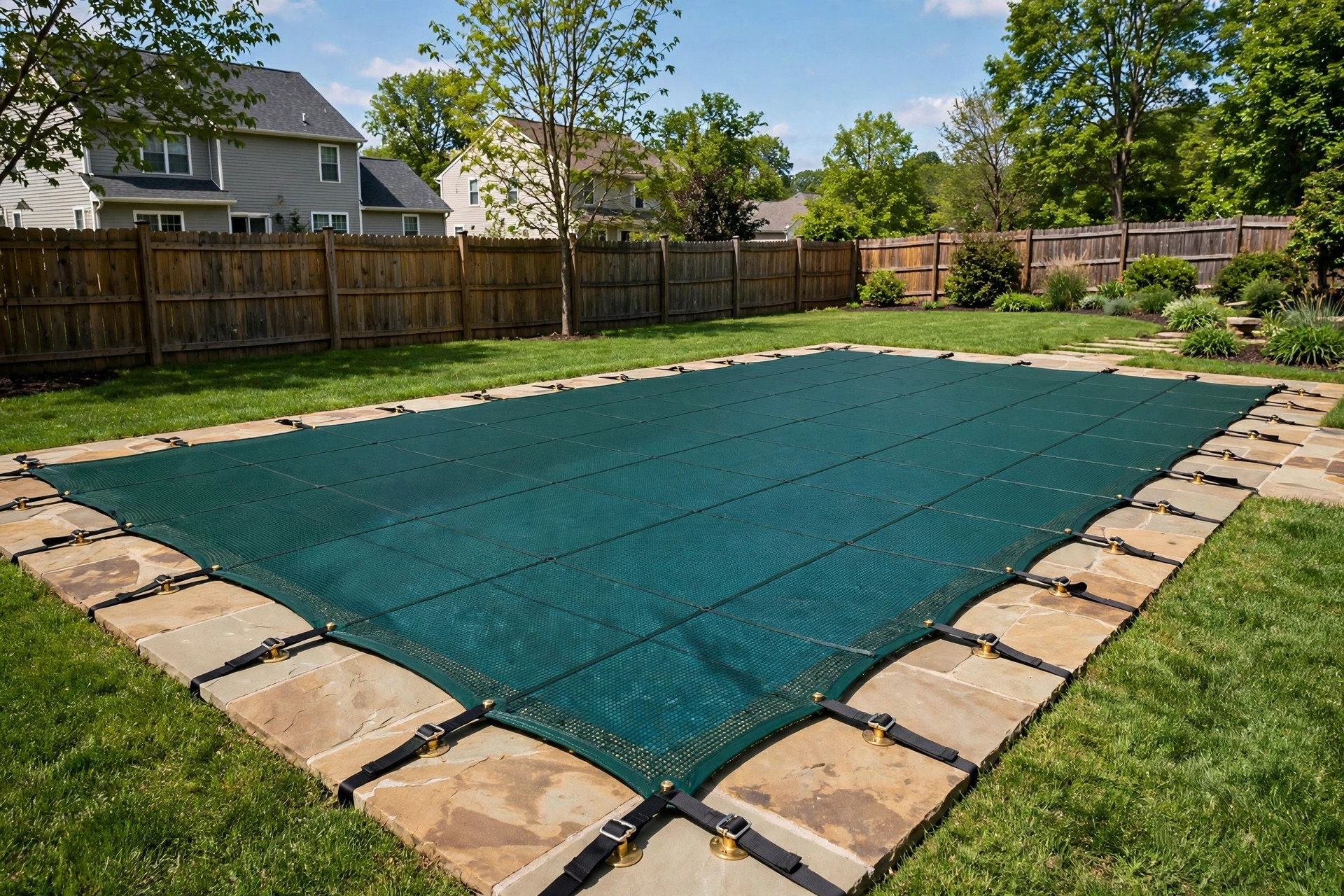
A solid safety cover is made from heavy reinforced vinyl. It stretches tight across the pool and locks down with straps and brass anchors set into the deck. It keeps out sun, rain, and debris. Because it is solid, it also keeps out light, which slows algae growth.
The great strength of a solid cover is its tight seal. It offers a firm, trampoline-like surface. The weak point is rain. Water pools on top of a solid cover and must be removed with a small pump. If standing water is left on the cover, it can create a hazard of its own and add heavy weight that wears the straps.
Mesh Safety Covers
A mesh safety cover looks like a heavy woven net. It is also locked to the deck with straps and anchors. Rain and melting snow drain through the mesh into the pool. You do not need to pump off standing water.
The strength of mesh is easy care. It is lighter than solid vinyl, so putting it on and taking it off is simpler. The weak point is sunlight. Fine debris and light pass through, so the pool may need more cleaning when you open it.
Automatic Safety Covers
An automatic cover rolls out over the pool at the press of a key switch. It runs on tracks set into the coping or under the deck. Many can support the weight of an adult when closed. They are very easy to use, so families actually use them every night.
The strength of an automatic cover is habit. Because closing it takes seconds, it gets closed. The weak point is cost and upkeep. These covers cost far more than mesh or solid covers, and the track and motor need service over time. For pools that are used every day, though, that daily ease is a real safety gain.
Watch out for covers that are not rated for safety. Solar covers warm the water and are useful, but they will not hold a child. A winter cover sold for debris is not a safety cover either. If the product does not name a safety standard, do not count on it for protection.
How to Choose the Right Cover for Your Family
Start with the fit. A safety cover must be sized and anchored for your exact pool. Rectangular pools are simple. Kidney-shaped and free-form pools can also be fitted, but the work is custom. Measure the pool and the deck around it. You need about three feet of solid deck on all sides for the anchors. Without that space, some covers cannot be fastened correctly.
Look for the safety standard ASTM F1346. This is the American standard for safety covers on home pools. A cover that meets it has been tested to hold a set weight without failing. Ask the seller or maker for proof of the rating. Do not take a vague claim of “safety cover” at face value. The standard is your proof.
Think about who will use the cover. If adults will close the pool every evening, an automatic cover makes the habit easy. If the cover will stay on all winter and come off in spring, a mesh cover is often the best value. If you live where leaves and dirt are heavy, a solid cover keeps the pool cleaner. Each choice is right for a different family.
Check the hardware. Brass anchors set into the deck hold the straps. The straps should be wide and strong. Springs take up the stretch and keep the cover taut. A loose, sagging cover is less safe than a drum-tight one. If you buy a used home with a cover already in place, have it checked by a pool service before you trust it.
For seasonal planning, many families pair a safety cover with their cold-weather routine. If you close your pool for winter, a mesh safety cover can serve double duty. Read our guide on how to winterize an inground pool properly to plan the full shutdown. A winter pool cover review can also help you compare brands for the off season.
Retail guides at places like Leslie’s Pool Supplies list common cover styles and sizes, which can help you learn the terms before you shop.
Cost and Price Ranges
Safety covers are not cheap, but they cost far less than the value they protect. Prices vary by pool size, shape, and cover type.
A custom mesh safety cover for a standard rectangular pool often runs from about 1,200 to 3,000 dollars, with fitting extra. Odd shapes cost more. A solid safety cover is in a similar range, sometimes a bit more because of the heavier fabric. An automatic safety cover is a bigger step: often 8,000 to 15,000 dollars or more, plus the cost of setting the tracks when the pool is built or remodeled.
Fitting by a trained crew is wise for mesh and solid covers. The anchors must be set right and the straps set to the correct tension. Many pool stores sell covers through dealers who measure and fit the pool. Buying online can save money, but a wrong fit is a safety risk.
Plan for upkeep costs too. Straps and springs wear out. A mesh cover may need new straps every few years. An automatic cover needs motor service. Treat the cover like any safety device: keep it in working order and replace worn parts before they fail. Pool care sites such as Swim University offer plain guides on cover care through the seasons.
Installation and Care
Fitting a mesh or solid safety cover takes most of a morning for a two-person crew. The anchors go into holes drilled in the deck. The straps hook in, and the springs are set so the cover sits tight and level. The maker gives a tension guide. Follow it. A cover that is too loose can let a small body push through a gap at the edge.
Care is simple but must be done. In fall, sweep leaves off the cover before they rot into the mesh. On a solid cover, pump off rain after each storm. Check the straps each season for fraying and wear. Tighten any that have gone slack. Look at the fabric for tears or thin spots, especially near the anchors where stress is highest.
Store a removed cover clean and dry. A damp cover folded in a warm shed can grow mold. Rinse it, let it dry fully in the sun, and fold it loosely. Keep hardware in a marked box so it is ready at season’s end. When spring comes and you take the cover off, test your water and check fences and gates before the first swim.
Pool Safety Rules for Families With Kids
A cover is one layer. True safety needs the whole plan. Here are rules that save lives.
Teach children to swim as early as your doctor allows. Lessons do not make a child drown-proof, but they buy precious seconds. Make sure every adult in the house knows basic rescue steps.
Never let children swim alone. Assign one adult to watch the water at all times. A phone call is enough of a break in watchfulness to matter. At parties, use a written list so the watcher role is never in doubt.
Keep rescue gear close. A long pole and a ring buoy by the pool are standard. Learn child CPR. The American Red Cross offers courses in most towns, and knowing CPR can turn a rescue into a save.
Lock up chemicals and tools. Pool chemicals are poison. Keep them in a locked shed, out of reach. Know where the pump shut-off is, since strong drain suction is a hidden danger for small bodies.
Safety groups like Safe Kids Worldwide remind parents that drowning prevention takes more than one device. Fences, covers, alarms, lessons, and watchfulness all work together.
Teach children that the pool rules are not negotiable. No running on the deck. No diving in shallow water. No swimming without a grown-up. Say it every season until it is habit.
Frequently Asked Questions
Can any pool cover be used as a safety cover? No. Only covers that meet the ASTM F1346 safety standard are rated to hold weight. Solar covers and cheap winter tarps are not safety covers. They can sink and trap a child. Always check for the standard before you buy.
Will a mesh safety cover keep my child out of the pool? A properly fitted and locked mesh cover will hold a child’s weight and keep the child out of the water. It must be anchored tight with no gaps at the edges. A loose or worn cover does not give full protection, so check it each season.
How long does a safety pool cover last? Most mesh and solid safety covers last eight to twelve years with fair care. Sun, chemicals, and weather wear the fabric over time. Replace any cover that shows tears, thin spots, or worn straps.
Are automatic covers worth the extra cost? For families that swim daily, yes. An automatic cover closes in seconds with a key switch, so it actually gets used. That daily habit is a real safety gain.
Can I fit a safety cover myself? Some handy owners do, but fitting by a trained crew is safer. Anchors must be set at the right spots and straps set to the right tension. A bad fit leaves gaps. If you buy online, follow the maker’s guide exactly and test the tension before trusting it.
What else should I buy with a safety cover? A cover works best with other layers. A four-sided fence with a self-closing gate is the top partner. Add a pool alarm for extra warning, keep rescue gear by the pool, and make sure adults learn CPR. Safety is a team of tools, not one tool.
A Final Word
The best pool cover for safety kids is the one that meets the standard, fits your pool tightly, and stays in place whenever children could reach the water. Mesh, solid, and automatic covers all do this job when they are bought from honest makers and fitted with care. Do not trust a plain tarp or a solar blanket with your child’s life. They are useful tools, but they are not safety tools.
Shopping for a cover takes some time. Measure well. Ask for the ASTM F1346 rating. Read plain advice from places like The Spruce and Pool Warehouse to compare options. Talk to a local pool service about fitting. Then keep the cover tight, keep the rules firm, and keep a watchful eye. The water will be there for fun. Your job is to make sure it is only fun.
Before you buy, it helps to see the full range of prices and brands. Big retailers such as The Home Depot carry cover lines you can compare side by side, and specialists like Hot Spring and Bullfrog Spas also publish general pool safety advice worth reading.
References
American Red Cross. (n.d.). Swimming and water safety. https://www.redcross.org Bullfrog Spas. (n.d.). Hot tubs and spas. https://www.bullfrogspas.com Hot Spring Spas. (n.d.). Hot tubs and spas. https://www.hotspring.com Leslie’s Pool Supplies. (n.d.). Pool supplies and equipment. https://www.lesliespool.com Pool Warehouse. (n.d.). Pool equipment and supplies. https://www.poolwarehouse.com Safe Kids Worldwide. (n.d.). Child safety resources. https://www.safekids.org Swim University. (n.d.). Pool and hot tub care guides. https://www.swimuniversity.com The Home Depot. (n.d.). Home improvement products. https://www.homedepot.com The Spruce. (n.d.). Home and garden advice. https://www.thespruce.com U.S. Consumer Product Safety Commission. (n.d.). Product safety information. https://www.cpsc.gov
Was this guide helpful?

About Sarah Mitchell
The My Garden US editorial team writes practical, in-depth home and garden guides for American homeowners — tested advice, no fluff.
You May Also Like
Inground Pool Cost Breakdown by Size
September 29, 2026 0 views
How to Winterize Pool Equipment Properly: A Step-by-Step Guide
June 1, 2026 0 views
How to Clean Pool Coping Tiles: A Simple Step-by-Step Guide
September 26, 2026 0 views