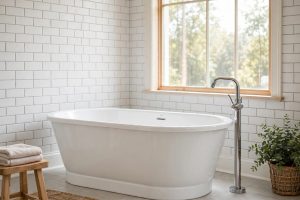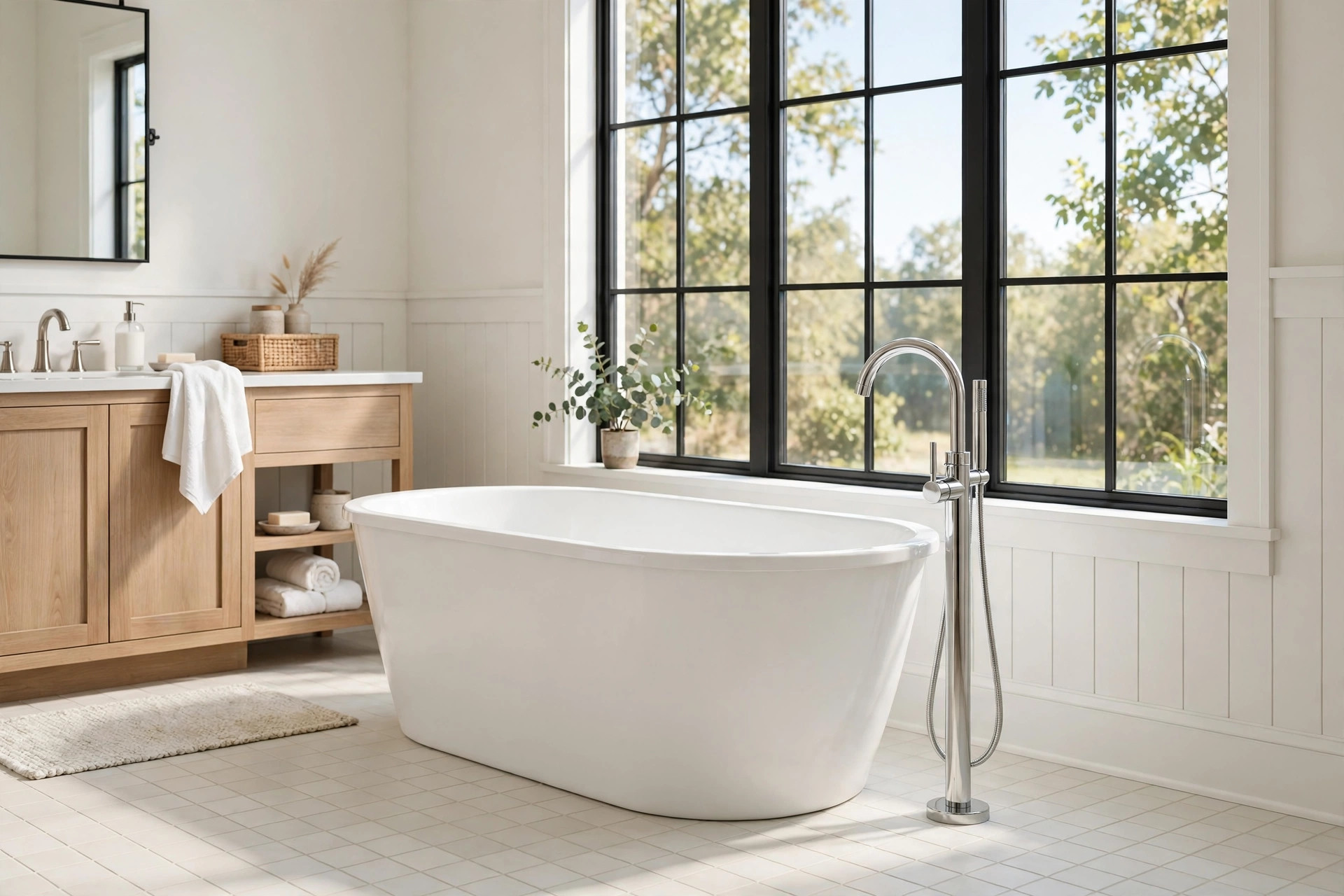

If you are searching for freestanding soaking tubs for sale usa, you are likely planning a bathroom remodel or a new build. A freestanding soaking tub is a deep, standalone tub that sits anywhere on the floor. It is not boxed in by walls or a deck. It fills with enough water to cover the body to the shoulders. This makes it popular with people who want long, restful baths.
The market in the United States is wide. You can find models under one thousand dollars and models over ten thousand dollars. Sizes run from compact 55-inch tubs to roomy 72-inch designs. Materials include acrylic, cast iron, stone resin, and copper. Each choice has trade-offs in price, weight, and heat retention.
This guide walks through the details. It covers why these tubs matter, what to look for when you shop, the main types, typical costs, upkeep, and safety. It also answers common questions. By the end, you should know how to read listings for freestanding soaking tubs for sale usa and pick a tub that fits your space and budget.
Why a Soaking Tub Matters
A standard alcove tub holds about 40 to 50 gallons. A soaking tub holds 60 to 80 gallons or more. The extra depth lets you sink in and relax. Warm water eases tired muscles. Many owners say a deep soak helps them unwind after a long day. The quiet ritual of a bath is part of the appeal.
There is also a design factor. A freestanding tub acts as a focal point. It gives a bathroom the look of a spa. Real estate writers often list updated bathrooms among the top home projects for resale appeal, and a striking tub can lift the whole room. Sites that cover home design, such as HGTV, show how a well-placed tub changes the feel of a bath.
Comfort is another reason. Soaking tubs have sloped backs that support the shoulders. Many designs let one person recline fully. Some larger models seat two. If a long bath is part of your weekly routine, the upgrade is easy to justify.
Energy use is worth a thought. A deeper tub uses more hot water per bath. A 75-gallon fill may need most of a 50-gallon water heater tank. Tankless heaters or larger tanks solve this, but they add cost. Keep this in mind when you compare models.
What to Look for When You Shop: Freestanding Soaking Tubs for Sale Usa
Listings for freestanding soaking tubs for sale usa use many terms. Knowing what each term means helps you compare fairly.
Size and Fit
Measure your bathroom first. A freestanding tub needs clear floor space on all sides. Plan for at least 6 inches of clearance around the tub for cleaning. Door swings and traffic paths matter too. A 60-inch tub fits many mid-size baths. A 66 or 72-inch tub needs a larger room.
Check the ceiling height as well. Tall tubs with high rims can feel cramped under low ceilings. Also confirm the doorway and hallway widths. A large tub must get from the delivery truck to the bathroom. Narrow halls and tight turns are a common problem.
Material
Acrylic is the most common choice. It is light, warm to the touch, and holds heat well. It resists chips and cleans with mild soap. Good acrylic tubs last many years.
Cast iron is the heavyweight option. An iron core with enamel coating holds heat longer than any other material. It feels solid and quiet. The weight is a real concern. A cast iron soaking tub can weigh 400 pounds or more before water. Floor support may need reinforcement. Makers such as Kohler are known for cast iron designs.
Stone resin, sometimes called solid surface, blends crushed stone with resin. It feels like carved stone and keeps water warm. It is heavy but lighter than cast iron. Prices sit in the mid to high range.
Copper tubs are a luxury pick. They look rich and develop a patina over time. They are lighter than iron and naturally warm. They cost several thousand dollars and need special care products.
Fiberglass is the budget choice. It is light and cheap. It scratches more easily and does not hold heat as long. It suits guest baths and rentals.
Drain and Overflow Placement
Freestanding tubs use a freestanding or floor-mounted filler, or a wall-mounted faucet. The drain location must line up with your rough-in. Some tubs have center drains. Others have end drains. The overflow can be built into the drain assembly. Check the spec sheet before you buy. A mismatch can force costly plumbing changes.
Finish and Color
White is the standard and matches most fixtures. Some brands offer matte black, gray, or biscuit tones. A colored exterior can make a bold statement. Keep in mind that bold colors may date the room. White tubs pair with any bathroom sink vanity style later, which keeps future updates simple.
Types of Freestanding Soaking Tubs
Shoppers will meet several shapes. Each suits a different room and taste.
Oval tubs are the classic pick. The curved shape fits the body well and looks soft. They work in both modern and traditional baths.
Rectangular tubs have clean lines. They suit modern and minimal designs. The flat sides can sit closer to a wall if needed.
Slipper tubs have one raised end, like an old slipper. The high back supports the head and neck. They have a vintage feel and suit traditional rooms.
Double-ended tubs slope at both ends. They seat two people facing each other. They are wider and need more floor space.
Japanese-style deep tubs are short but very deep. They are made for sitting upright in hot water. They fit small bathrooms well. The steep sides save floor space while giving full-body coverage.
Walk-in soaking tubs have a door for easy entry. They help people with limited mobility. They cost more and need a tight door seal. They are a practical option for aging in place.
When you browse listings, filter by shape early. It narrows the field fast. Product reviews and buying guides on sites like Bob Vila compare shapes and list pros and cons.
Cost and Price
A basic acrylic model starts near 700 dollars. Mid-range acrylic and stone resin tubs run 1,200 to 3,000 dollars. Cast iron models often cost 2,500 to 5,000 dollars. Copper and designer stone tubs can pass 6,000 dollars.
Installation adds more. A simple swap may cost 500 to 1,000 dollars for labor. A full remodel with new plumbing, a freestanding filler, and floor work can reach 3,000 to 8,000 dollars. The filler alone often costs 300 to 900 dollars. Matching brands for the tub and filler gives a clean look. Faucet makers such as Moen and Delta Faucet sell freestanding fillers in many finishes.
Delivery fees vary. Large tubs may need special freight. Some sellers include curbside delivery only. Inside delivery and haul-away of the old tub cost extra. Ask about this before you order.
Watch for sales. Major retailers run bath events in spring and fall. Holiday weekends often bring discounts of 10 to 25 percent. Big-box stores like The Home Depot and Lowe’s stock many models and list full specs online. That makes side-by-side comparison easy.
Set a total budget, not just a tub budget. Add the filler, drain kit, delivery, labor, and any floor reinforcement. A 1,500-dollar tub can become a 4,000-dollar project. Knowing the full number keeps the project on track.
Installation Basics
A freestanding tub install is simpler than a built-in in some ways. There is no surround to tile. But the plumbing must be exact.
The drain rough-in must sit under the tub drain. The floor filler must align with the tub edge. Heights matter. A filler that is too short will splash. One that is too tall looks off. Follow the spec sheet to the inch.
Floor strength deserves a check. A filled soaking tub can weigh 700 to 1,000 pounds. Spread over a small footprint, that is a heavy load. Older homes with wood joists may need sistering or blocking. A contractor or engineer can confirm. Renovation guides from This Old House explain how pros check floor framing before heavy fixtures go in.
Waterproofing is still needed. Even without a shower, splashes reach the floor. Use a waterproof membrane under tile near the tub. Seal the base with silicone. This stops slow leaks from reaching the subfloor.
Ventilation matters too. Deep baths make steam. A good exhaust fan clears moisture and stops mold. Size the fan to the room. Run it during the bath and for 20 minutes after.
Care and Upkeep
Soaking tubs are easy to keep clean with a simple routine. Rinse the tub after each use. Wipe it down weekly with a soft cloth and mild soap. Avoid abrasive pads. They dull acrylic and scratch enamel.
For acrylic, use non-abrasive cleaners only. Baking soda paste lifts light stains. For cast iron enamel, avoid harsh acids. For copper, use cleaners made for copper. Never use bleach on stone resin. It can discolor the surface.
Hard water leaves mineral rings. White vinegar on a cloth removes most buildup. Rinse well after. If your water is very hard, a softener helps. It also helps your double sink vanity faucets and showerheads last longer.
Check the drain and overflow yearly. Hair and soap collect in the assembly. A quick clean keeps water draining fast. Inspect the silicone seal at the base. Re-caulk if it pulls away. This small job stops water damage.
Deep tubs take longer to fill and drain. A fast-draining waste helps. Some owners add a larger drain line during a remodel. It cuts drain time by minutes.
Safety
A deep tub needs care, especially with children and older adults. Water depth that relaxes an adult can be risky for a small child. Never leave children alone in a filled tub. Standard bath safety rules stress the same point: supervise children and keep water temperature moderate.
Set the water heater to 120 degrees Fahrenheit. This cuts scald risk. Test the water with your hand before getting in. Grab bars add steady support. A freestanding tub has no wall to hold, so a nearby bar or sturdy vanity helps.
The floor gets wet. Use a non-slip mat outside the tub. Choose bath rugs with rubber backing. Keep the path to the door clear.
Getting in and out of a deep tub takes effort. The rim can be 24 inches high or more. A small step stool helps shorter users. Walk-in models with doors solve this for those who need it.
Pair the tub with good lighting. Bright, even light helps you see the water line and the floor. Advice on bath lighting from The Spruce covers fixture placement over tubs and vanities.
Shopping Tips for US Buyers
Start with measurements and a budget. Then shortlist three to five models. Read the spec sheets, not just the photos. Confirm drain location, weight, and fill capacity.
Check the warranty. Good tubs carry five to ten years on the shell. Read the fine print. Some warranties void if you use abrasive cleaners.
Look at return policies. A tub is a big item to ship back. Some sellers charge restocking fees. Ask before you buy.
Read owner reviews. They reveal real issues like slow drains or thin acrylic. Sort by critical reviews first. Patterns matter more than single complaints.
Compare the same model across sellers. Prices for freestanding soaking tubs for sale usa can differ by hundreds of dollars between stores. Include shipping in the math. A lower sticker price with high freight may cost more.
Consider the whole bath. A new tub often leads to new fixtures. Matching the filler finish to the shower trim and vanity hardware gives a planned look. If you are also updating the shower, browse frameless shower doors in the same finish for a matched set. Coordinating early saves return trips.
Big brands back their products with parts and support. Names like American Standard have long service histories. That matters if you need a replacement drain or trim piece years later.
Frequently Asked Questions
How much water does a freestanding soaking tub hold? Most hold 60 to 80 gallons. Large models can pass 90 gallons. Check the spec sheet for the exact capacity. Match it to your water heater size.
Do I need special floor support? Often yes. A filled tub can weigh close to 1,000 pounds. Have a contractor check the joists. Reinforcement is common in older homes.
Can I install it myself? A handy owner can set a light acrylic tub with basic plumbing skills. Cast iron and stone tubs need pros. The weight and precise drain alignment make DIY risky. Most buyers hire a plumber.
How long does the water stay warm? Acrylic and stone resin hold heat 20 to 30 minutes. Cast iron holds it longer, often 30 to 45 minutes. Room temperature and fill level affect this. A bathroom door kept closed helps.
Are freestanding tubs hard to clean around? The gap behind the tub needs a wipe now and then. A long-handled duster reaches it. Leave at least 6 inches of clearance when you plan the layout.
What is the best material for a first soaking tub? Acrylic is the best first pick for most buyers. It is light, warm, easy to clean, and mid-priced. Move to cast iron or stone when budget and floor support allow.
A Short Final Word
A freestanding soaking tub turns an ordinary bath into a daily retreat. The US market offers a model for nearly every room and budget. Measure well, pick the right material, and budget for the full install. Read specs, compare sellers, and check reviews before you order. With care, your tub will give years of quiet, warm soaks.
References
American Standard. (n.d.). Bathroom and kitchen products. https://www.americanstandard.com Bob Vila. (n.d.). Home improvement advice. https://www.bobvila.com Delta Faucet. (n.d.). Kitchen and bathroom faucets. https://www.deltafaucet.com HGTV. (n.d.). Home and garden ideas. https://www.hgtv.com Kohler. (n.d.). Bathroom and kitchen fixtures. https://www.kohler.com Lowe’s. (n.d.). Home improvement products. https://www.lowes.com Moen. (n.d.). Faucets and plumbing fixtures. https://www.moen.com The Home Depot. (n.d.). Home improvement products. https://www.homedepot.com The Spruce. (n.d.). Home and garden advice. https://www.thespruce.com This Old House. (n.d.). Home renovation guidance. https://www.thisoldhouse.com
Was this guide helpful?

About Michael Thompson
The My Garden US editorial team writes practical, in-depth home and garden guides for American homeowners — tested advice, no fluff.
You May Also Like
Bathroom Vanity Light Bars for Sale USA: A Buyer’s Guide
February 2, 2026 0 views
Frameless Shower Doors Buying Guide USA
September 16, 2026 0 views
Freestanding Soaking Tubs for California Homes: A Complete Buyer’s Guide
September 14, 2026 0 views