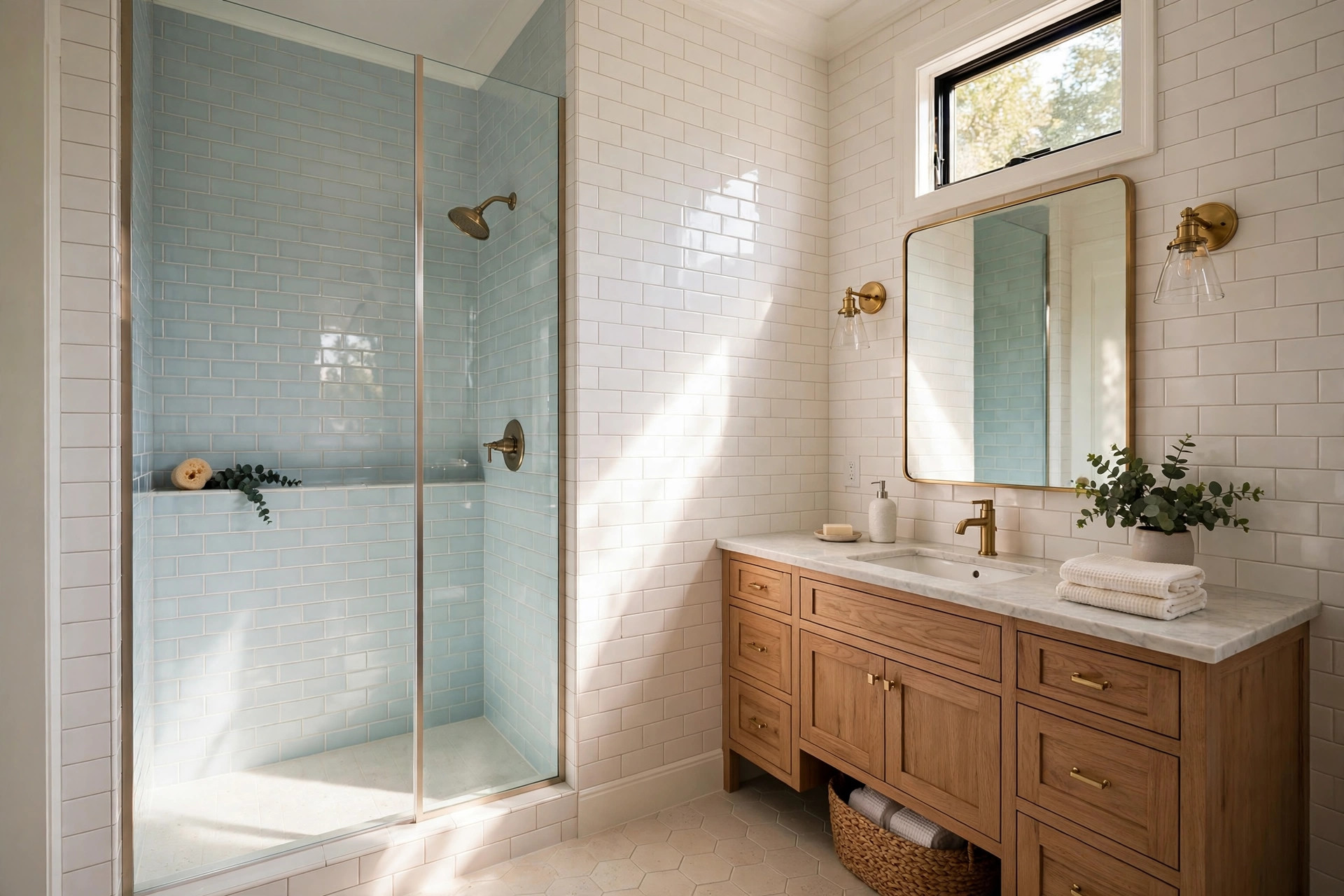

Finding bathroom wall tiles deals near me is one of the smartest moves a homeowner can make before a remodel. Tile is a long term purchase. It stays on the wall for twenty or thirty years. A good deal on wall tile can cut hundreds of dollars from a project. A bad deal, or a price that only looks low, can cost far more over time. This guide explains where to look, what to check, and how to compare offers so you pay a fair price and get tile that lasts.
Why It Matters
Bathroom walls take constant punishment. Steam from the shower. Water splashing off the sink. Soap and cleaning sprays that wear on weak surfaces. Good tile stands up to all of it. Cheap tile that is poorly made will crack, stain, or lose its shine in a few years. Then you pay twice: once to buy it, and once to tear it out.
The price of bathroom wall tile covers a wide range. Plain ceramic tile can run a few dollars per square foot. Handmade porcelain or stone can run many times that. A local deal does not always mean the lowest price in town. It means strong value for the grade you need. A mid grade tile at forty percent off is often a better buy than a premium tile at full price, if the mid grade tile fits your wall and your budget.
Deals also move fast. Tile stores clear out lines when new colors arrive. Home centers run holiday sales. Local shops close out odd lots from cancelled orders. The buyer who knows what to look for can catch these sales at the right time and save real money.
What to Look for When You Compare Deals: Bathroom Wall Tiles Deals near Me
A tile deal has two parts: the price and the product. Judge both before you spend.
Start with the tile itself. Pick up a sample if the store allows it. Look at the glaze. It should be smooth and even, with no pinholes or dull spots. Check the back of the tile for the brand mark and the grade stamp. First grade tile is the standard for walls. Second grade tile may have small flaws. There is nothing wrong with second grade tile for a wall if the price reflects it, but you should know what you are buying.
Ask for the water absorption rate. Wall tile does not need the low absorption rate of floor tile, but the glaze should be non porous. In a shower, the grout and the backer board matter more than the tile, but a weak glaze will fade under daily steam and soap. Guides on wall tile basics, such as a bathroom wall tiles buying guide, explain these numbers in plain terms.
Measure your walls before you shop. Write down the length and height of each wall. Subtract doors and windows. Multiply to get square feet. Then add fifteen percent for cuts and breakage. This number is your working figure. A deal priced per square foot only makes sense when you know your total. Bring the number with you. It stops guesswork at the counter.
Where to Find the Deals
The search for bathroom wall tiles deals near me works best when you check several kinds of sellers.
Local tile showrooms are the first stop. They often keep a clearance section with tiles from ended lines. These tiles are still first grade. The line was simply replaced by a new color or size. Ask the staff what is in clearance and what is coming in. A polite question can uncover stock that is not on the floor yet.
Large home centers are the second stop. Chains such as Home Depot and Lowe’s run regular sales on tile, and they publish their flyers online. Check the flyer before you drive over. Prices vary by store, and some deals are online only. Compare the in store price with the website price on your phone.
Smaller local stores form a third source. They may sell closeouts from cancelled builder orders. A builder may have ordered two hundred boxes and needed only one hundred fifty. The rest goes to a local shop at a discount, and the shop passes it on. The supply is limited, so buy your full amount at once. Do not expect more later.
Online sellers add a fourth path. Some will ship tile to your home or to the store for pickup. Watch the shipping cost. Tile is heavy. Freight can erase a discount. A deal that looks strong online may cost more than the same tile on the shelf ten miles away once freight is added. Home guides such as The Spruce also round up seasonal tile sales, which helps you time a trip.
Types of Wall Tile and What They Cost
Ceramic tile is the common choice for bathroom walls. It is made from clay, fired once or twice, and finished with glaze. It costs less than most other types and comes in many colors and sizes.
Porcelain tile is denser than ceramic. It handles moisture well and keeps its color over time. It costs more per square foot. For shower walls, porcelain is a sound choice. It pairs well with quality bath fixtures, such as those shown by American Standard, when you plan the whole room at once.
Glass tile adds shine and color depth. It is often sold in mesh sheets of small squares. It costs more than ceramic. It works best as an accent band or a niche wall rather than for a whole shower.
Stone tile, such as marble or travertine, gives a rich look. It costs the most. It needs sealing and more care than glazed tile. For a wall that will see daily water, stone is a project for someone who will keep up with upkeep.
Subway tile, three by six inches, is the classic bathroom wall tile. It comes in ceramic and porcelain. Prices stay low because makers produce it in great volume. Penny round, hexagon, and large format tiles follow in price from low to high. Large format tiles need fewer grout lines, which can cut labor cost for the installer, but they demand a very flat wall.
Cost and Price: Reading the Numbers
Tile prices are quoted per square foot, per tile, or per box. Convert every offer to price per square foot before you compare. A box that holds ten square feet at thirty dollars costs three dollars per square foot. A single tile priced at one dollar fifty cents may cover a third of a square foot. That equals four dollars fifty cents per square foot. The box with the lower single tile price is not always the cheaper buy.
Watch the extras. Thinset mortar, grout, spacers, sealer, and tools add up. A true deal account for these. If one seller sells tile at two dollars per square foot but charges high prices for grout and thinset, and another sells tile at three dollars with fair prices on supplies, the total cost may be close. Add it all up.
Ask about the return policy. Tile deals from clearance bins are often final sale. If you break more tile than planned, you may not be able to buy more of the same lot. Shade can vary between lots. This is why the fifteen percent overage matters. Buy it once.
Labor is a separate cost if you hire an installer. Ask installers for a price per square foot for setting tile, plus a price for prep work. Prep often includes fixing the wall surface and installing cement backer board. Wall prep matters more than most buyers think. Tile over a weak wall will fail no matter how good the tile is. Renovation resources such as This Old House give a clear picture of proper wall prep.
Timing Your Purchase
Tile goes on sale on a cycle. Holiday weekends are the big ones. Memorial Day, Labor Day, and the end of the year bring strong sales at the large chains. January often brings clearance as stores make room for spring stock. New tile lines arrive in spring, so winter is a good time to find last season’s lines at a discount.
Local showrooms clear floor samples when they reset displays. A floor sample may cover only a few square feet. It suits a small wall or a backsplash, not a full shower. Ask how many square feet are available before you plan around a sample lot.
If your installer holds a trade account, ask if the contractor price applies to your order.
Planning the Job Around Your Fixtures
Tile does not live alone in a bathroom. Plan the tile with the rest of the room. The vanity, the faucets, the shower door, and the tub or shower base all meet the tile. Measure the gaps where tile meets fixtures. Order trim pieces and edge tiles that match your field tile. A good deal on field tile means little if matching trim is only sold at full price.
If you are changing faucets in the same project, review a brushed nickel faucets buying guide before you shop for tile. Pick your finish first. Then choose grout and tile colors that sit well with it. If you are adding a shower door, read a frameless shower doors buying guide early. The door installer needs to know the tile thickness and where the glass meets the wall.
Layout matters too. A simple running bond pattern in subway tile is fast to set. A herringbone pattern takes more time and more cuts. Labor cost rises with pattern difficulty. A simple pattern in a good tile often beats a fancy pattern in a cheap tile, both in looks and in cost.
Care and Upkeep of Wall Tile
Tile walls are easy to keep. The grout needs the most care. Use a pH neutral cleaner for routine cleaning. Wipe down shower walls after use to cut soap scum.
Seal the grout once a year in wet areas. A drop of water on sealed grout will bead up. Check caulk lines where tile meets the tub or the pan. Old caulk pulls away and lets water behind the tile. Cut out bad caulk and lay a fresh bead of kitchen and bath silicone.
Glass tile needs gentle handling. Avoid abrasive pads on glass. Stone tile needs its own sealer and gentle cleaners. Porcelain and glazed ceramic are the easiest to care for, which is one more reason they suit busy bathrooms.
Safety During Tile Work
Cutting tile creates dust and sharp edges. Silica dust from cutting tile and backer board harms the lungs. Cut outdoors when you can, or use a wet saw that keeps dust down. Wear a dust mask rated for fine particles. Wear eye guards and gloves. Glazed tile edges can be as sharp as a knife.
Lifting tile boxes is heavy work. A box of large format tile can weigh sixty pounds or more. Lift with the legs, not the back. Set boxes down where they will be used so you carry them once.
Bathrooms are small work zones. Keep the floor dry. Water on the floor plus tile dust makes a slick surface. Keep tools in one spot and clean up each day. Safety guides from makers such as Kohler, Moen, and Delta remind remodelers that careful work habits prevent most accidents.
Frequently Asked Questions
How much wall tile do I need for a standard bathroom? A standard full bath often needs sixty to eighty square feet of wall tile, counting a shower or tub surround and a backsplash. Measure your own walls and add fifteen percent. Small half baths need far less.
Are cheap tiles from clearance bins worth buying? Yes, if they are first grade and you buy enough from one lot. Clearance tile is often strong stock at a low price. Check the grade, the shade lot, and the return policy. Avoid cracked boxes or mixed lots.
What is the cheapest tile type for bathroom walls? Plain ceramic subway tile is usually the lowest cost per square foot. It also sets fast, which keeps labor down. It has served American bathrooms for over a century and still looks right.
Can I mix tile brands in one bathroom? Yes, but keep the colors and tones in the same family. Mix field tile on the main walls with a different accent tile in the niche or above the vanity. Check that grout colors suit both tiles.
How do I know a deal is real and not a fake markdown? Write down the everyday price of the tile before the sale. Check the price at two stores. A true sale beats the everyday price by a clear margin. Watch for stores that raise the base price before a sale. Online price histories and flyers help.
Should I buy tile online or at a local store? Local stores let you see the true color and feel the glaze, and you avoid freight damage. If you buy online, order a sample first and check the freight cost to your door.
A Short Final Word
The best bathroom wall tiles deals near me are found by shoppers who do the groundwork. Measure the walls. Know the tile grade you need. Check local showrooms, home centers, and closeout shops. Convert every price to cost per square foot. Buy one shade lot with extra for cuts. When you treat tile as a long term purchase, a good deal is not only about the price tag. It is about tile that looks right, sets true, and holds up for decades. Plan with care, compare with a clear head, and your bathroom walls will pay you back every day. For more bathroom planning ideas, visit Bob Vila and HGTV for remodel guides that pair well with a tile project.
References
American Standard. (n.d.). Bathroom and kitchen products. https://www.americanstandard.com Bob Vila. (n.d.). Home improvement advice. https://www.bobvila.com Delta Faucet. (n.d.). Kitchen and bathroom faucets. https://www.deltafaucet.com HGTV. (n.d.). Home and garden ideas. https://www.hgtv.com Kohler. (n.d.). Bathroom and kitchen fixtures. https://www.kohler.com Lowe’s. (n.d.). Home improvement products. https://www.lowes.com Moen. (n.d.). Faucets and plumbing fixtures. https://www.moen.com The Home Depot. (n.d.). Home improvement products. https://www.homedepot.com The Spruce. (n.d.). Home and garden advice. https://www.thespruce.com This Old House. (n.d.). Home renovation guidance. https://www.thisoldhouse.com
Was this guide helpful?

About James Carter
The My Garden US editorial team writes practical, in-depth home and garden guides for American homeowners — tested advice, no fluff.
You May Also Like
Bathroom Sink Vanities Reviews Buying Guide USA: How to Choose the Right One
July 27, 2026 0 views
Freestanding Soaking Tubs Deals Near Me: How to Find a Good Price Without Buying a Bad Tub
August 13, 2026 0 views
Frameless Shower Doors for Florida Homes USA
April 15, 2026 0 views