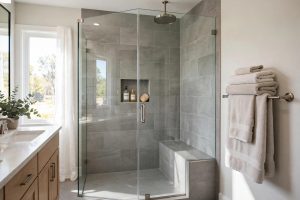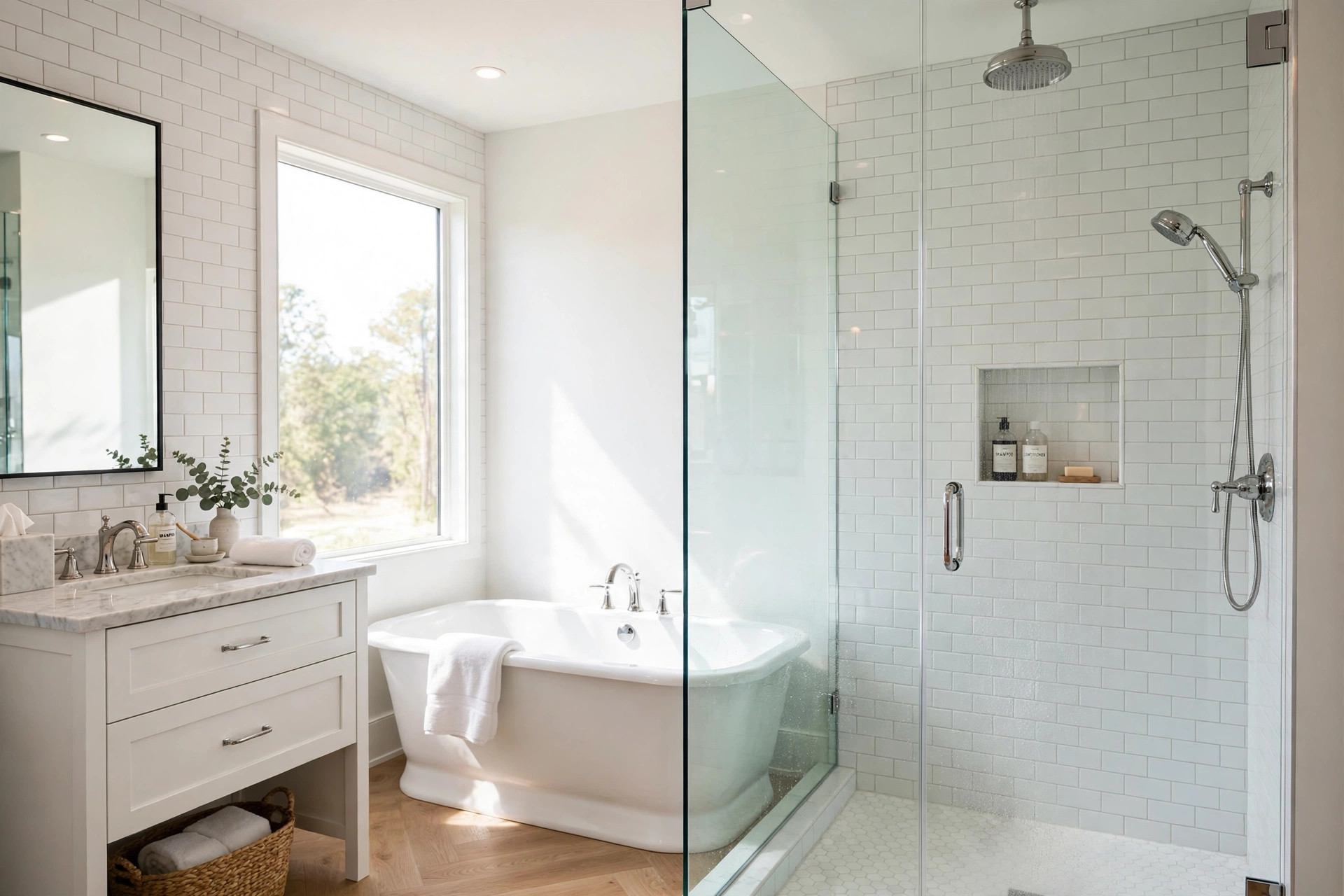

A frameless shower door is made of thick glass with very little metal around the edges. It has no heavy frame to block the view. The glass is held in place by small clips, hinges, or channels. This gives the bathroom a clean and open look. Many homeowners in the United States choose this style during a remodel. This frameless shower doors buying guide USA will walk you through the choices. You will learn about glass types, door styles, sizing, prices, and care. By the end, you will know how to shop with confidence.
Why Frameless Shower Doors Matter
A framed shower door has metal all around the glass. Over time, soap scum and mold can grow in the metal tracks. A frameless door has almost no track. Water drains away more easily. Cleaning takes less time. The thick glass also feels strong and solid when you open it.
Frameless doors make small bathrooms look larger. The clear glass lets light move through the room. If you spent money on nice tile, a frameless door lets you see it. A glass shower with no frame looks modern and timeless at the same time. It works with tile, marble, stone, and acrylic walls. It fits both new builds and remodel jobs.
Types of Frameless Shower Doors: Frameless Shower Doors Buying Guide Usa
Frameless doors come in several shapes. The right shape depends on your shower layout and how much space you have.
Swing doors. A swing door opens like a regular door. It can swing outward, and some models swing both ways. Swing doors need clear space in front of the shower. They are the most common choice for alcove showers with a single opening.
Sliding doors. Sliding panels move on a thin top rail or on small rollers. They are a good choice when a swing door would hit the toilet or the vanity. The glass panels overlap when closed.
Fixed panel screens. A single fixed panel stands between the shower and the rest of the room. There is no door to open or close. You walk in around the panel. This style is common in walk-in showers. It needs a large shower floor so water stays inside.
Corner enclosures. Two glass walls meet at a corner. The door may be a single swing panel or two panels that meet at the corner. Corner units save floor space in tight bathrooms.
Tub doors. Frameless glass panels can sit on top of a bathtub instead of a shower curtain. They are usually two sliding panels. This is a simple way to update a tub without full demo work.
If you are planning a full shower rebuild, you may also want to look at walk-in shower kits to compare complete systems with custom glass.
What to Look For When You Shop
Glass thickness is the first thing to check. Frameless doors use heavy glass, usually 3/8 inch or 1/2 inch thick. The thicker glass is heavier and feels more solid. It costs more. Three-eighths inch glass is fine for most homes. Half-inch glass is best for tall doors or wide panels.
All frameless shower glass should be tempered safety glass. Tempered glass is heat treated so it is much stronger than regular glass. If it ever breaks, it crumbles into small dull pieces instead of sharp shards. Look for a small tempered mark in the corner of the glass. This mark shows that the panel passed safety rules.
The edge work matters too. Polished or beveled edges look clean and are safe to touch.
Glass coatings can save cleaning time. Many doors come with a clear coating that helps water bead and roll off. Less water stays on the glass, so spots and mineral marks form more slowly. Coatings wear down over years of use, but they help a lot at first.
Hardware is the jewelry of the door. Hinges, handles, clips, and towel bars come in finishes like chrome, brushed nickel, oil-rubbed bronze, and matte black. Pick a finish that matches your faucet and showerhead. Solid brass hardware lasts longer than plated zinc in a wet room.
How to Measure for a Frameless Shower Door
Good measurements are the most important part of this project. A frameless door has no frame to hide gaps, so the glass must fit the opening closely.
Measure the width of the opening at the top, middle, and bottom. Walls are rarely straight. Use the smallest number. Measure the height from the curb or threshold to where the glass will end. Glass does not have to reach the ceiling. Most doors leave a gap of a few inches at the top for air flow.
Check that the curb is level. Put a level on the threshold. If it slopes, note which way it slopes so the installer can set the glass to match. Check the walls for plumb with a level held straight up and down. If a wall leans, the glass may need to be cut at a slight angle.
If you are unsure about measuring, many shops will send a person to measure for you. A professional measure is worth it for custom glass, because cut glass cannot be changed. You can also read sizing tips from This Old House before you book a remodel visit.
Frameless Shower Door vs Framed: Which Is Right?
A framed door costs less and is easier to install. It works in almost any opening. The frame hides small gaps and out-of-square walls. But the metal tracks can trap water and grow mold. They need more scrubbing.
A semi-frameless door is a middle choice. It has a frame around some parts but not all. It costs less than full frameless and looks cleaner than a fully framed door.
A frameless door costs more and needs careful measuring. It is easier to clean and looks more open. For a master bathroom remodel, most homeowners pick frameless. For a rental or a tight budget, framed still works fine.
Think about who uses the shower. Small children and older adults may push on the glass for balance. Thick tempered glass is strong, but a grab bar on the wall is a safer support than the door. Plan grab bars into the tile work before the glass is set.
Cost and Price in the USA
Prices vary by size, glass thickness, and whether the door is stock or custom. Here is what American shoppers can expect to pay in 2026.
Stock frameless doors from big retailers run about 400 to 900 dollars for the glass and hardware kit. These kits fit standard openings and you install them yourself or hire a handyman.
Custom frameless doors run about 900 to 2,500 dollars for a typical alcove shower. The price includes measuring, glass cut to fit, and professional install. Large corner units and tall doors with half-inch glass can reach 3,000 dollars or more.
Installation labor alone usually adds 300 to 800 dollars. Custom glass is heavy. Two people are needed to set it safely. A pro installer will also seal the joints with clear silicone so water stays in the shower.
You can compare stock prices at Home Depot and Lowe’s, which both carry several frameless lines. For ideas on where the money goes in a full bath project, Bob Vila and The Spruce publish cost guides that are updated each year.
Hidden costs can add up. If the curb is not level, the installer may need shims or extra sealant. If the tile was set out of square, custom angled cuts cost more. Some towns require a permit for a full shower rebuild, which adds a fee and an inspection visit.
Installation: DIY or Hire a Pro?
A stock kit with clear directions can be a weekend project for a skilled homeowner. You will need a drill, a level, silicone caulk, and a helper. Always carry glass on edge, never flat.
Custom frameless glass is best left to a professional. The glass is cut to your exact opening. Hinges must be set into tile or wall studs. A mistake can crack a panel that took weeks to make. Most glass shops include install in the price.
Ask any installer these questions. How long have you set frameless glass? Do you carry insurance? What is the warranty on the glass and the labor? Will you seal the joints with mildew-resistant silicone? Get the answers in writing before work starts.
Care and Upkeep
Daily care is simple. Keep a squeegee in the shower. Wipe the glass after each use. This one habit stops most spots and streaks.
Weekly cleaning keeps the door clear. Use a soft cloth with mild dish soap and warm water. Rinse and squeegee dry. Avoid harsh scrub pads, which can scratch glass and wear off coatings. Avoid bleach on metal hardware, which can dull the finish.
Hard water leaves white mineral marks. A mix of equal parts white vinegar and water cuts through these marks. Spray it on, wait a few minutes, and wipe clean. Rinse well. Do this once a month in areas with hard water.
Check the silicone seals once a year. If the clear sealant pulls away from the glass or the curb, cut it out and run a fresh bead. Good seals stop slow leaks that can rot the floor under the shower. Design and care ideas from HGTV also cover simple routines that keep a glass shower looking new.
Safety Notes
Frameless shower doors are safe when made and installed correctly. Still, keep these points in mind.
Always buy tempered glass from a known maker. Ask for the safety standard on the panel. The glass should meet the US standard for safety glazing. If a seller cannot name the standard, shop elsewhere.
Never hang heavy items on a glass door. Towels are fine on a towel bar made for the door. Do not sit or lean hard on the glass. Keep the hinges tight. If a door starts to sag or rub, call the installer before it gets worse.
Steam from a hot shower makes the room warm and damp. A good exhaust fan clears the steam fast. Run the fan during the shower and for twenty minutes after.
Homes with small children should keep bath time supervised, as with any glass in the bathroom. You can read general home safety rules at American Standard, which covers bath fixtures for family homes.
Common Mistakes to Avoid
The biggest mistake is measuring once and ordering fast. Measure three times. Write down every number. Photograph the shower with a tape measure in the shot for reference.
Another mistake is picking the door before the tile is done. Set the tile first, let it cure, then measure. Tile thickness changes the opening size. Glass ordered too early may not fit.
A third mistake is ignoring the swing. A swing door needs room to open. A swing door needs room to open. Make sure the door will not hit the toilet, the vanity, or another door.
Do not forget the small gap under the door. A frameless door does not sit tight on the curb. A small gap lets water drain back into the shower. The installer will set the right gap. Do not caulk it shut later.
Many shoppers also forget to match metals. A chrome door handle next to an oil-rubbed bronze faucet can look off. Bring a sample of your faucet finish when you shop for hardware. If you are updating the whole bath, Moen and Delta Faucet show bath collections that make matching easy.
FAQ
How much does a frameless shower door cost in the USA? A stock kit costs about 400 to 900 dollars. A custom door with professional install costs about 900 to 2,500 dollars. Large or thick-glass units can cost more.
What glass thickness is best for a frameless shower door? Three-eighths inch glass suits most homes. Half-inch glass is heavier, stronger, and better for tall or wide panels. Both must be tempered safety glass.
Can I install a frameless shower door myself? A stock kit can be a DIY job if you are handy and have a helper. Custom glass should be installed by a professional glass shop.
Do frameless shower doors leak? A well-fit door with good seals keeps water in. Small gaps are normal and let water drain back.
How do I clean a frameless glass shower door? Squeegee after each shower. Clean weekly with mild soap and water. Use vinegar and water monthly for hard water spots. Skip harsh pads and bleach.
Will a frameless door make my small bathroom look bigger? Yes. Clear glass lets light pass through and shows the full tile wall. The room feels open instead of cut in half by a frame or curtain.
A Short Final Word
A frameless shower door is a strong upgrade for almost any bathroom. It looks clean, it is easy to keep clean, and it shows off your tile. Compare a stock kit with a custom quote. Think about who uses the shower and how much upkeep you want to do.
Once the glass is in, a few small touches finish the room. Warm bathroom towel warmers feel good on cold mornings next to a glass shower. Some homeowners pair the remodel with bidet toilet seats for a full bath upgrade. Shop from trusted sellers, hire a careful installer, and your frameless door will serve you well for many years.
References
American Standard. (n.d.). Bathroom and kitchen products. https://www.americanstandard.com Bob Vila. (n.d.). Home improvement advice. https://www.bobvila.com Delta Faucet. (n.d.). Kitchen and bathroom faucets. https://www.deltafaucet.com HGTV. (n.d.). Home and garden ideas. https://www.hgtv.com Lowe’s. (n.d.). Home improvement products. https://www.lowes.com Moen. (n.d.). Faucets and plumbing fixtures. https://www.moen.com The Home Depot. (n.d.). Home improvement products. https://www.homedepot.com The Spruce. (n.d.). Home and garden advice. https://www.thespruce.com This Old House. (n.d.). Home renovation guidance. https://www.thisoldhouse.com
Was this guide helpful?

About Emily Rodriguez
The My Garden US editorial team writes practical, in-depth home and garden guides for American homeowners — tested advice, no fluff.
You May Also Like
Bathtub Refinishing Kits USA Online Deals: A Plain Guide
January 16, 2026 0 views
Brushed Nickel Faucets: A Reviews and Buying Guide for American Homes
March 21, 2026 0 views
Mirrored Medicine Cabinets Reviews Buying Guide USA
July 4, 2026 0 views