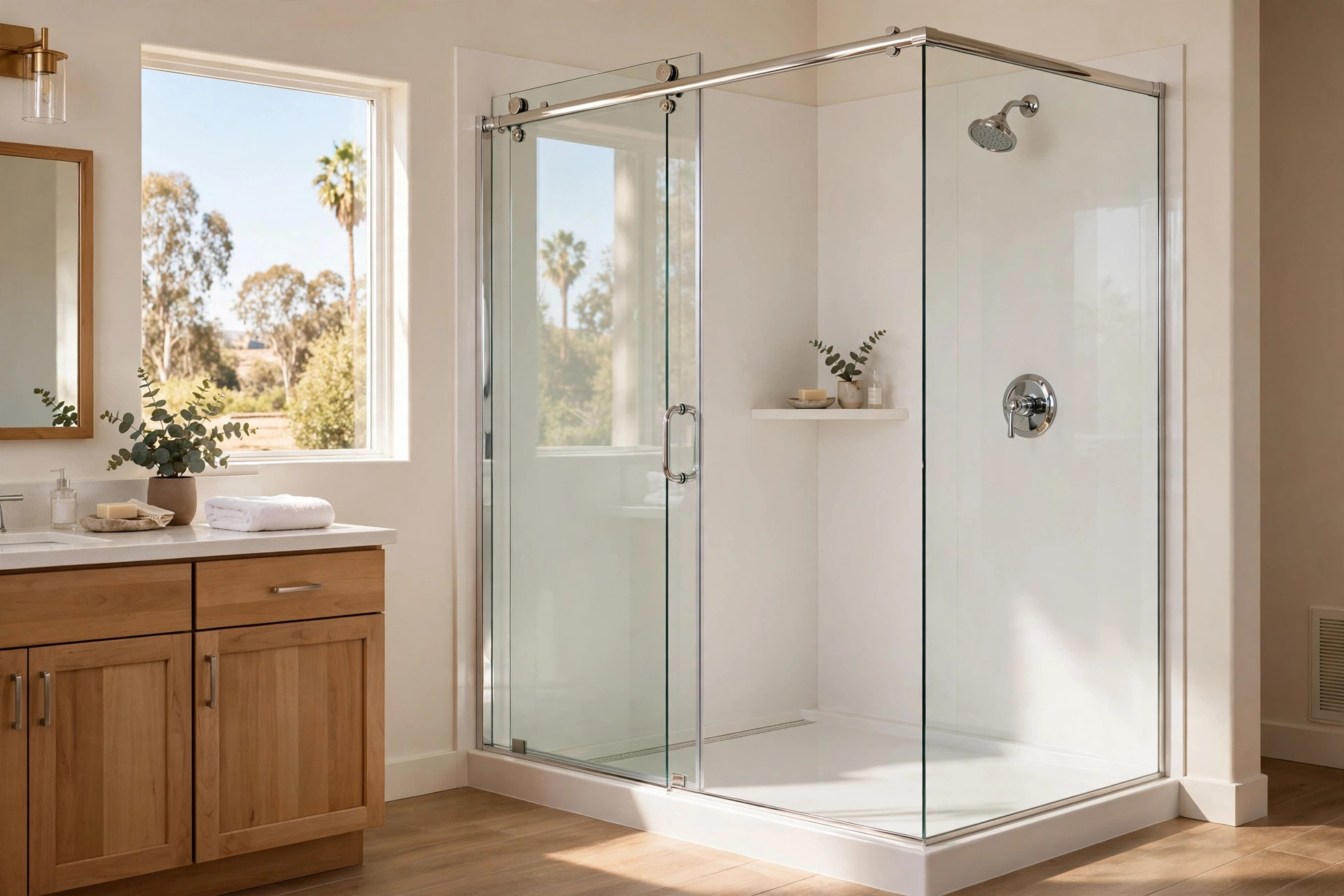

Walk in shower kits california homes usa is a search term that has grown in use over the past few years. More and more owners of California homes are taking out old tubs and tub-shower units and putting in walk-in showers. A kit makes the job simpler. Instead of buying each part on its own, the owner buys one boxed set that holds the base, the walls, the doors, the drain, and the hardware. Everything in the box is made to fit together. This article explains what these kits are, how to choose one, what they cost, and how to keep one in good shape in a California home.
Why Walk-In Shower Kits Matter in California Homes
California homes come in many forms. There are small beach cottages, ranch houses from the 1950s, tract homes from the 1980s, and new builds with open floor plans. Many of these houses have small bathrooms. The old tub and shower unit takes up space and has a high step over the side. A walk-in shower kit gives back room. The base sits low to the floor. The step over the edge is short, often only three or four inches. That makes the bath safer for older folks and for anyone with sore knees.
Water use is a second reason. California has dry years, and cities set rules on water use. A walk-in shower with a low-flow showerhead uses less water than a full bath. A person can buy a kit, pair it with a water-saving head, and cut use. A third reason is looks. Walk-in showers have clean lines and clear glass. They make a small bath look bigger. Home design sites such as HGTV show how a glass walk-in opens up a tight floor plan. Home buyers like that. Many real estate agents say an updated bath helps a house sell.
How a Walk-In Shower Kit Works: Walk in Shower Kits California Homes Usa
A walk-in shower kit is a packaged set. The maker builds the parts in a factory so they fit as one system. A standard kit has five main parts.
First is the base, also called the shower pan. The base forms the floor of the shower. It is molded from acrylic, fiberglass, or a stone blend. It slopes gently toward the drain so water runs off. Many bases have a low edge, called a low threshold, which makes entry easy.
Second is the drain assembly. The kit holds a drain cover, a strainer, and the parts that join the base to the house drain pipe.
Third are the wall panels. The panels cover the shower walls. They are made from acrylic, cultured marble, or a solid surface. Some kits have panels with built-in shelves or a corner caddy. The panels lock together with no grout lines, which means less cleaning.
Fourth is the door set. Many kits use glass doors. Some doors slide. Some swing on hinges. Some kits are doorless with a partial glass panel that keeps water in. Big makers such as Kohler, Moen, Delta Faucet, and American Standard all sell boxed kits in standard sizes.
Fifth is the hardware. This includes handles, hinges, door tracks, and screws. A good kit also holds a full guide with step-by-step plans.
Types of Walk In Shower Kits
Walk in shower kits for California homes come in several forms. The right type depends on the size of the bath, the budget, and the style of the house.
Alcove Kits
Alcove kits fit into a space with three finished walls. This is the most common type in American tract homes. The kit base slides into the alcove. Two wall panels or three cover the open sides. Alcove kits are made in standard sizes: 36 by 36 inches, 48 by 36 inches, 60 by 30 inches, and 60 by 36 inches. If the old tub was 60 inches wide, an alcove kit of the same width fits the same spot with little extra work.
Corner Kits
Corner kits fit into a corner where two walls meet. They are made for smaller baths. Sizes run from 32 by 32 inches up to 48 by 48 inches. Corner kits often have neo-angle bases, which have a clipped front corner. The clipped front saves floor space and leaves room for the bathroom door to swing.
Curbless Kits
Curbless kits have a base that sits flat with the bathroom floor. There is no lip at all. The floor slopes into a center or trench drain. Curbless kits look clean and modern. They are the best choice for wheelchair users. But they need care in the install. The subfloor must be cut down or built up so the slope works. In California, a curbless shower may need a special permit and an inspection of the waterproofing.
Walk-In Tub-Shower Combos
Some makers sell kits that keep a low step-in tub with a shower above it. These are for folks who want to soak but need an easy step over a low wall. They are less common in California, but they suit small homes where the owner wants both options.
What to Look For When Choosing a Kit
Buying a kit is like buying any big home product. A few points matter most.
Base material. Acrylic is light, warm to the touch, and resists stains. Fiberglass is cheaper but wears faster. Stone blend, sometimes sold as a solid surface, is heavy and strong. It feels like real stone. It costs more. For a California home that will be sold in a few years, a stone blend base is a strong selling point.
Wall panels. Look for panels with a thick core. Thin panels flex and feel cheap. Some panels have a molded tile look. They give the look of tile with no grout to scrub. Other panels are smooth and plain. Both are fine. Pick the one that suits the style of the bath.
Glass thickness. Frameless doors look best with glass at least 3/8 inch thick. Thinner glass needs a frame for support. If you want a doorless look, ask how the half glass panel is held. Clamps and channels must be rust proof.
Drain placement. Check where the drain sits in the base. The house drain pipe is in a fixed spot under the floor. If the new base has the drain in a different spot, a plumber must move the pipe. That adds cost. Measure first, then buy a kit with a matching drain spot.
Size and fit. Measure the alcove twice. Walls are rarely square in older California homes. A house from the 1950s may have walls that lean. Buy a kit with some trim or filler strips so small gaps can be covered.
For more on doors, see the guide to frameless shower doors and the guide to rain shower heads, which many owners add to a new walk-in shower.
Cost and Price in California
Cost is the question most buyers ask first. Walk in shower kits for California homes run across a wide price range.
A basic fiberglass or thin acrylic alcove kit costs between $400 and $900 at big box stores such as The Home Depot and Lowe’s. These kits work well in rentals and small baths. They last about ten years with fair care.
A mid-range acrylic kit with molded tile walls and glass doors costs between $900 and $2,200. This is the most common choice for owner homes. The finish is nicer. The doors are heavier. The base feels solid underfoot.
A high-end stone blend kit with thick glass and solid surface walls costs between $2,200 and $4,500. These kits suit new builds and full bath remodels. They can last twenty years or more.
Install cost is separate. A handy owner can install a kit in a weekend if the drain lines up and the walls are square. A plumber or bath contractor charges between $1,500 and $4,000 for a full install in California. The price is higher in the Bay Area and Los Angeles than in the Central Valley. If the drain must move, if the walls need repair, or if the floor needs a new waterproof bed, the bill rises. Always get two or three bids in writing.
Water-saving rules add a small cost note. California plumbing code limits showerheads to 1.8 gallons per minute. Most kits sold in the state ship with a compliant head or none at all, so the buyer picks one. A good low-flow head costs $40 to $120.
California Rules and Permits
California has rules that touch any shower work. First, most cities ask for a permit when a shower base or drain is moved. If the kit goes into the same spot as the old tub and no pipes move, some cities allow a simple over-the-counter permit. If pipes move, a full permit and an inspection are normal. Check with the city building office before work starts.
Second, the state plumbing code sets the rules for showerheads, drains, and waterproofing. The shower must have a working pressure balance or thermostatic valve so hot water cannot scald. Most kits do not hold the valve, so the buyer buys it apart. Pick a valve that meets the state code.
Third, some California cities have green building rules for remodels. These rules may ask for water-saving fixtures and low-VOC sealants. A quick call to the city office tells the owner what is needed.
Installing the Kit: The Basic Steps
Most kits follow the same plan. The steps below give the general order. Always read the maker guide for the exact kit on hand.
1. Turn off the water to the bath. Take out the old tub or shower. Check the walls and floor for rot or mold. Fix any damage now. 2. Set the drain pipe to the right height and spot. Dry fit the base to check the fit. 3. Set the base in a bed of mortar or on the leveling pads the kit holds. Make sure the base is level. Let the mortar set. 4. Set the wall panels. Start with the back panel, then the side panels. Use the adhesive the maker names. Seal every joint with silicone. 5. Set the doors or glass panels. Hang doors last, after the walls are firm. Adjust hinges and tracks until the doors move free and seal tight. 6. Join the drain and test. Run the shower for ten minutes. Look under the floor and around the base for leaks. Caulk the outer edges.
A full job takes two to four days for a first-time installer. Home project guides from This Old House, Bob Vila, and The Spruce walk through each step with photos. For a look at the broader buying process, the walk in shower kits buying guide gives more detail on sizes and brands.
Care and Upkeep
A walk-in shower kit is easy to care for, but a few habits keep it looking new.
Wipe down glass doors after each use with a squeegee. This stops water spots and soap film. California has hard water in many areas, and hard water leaves white marks on glass.
Clean acrylic and fiberglass with a soft cloth and a mild cleaner. Never use scouring powder or steel wool. They scratch the surface. Scratched acrylic holds soap film and looks dull.
Reseal silicone joints once a year. Pull up any loose caulk and lay a fresh bead. Good caulk stops water from getting behind the walls.
Clean the drain cover monthly. Hair and soap build up fast. A clear drain keeps water moving and stops smells.
Check the door hinges and tracks twice a year. Tighten loose screws. A door that drags will chip the base edge.
Safety Points for California Homes
Safety is one of the top reasons to pick a walk-in kit. A low threshold means no high step. Add these points for a safer bath.
– Put a grab bar on the back wall and one near the entry. Bars must be screwed into wall studs, not just into the panel. See the guide to shower grab bars for placement tips. – Use a base with a textured floor or add stick-on grip strips. – Set the water heater to 120 degrees Fahrenheit. This stops scalds, and it meets most maker advice. – Keep a bath mat outside the shower door. Tile floors get slick when wet. – If an older person lives in the house, think about a fold-down shower seat. Many kits have a seat as an add-on.
Earthquake safety is a California point worth a line. Secure tall glass doors with good hinges and keep the bath clear of heavy items on high shelves. After a quake, check the shower for cracked panels or loose glass before using it.
FAQ
How long does a walk in shower kit last? A good acrylic or stone blend kit lasts 15 to 20 years with fair care. A basic fiberglass kit lasts 8 to 12 years. The doors often need new seals or rollers before the base wears out.
Can I install a walk in shower kit myself? Yes, if you have basic tools and some skill. The job needs plumbing work at the drain and careful sealing. If pipes must move or the floor needs repair, hire a plumber.
Do I need a permit in California? In most cities, yes, at least a simple permit. If the drain moves or the work touches the structure, a full permit and inspection are needed. Call the city building office first.
What size kit fits a standard tub space? A standard American tub space is 60 inches wide by 30 or 32 inches deep. A 60 by 30 or 60 by 32 alcove kit fits that space with little change.
Are walk in shower kits good for small bathrooms? Yes. A corner kit as small as 32 by 32 inches fits a tight bath. The low step and clear glass make the room feel larger than a tub unit does.
How much water does a walk-in shower save? A five-minute shower with a 1.8 gallon per minute head uses about 9 gallons. A full bath uses 40 to 60 gallons. The savings are large over a year.
A Short Final Word
Walk in shower kits california homes usa is more than a search term. It stands for a real change in how California owners build their baths. A kit keeps the job simple. The parts fit. The cost is clear up front. The result is a safer, cleaner, and better-looking bath that suits the dry climate and the small floor plans of the state. Measure twice, pick a solid base, seal every joint, and follow the city rules. Do that, and the new shower will serve the house well for many years.
References
American Standard. (n.d.). Bathroom and kitchen products. https://www.americanstandard.com Bob Vila. (n.d.). Home improvement advice. https://www.bobvila.com Delta Faucet. (n.d.). Kitchen and bathroom faucets. https://www.deltafaucet.com HGTV. (n.d.). Home and garden ideas. https://www.hgtv.com Kohler. (n.d.). Bathroom and kitchen fixtures. https://www.kohler.com Lowe’s. (n.d.). Home improvement products. https://www.lowes.com Moen. (n.d.). Faucets and plumbing fixtures. https://www.moen.com The Home Depot. (n.d.). Home improvement products. https://www.homedepot.com The Spruce. (n.d.). Home and garden advice. https://www.thespruce.com This Old House. (n.d.). Home renovation guidance. https://www.thisoldhouse.com
Was this guide helpful?

About Jennifer Lee
The My Garden US editorial team writes practical, in-depth home and garden guides for American homeowners — tested advice, no fluff.
You May Also Like
Double Sink Vanities for Texas Homes USA: Sizes, Styles, and Buying Advice
October 2, 2026 0 views
Bidet Toilet Seats for Texas Homes: A Plain Guide
August 6, 2026 0 views
Brushed Nickel Faucets for Sale USA: What to Know Before You Buy
March 1, 2026 0 views