This double sink vanities american homes guide will walk you through one of the most common upgrades in the modern American bathroom. A double sink vanity is a single cabinet that holds two sinks side by side. It lets two people use the bathroom at the same time without standing in line. In many homes it is the first thing a family changes when the morning rush starts to feel crowded.
The idea is simple. Instead of one sink shared by all, you get two basins with their own faucets, set into one long counter. Each person gets their own space for brushing teeth, washing hands, and getting ready. The cabinet below holds towels, soap, and cleaning supplies. When you plan it well, a double sink vanity can turn a busy family bathroom into a calm and orderly room.
Why a Double Sink Vanity Matters
The morning is the busiest hour in most homes. Parents get ready for work. Children get ready for school. Everyone wants the bathroom at the same time. A single sink slows everything down. Two sinks cut the wait in half. That is the main reason American families choose this upgrade.
There are other gains too. A wide vanity gives more counter space. You can set out soap, toothpaste, and bottles without pushing things aside. Storage grows as well, because a long cabinet has more room for drawers and shelves. Many owners say the bathroom feels more balanced and looks more finished with two sinks.
A double sink vanity can also add value to a home. Buyers often look for master bathrooms with two sinks. Real estate agents know this. If you plan to sell your home one day, a well built double vanity may help the bathroom stand out in the listing photos.
How to Choose the Right Size: Double Sink Vanities American Homes Guide
Size is the first thing to settle. Measure your bathroom before you shop. A double sink vanity needs enough wall to hold two basins and still leave room to walk past.
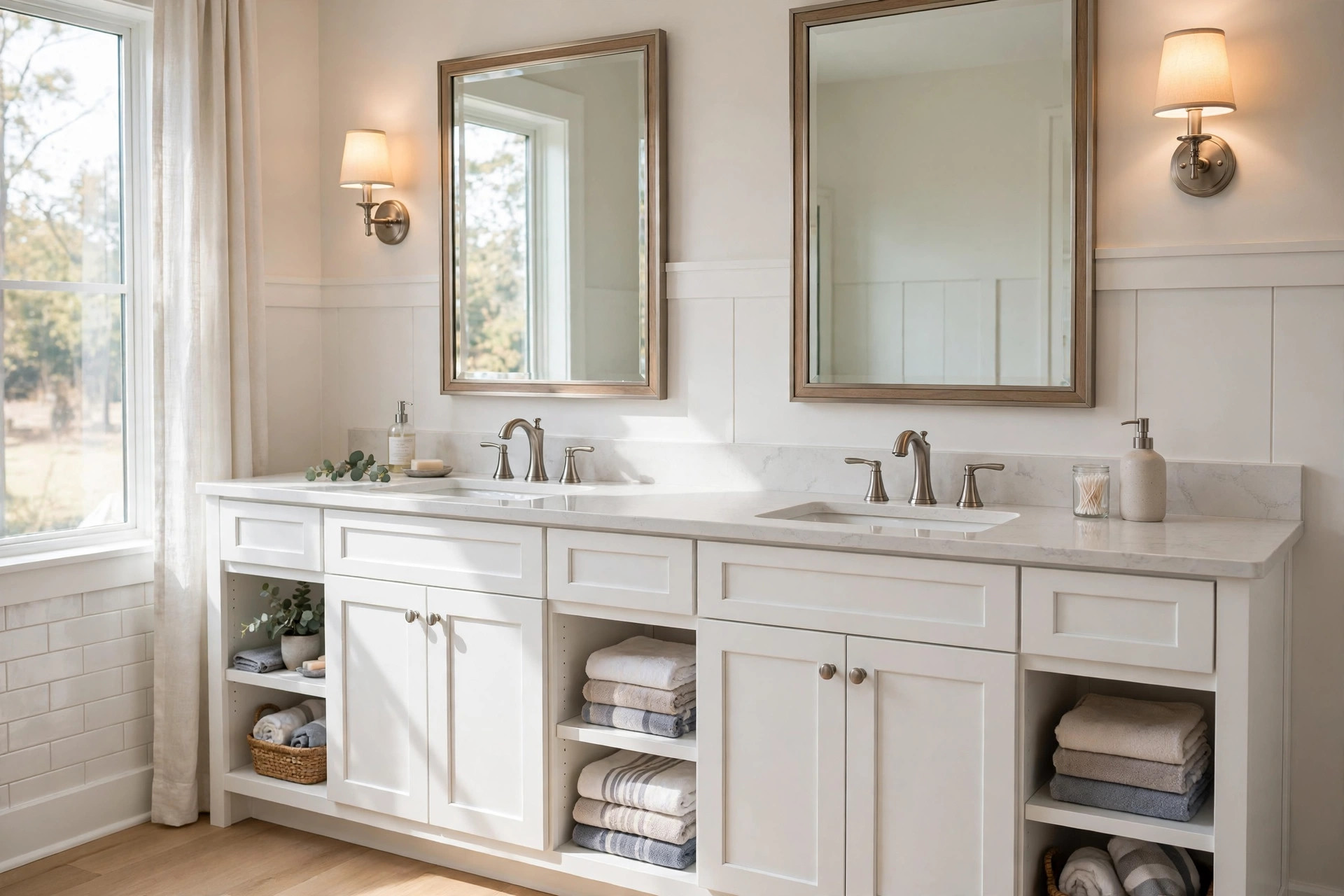
Most double sink vanities are 60 inches wide. That is the common size in American homes. Each sink gets about 30 inches of width, which gives each person fair elbow room. If your bathroom is large, you can look at 72 inch models. These give generous counter space between the sinks.
Small bathrooms need care. A vanity narrower than 60 inches will feel cramped with two sinks. The basins sit too close together, and the counter space between them disappears. If your wall is only 48 inches wide, it may be wiser to keep a single sink with a wide cabinet. Measure twice before you decide.
Check the depth as well. Standard vanities are 21 to 22 inches deep. That depth fits most bathrooms. In a tight room, a shallow vanity of 18 inches may work better. Also check the height. Many modern vanities stand 34 to 36 inches tall. Older homes often have 30 inch vanities. Taller vanities are easier on the back for most adults.
Leave space around the vanity. You need at least 21 inches of clear floor in front of it. Doors should swing open without hitting the cabinet. Drawers should pull out fully. Walk through the motions in your mind before you buy.
When you shop for bathroom sink vanities buying guide usa resources, you will see the same 60 inch rule repeated often. It holds true for most families.
Types and Options
Double sink vanities come in several styles. Each suits a different taste and a different home.
Freestanding vanities
A freestanding vanity sits on legs or a full base. It looks like a piece of furniture. This is the most common type in American homes. It is easy to install and comes in many woods and colors. You can move it during a remodel if needed.
Wall mounted vanities
A wall mounted vanity hangs on the wall. The floor below stays clear. This makes the bathroom look larger and makes cleaning the floor easy. These vanities need strong wall support, so the framing must be checked first.
Cabinet styles
The cabinet can be open or closed. Open shelves show off towels and baskets. Closed drawers hide clutter. Many families prefer a mix: deep drawers for towels and a small open shelf for soap. Soft close hinges keep the drawers quiet, which matters in a house with light sleepers.
Sink types
The basins can sit on top of the counter, drop into it, or sit under it. A vessel sink sits on top like a bowl. It looks bold but can be hard to clean around. A drop in sink has a rim that rests on the counter. An undermount sink is fixed below the counter, which makes wiping crumbs and water into the sink easy. Undermount sinks are the most common choice for double vanities in American homes.
Materials
The cabinet may be solid wood, plywood, or engineered board. Solid wood and plywood handle bathroom moisture best. The counter may be quartz, granite, marble, or cultured stone. Quartz is popular because it resists stains and needs little care. Granite is strong and natural. Marble is lovely but can stain with hard water and soap.
Faucets finish the look. Match the faucet to the other fittings in the room. Brushed nickel faucets buying guide usa pages show how this soft metal finish fits both old and new bathrooms. Chrome, matte black, and brushed brass are other common choices.
Plumbing: What to Know Before You Buy
Plumbing is the hidden part of the job. Plan it before you order the vanity.
A double sink vanity needs two drain lines and two water supply lines. Many bathrooms already have these if they once had two sinks. If the room has only one sink, the plumber must add a second set of lines. This adds cost and may mean opening the wall.
Check where the drain pipe sits. The new vanity must line up with it, or the pipes must be moved. Measure the height of the drain as well. Wall mounted vanities need the drain at the right height inside the wall.
Water pressure is another point. Two faucets running at once can drop the pressure a little. In most homes this is fine. If your home has weak pressure, a plumber can check the lines before you start.
Shut off valves should be easy to reach. Make sure each sink has its own pair of valves under the cabinet. If one faucet leaks, you can shut off that side and keep using the other sink.
Many owners read the plumbing advice on This Old House before they start. The site explains drain and vent work in plain terms. For general bathroom planning, The Spruce keeps clear guides on vanity sizes and layouts.
Cost and Price Ranges
Prices for double sink vanities vary widely. Here is what most American shoppers can expect.
A basic ready made double vanity of 60 inches costs about 400 to 900 dollars. These come from large home stores and include the cabinet and top. The quality is fair and suits rental homes and tight budgets. You can browse current models at Lowe’s and The Home Depot.
A mid range vanity costs 900 to 2,000 dollars. The wood is better, the drawers glide well, and the top is often quartz or granite. This is the sweet spot for most family bathrooms.
A high end or custom vanity costs 2,000 to 5,000 dollars or more. You choose the wood, the finish, and the stone. A cabinet maker builds it to fit your wall exactly. These pieces last for decades.
Faucets add 60 to 300 dollars each, so two faucets double that cost. Mirrors, lights, and hardware add more. Installation by a plumber often runs 500 to 1,500 dollars, depending on how much pipe work is needed. Designers like the finish galleries at Kohler and Moen for ideas on matching faucets and hardware.
Budget for the small things too: caulk, shut off valves, drain parts, and a new mirror. They add up fast.
Light and Mirrors
Good light matters at a double vanity. Two people need to see their faces clearly. One long light bar over both sinks works well. Two separate lights, one over each sink, look balanced and give even light.
Side lights are even better. Lights on each side of a mirror cut shadows on the face. This helps with shaving and makeup. Warm white bulbs around 3000 Kelvin give a natural look.
Mirrors can be one wide piece or two separate mirrors. Two mirrors mark each person’s space and look neat over a double vanity. Make sure the mirror is at a height that suits the shorter users of the house as well as the tall ones.
For lighting ideas, see the bathroom vanity light bars buying guide usa and the bathroom sections at HGTV and Bob Vila.
Care and Upkeep
A double sink vanity is easy to keep up if you follow a few habits.
Wipe the counter each day. Water spots and toothpaste dry fast and leave marks. A soft cloth is enough for daily cleaning. Once a week, clean the sinks and faucets with a mild cleaner. Avoid harsh acids on natural stone.
Check the caulk line where the counter meets the wall. If it cracks, water can seep behind the vanity. Re-caulk when you see gaps. This small job stops big damage.
Tighten faucet handles once a year. They loosen with daily use. Look under the cabinet now and then for slow drips. A small leak left alone can ruin the cabinet floor.
Wood cabinets like dry air. Run the bath fan during showers and for 20 minutes after. This keeps moisture down and guards the wood. A quiet fan that you actually use beats a loud one that stays off.
Quartz counters need little care. Granite may need sealing once a year. Marble needs gentle cleaners only. Check the care card that comes with your stone.
The fixture makers Delta Faucet and American Standard both publish simple care guides for their faucets and sinks. They are worth reading before you buy cleaning products.
Safety Notes
Safety is easy to overlook in a bathroom. A double vanity serves the whole family, so plan for all ages.
Secure the vanity to the wall. A tall cabinet can tip if a child climbs it. Use the brackets that come in the box. This takes only a few minutes.
Set the water heater to 120 degrees Fahrenheit. Two sinks mean more hands under hot water, often small hands. This setting prevents most scalds.
Keep medicines and cleaners in a locked cabinet or a high drawer. The extra storage of a double vanity is handy, but it also puts more items within reach. A simple child lock on one drawer solves this.
Make sure the floor in front of the vanity is not slippery when wet. A bath mat with a rubber back helps. Good lighting, covered above, also prevents trips and bumps in the early morning.
Frequently Asked Questions
How wide should a double sink vanity be? Sixty inches is the standard width for most American homes. It gives each sink about 30 inches of space. Seventy-two inches feels roomy. Below 60 inches, two sinks get cramped, and a single wide sink may serve you better.
Can I put a double vanity in a small bathroom? Only if the wall is long enough. You need 60 inches of wall at least, plus clear floor space in front. In a tight bath, a single sink with good storage often works better than two crowded sinks.
Do I need a plumber to install a double sink vanity? If your bathroom already has two sets of water and drain lines, a handy owner can often do the swap. If new lines must be added, hire a licensed plumber. Moving drains and vents is skilled work, and local codes may require a permit.
What is the best countertop for a double vanity? Quartz is the most popular choice. It resists stains, needs no sealing, and comes in many colors. Granite is a close second for strength. Marble is beautiful but needs more care in a busy family bath.
How much does a double sink vanity cost installed? A basic setup with installation often runs 1,200 to 2,500 dollars. Mid range projects run 2,500 to 5,000 dollars. Custom work with new plumbing can pass 6,000 dollars. Get two or three quotes from local plumbers before you commit.
Should the two sinks match? Yes, in most cases. Matching basins and faucets give a calm, balanced look. The cabinet, top, and hardware should also match. If you want variety, change the mirror frames or the light shades, not the sinks.
A Short Final Word
A double sink vanity is a practical upgrade that pays off every day. It ends the morning line at the bathroom door. It adds storage and counter space. It gives the room a finished, balanced look. Measure your wall, check your plumbing, and choose materials that suit your family’s habits. With a little planning, this one change can make the busiest room in the house run with ease.
References
American Standard. (n.d.). Bathroom and kitchen products. https://www.americanstandard.com Bob Vila. (n.d.). Home improvement advice. https://www.bobvila.com Delta Faucet. (n.d.). Kitchen and bathroom faucets. https://www.deltafaucet.com HGTV. (n.d.). Home and garden ideas. https://www.hgtv.com Kohler. (n.d.). Bathroom and kitchen fixtures. https://www.kohler.com Lowe’s. (n.d.). Home improvement products. https://www.lowes.com Moen. (n.d.). Faucets and plumbing fixtures. https://www.moen.com The Home Depot. (n.d.). Home improvement products. https://www.homedepot.com The Spruce. (n.d.). Home and garden advice. https://www.thespruce.com This Old House. (n.d.). Home renovation guidance. https://www.thisoldhouse.com
Was this guide helpful?

About Sarah Mitchell
The My Garden US editorial team writes practical, in-depth home and garden guides for American homeowners — tested advice, no fluff.