Best Garden Hose Reel Retractable Reviews for 2026
A garden hose left on the ground is a daily trouble. It tangles. It kinks. It trips people who walk across the yard. The best garden hose reel retractable reviews solve this old problem with a simple spring. You pull the hose out to water your plants. When you are done, you give a light tug. The hose winds itself back into a closed case. No coiling by hand. No mess on the lawn.
Retractable hose reels have been on the market for many years. The design has improved in small steps. The cases are stronger now. The springs last longer. The hoses resist kinks better than the thin green hoses of the past. In this guide, we review what makes a retractable reel worth buying. We look at how they work, what to check before you buy, and how much you should plan to spend.
Why It Matters: Best Garden Hose Reel Retractable Reviews
Watering is a large part of yard care. Most homes in America have a garden, a lawn, or a flower bed that needs water in dry weeks. A hose reel makes that chore lighter. You are more likely to water the right way when the hose is easy to reach and easy to put away.
A tangled hose also wastes water. Kinks cut the flow. The sprinkler head sputters. You move the hose and find it crushed under a cart or a chair. A reel with a guide arm feeds the hose out in a straight line. That keeps the water pressure steady from the spigot to the nozzle.
There is also the matter of hose life. A hose that sits in the sun and gets dragged over concrete will crack and split sooner. A closed reel case shields the hose from the sun and keeps it off sharp edges. That can add years to the life of a good hose.
Shoppers who compare hose reel options at large home centers often find the retractable models near the top of the price range. They pay more because the spring and case add cost. The extra money is worth it for people who water often. It saves time every single day.
What to Look For
Start with hose length. Most retractable reels hold between 50 and 100 feet of hose. A few large models hold 130 feet. Measure the distance from your spigot to the far corner of your yard. Add ten feet for slack. Buy a reel that fits that length. A reel wound tight with too long a hose will not retract well.
Next, check the hose diameter. A five-eighths inch hose is the common choice. It gives a strong flow for sprinklers and watering wands. A half-inch hose is lighter and easier to pull, but the flow is weaker. A three-quarter inch hose gives the most water, but it is heavy. For most homes, the five-eighths inch hose is the right middle ground.
Look at the case. Good cases are made of thick plastic or coated metal. They resist sun damage and rust. The case should have vents or a way for water to drain. If the case holds water, the spring can rust from the inside. Read the best garden hose reel retractable reviews from independent testers before you trust a brand claim about rust-proof parts.
The spring is the heart of the reel. Better springs retract the full length of the hose with one pull. Cheap springs weaken after one season. They leave ten or fifteen feet of hose lying on the ground. You cannot inspect the spring in the store. Instead, read owner reviews about the second and third year of use. That is where weak springs show their faults.
Check the lock. A retractable reel locks the hose at any length while you water. Most use a ratchet. You pull out what you need and the ratchet holds it. A short tug releases the lock and the spring pulls the hose in. Test this action if you can. The lock should click with a firm feel. A sloppy lock will slip and drag the hose across your garden while you water.
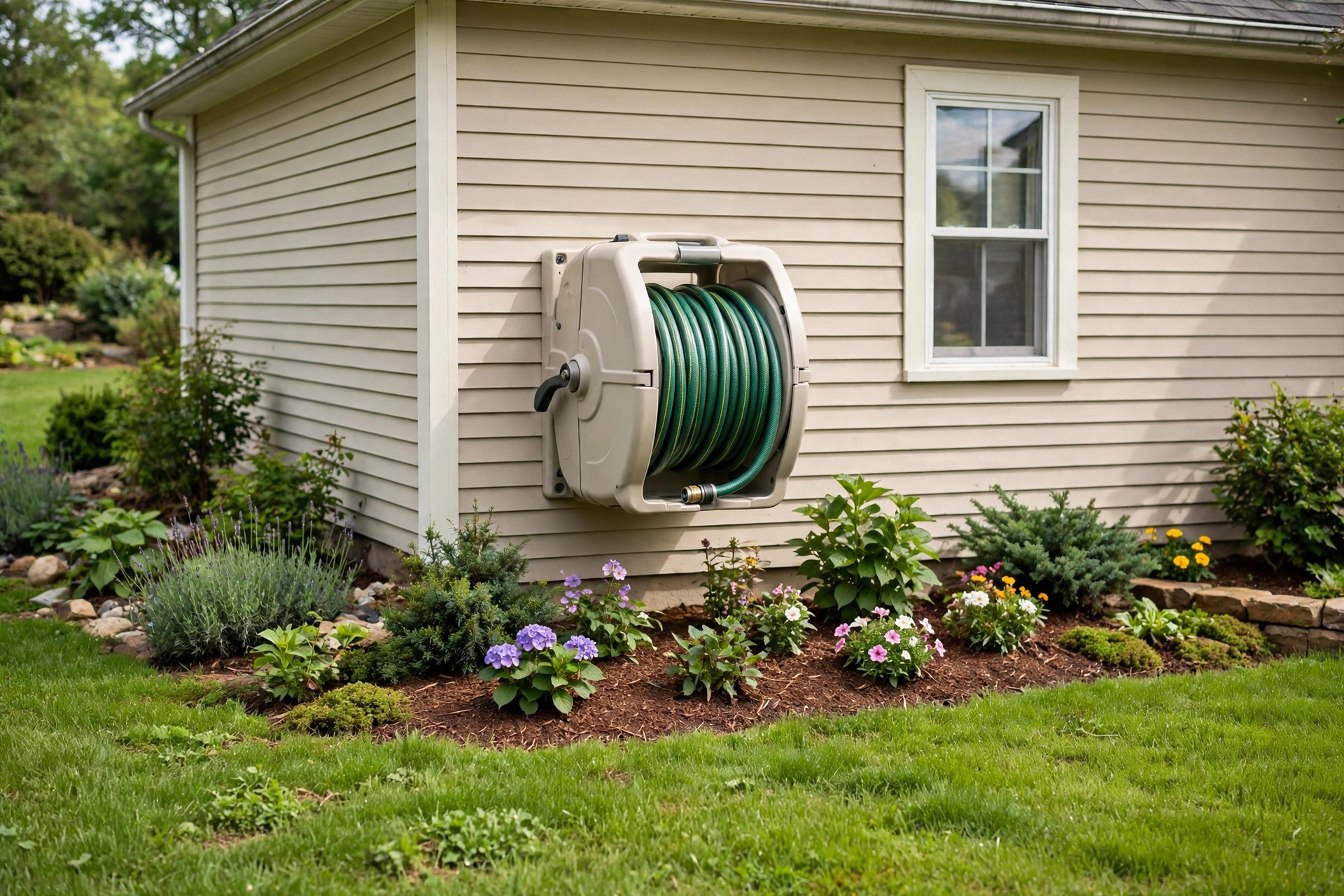
Look for a mounting bracket that pivots. A wall-mounted reel should swing at least 180 degrees. That lets you pull the hose toward any part of the yard. Free-standing models should have a stable base that will not tip when the hose is fully extended. Guides on garden project pages often show how a pivot bracket works in a real yard.
Finally, check the fittings. Brass connectors last longer than plastic. The inlet hose that connects the reel to the spigot should be thick and flexible. A thin inlet hose will kink at the faucet and cut the flow.
Types and Options
Retractable reels come in two main styles. The first is the wall-mounted reel. You bolt a bracket to a stud on the house, a fence post, or a deck post. The reel hangs on the bracket and pivots as you pull. This style keeps the yard clear. Nothing sits on the lawn. The case hangs about four feet off the ground, which keeps the hose clean.
The second style is the free-standing or cart reel. It stands on the ground or on wheels. Some look like a box on legs. This style suits renters and people who do not want to drill into the house. It can be moved to a shed in winter. The drawback is that it sits on the lawn and can tip in strong wind.
Within those styles, there are small differences. Some reels have a hand crank as a backup. If the spring ever fails, you can wind the hose by hand. Some have a hose guide that spreads the hose evenly across the drum. That helps the spring work with less strain. A few high-end models have a slow-retract feature. The hose winds back at a gentle speed, which is safer around children and pets.
Shoppers who want a reel they can roll around the yard may also look at best garden hose reel cart reviews. Carts hold more hose and cost less, but they do not rewind by themselves. A retractable reel is the better pick for people who value quick cleanup.
Cost and Price
Retractable hose reels cost more than simple wall hangers or crank reels. Expect to pay between 80 and 200 dollars for a good wall-mounted model. The low end holds 50 feet of hose with basic parts. The high end holds 100 feet or more with brass fittings, a strong spring, and a slow-retract feature.
Free-standing retractable reels run from 90 to 250 dollars. Large capacity models cost the most. They need a stronger spring and a bigger case to handle 130 feet of hose.
Do not judge by price alone. Some costly reels have fine cases but weak springs. Some mid-price reels from trusted garden brands and major retailers give the best value. Read several reviews. Look for patterns in owner complaints. If many owners report the same fault, it is real.
Watch for extra costs. You may need mounting hardware that fits your siding or brick. A leader hose with brass ends can add 20 to 30 dollars if the one in the box is thin. Some owners add a quick-connect set at the spigot. That costs another 15 dollars but saves time when you hook up and remove the reel.
Care and Upkeep
A retractable reel needs little care, but it needs some. Drain the hose before winter. Shut off the spigot. Disconnect the inlet hose. Pull the full hose out and let the water drain downhill. Then let it retract. This one step stops most freeze damage. Water left in the hose will expand when it freezes. It can crack the case and the fittings.
Clean the case once a year. Wipe it down with a damp cloth. Check the vents for dirt and spider nests. A blocked vent traps moisture inside. Home repair writers note that many spring failures trace back to rust from trapped water, not from the spring itself.
Do not slam the retract. When the hose winds back, hold the end and guide it in at a steady speed. A free slam can crack the guide arm and snap the fitting against the case. It can also strain the spring. Treat the spring with respect and it will last.
Check the hose for wear each spring. Run your hand along the full length. Look for flat spots, cracks, and soft areas. A hose that bulges under pressure should be replaced before it bursts. Garden supply makers and home advice sites agree that most burst hoses failed after a season of visible wear that owners ignored.
Oil the pivot bracket once a year. A few drops of silicone spray keep it swinging free. If the reel squeaks or sticks, the bracket is the first place to look. Keep the lock clean too. Sand and grit in the ratchet cause most lock failures.
Safety
A retractable hose is under spring tension. Never let the hose end fly back toward your face. Hold it firmly while it rewinds. Teach children to stand clear. A loose hose end can whip and strike an eye.
Do not leave the hose under pressure for long periods. Open the spigot, water your garden, and shut the spigot when done. Relieve the pressure by squeezing the nozzle. A hose kept under full pressure all week strains the reel and the fittings. In hot weather, pressure builds inside a sun-baked hose. That is how hoses split on summer afternoons.
Mount the reel to a solid stud or post. A reel full of hose is heavy. If the bracket pulls out of the wall, it can fall on a person or a pet. Use lag bolts, not simple wood screws. If you mount to brick, use masonry anchors made for the weight. Consumer testing groups warn that most mounting failures come from weak fasteners, not from the reel itself.
Keep drinking water rules in mind. Water that sits in a warm hose can pick up taste from the hose lining. If you fill a pool or water vegetables, let the hose run for a few seconds first. Use a hose marked safe for drinking water if that matters to you.
FAQ
How long should a retractable hose reel last?
A well-made reel lasts five to ten years. The spring usually fails before the case. Drain it in winter and guide the hose back gently. That gives the spring its longest life.
Can I use a retractable reel with a sprinkler?
Yes. A five-eighths inch hose on a good reel drives most lawn sprinklers. Keep the spigot fully open. Make sure the inlet hose is thick and free of kinks.
What is the best length for a retractable hose reel?
Most homes do well with 75 to 100 feet. Measure from your spigot to the farthest bed. Add ten feet. A shorter hose is lighter and retracts better. Do not buy more length than you need.
Why does my reel leave hose on the ground?
The spring may be weak or the hose may be binding. Pull the hose all the way out. Check for kinks and dirt in the guide. Clean the case vents. If the spring is worn, contact the maker about a replacement reel.
Can I mount a retractable reel on vinyl siding?
Yes, with care. You must drive the lag bolts into the studs behind the siding, not into the siding alone. Use a mounting board to spread the load. Seal the bolt holes with caulk to keep water out of the wall.
Should I store the reel indoors in winter?
If you can, yes. Bringing the reel into a garage or shed extends its life. At the very least, drain it and cover it. Cold alone does little harm. Water left inside does the damage.
A Short Final Word
The best garden hose reel retractable reviews all point to the same truth. The mechanism is simple, and it works when it is built well. Measure your yard. Choose the right length. Pick a strong case, brass fittings, and a smooth lock. Then care for it with a few minutes each spring and fall. A good reel will save you time for years, and it will make watering the garden one of the lighter chores of the week.
For the rest of your garden tool kit, look at our guides to best garden rake for leaves reviews and best pruning shears for rose bushes. Good tools, kept clean and sharp, make every garden task easier. Advice from garden supply houses, seed and garden brands, and watering guides all agree: buy once, buy well, and take care of what you own.
References
Bob Vila. (n.d.). Home improvement advice. https://www.bobvila.com Burpee. (n.d.). Seeds, plants, and gardening supplies. https://www.burpee.com Consumer Reports. (n.d.). Product reviews and ratings. https://www.consumerreports.org Corona Tools. (n.d.). Garden and landscape tools. https://www.corona-tools.com Family Handyman. (n.d.). DIY home repair and maintenance. https://www.familyhandyman.com Fiskars. (n.d.). Garden and cutting tools. https://www.fiskars.com Gardener’s Supply Company. (n.d.). Gardening tools and supplies. https://www.gardeners.com Lowe’s. (n.d.). Home improvement products. https://www.lowes.com The Home Depot. (n.d.). Home improvement products. https://www.homedepot.com The Spruce. (n.d.). Home and garden advice. https://www.thespruce.com
Was this guide helpful?

About David Wilson
The My Garden US editorial team writes practical, in-depth home and garden guides for American homeowners — tested advice, no fluff.