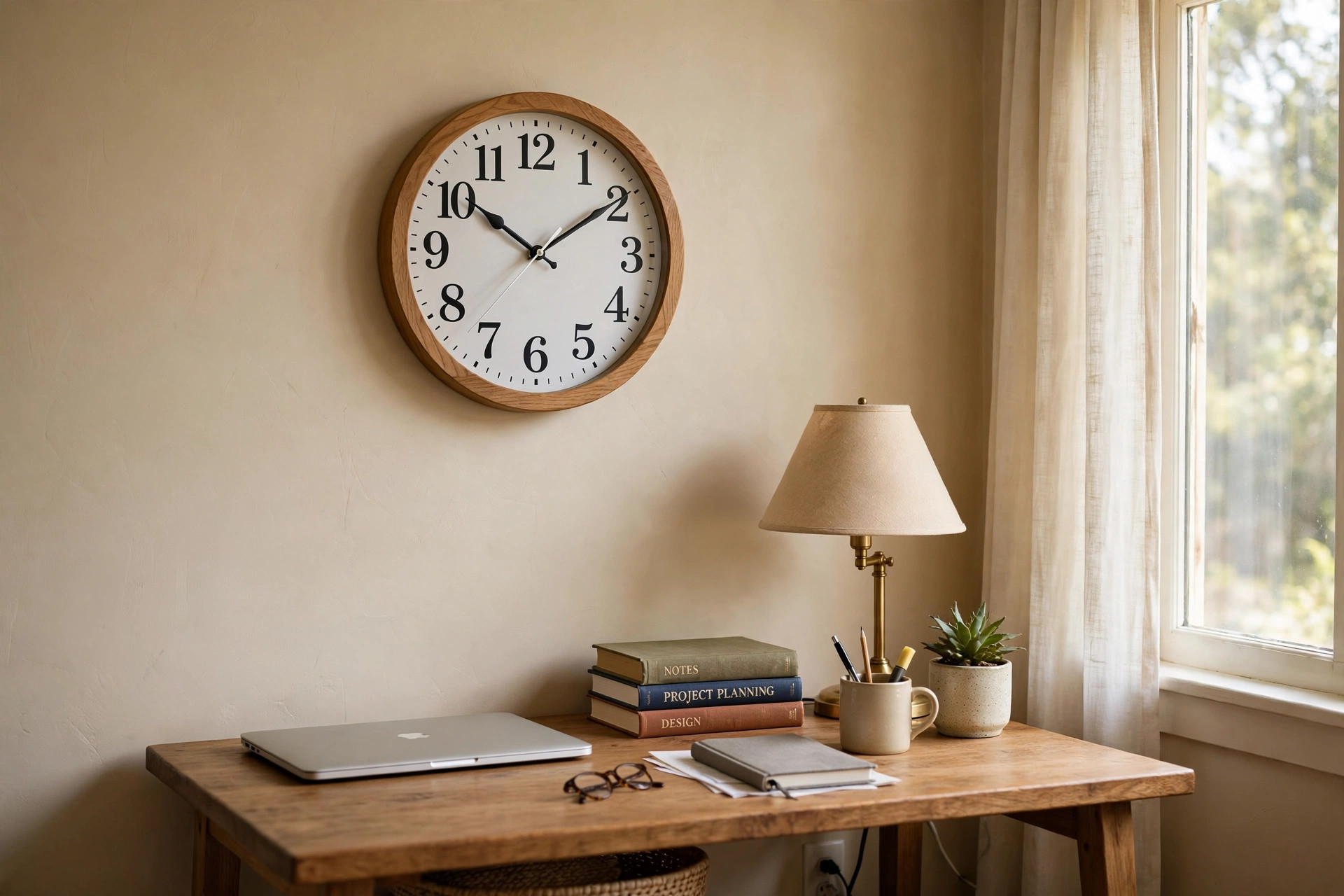

A home office wall clock with silent movement does one simple job. It tells the time, and it makes no noise while doing it. Many people work from home now, and their rooms are quiet. In that quiet, the steady tick of an ordinary clock can feel loud. It breaks focus. It interrupts calls. A silent movement clock solves the problem by design.
This guide explains what a silent movement clock is, why it matters for home offices, how to choose one, and how to care for it. It also covers prices, safety, and common questions.
Why It Matters
Silence Helps Focus
The human brain notices patterns. A ticking clock gives the brain a pattern to track. When you work on hard tasks, that pattern competes with your thoughts. Writers, coders, designers, and accountants all report the same thing. A quiet room helps them think. A home office wall clock with silent movement keeps the room quiet while still showing the time.
The effect is small but real. Over an eight hour work day, small distractions add up. Removing one steady source of noise removes one steady source of stress. The result is a calmer room and a calmer mind.
Better Calls and Recordings
Remote workers spend much of their day on video and phone calls. A ticking clock can show up on a microphone. Some microphones pick up faint sounds and make them louder. People on the other end of the call may hear the tick even when you barely notice it yourself.
A silent clock ends this risk. If you record voiceovers, podcasts, or training videos at your desk, silence matters even more. A desk organization setup keeps the work surface tidy. A quiet clock keeps the soundtrack clean.
The Room Feels Complete
A home office needs a focal point. A clock on the wall gives the room a finished look. It fills empty wall space above the desk. It also serves a real purpose during long work sessions. Glancing at the wall takes less effort than unlocking a phone. That small glance keeps you off the phone and on task.
What to Look For: Home Office Wall Clock with Silent Movement
The Movement
The movement is the engine inside the clock. A silent movement is a quartz movement with a sweep second hand. The hand moves in a smooth, continuous motion. It does not jump from second to second. That jump is what makes the tick sound.
Check the box or product listing for words like “silent sweep,” “non-ticking,” or “continuous sweep.” True silent movement clocks make no audible tick in a quiet room. Be careful with marketing claims. Some clocks claim to be quiet but still tick faintly. Reviews on independent product review sites often test this point directly.
Size and Readability
Choose a clock you can read from your desk chair without straining. For most home offices, a diameter of 10 to 14 inches works well. If your desk sits far from the wall, go larger. If the room is small, stay near 10 inches.
Numbers matter too. Large, bold numerals are easy to read at a glance. Thin hands on a busy face take more effort. High contrast helps. Dark hands on a light face are the classic choice for a reason.
The Dial and Frame
The dial should fit your office style. Wood frames suit warm, traditional rooms. Metal frames suit modern rooms. Simple plastic frames cost less and weigh less. Avoid faces with loud patterns or distracting colors. The clock should help you focus, not steal your eyes.
Glass or plastic covers protect the dial from dust. They also reduce glare if you choose a matte finish. Think about where your window light falls. A glossy cover can reflect a lamp or window straight into your eyes.
Battery and Power
Almost all silent movement clocks run on a single AA battery. This keeps them cheap to run and easy to hang anywhere. No outlet is needed. Check whether the clock uses the battery well. A good movement should run for a year or more on one battery.
Some clocks use a louder second movement for looks. Those models draw more power and may tick. Stick with one-movement models for true silence.
Types and Options
Sweep Versus Step Movement
Sweep movement is the silent type. The second hand glides. Step movement is the ticking type. The hand jumps each second. When shopping, this one detail decides the noise question. If the listing does not say “sweep,” ask before you buy.
Analog and Digital
Analog clocks have hands and a round face. They are the classic choice for a home office wall clock with silent movement. Most silent models are analog. Digital clocks are silent by nature but show time as numbers. A digital display can glow at night and may feel less warm in a study.
Some people prefer a hybrid style. These clocks show analog hands with a small digital date window. They cost more but give both looks and extra information.
Style Families
Silent clocks come in many styles. Minimalist clocks have thin hands and bare faces. They suit modern offices. Traditional clocks have Roman numerals and wood frames. They suit studies with books and warm light. Industrial clocks use metal and bold marks. They suit loft style rooms.
A related long-tail option, the quiet wall clock for study room, often comes in these same styles. The choice is personal. Match the clock to the room and you will enjoy looking at it for years.
Cost and Price
A home office wall clock with silent movement is not an expensive purchase. Basic plastic models start near ten dollars. Mid-range models with wood or metal frames run between twenty and fifty dollars. Premium models with designer names or solid materials can reach one hundred dollars or more.
What raises the price? Frame material matters most. Solid wood costs more than plastic. Real glass costs more than acrylic. Brand names add a premium. Larger sizes cost more than small ones. The silent movement itself adds only a small amount to the cost.
Do not assume price equals quality. A twenty dollar clock with a good movement often runs as well as a fifty dollar one. Read reviews about long term accuracy. A clock that loses minutes each month is a poor tool no matter how pretty it is. Budget guides on home office decor advice pages can help you compare models.
Shop around before buying. Prices change often. Online home office furniture stores carry many styles. Affordable office furniture retailers offer simple, clean designs at low prices. Local shops let you test the silence in person, which is a real advantage.
Care and Upkeep
Battery Changes
Change the battery once a year, even if the clock still runs. A weak battery can make the hands move slowly or stop the sweep motion. Use a fresh alkaline AA battery. Avoid cheap batteries that leak. A leaked battery can ruin the movement.
If the clock starts ticking or stuttering, the battery is the first suspect. Replace it before assuming the clock is broken.
Cleaning the Face and Frame
Dust the clock with a soft, dry cloth once a month. Dust builds up on the frame and cover. If the face sits under glass, wipe the glass with a slightly damp cloth, then dry it. Do not spray cleaner directly on the clock. Liquid can seep inside and damage the movement.
Keep the clock away from steam and cooking moisture. A home office is usually fine. Avoid hanging it above a heater vent or in a damp basement office.
Hanging and Leveling
Hang the clock at eye level from your seated position, or slightly above. A crooked clock annoys the eye. Use a small level or a phone level app to set it straight. A sturdy nail or wall anchor holds most clocks. Heavy clocks need a real anchor, not just a nail.
Check the hanger on the back. Some clocks hang from a simple slot. Others have a built-in bracket. Make sure the hanger sits flat against the wall so the clock does not tilt forward.
Long Term Accuracy
Quartz clocks are quite accurate. A good one drifts less than a minute per month. If your clock runs fast or slow, check the battery first. Then check for heat. Clocks near radiators or sunny windows can run off pace. Move the clock to a spot with steady room temperature.
Safety
Wall clocks are safe objects, but a few points deserve care. Hang heavy clocks with proper anchors. A falling clock can injure a person or damage a desk. Keep glass-covered clocks away from areas where children play. If the glass breaks, the shards are sharp.
Check the battery compartment. Some cheap clocks have loose battery doors. A loose door can drop the battery on the floor. Keep spare batteries away from small children.
When disposing of old batteries, follow local rules. Many towns have battery drop-off points. Do not throw alkaline batteries in a fire.
Frequently Asked Questions
What does silent movement mean in a wall clock?
Silent movement means the clock uses a continuous sweep quartz mechanism. The second hand glides smoothly instead of jumping once per second. The jumping motion is what creates the ticking sound. With a sweep movement, there is no jump and no tick.
Is a home office wall clock with silent movement truly silent?
A true silent movement clock makes no ticking sound. You may hear nothing at all in a quiet room. Some people can hear a very faint hum if they press an ear to the clock. From normal desk distance, it is silent. Beware of clocks that claim to be quiet but use step movements. Those still tick.
How do I know if my clock has a silent movement?
Look for the words “silent sweep,” “non-ticking,” or “continuous sweep” on the box or listing. Watch the second hand. If it glides smoothly, the movement is silent. If it jumps and you hear a tick each second, it is not. When in doubt, check reviews on tech and home office review sites or ask the seller.
Where should I hang my clock in a home office?
Hang it where you can see it from your desk without turning your head far. Common spots include the wall above the monitor, a side wall near the desk, or above a bookshelf. Keep it out of direct sun and away from heat vents. Pair it with other wall items like planning boards for a balanced look.
Do silent clocks need special batteries?
No. Most use one standard AA battery. Use a fresh alkaline battery for best life. Rechargeable batteries work but hold less charge, so you will replace them more often. Change the battery yearly to keep the sweep motion smooth.
Can a silent wall clock work in a large office?
Yes, if you size it right. In a large room, choose a clock of 14 inches or more. The sweep movement works the same at any size. For shared offices, a silent clock is a courtesy. It keeps the whole room quiet for everyone.
A Short Final Word
A home office wall clock with silent movement is a small purchase with a large daily effect. It tells the time without sound. It keeps your calls clean. It finishes the look of your room. Choose a sweep movement, a readable face, and a size that fits your wall. Hang it straight, feed it a fresh battery each year, and it will serve you quietly for a decade.
As you build out your workspace, think about the whole picture. An ergonomic seating choice for the home office pairs well with a calm, quiet room. Workplace ergonomics guides cover posture and seating. Office design research covers light and layout. Standing desk setups cover how you work through the day. The clock is one part of that picture. It is the part that marks your time, minute by minute, without saying a word.
References
Herman Miller. (n.d.). Office furniture and ergonomic seating. https://www.hermanmiller.com IKEA. (n.d.). Home furnishings. https://www.ikea.com PCMag. (n.d.). Technology product reviews. https://www.pcmag.com Steelcase. (n.d.). Office furniture and workplace research. https://www.steelcase.com The Spruce. (n.d.). Home and garden advice. https://www.thespruce.com UPLIFT Desk. (n.d.). Standing desks and ergonomic office furniture. https://www.uplift-desk.com Wayfair. (n.d.). Furniture and home goods. https://www.wayfair.com Wirecutter. (n.d.). Product reviews from The New York Times. https://www.nytimes.com/wirecutter
Was this guide helpful?

About Robert Taylor
The My Garden US editorial team writes practical, in-depth home and garden guides for American homeowners — tested advice, no fluff.
You May Also Like
Home Office Monitor Stand With USB Hub: What to Know Before You Buy
March 28, 2026 0 views
Best Desk Accessories Set for New Home Office: A Complete Guide
August 13, 2026 0 views
Floating Shelf Desk for Tiny Bedroom Office: A Simple Guide
August 14, 2026 0 views