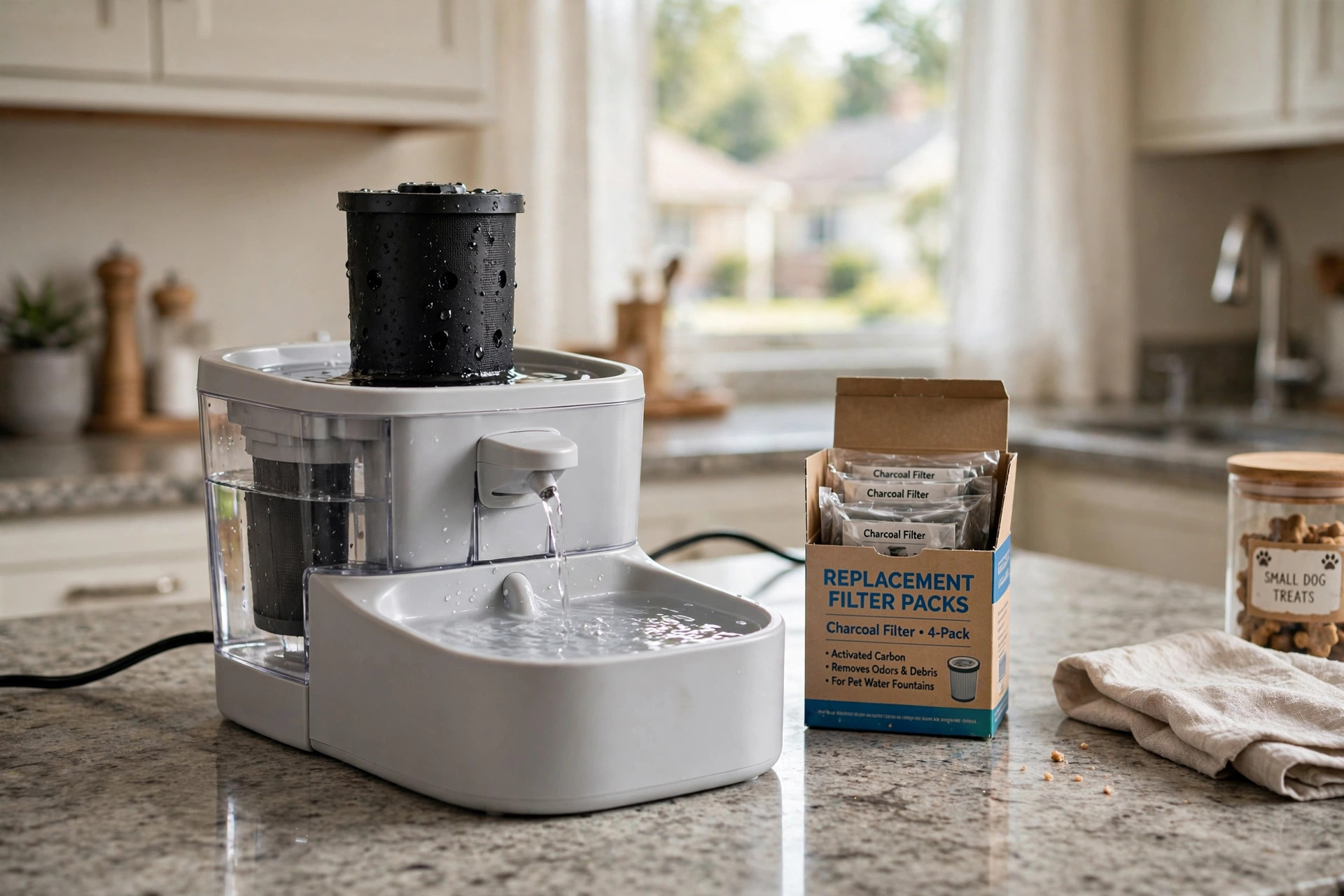

A pet water fountain filter replacement pack usa buyers see on store shelves is a simple thing. It is a box of small filters that fit inside an electric pet water fountain. The fountain pushes water up through a spout. The water falls back into the bowl. The filter sits in the path of the water and traps hair, dust, food bits, and bad tastes. Over a few weeks the filter fills up and stops doing its job. A fresh pack lets the owner swap in a new filter in under a minute. This guide explains why the filters matter, which types exist, what to look for when buying one, how much a pack costs, how to care for the fountain, and how to keep the whole setup safe for cats and dogs.
Why a Filter Pack Matters for Your Pet
Pets drink more water when it tastes clean and feels fresh. Many owners have seen this themselves. A cat that ignores a still bowl will drink from a moving fountain with clear water. Moving water also carries more air, which keeps it from going flat and stale. But the motion has a cost. A fountain recycles the same water again and again. Every bit of hair, dust, and food crumb that lands in the bowl gets pulled through the pump and around the loop. Without a filter, the water turns cloudy and the pump works harder. Slime can grow on the plastic in days.
The filter is the guard at the gate. It sits where water leaves the pump or drops back into the bowl, and it catches the small stuff before it spreads. A spent filter does nothing. Worse, an old filter can break apart and send small bits of charcoal or fiber into the water. A replacement pack solves this. It gives the owner a fresh guard every two to four weeks without a new trip to the store. Many pet care writers at PetMD note that clean drinking water is one of the simplest ways to support a cat or dog’s daily health. The fountain is the tool. The filter pack keeps the tool honest.
What to Look for When Buying a Replacement Pack: Pet Water Fountain Filter Replacement Pack Usa
The first thing to check is fit. Fountain filters are not one size. A filter made for a round top-loading fountain will not fit a tall tower fountain. Before buying, read the fountain’s model name on the base or in the manual. Then read the pack’s label to confirm it lists that model. Packs that say “fits most fountains” often fit none of them well. A loose filter lets dirty water flow around its edges. Retailers such as Chewy and PetSmart list filter packs by fountain brand and model, which makes matching easier.
Next, look at what is inside the filter. Most packs use a three-layer build: a foam pad that catches hair and large bits, a layer of activated charcoal that pulls out odors and bad taste, and a fine mesh that holds everything together. Some packs add an ion-exchange resin that softens hard tap water. Check the label for the materials and for any warning about small dogs or cats that chew. If the pack does not say what is inside, treat that as a poor sign.
Count the filters in the pack. Common counts are two, four, six, or twelve. Since a filter lasts about two to four weeks, a six-pack covers roughly three to six months. Buying the count that matches how often the owner is willing to change filters is more sensible than buying the largest box by default. Also check the pack date or a “best by” note if one is printed. Charcoal filters can lose strength after long storage in a damp garage. A cool, dry cupboard keeps them fresh until use.
Finally, check the water type the pack is made for. Most American packs are built for tap water treated with chlorine or chloramine. Homes on well water with heavy iron or sulfur may need a stronger stage of filtration or more frequent changes. The federal guidance on safe drinking water at EPA is written for people, not pets, but it is still useful background on what is commonly found in tap water.
Types of Pet Fountain Filter Packs
Filter packs fall into a few clear types. Knowing them helps the buyer pick without confusion.
Carbon and charcoal packs. These are the most common. The black charcoal layer pulls out chlorine taste and mild odors. They do not remove heavy minerals, but they make tap water taste much better. Most fountain brands ship their own charcoal pack for their models.
Multi-stage packs. These add a resin layer or an extra foam stage. They suit homes with hard water, where mineral spots build up on the fountain. The resin layer needs more care. It should not be left soaking for weeks before use.
Foam-only pre-filter packs. Some fountains use a foam sleeve over the pump plus a main filter. The foam sleeve catches hair before it reaches the pump. These packs are cheap and simple. They do not clean taste or odor. They are best used together with a charcoal stage, not alone.
Third-party compatible packs. These are made by companies other than the fountain maker. They cost less and sometimes come in larger counts. Quality varies. A good third-party pack names the exact fountain models it fits and lists its materials. A weak one uses vague claims. When in doubt, the fountain maker’s own pack is the safer buy, and pet product reviewers at The Spruce Pets often compare brand and generic packs side by side.
For a buyer setting up a pet watering station outdoors, a matching note of care applies to the rest of the yard. A shaded spot near the dog house keeps the fountain cooler in summer, and owners there will find the same rules about clean water apply.
Cost and Price of a Replacement Pack in the USA
Prices in the USA are steady and easy to compare. A two-pack of brand-name filters usually sells for about four to eight dollars. A four-pack runs about eight to fourteen dollars. A six-pack runs about ten to eighteen dollars. Twelve-packs, often from third-party makers, run about fifteen to thirty dollars. Foam-only pre-filter packs cost less, often two to five dollars for a small set.
Several things move the price. Brand-name packs cost more than third-party ones. Multi-stage packs cost more than simple charcoal ones. Packs sold in big-box stores such as Home Depot sometimes cost a dollar or two more than the same pack from a pet-only seller such as Petco, though the store price includes the ease of picking it up the same day. Shipping can erase the saving from a cheaper online pack, so it pays to compare the total at checkout.
A simple way to plan the yearly cost is to count the changes. A cat fountain with one pet and a charcoal filter changed every three weeks needs about seventeen filters a year. At two dollars a filter, that is about thirty-four dollars a year. A house with two large dogs may change filters every two weeks, which doubles the count. Buying a larger pack brings the per-filter cost down in most cases. The fountain pump itself, kept clean, often lasts two or three years, so the filters are the main running cost.
Care and Upkeep of the Fountain
A filter pack works best in a clean fountain. Once a week, pour out the water and wash the bowl, the spout, and the pump housing with warm water and a soft brush. Do not use strong soap. Soap film is hard to rinse out of plastic and can upset a pet’s stomach. A small brush for the pump intake takes out the hair that the filter misses. Many owners keep a spare bowl so they can swap a clean one in while the used one dries.
Change the filter on a set schedule. Two to three weeks is right for most homes. Homes with long-haired pets or with the fountain near a kitchen may need a change every two weeks. Write the date on the pack with a marker when a new filter goes in. This small habit prevents the common mistake of guessing.
Rinse a new filter before installing it. Hold it under cool running water for about thirty seconds to wash out loose charcoal dust. Black water from a new charcoal filter is normal at first, but it should clear after rinsing. If the water stays black, the filter may be damaged and should be replaced from the same pack.
Keep spare packs sealed until use. Charcoal absorbs odors from the air. An open box in a laundry room will pick up smells that then pass into the pet’s water. Store packs in a kitchen cupboard or a dry pantry shelf. Homes that deal with winter weather already think about clean, safe paths for their pets, much like owners who shop for the best pet safe ice melt for driveways dogs each season.
Safety Notes for Cats and Dogs
The fountain should stand on a flat, stable surface away from stairs and high edges. Cats like to bat at the water stream, and a light fountain can tip. A rubber mat under the base keeps it steady and catches splashes. Keep the power cord short and tucked behind the unit so a chewing puppy cannot reach it. Cord covers made for pet homes add one more layer of safety. The ASPCA offers general guidance on keeping home setups safe for curious animals.
Never run the pump dry. A pump that runs without water can burn out in an hour and can melt nearby plastic. Fill the fountain to the marked line and top it up every day or two. In warm rooms the water level drops faster. If the fountain starts to make a loud buzzing sound, check the water level first and the pump intake second.
Watch the pet, not just the machine. If a cat suddenly stops drinking from the fountain, the water may taste off or the pump may have grown noisy. A dog that paws the water hard may be playing, or may be trying to tell the owner the flow is too weak. The AKC reminds dog owners that fresh water should always be available, and a fountain is a helper, not a replacement for checking the water daily.
Small parts are a risk for chewers. Keep unopened filter packs out of reach. A puppy that tears open a pack can swallow foam or charcoal bits. The filter itself should sit fully inside the fountain housing where teeth cannot reach it. For households adding barriers for pets, a pet gate with cat door for stairway safety keeps the fountain room calm and limits rough play around the unit.
Frequently Asked Questions
How often should I replace the filter in my pet water fountain? Every two to four weeks is the standard range. One cat in a clean room can go three to four weeks. Two dogs, or a long-haired pet, often need a new filter every two weeks. Change it sooner if the water looks cloudy or the flow slows down.
Can I use a third-party filter pack instead of the brand-name one? Yes, if it names the exact fountain model on the label and lists its filter materials. A poor fit lets water bypass the filter, which defeats the purpose. When the pack’s claims are vague, the brand-name pack is the safer choice.
Do I need to rinse a new filter before use? Yes. Rinse it under cool running water for about thirty seconds. This washes out loose charcoal dust so the pet’s first drink is clear. A brief gray tint at first is normal and clears quickly.
Will a filter pack remove all the minerals from hard water? No. Standard charcoal packs improve taste and odor but leave most minerals in place. Multi-stage packs with resin soften the water more. In very hard-water areas, wiping mineral spots off the fountain weekly matters as much as the filter choice.
Can the same fountain be used for cats and dogs together? Yes, in most cases. Pick a fountain with a large enough bowl and a strong pump so the water stays fresh for the bigger drinker. Change filters more often when more animals share it. Shy cats may want their own quiet corner away from a playful dog.
Where is the best place to buy a pet water fountain filter replacement pack in the USA? Pet specialty stores, big-box home stores, and online pet retailers all carry them. Buying where the fountain was bought makes matching the model easy. Comparing the price per filter, not the price per pack, gives the truest sense of value.
A Short Final Word
A pet water fountain filter replacement pack is a small purchase with a large effect. Clean filters mean clear water, a quiet pump, and a pet that drinks well. Match the pack to the fountain model, change the filter on schedule, rinse each new filter, and keep the fountain itself washed. Do those four things and the fountain will do its job for years. For more ideas on pet water setups, the fountain specialists at Catit show how different designs suit different homes, and the guides at The Spruce Pets cover daily pet care in plain detail.
Related guides on this site include best outdoor dog kennel for large breeds usa.
References
American Kennel Club. (n.d.). Dog care and training resources. https://www.akc.org ASPCA. (n.d.). Pet care and animal welfare resources. https://www.aspca.org Catit. (n.d.). Cat products and water fountains. https://www.catit.com Chewy. (n.d.). Pet supplies. https://www.chewy.com Petco. (n.d.). Pet supplies and services. https://www.petco.com PetMD. (n.d.). Pet health information. https://www.petmd.com PetSmart. (n.d.). Pet supplies and services. https://www.petsmart.com The Home Depot. (n.d.). Home improvement products. https://www.homedepot.com The Spruce Pets. (n.d.). Pet care guides and product reviews. https://www.thesprucepets.com U.S. Environmental Protection Agency. (n.d.). Protecting human health and the environment. https://www.epa.gov
Was this guide helpful?

About Lisa Anderson
The My Garden US editorial team writes practical, in-depth home and garden guides for American homeowners — tested advice, no fluff.
You May Also Like
Best Pet Door for Wall Installation Large Dogs
February 12, 2026 0 views
Pet Door for Screen Door Installation Dogs: A Simple Guide for Dog Owners
July 25, 2026 0 views
Pet Grooming Vacuum Kit for Shedding Dogs: A Plain Guide for Tired Owners
August 8, 2026 0 views