
Pregnancy changes the way a woman sits, stands, and works. An ergonomic chair for pregnancy home office use is not a luxury. It is a tool that supports the body through nine months of steady change. Many women work from home during pregnancy. Long hours at a desk can bring back pain, leg swelling, and poor posture. The right chair can reduce these problems in a real way. This guide explains what to look for, how to choose wisely, what to expect on price, and how to use the chair with safety.
Why the Right Chair Matters During Pregnancy
During pregnancy, the body releases a hormone called relaxin. This hormone loosens the joints and ligaments. The spine loses some of its natural support. At the same time, the growing belly shifts the center of gravity forward. This puts extra strain on the lower back. Many pregnant women report back pain by the second trimester. Some feel it even earlier.
A standard dining chair does not offer enough support. It forces the body into a fixed position. The back gets no help. The seat may be too hard or too deep. An ergonomic chair works the other way. It adjusts to the body instead of forcing the body to adjust to it. It supports the lower back. It keeps the feet flat on the floor. It allows the hips to rest at a healthy angle. Good support can cut back pain and improve focus at work.
Sitting for long periods can also slow blood flow in the legs. This can cause swelling in the feet and ankles. A chair with the right seat height helps the blood move well. An ergonomic footrest for under desk use can help as well. It raises the feet slightly and takes pressure off the thighs.
Poor posture adds to the problem. When the shoulders hunch forward, the neck and upper back suffer. A chair with a supportive backrest helps the spine stay in a neutral line. Over weeks and months, this small change makes a large difference. Comfort during pregnancy is not a small thing. It affects work, rest, and mood.
What to Look for in an Ergonomic Chair for Pregnancy Home Office Use
Lumbar Support
The lower back needs steady support. Look for a chair with adjustable lumbar support. The lumbar pad should press gently into the curve of the lower back. Fixed lumbar support is fine if it matches the shape of the body. Adjustable support is better because the body changes each month. What fits in the first trimester may feel wrong in the third.
Some chairs let the lumbar pad move up and down. Others let it move in and out. Both options are useful. Test the chair if you can. Sit for at least ten minutes. The support should feel firm but not hard. It should fill the gap between the chair back and the lower spine.
Seat Depth and Width
The seat should be wide enough for comfort. There should be room to shift position during the day. The depth matters too. It should leave two to three inches between the front edge of the seat and the back of the knees. A seat that is too deep presses on the back of the thighs. This slows blood flow and can cause numbness. A seat that is too shallow fails to support the thighs.
Many ergonomic chairs have a sliding seat pan. This lets the user change the depth. This feature is worth the extra cost during pregnancy. Bodies change fast, and a sliding seat keeps the fit right.
Adjustability
A good chair adjusts in many ways. The seat height should move up and down with ease. The armrests should move up, down, and side to side. The backrest should tilt and lock at several angles. The tension of the tilt should also adjust. During pregnancy, needs change week by week. A chair that adjusts with ease will serve through all three trimesters.
Pneumatic height adjustment is standard on most office chairs. Look for a smooth lever that works with one hand. Armrests that pivot are a plus. They help when typing or using a mouse. A tilt lock lets the user lean back slightly between tasks. A small recline eases pressure on the spine.
Armrests and Seat Material
Armrests should support the elbows at close to a right angle. This reduces strain on the shoulders and neck. Padded armrests are best. Hard plastic can press on the arms and cause sore spots. The armrests should not block the chair from sliding under the desk.
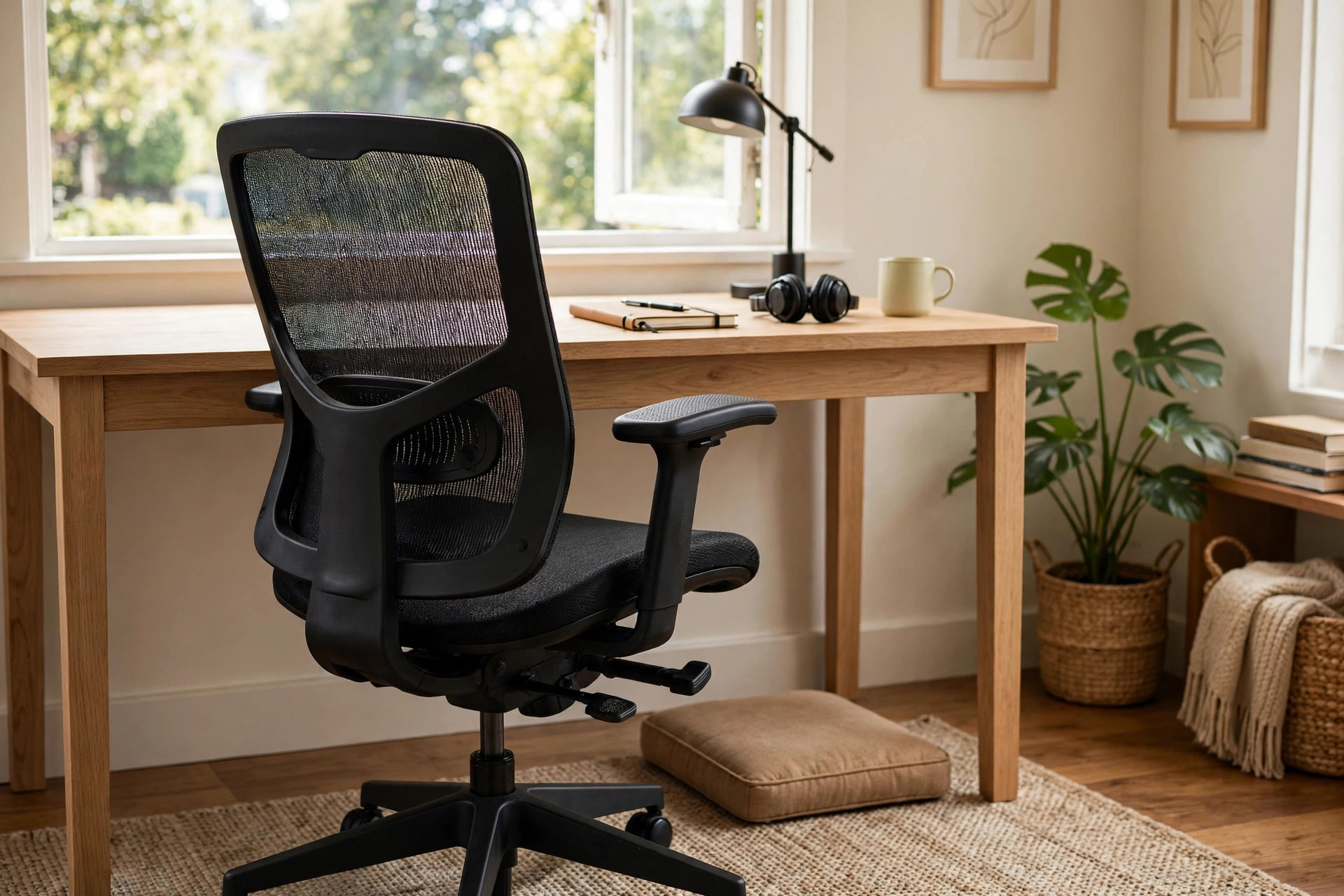
The seat material should breathe. Mesh seats allow air flow. This keeps the body cool during long sessions. Pregnancy can raise body heat, so a cool seat matters. An ergonomic mesh office chair under 200 dollars is a smart low-cost option with this benefit. Fabric seats are soft and quiet. Leather seats look fine but can feel warm. Choose based on comfort first and looks second.
Types of Chairs to Consider
Task chairs are the most common choice for a home office. They have wheels, adjustable height, and a swivel base. Many offer strong lumbar support. Models designed as the best ergonomic office desk chair for back pain often include the features a pregnant worker needs. Task chairs suit long workdays and tight spaces. Reviews and buying guides from PCMag can help narrow the field.
Kneeling chairs shift the weight forward. They open the hip angle and take pressure off the lower back. Some women find them helpful in early pregnancy. They offer less back support in later months. They also make it harder to stand up, which matters when balance shifts.
Ball chairs use an exercise ball as the seat. They encourage small movements through the day. These movements can help core strength. Ball chairs are not ideal for long work hours. The lack of back support is a clear drawback. They work best for short tasks, not full days.
High-back executive chairs offer full support for the back and neck. They are larger and often cost more. For women with strong back pain, the extra support can be worth the price. Look for one with a headrest and a locking tilt. The headrest helps during rest breaks.
Drafting chairs are tall chairs meant for high desks. They are less common for pregnancy use. The high seat can make it hard to keep feet on the floor. Skip this type unless the desk setup truly needs it.
Cost and Price
Prices vary widely. A basic ergonomic task chair costs between 150 and 300 dollars. These models cover the basics: height adjustment, lumbar support, and a tilt back. Mid-range models cost 300 to 600 dollars. They add better materials, more adjustment points, and longer warranties. Premium brands cost 800 dollars or more. They offer top build quality and long guarantees.
A chair bought for pregnancy should last well beyond the pregnancy. View it as a long-term investment in health. A cheap chair that breaks in a year costs more in the end. Check the warranty before buying. A five-year warranty is a good sign. A twelve-year warranty is better.
Affordable options are easy to find. IKEA sells many office chairs at fair prices. Wayfair lists hundreds of models with user reviews. Premium makers such as Herman Miller and Steelcase publish deep ergonomic research that explains why their designs cost more. UPLIFT Desk pairs chairs with height-adjustable desks. Product roundups from The Spruce and Wirecutter compare models side by side.
Watch for sales. Office furniture often goes on sale in late summer and after the new year. Refurbished chairs from premium brands can save hundreds of dollars. Just check that the warranty still holds on refurbished stock.
Care and Upkeep
A good chair lasts longer with simple care. Clean the chair based on its material. Mesh seats need only a damp cloth and mild soap. Fabric seats can be vacuumed each week with a brush attachment. Leather seats need a proper leather cleaner. Test any cleaner on a hidden spot first.
Check the wheels for hair and dust. Clogged wheels roll poorly and can scratch floors. Pull out debris with tweezers. Tighten the screws every few months. Loose bolts make the chair wobble. A small hex key set handles most chairs.
Keep the chair out of direct sun. Sun fades fabric and dries out leather. If the chair has a gas lift, avoid slamming down into the seat. Hard drops wear out the cylinder fast. With these simple steps, a quality chair can serve for ten years or more.
Safety
Always sit with the feet flat on the floor or on a footrest. Keep the knees at or below hip level. This keeps blood flow open. Stand up and walk every 30 to 45 minutes. Short walks cut swelling and ease stiffness. Set a timer if it helps.
Lock the wheels before sitting down. An unlocked chair can roll away and cause a fall. Do not lean far back in a chair with no tilt lock. Keep the desk at a height where the elbows rest near 90 degrees. The top of the screen should sit at or just below eye level. This keeps the neck in a neutral line.
If back pain is severe, speak with a doctor. Sharp pain, numbness, or pain that spreads down the leg needs medical care. General guidance on back pain in pregnancy is published by ACOG. More everyday comfort tips are shared by What to Expect. No chair replaces medical advice.
Frequently Asked Questions
When should I buy an ergonomic chair for pregnancy home office use?
As early as possible. Back strain can start in the first trimester for some women. Buying early means more months of comfort. The chair also serves well after the baby arrives.
Can a regular office chair work during pregnancy?
It can, but adjustable lumbar support makes a real difference. A basic chair with no lumbar curve may increase back pain over time. If the budget is tight, add a lumbar pillow to a plain chair.
How should I set the seat height?
Set it so the feet rest flat on the floor. The knees should bend at about 90 degrees. If the feet do not reach the floor, use a footrest. Never let the legs dangle.
Is a reclining backrest safe during pregnancy?
Yes, if the chair locks in place. A slight recline of 100 to 110 degrees eases pressure on the spine. Avoid deep reclines that make standing up hard.
Do I need a headrest?
A headrest is not required, but it helps with neck strain. It also gives a place to rest during short breaks. Tall users gain the most from one.
Can I keep using the chair after pregnancy?
Yes. A good ergonomic chair serves for many years. It works just as well for nursing breaks, desk work, and study. Choose a style that fits the home office for the long term.
A Final Word
The right seat changes the workday. An ergonomic chair for pregnancy home office use supports the back, opens the hips, and eases long hours at the desk. Choose a chair with adjustable lumbar support, a proper seat depth, and a strong build. Pair it with good habits. Take short walks. Keep the screen at eye level. Use a footrest when the feet cannot reach the floor. These small steps add up to real comfort. The body is doing hard work. It deserves good support.
References
ACOG. (n.d.). Back pain during pregnancy. https://www.acog.org Herman Miller. (n.d.). Office furniture and ergonomic seating. https://www.hermanmiller.com IKEA. (n.d.). Home furnishings. https://www.ikea.com PCMag. (n.d.). Technology product reviews. https://www.pcmag.com Steelcase. (n.d.). Office furniture and workplace research. https://www.steelcase.com The Spruce. (n.d.). Home and garden advice. https://www.thespruce.com UPLIFT Desk. (n.d.). Standing desks and ergonomic office furniture. https://www.uplift-desk.com Wayfair. (n.d.). Furniture and home goods. https://www.wayfair.com What to Expect. (n.d.). Pregnancy and parenting guidance. https://www.whattoexpect.com Wirecutter. (n.d.). Product reviews from The New York Times. https://www.nytimes.com/wirecutter
Was this guide helpful?

About Sarah Mitchell
The My Garden US editorial team writes practical, in-depth home and garden guides for American homeowners — tested advice, no fluff.
You May Also Like
Adjustable Standing Desk with Memory Presets USA: A Plain Guide for Home Offices
January 19, 2026 0 views
Best Standing Desk for Short People Under 5ft: A Practical Guide
February 21, 2026 0 views
USB C Docking Station for Home Office Setup: A Plain Guide
May 8, 2026 0 views