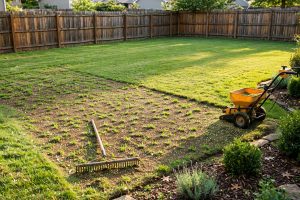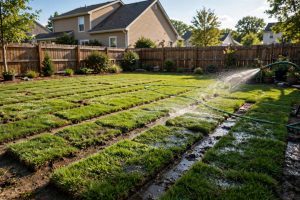
A thick lawn can hide a problem. Between the green blades and the soil, a layer of dead stems and roots can build up. Lawn experts call this layer thatch. A thin layer is normal. A thick layer is not. When thatch grows past half an inch, water cannot reach the soil. Air cannot reach the roots. Fertilizer sits on top and does no good. The grass turns pale and weak. Moss moves in. Finding the best lawn scarifier for thatch removal is the first step toward fixing this. A scarifier is a machine with metal tines. It digs into the thatch and pulls it out. The job takes a weekend afternoon. The lawn looks rough for a week. Then it grows back stronger. This guide explains how scarifiers work, what kinds you can buy, what they cost, and how to use one in safety. The advice is plain. No special skills are needed.
Why Removing Thatch Matters
What Thatch Is
Thatch is a mat of dead plant parts. It sits just above the soil. It is made of dead stems, runners, and old roots. Every lawn makes thatch. Grass grows. Grass dies. New growth pushes up through old growth. In a healthy lawn, soil microbes break the dead matter down. It rots and feeds the soil. This cycle works when the lawn is mowed at the right height and the soil is alive. It breaks down when the lawn gets too much water or too much nitrogen. Fast growth outruns the microbes. Dead matter piles up. Some grass types make thatch faster than others. Kentucky bluegrass and creeping bentgrass are heavy thatch makers. They spread with runners, and the runners die and mat together.
Signs Your Lawn Has Too Much Thatch
The first sign is feel. Walk across the lawn. If it feels soft and spongy under your feet, suspect thatch. Mow it. If the mower sinks and the cut looks uneven, that is another sign. Water gives more clues. Watch a rain shower. If water sits on the lawn or runs off instead of soaking in, thatch is likely blocking it. Fertilizer stops working. The grass stays yellow even after feeding. Disease and insects move into the mat. To check, cut a small plug of turf with a spade. Look at the layer between the green blades and the soil. If it is less than half an inch, leave it alone. If it is half an inch or more, the lawn needs scarifying.
Why It Matters
Thick thatch starves the grass it covers. Roots grow up into the mat instead of down into the soil. Those shallow roots dry out fast in summer heat. The mat also holds moisture at the surface. Fungus diseases love this damp layer. In winter, a deep mat can smother the crown of the grass plants. Removing thatch opens the lawn up. Water reaches the soil again. Air moves through. Roots grow deeper. Seed dropped on a scarified lawn touches soil and sprouts. The result is a lawn that is greener with less fertilizer and less water.
How to Choose the Best Lawn Scarifier for Thatch Removal
Start with your lawn size. A small city lot of a few thousand square feet needs a light machine. A half-acre needs more power and a wider path. Using an underpowered machine on a big lawn makes for a long day. Using a heavy gas machine on a tiny lawn is hard work for no reason. Match the tool to the job. Then look at these four points.
Power Source
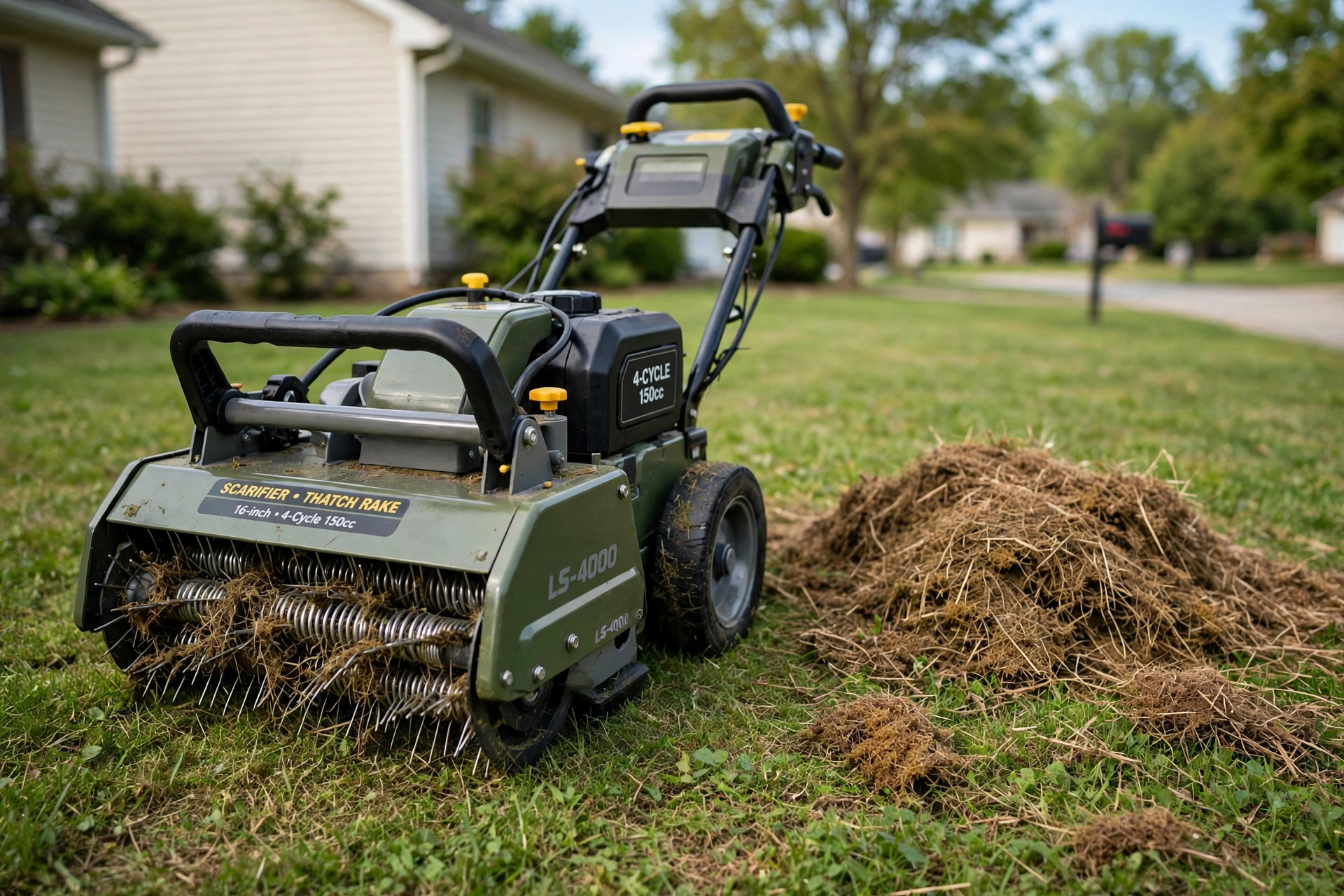
Manual scarifying rakes are the cheapest option. They look like a stiff garden rake with curved tines. They work for small lawns and for spot work. They demand real effort. For anything bigger, power is better. Electric corded scarifiers plug into a wall outlet. They are light, quiet, and cheap to run. Their reach is limited by the cord. They suit small to medium lawns. Battery scarifiers run on rechargeable packs. They cost more up front. They are quiet and need no cord. The run time limits the area you can cover in one charge. Gas scarifiers use small four-cycle engines, the kind made by companies such as Briggs & Stratton. They are the strongest choice. They handle large lawns and deep thatch. They are loud, heavy, and need fuel and oil changes.
Tines and Working Width
The working part of a scarifier is a row of metal tines on a spinning drum. Spring tines are thin and flexible. They rake the thatch out gently. They are a good choice for light to medium work. Fixed blades or knives cut deeper. They suit heavy thatch and level lawns. Most walk-behind machines cover 12 to 16 inches in one pass. Wider is faster. Wider is also heavier. Check that the tines are made of spring steel. Cheap wire bends and breaks. Tines should also be easy to replace. They wear out with use, and a machine with bolted-on tines is cheaper to keep.
Depth Adjustment
Depth control is the most important feature on any scarifier. The tines must reach the thatch but not tear deep into the soil. A machine without depth settings forces you to accept whatever it does. Look for a lever or dial that raises and lowers the drum. Start shallow on the first pass. Set the tines to just touch the thatch layer. Make a pass and look at the result. Lower the drum a little if the thatch is still thick. Two shallow passes beat one deep one. A deep first pass can scalp the lawn down to bare soil.
A Bag or No Bag
Some scarifiers come with a collection bag. The bag catches the thatch as the drum pulls it out. This saves a long raking job at the end. Bags fill fast, and you will stop often to empty them. Machines without bags throw the thatch behind them. You rake it up after. This is slower but the machine is lighter. For a small lawn, raking by hand is fine. For a big lawn, a bag or a tow-behind collector pays for itself in saved time.
Types of Scarifiers and Other Options
Manual rake scarifiers are simple tools. A head with a row of curved tines sits on a long handle. You rake the lawn the way you would rake leaves, but harder. They cost little and last for years. They are honest work. They suit lawns under a few thousand square feet. They are too slow for big areas.
Electric scarifiers look like small lawn mowers. A motor spins the drum. You walk behind it. They weigh little. They start with a button. They need an outdoor-rated extension cord. They are the most common choice for town lawns. Prices are modest.
Battery scarifiers are the same idea without the cord. Modern battery packs run 20 to 40 minutes. That covers a small or medium lawn. Spare packs extend the range. They are quiet enough to use early in the morning without troubling the neighbors.
Gas scarifiers are workhorses. They scarify deep and fast. Landscapers use them. Many gas units take swap-in drums for different jobs. They need fuel, oil, and winter storage care. They are too much machine for a small patch of grass.
Tow-behind units attach to a riding mower or garden tractor. Makers such as Toro and Deere sell lawn tools for large properties. A tow-behind scarifier or dethatcher covers ground fast. It only makes sense if you already own the tractor.
Renting is a fair option too. If you scarify once every year or two, renting may be the smart move. Rental yards stock walk-behind scarifiers and power dethatchers. Before you buy, compare lawn dethatcher rental prices near me with the cost of a machine that will sit in the shed most of the year.
Cost and Price
Prices run wide. A manual scarifying rake costs between 25 and 60 dollars. It has no running costs. An electric corded scarifier costs between 80 and 180 dollars. Electricity for a session costs pennies. A battery scarifier costs between 150 and 300 dollars, and a spare pack adds to that. A gas walk-behind scarifier costs between 250 and 600 dollars. Fuel, oil, and spark plugs add a few dollars a year. Tow-behind units cost between 100 and 400 dollars on top of the tractor. Professional scarifying services charge by lawn size. Expect 100 to 300 dollars for a typical suburban lot. A service makes sense if you do not want to store a machine. When you compare, count the tines too. Replacement tine sets cost 20 to 50 dollars. A cheap machine with costly tines is no bargain.
Care and Upkeep
A scarifier is a simple machine. It lasts for years if it is cleaned and stored right. After each use, pull the thatch out of the drum. A stiff brush works. Do not use water on a gas machine’s engine parts. Check the tines. Bent or broken tines scarify unevenly. Replace them in sets, not one by one, so the drum stays balanced. On gas models, change the oil once a year. Check the air filter. A dirty filter makes the engine run rich and weak. Sharpen fixed blades with a file when they dull. Store the machine in a dry shed or garage. Hang a manual rake on the wall so the tines do not bend under weight. Before winter, run the fuel out of a gas machine or add fuel stabilizer. Old fuel gums up the carburetor. A clean machine starts easy in spring.
Safety While Scarifying
Read the manual first. Every machine has its own quirks. Wear eye protection. Tines fling small stones and bits of stem. Wear gloves. The thatch is dirty, and the tines are sharp. Gas machines are loud. Wear ear plugs or muffs. Keep the electric cord behind you as you walk. Never run the machine over the cord. Mark sprinkler heads and shallow cables before you start. The tines will find them. Keep children and pets off the lawn while you work and until you have raked up. Never reach under a running machine to clear a clog. Turn it off. On gas models, pull the spark plug wire. On electric models, unplug the cord. Let the drum stop fully. Scarify in daylight. Wet grass clumps and clogs the drum. Wait a day after rain. After scarifying, the lawn looks rough. This is normal. Water it well. Overseed bare spots. Once the grass recovers, a robot lawn mower for half acre yards can keep the lawn tidy through the season without more heavy work.
Frequently Asked Questions
When is the best time to scarify a lawn?
Early fall is best for cool-season grasses. The grass is growing strong. It recovers before winter. Late spring suits warm-season grasses. Never scarify in summer heat or during a drought. The stressed grass will not recover.
How often should I scarify?
Most lawns need it once a year or once every two years. Lawns with heavy thatch grass may need two passes in one season. Check the thatch layer each fall with a spade. Let the measurement decide, not the calendar.
Will scarifying hurt my grass?
The lawn will look thin and rough for a week or two. This is normal. The grass is not dead. It grows back stronger. Water after the job. Spread seed on thin spots. Stay off the lawn while it recovers.
What is the difference between a scarifier and a dethatcher?
The words overlap. In general, a dethatcher rakes the surface lightly. A scarifier works deeper and more aggressively. Scarifiers have depth settings and stronger tines or blades. For a thin thatch layer, either will do. For a deep mat, use a scarifier.
Should I rent or buy a scarifier?
Buy if your lawn is large and you scarify every year. A mid-range electric machine pays for itself in two or three seasons. Rent if your lawn is small or you only plan to scarify once. Storage and upkeep cost money too.
What should I do with the thatch I pull out?
Compost it. Thatch is just dead plant matter. It breaks down in a compost pile. Mix it with green material. Or bag it for the yard waste pickup. Do not leave it in piles on the lawn. It will smother the grass under it.
A Short Final Word
Thatch is a quiet problem. It builds up year by year. The lawn fades slowly. Most owners blame the weather or the soil. A scarifier answers the real cause. Choose a machine that fits your lawn. Start shallow. Work in the right season. Water and seed after. The lawn will look worse for a week. Then it will look better than it has in years. Keep the edges neat too, since the scarifier cannot reach them. A top rated string trimmer for thick weeds handles the borders. A little work each fall keeps the thatch from ever taking over again.
References
Toro. (n.d.). Lawn care equipment. https://www.toro.com
Deere. (n.d.). Lawn and garden equipment. https://www.deere.com
Briggs & Stratton. (n.d.). Small engines for outdoor power equipment. https://www.briggsandstratton.com
Was this guide helpful?

About Lisa Anderson
The My Garden US editorial team writes practical, in-depth home and garden guides for American homeowners — tested advice, no fluff.