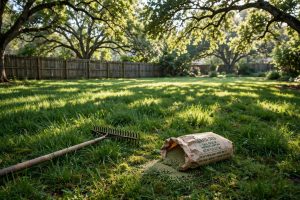

A thin, tired lawn can still come back to life. Many home owners find that the best grass seed for overseeding fescue is the answer when bare spots appear and the old turf looks worn. Overseeding means spreading new seed over a lawn that is already growing. It adds new plants to the old stand. It fills in bare patches. It makes the turf thick and green again.
Fescue is a cool season grass. It grows well in spring and fall. It slows down in summer heat. Over time, fescue lawns can grow thin. Foot traffic wears them down. Disease thins them out. Drought leaves weak spots. New seed gives the lawn a fresh start. This guide shows how to pick seed, how much to pay, and how to sow it right.
Why Overseeding Fescue Matters
A thick lawn is more than looks. Thick grass keeps weeds out. Weeds need light and space to grow. A full stand of fescue gives them neither. A thin lawn invites crabgrass and dandelions. New seed closes the gaps.
Overseeding also adds new plant types. Seed makers improve their blends each year. New types of tall fescue resist disease better than old ones. They stand up to heat and drought with less water. When you overseed, you bring these new plants into your lawn. The old plants stay. The new plants join them. Together they make a stronger lawn.
Fall is the right time for this work. Fescue seed needs soil warmth and steady rain. Fall gives both. Spring works too, but fall is better. If you want the full step by step plan for fall work, read our guide to overseeding lawn in fall step by step.
What to Look for When You Choose Seed: Best Grass Seed for Overseeding Fescue
The bag label tells you what you need to know. Read it before you buy. Good seed starts with a pure seed rate. Look for bags with 90 percent or more pure live seed. This number means the seed will grow. Low grade seed may cost less. It often has weak germ. You pay less per bag but need more bags.
Check the weed seed content. The label lists weed seed as a percent. Good seed has 0.01 percent or less. Some cheap seed holds much more. Weed seed in the bag grows into weeds in your lawn. It is never a good trade.
Look at the germ rate. Seed lots are tested for how many seeds sprout. A germ rate of 85 percent or higher is good. The label also shows the test date. Buy seed tested within the last year. Old seed may still be fine, but fresh seed is safer.
Read the seed mix. The best grass seed for overseeding fescue is often a blend of tall fescue types. Some blends add a small share of perennial ryegrass. Ryegrass sprouts fast. It holds the soil while the fescue comes up. But it can crowd out the fescue if the share is too high. Keep ryegrass below 20 percent of the mix.
Some lawns sit in shade. If yours does, look for a shade blend. Our notes on tall fescue seed for shade reviews can help you compare brands for low light spots.
Types of Seed Options
Tall fescue is the most common pick for home lawns. It has deep roots. It needs less water than many other grasses. New types of tall fescue, often called turf type tall fescue, have fine blades. They look soft and even. They hold up well under foot traffic.
Fine fescues are a second choice. This group holds hard fescue, chewings fescue, and creeping red fescue. They grow well in poor soil and deep shade. But they do not take heavy foot traffic. Use them where feet seldom walk.
Seed coatings are common now. The maker coats each seed with a mix of lime, starter food, and moisture holding gel. Coated seed is easier to spread. It stays damp longer. The bag feels heavy for the amount of seed inside. Half the weight may be the coating. Check the label for the seed weight apart from the coat. Pay for seed, not coat.
Organic seed is also on the shelf. It is grown without man made sprays. The seed itself is the same. It grows the same way. Buy it if you like the idea, but know that any seed grows clean.
Brand name seed often costs more than store brand seed. The name brands test their seed more. They tend to have true germ rates and low weed counts. Store brands can be good too. Read the label either way. Reviews from test groups, such as those at Consumer Reports, can help you weigh one brand against another.
Cost and Price
Grass seed costs less than most lawn fixes. A 20 pound bag of good tall fescue blend covers about 5,000 square feet for overseeding. It sells for 40 to 80 dollars at most stores. That is about 8 to 16 dollars per thousand square feet.
Small bags suit small yards. A 5 pound bag covers about 1,250 square feet. It sells for 12 to 25 dollars. Buy two small bags rather than one big bag if you have two yard zones with different needs.
Do not stretch seed too thin. A light rate gives a thin stand. A thin stand lets weeds in. Follow the bag rate for overseeding. It is often 4 to 5 pounds per thousand square feet for tall fescue. More is not better. Too much seed makes weak, crowded plants.
Bulk seed from a farm store can save money on large lots. It comes in 50 pound bags. Ask for the tag so you can read the seed lot. If the seller cannot show a tag, buy bagged seed instead.
How to Overseed Step by Step
Start by mowing short. Cut the old grass to about 2 inches. This lets light reach the new seed. Bag the cuttings or rake them up. A clean bed helps seed touch soil.
Next, loosen the soil surface. A garden rake works for small spots. A core aerator works best for a whole lawn. Aerators pull small plugs of soil from the ground. They open the soil so seed falls in. Rent one if you need it. Toro makes equipment for this kind of work, and their site lists tools that fit small home jobs.
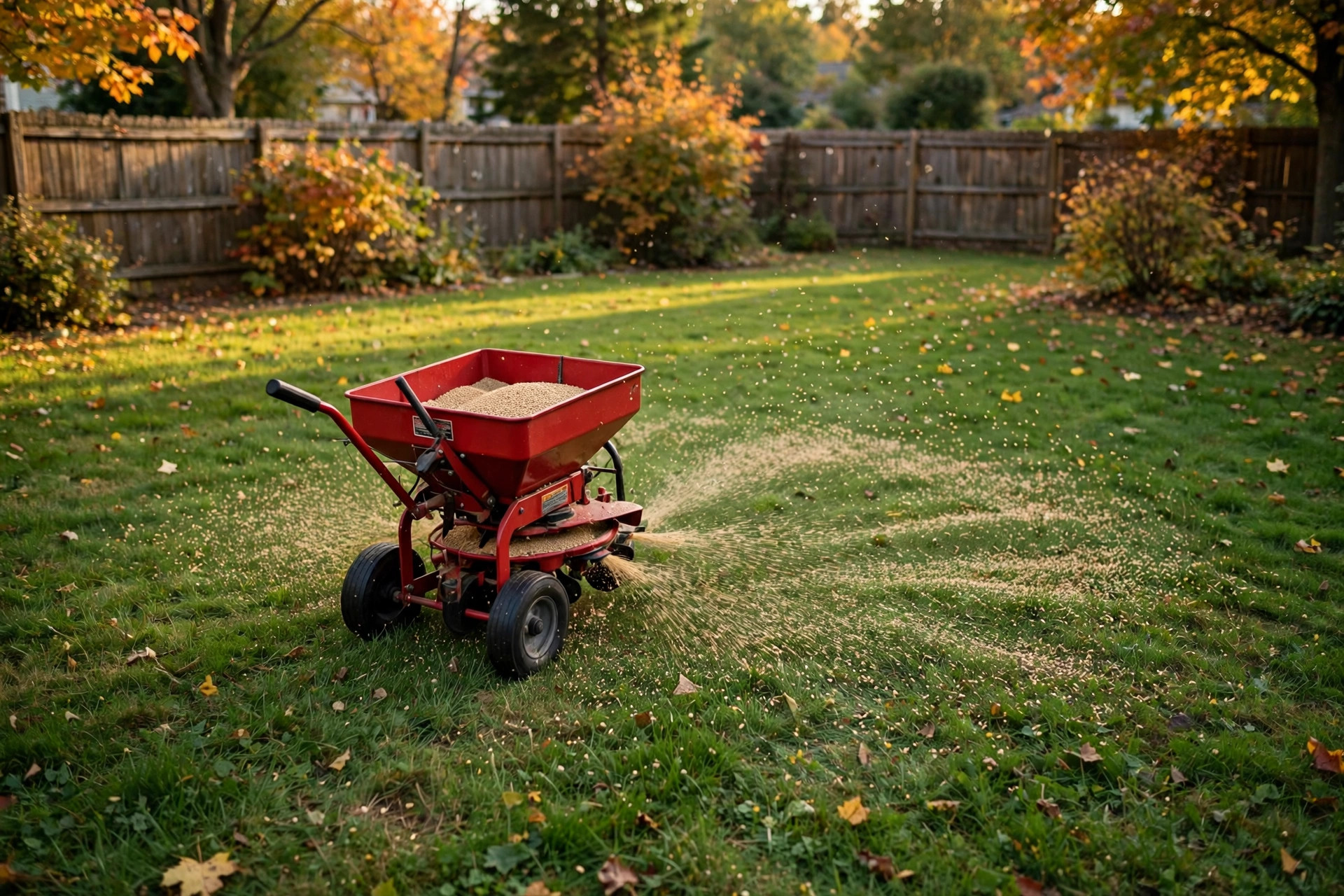
Spread the seed with a spreader. A broadcast spreader gives even cover. Walk at a steady pace. Split the seed in half. Spread one half north to south. Spread the other half east to west. This cross pattern stops bare lines.
Rake lightly after spreading. This pulls a little soil over the seed. Seed to soil contact is the whole game. Seed that sits on top of thatch dries out and dies.
Water right away. Keep the top inch of soil damp. In most falls, light watering twice a day is enough. A short cycle in the morning and one in the late afternoon works well. Cut back when the new grass is about 2 inches tall.
Hold the fertilizer at first. Do not feed on the same day you seed. A starter fertilizer after the new grass has sprouted, in about two to three weeks, gives it a good push. Use a bag made for new seed. Follow the bag rate.
If you need a plan for a different grass type too, our guide on the best overseed blend for cool season lawns covers mixes beyond fescue.
Care and Upkeep After Seeding
New grass is tender. Stay off the lawn for three to four weeks if you can. One walk across a new stand can kill rows of young plants. If you must cross, step on boards or stay on the old path.
Mow high when you start again. Set the blade to 3.5 or 4 inches. Tall blades shade the soil. They keep roots cool. Never cut more than one third of the blade at one time. Sharp blades make clean cuts. Dull blades tear the leaf and brown the tips.
Keep watering through the first fall. New roots need steady moisture. An inch of water per week is a good aim. Rain counts. Back off in late fall when growth slows.
Feed the lawn in late fall. A fall feeding helps roots grow deep over winter. Use a slow release food. A soil test from your local extension office tells you what the soil lacks. It costs little. It saves you from buying what you do not need.
Watch for weeds in the first spring. The new stand is still young. Pull weeds by hand when you see them. Wait until the new grass has been mowed four or five times before you use weed sprays. New grass can be harmed by sprays made for old lawns.
Keep up a simple year plan. Overseed again the next fall if the lawn is still thin. Most fescue lawns do best with overseeding every one or two years. Small yearly seeding keeps the lawn dense and holds weeds out for good.
Safety
Grass seed itself is safe to handle. Some seed is treated with a coating that holds lime or food. Wash your hands after spreading. Keep children and pets off the seeded area until after the first good rain or watering. This is more about clean shoes than real harm.
Fertilizer and weed sprays need more care. Read the bag. Wear gloves and long sleeves. Keep kids and pets off the lawn for the time the label states. Store all lawn goods high and locked, away from children.
Machines need care too. Aerators and spreaders are heavy. Rent the size that fits your body and your yard. If a job feels too big, call a local lawn service. The CPSC posts guides on safe use of home power tools, and their safety notes are worth a read before you rent.
FAQ
How much seed do I need to overseed fescue?
For tall fescue, use 4 to 5 pounds of seed per 1,000 square feet. Measure your lawn first. A 5,000 square foot lawn needs about 20 to 25 pounds. Follow the bag rate. It is tuned to the seed type inside.
When is the best time to overseed fescue?
Early to mid fall is best. Soil is still warm. Rain is steady. Weeds grow slow. Spring is second best. Avoid summer. Heat and drought stress young plants too much.
Can I mix tall fescue seed with my old lawn?
Yes. That is the point of overseeding. New tall fescue blends well with old stands. Pick a blend close in color and blade width to what you have. Turf type tall fescue mixes with most home fescue lawns.
How long does fescue seed take to grow?
You will see green in 7 to 14 days. Full cover takes 6 to 8 weeks. Cool soil slows it down. Warm soil speeds it up. Keep it damp until the plants are well up.
Should I use starter fertilizer when I overseed?
Wait until the new grass sprouts, then feed with a starter fertilizer. Do not feed on seed day. Early food can burn young roots. One light feeding three weeks after seeding is enough.
Can I overseed fescue in the shade?
Yes, with the right seed. Tall fescue handles light shade. Deep shade needs fine fescue in the mix. Trim tree limbs if you can. More light means stronger grass.
A Final Word
A thick fescue lawn starts with good seed and a little care. Pick a clean bag with a high germ rate. Sow at the right rate in early fall. Keep it damp. Mow high. The best grass seed for overseeding fescue is the one that fits your soil, your shade, and your yard, and that you plant the right way. Do the work once, do it well, and the lawn will pay you back for years.
References
Consumer Reports. (n.d.). Product reviews and ratings. https://www.consumerreports.org Deere. (n.d.). Lawn care and grounds equipment. https://www.deere.com Toro. (n.d.). Lawn mowers and yard tools. https://www.toro.com
Was this guide helpful?

About David Wilson
The My Garden US editorial team writes practical, in-depth home and garden guides for American homeowners — tested advice, no fluff.
You May Also Like

Affordable Fence Installation Companies Near Me: A Homeowner’s Guide
January 10, 2026 0 views
Lawn Fertilizer With Iron for Greening: A Plain Guide to a Deep Green Yard
April 27, 2026 0 views
Lawn Care Franchise Opportunities in USA: A Plain Guide for New Owners
June 6, 2026 0 views