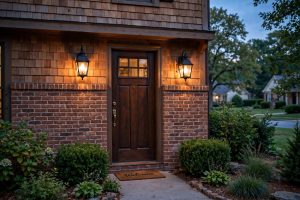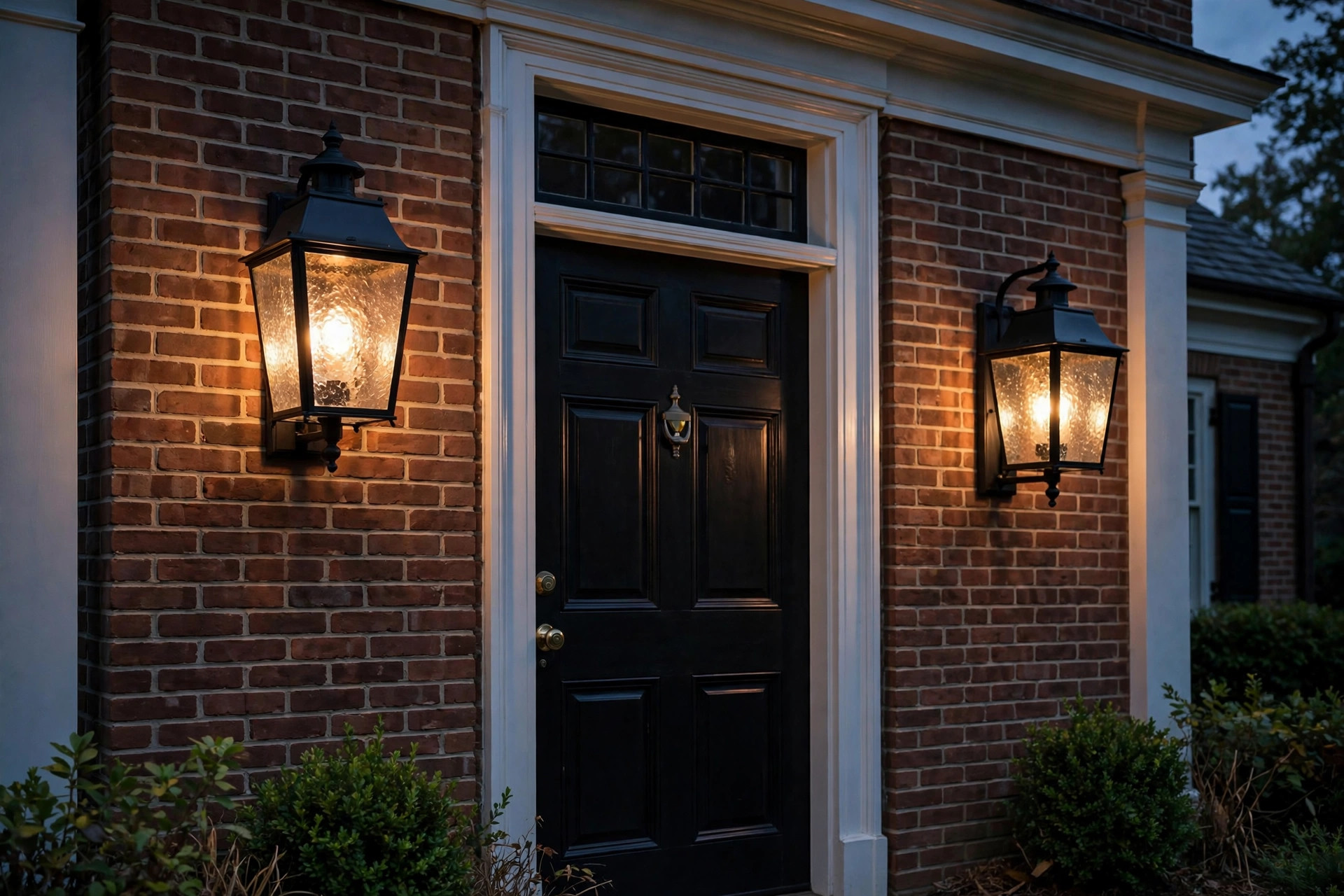
A front door tells the first story of a house. When night falls, a good wall lantern tells it well. It lights the steps. It marks the door. It gives a caller a warm face of glass and brass. The hunt for outdoor wall lanterns USA online deals brings thousands of choices to the screen, and that is the trouble. Too many choices make for poor choices. This guide was written to make the matter plain. It walks through why these fixtures matter, what to look for, the types on the market, what they cost, how to care for them, and how to keep them safe. Every word here is meant for the ordinary homeowner who shops from a kitchen table and wants light that lasts.
Why Outdoor Wall Lanterns Matter
Light at the door is not a luxury. It is a need. A dark porch invites a missed step. A dark garage invites a fumble with keys. A lit entry tells a visitor they are welcome and tells a stranger they are seen. Studies of home safety have long held that a lit house draws less trouble than a dark one. The U.S. Department of Energy notes that well-planned outdoor lighting adds both safety and curb appeal, and it can do so on very little power when the fixture is chosen with care.
Lanterns do more than the plain box fixtures of years past. Their shape throws light down and out, the way a carriage lamp once did. Glass panels soften the glare. A seeded or frosted glass takes the hard edge off an LED bulb. The result is light that serves the eye instead of blinding it. Neighbors notice. Buyers notice. When a house goes on the market, a pair of handsome lanterns by the door can be the first thing a shopper sees in the listing photo. They cost little next to paint or trim, yet they set the tone for all of it.
There is also the matter of habit. We come home in the dark half the year. A lantern on a timer or a dusk-to-dawn sensor greets us without a thought. That small comfort, repeated nightly, is worth the price of the fixture many times over.
What to Look for When You Buy Online: Outdoor Wall Lanterns Usa Online Deals
Shopping on a screen has its risks. You cannot feel the weight of the metal. You cannot see the true color of the glass. But you can read the details that matter, and the best outdoor wall lanterns USA online deals reward a careful reader. Start with the listings on large retailers, compare a few, and read the buyer reviews the way you would ask a neighbor. Guides from The Spruce and Bob Vila are useful reading before you spend a dollar.
Finish and Materials
The finish decides how the lantern ages. Powder-coated aluminum is the common choice. It is light, it does not rust the way raw steel does, and the coating holds up for years if the lantern is rated for wet locations. Solid brass and copper cost more. They age to a green or brown patina that many owners prize. If you live near the sea, salt air is hard on cheap steel. Look for marine-grade or coastal-rated finishes. The product page should state a wet-location rating. If it does not, move on.
Size and Scale
A lantern too small looks lost beside a wide door. A lantern too large crowds a narrow stoop. A rule of the thumb from old trade practice: the fixture should stand about one-third the height of the door. For a standard 80-inch door, look for a lantern between 20 and 28 inches tall. Measure twice. Hold a paper cutout to the wall if you must. Online photos lie about scale. The listed dimensions do not.
Light Source and Bulb Base
Most lanterns today take a standard medium-base bulb, which gives you freedom. You can fit an LED, a warm filament-style LED, or, where allowed, an old incandescent. Check the maximum wattage on the socket. LEDs draw little power, so the limit is rarely a problem, but it is worth a look. Some lanterns ship with built-in LED modules that cannot be changed. They are efficient, but when the module dies, the whole fixture may need replacement. A socket you can relamp is the safer long-term bet.
Wet, Damp, or Dry Rating
Outdoor fixtures carry a location rating. Wet-rated lanterns can take direct rain. Damp-rated ones suit a covered porch. Dry-rated fixtures belong indoors only and should never be hung outside, no matter how fine the deal looks. This one detail separates a bargain from a hazard. When you compare outdoor wall lanterns USA online deals, filter for the rating first and the price second.
Types and Options
The market holds four broad kinds of wall lanterns. Each suits a different house and a different hand.
Hardwired Lanterns
These wire into the house circuit through a wall box. They are the standard choice for a front door, a garage, or a patio wall. They switch on with the house, they can join a timer or a smart switch, and they throw the most light. They need a junction box and, by the book, an electrician for the hookup. If your wall already has a box from an old fixture, the swap is a small job.
Solar Lanterns
Solar models carry a small panel and a battery. They charge by day and glow by night. No wiring is needed, which makes them dear to renters and to owners of sheds and fences. Their light is softer and their run time depends on the sun. In northern winters they may fade before midnight. Read the lumen rating and the stated run time. A good solar lantern states both.
Motion-Sensor Lanterns
These stay dim or dark until they sense movement, then flare to full light. They suit side doors, garages, and dark corners of the yard. They save power and they startle no one when set right. The sensor’s range and angle are listed on the box. Aim the lantern so passing cars do not set it off every minute, or the neighbors will have words.
Dusk-to-Dawn Lanterns
A small photocell reads the sky and switches the lantern on at dark and off at dawn. It is the set-and-forget choice. Many hardwired lanterns offer it as a built-in option, and it pairs well with LED bulbs that sip power. For a front entry that should always look lived-in, this is the type to buy.
Shoppers who enjoy comparing categories may also browse related lighting topics, such as garage shop lights for sale in the USA, before they settle on a style.
Cost and Price
Prices run wide. A basic steel lantern from a big-box store can be had for twenty to forty dollars. Mid-range powder-coated or seeded-glass models run forty to one hundred and twenty dollars. Solid brass, copper, or hand-forged lanterns run one hundred and fifty dollars and up, sometimes well past three hundred for a large pair.
Online deals cut these numbers, but the wise buyer reads the fine print. A “deal” on a dry-rated fixture is no deal at all. Shipping can erase a discount, so check for free freight. Seasonal sales in spring and late fall often bring the deepest cuts, as stores clear patio stock. Price trackers and the buying guides at Consumer Reports can help you learn the fair range before you click. Big retailers like The Home Depot and Lowe’s run frequent promotions, while specialty shops such as Lamps Plus carry wider style ranges at steadier prices.
Count the whole cost, not just the fixture. A hardwired lantern may need an electrician’s hour. A pair needs two fixtures and two bulbs. Solar needs nothing but sun. Over ten years, the LED bulb inside will likely cost more in thought than in money, since a good LED can run for a decade. The ENERGY STAR program certifies efficient fixtures and bulbs, and its mark is a fair guide to low running cost.
For owners planning a wider lighting update, it pays to look at indoor needs in the same season, from kitchen track lighting options to buy in the USA to bedroom table lamps for California homes. One freight charge can serve the whole house.
Care and Upkeep
A lantern asks little, but it asks it yearly. Wash the glass each spring with mild soap and water. Dust and dead insects dim the light more than most owners guess. Check the caulk or gasket where the fixture meets the wall. Water behind the mount is the quiet killer of outdoor fixtures. Tighten any loose screws, and look at the finish for chips. Touch up small chips with matching paint before rust takes hold.
For solar lanterns, wipe the panel clean. A filmed panel charges poorly. Replace rechargeable batteries every two to three years, or when the nightly glow grows short. For hardwired lanterns, relamp with the same base type and stay within the stated wattage. If a fixture flickers or smells hot, switch it off at the breaker and call an electrician. Light is not worth a gamble.
Trim plants back from the lantern. Vines look romantic until they trap moisture against the finish or block the sensor. A foot of clear air around the fixture keeps it dry and working.
Safety
Outdoor wiring lives in weather, and weather does not forgive sloppy work. Turn off the breaker before you touch any hardwired fixture. Test that the power is dead with a non-contact tester. Outdoor circuits should sit on a GFCI breaker or outlet, which cuts power fast if water gets in. If the old box is cracked or the wires are brittle, stop and call a licensed electrician. The cost of the visit is small next to the cost of a fire.
Mount the lantern firmly. A heavy brass fixture on a single drywall anchor is an accident waiting for a windstorm. Use the wall box and the mounting strap the maker provides. Keep bulbs within the rated wattage, and keep paper, dry leaves, and fabric shades of any kind away from the fixture. LEDs run cooler than the old incandescents, which is one more reason to choose them. Product safety recalls are listed by the federal government, and a quick check before buying a little-known brand is time well spent.
Ladder safety matters too. Most lanterns hang at head height or a little above. A short step ladder on firm ground is enough. Do not lean from a chair. Do not work in the rain.
Frequently Asked Questions
How many lumens do I need for a porch wall lantern? For a front door, 400 to 800 lumens per fixture is plenty. That is roughly the light of an old 40 to 60-watt bulb. More light is not always better. Too much glare at the door makes it harder, not easier, to see the steps.
Can I put an indoor lantern outside if the porch is covered? No. Use only fixtures rated for damp or wet locations outdoors. Indoor fixtures lack the seals and the wiring protection that weather demands. The rating is printed on the box and in the online listing.
Are solar wall lanterns bright enough for a front door? They can be, in a sunny spot. Look for models rated at 200 lumens or more with a full-night run time. On a shaded north wall or in a cloudy climate, a hardwired lantern is the surer choice.
What color temperature looks best on a house exterior? Most owners prefer 2700K to 3000K, a warm white that flatters wood, brick, and stone. Cooler 4000K and above can look harsh and institutional. Warm light also bothers sleeping neighbors less.
How far apart should two lanterns hang by the front door? Hang one on each side, centered on the door trim, with the center of each fixture about 66 inches from the ground. On a wide entry, keep them close to the door rather than drifting toward the corners. Symmetry is the whole game.
Do LED bulbs work in old lantern fixtures? Yes, in nearly all cases. Match the base type, usually medium E26, and stay under the fixture’s maximum wattage. An LED marked “damp rated” is the right pick for a porch. Makers such as Philips publish clear guidance on choosing the right LED for enclosed and outdoor fixtures.
A Short Final Word
The best outdoor wall lanterns USA online deals are not always the cheapest listings. They are the fixtures with the right rating, the right size, and a finish that will face ten winters without complaint. Buy the lantern that suits the door, not the one that suits the moment’s sale banner. Hang it straight, seal it well, and fit a warm LED. Then stand on the walk at dusk and look back. A house with lit lanterns looks kept, and a kept house is a comfort to come home to. That is worth more than any discount, though a fair price does no harm at all.
References
Bob Vila. (n.d.). Home improvement advice. https://www.bobvila.com Consumer Reports. (n.d.). Product reviews and ratings. https://www.consumerreports.org ENERGY STAR. (n.d.). Energy efficient products. https://www.energystar.gov Lamps Plus. (n.d.). Lighting and home decor. https://www.lampsplus.com Lowe’s. (n.d.). Home improvement products. https://www.lowes.com Lumens. (n.d.). Lighting and ceiling fans. https://www.lumens.com Philips. (n.d.). Lighting products. https://www.philips.com The Home Depot. (n.d.). Home improvement products. https://www.homedepot.com The Spruce. (n.d.). Home and garden advice. https://www.thespruce.com U.S. Department of Energy. (n.d.). Energy efficiency and renewable energy. https://www.energy.gov
Was this guide helpful?

About James Carter
The My Garden US editorial team writes practical, in-depth home and garden guides for American homeowners — tested advice, no fluff.