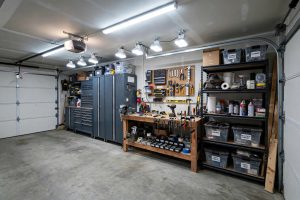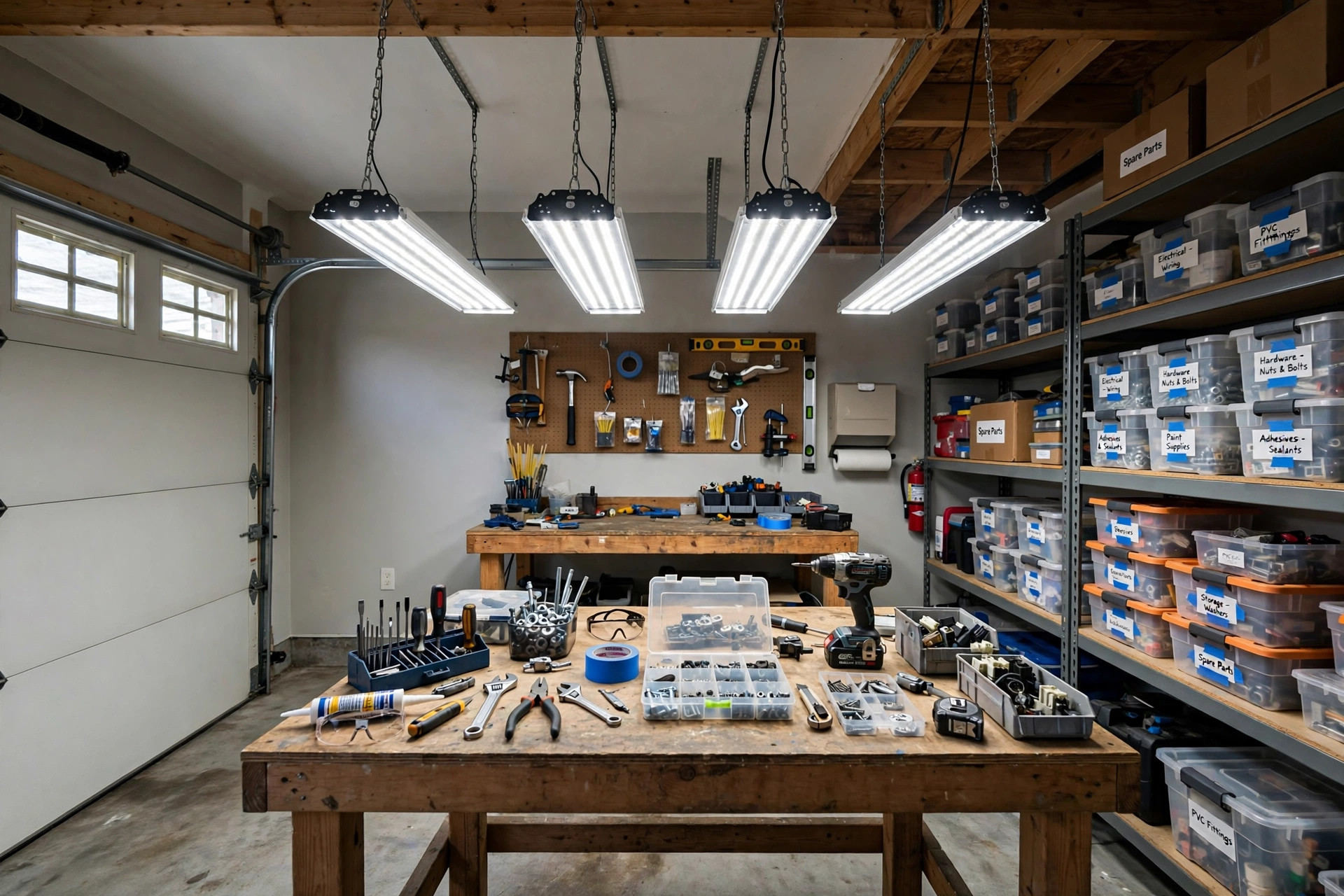
A garage without good light is a poor place to work. Many owners search for garage shop lights for sale usa when the old bulbs give up or when a new workbench needs real light. This guide walks through the main points in plain terms. It covers why these lights matter, the types sold, how to pick the right one, what prices look like, how to care for them, and common safety points. By the end, you will know what to look for before you buy.
Why Garage Shop Lights Matter
Most garages get one weak bulb on the ceiling. That is fine for parking a car. It is not enough for real work. A shop light spreads bright, even light across a wide area. It cuts down on shadows. It lets you see small parts, read labels, and find dropped screws.
Good light also keeps you safe. Dark corners hide tripping hazards. A sharp tool on a dim bench is a risk. Many home stores now stock bright LED shop lights made just for this job, and they cost less than most people expect.
A well-lit garage is also a nicer place to spend time. People who fix cars, build furniture, or restore old bikes often say light was the single best upgrade they made. It matters more than a new tool.
What to Look for When You Buy: Garage Shop Lights for Sale Usa
Several factors decide which light fits your space. Start with the size of the garage. A small one-car garage may need two fixtures. A three-car garage or a full workshop may need six or more.
Brightness
Brightness is measured in lumens. More lumens means more light. A typical garage shop light gives between 4,000 and 10,000 lumens. For light work like storage, 4,000 lumens per fixture may be enough. For detail work like wiring or woodwork, aim higher.
Color Temperature
Color temperature is measured in kelvin, or K. It tells you how the light looks. A rating near 3,000K looks warm and yellow. A rating near 5,000K looks like daylight. Most shop lights sold in the USA sit between 4,000K and 5,000K. This cool white light shows true colors. It is the best choice for a workshop.
Length and Shape
Most garage shop lights are long tubes or flat panels. The common length is four feet. This fits the standard span between ceiling joists in American garages. Some come as two-foot units for small spaces.
Plug In or Hardwired
Many shop lights plug into a standard outlet. Some must be wired into the house power by an electrician. Plug-in models are easier. Hardwired models look cleaner and free up outlets. Decide before you shop.
Linkable Fixtures
Many models link together in a chain. One outlet can power several linked lights. This is a simple way to light a big garage without new wiring.
Main Types of Garage Shop Lights
Stores across the USA sell several styles. Each has strengths.
LED Tube Lights
LED tube lights are the most common type now. They slide into old fluorescent fixtures or come as full new units. They use little power and last for years. They turn on at full brightness even in a cold garage, which is a real advantage in winter.
Integrated LED Panels
These are flat panels with the LED built in. There is no bulb to change. When the light fails years from now, you replace the whole panel. They give very even light and look neat on the ceiling.
High Bay Lights
High bay lights are round, dome-shaped fixtures. They suit tall ceilings, like a barn or a large detached garage. They throw light far down to the floor.
Under Cabinet and Task Lights
Small task lights mount under shelves or over a workbench. They give strong light right where your hands work. They pair well with ceiling fixtures.
Buyers comparing styles can browse full ranges at places like Lowe’s garage lighting selection or the Lamps Plus workshop collection, both of which carry many of the types above.
How Many Lights Do You Need
A simple rule helps. Take the square feet of your garage. Divide by 50. The answer is a rough number of 4,000-lumen fixtures for general work. A 400-square-foot two-car garage needs about eight fixtures by this rule. That sounds like a lot, but linked LED units make it simple.
In practice, many owners start with four fixtures: two over the workbench area and two over the open floor. They add more later. It is better to start with too much light than too little. You can always add a pull switch to turn half of them off.
Ceiling height matters too. Low ceilings, under nine feet, spread light well. High ceilings need brighter fixtures or more of them.
Think about where you stand most. The workbench gets the most light. The open floor where you park needs less. A common layout puts four fixtures in a row over the bench and parking zone, then adds two more near the door and the back wall. This gives even light with no dark spots. If your garage has a dark corner where tools pile up, add a small fixture there too.
Also check for natural light. Windows and garage door glass let in daylight. You may need fewer lights in the day, but they are no help at night. Plan for night work, since that is when weak light hurts most.
Cost and Price of Garage Shop Lights in the USA
Prices are friendly. A single four-foot LED shop light often costs between 25 and 60 dollars. Basic plug-in models sit at the low end. High-output or linkable models cost more.
Buying in packs saves money. Two-packs and four-packs are common. A four-pack of good LED shop lights often runs 90 to 160 dollars. That is enough to light most two-car garages.
Professional-grade high bay lights cost more, often 80 to 200 dollars each. Smart lights with motion sensors and phone apps cost more still.
Running costs are low. An LED shop light may use 40 watts. That is far less than an old 200-watt fluorescent pair. Many energy rating guides, such as the ENERGY STAR lighting pages, show how much an LED can save over a year. The U.S. Department of Energy also publishes plain energy saving tips for home lighting that apply to garages.
Keep an eye on sales. Home improvement chains run lighting sales around holidays and spring project season. Clearance bins often hold last year’s models at half price. They work just as well.
Installation Basics
Most plug-in shop lights hang from small chains. The box includes the chains and hooks. You screw the hooks into a ceiling joist and hang the fixture. Then you plug it in. No tools beyond a drill are needed.
Hardwired models need more care. Turn off the breaker first. Follow the wiring diagram in the box. If you are not sure, call an electrician. A mistake with house wiring is not worth the risk.
Linkable fixtures connect with short cords. Run the cord from the first light to the second, and so on. Check the box for the maximum number of linked units. Going past that limit can overheat the first fixture.
Mount lights a few feet from walls. This keeps light even and avoids dark corners. Over a workbench, hang the light about three to four feet above the bench top. That puts the work surface in strong light without glare in your eyes.
Care and Upkeep
LED shop lights need little care. Dust builds up on the cover over time. Wipe the cover with a dry cloth once or twice a year. This keeps the light output high.
Check the cords now and then. Look for cracked insulation or loose plugs. Replace a damaged cord at once. If a fixture flickers, check the link cord first. It is often loose.
Keep a small stock of spare fixtures if your garage is a full workshop. When one fails, you can swap it in minutes and stay on schedule.
Cold garages are no problem for LEDs. Unlike old fluorescent tubes, LEDs start fast in freezing weather. This is one reason so many owners in northern states have switched.
Safety Points
Safety comes first with any electrical device. Buy only lights with a UL or ETL listing. This mark means the fixture passed safety tests. The home safety pages from lighting guides and general product safety pages are worth a read for new buyers.
Do not overload outlets. A chain of linked lights draws real power. Add up the watts and stay well under the outlet rating. Use a heavy-duty extension cord if you must extend the reach, and never run cords under rugs or across the floor where cars roll over them.
Keep lights clear of flammable items. A shop light gets only slightly warm, but paint cans and rags should not touch any fixture. Leave space around each unit for air flow.
Ladders are part of the job. When you hang lights, use a steady step ladder on flat ground. Have a second person hold the ladder if you can. Most garage injuries come from falls, not from the lights themselves.
Water and electricity do not mix. If your garage floods or the roof leaks, turn off the lights and fix the water problem first.
Frequently Asked Questions
How many lumens do I need for a garage workshop?
For general use, plan on 50 to 75 lumens per square foot. A 400-square-foot garage needs 20,000 to 30,000 lumens total. That is about four to six standard LED shop lights.
Are LED shop lights better than fluorescent?
Yes, in almost every way. LEDs use less power, last longer, start in the cold, and do not flicker. Fluorescent tubes are still sold, but LEDs have taken over the market.
Can I leave shop lights on all day?
You can, but it wastes power. Many modern shop lights include motion sensors or pull chains. A motion sensor turns the light off when no one is there. This is a smart add-on for a busy garage.
What color temperature is best for a garage?
Most owners prefer 4,000K to 5,000K. This is a clean white light that shows true colors. It is close to daylight. Avoid warm 2,700K bulbs in a workshop; they make detail work harder.
Do I need an electrician to install shop lights?
Not for plug-in models. Hang them and plug them in. Hardwired models tie into house wiring, so an electrician is the safe choice unless you have experience.
How long do LED shop lights last?
Most are rated for 25,000 to 50,000 hours. In a home garage used a few hours a day, that is ten years or more. The light may dim slowly near the end rather than burning out all at once.
What should I do if a shop light flickers?
First check the plug and the link cord. Loose cords cause most flicker. If the cord is tight and the light still flickers, try the fixture in a different outlet. A failing LED driver is the next cause. Most makers offer a warranty of three to five years, so check your receipt.
Do shop lights work with a dimmer switch?
Most do not. Standard shop lights run at full power only. Some newer models are marked dimmable. If you want dimming, look for that mark on the box and use a dimmer made for LEDs.
A Short Final Word
Shopping for garage shop lights for sale usa is simpler than it first looks. Pick bright LED fixtures with daylight color, enough lumens for your floor space, and a mount style that suits your ceiling. Prices are fair, upkeep is easy, and the change in your garage will be large. Good light turns a dark storage box into a real workshop.
If you are outfitting other rooms too, you may find these related guides useful: /garage-shop-lights-deals-near-me/, /led-recessed-lights-installation-guide-usa/, and /kitchen-track-lighting-deals-near-me/. For style ideas from a trusted home design source, see The Spruce home lighting guides and the Philips lighting resources.
References
ENERGY STAR. (n.d.). Energy efficient products. https://www.energystar.gov Lamps Plus. (n.d.). Lighting and home decor. https://www.lampsplus.com Lowe’s. (n.d.). Home improvement products. https://www.lowes.com Lumens. (n.d.). Lighting and ceiling fans. https://www.lumens.com Philips. (n.d.). Lighting products. https://www.philips.com The Home Depot. (n.d.). Home improvement products. https://www.homedepot.com The Spruce. (n.d.). Home and garden advice. https://www.thespruce.com U.S. Department of Energy. (n.d.). Energy efficiency and renewable energy. https://www.energy.gov
Was this guide helpful?

About Michael Thompson
The My Garden US editorial team writes practical, in-depth home and garden guides for American homeowners — tested advice, no fluff.