
When people type garage shop lights deals near me into a search box, they usually want two things at once. They want bright light for their garage or workshop, and they do not want to pay full price. That is a sensible goal. Good shop lighting changes how a garage feels and works, and there are real ways to find a lower price without buying a poor product. This guide explains what shop lights are, how to choose them, what they should cost, and how to hunt for local deals in a careful way.
Why Good Garage Shop Lights Matter
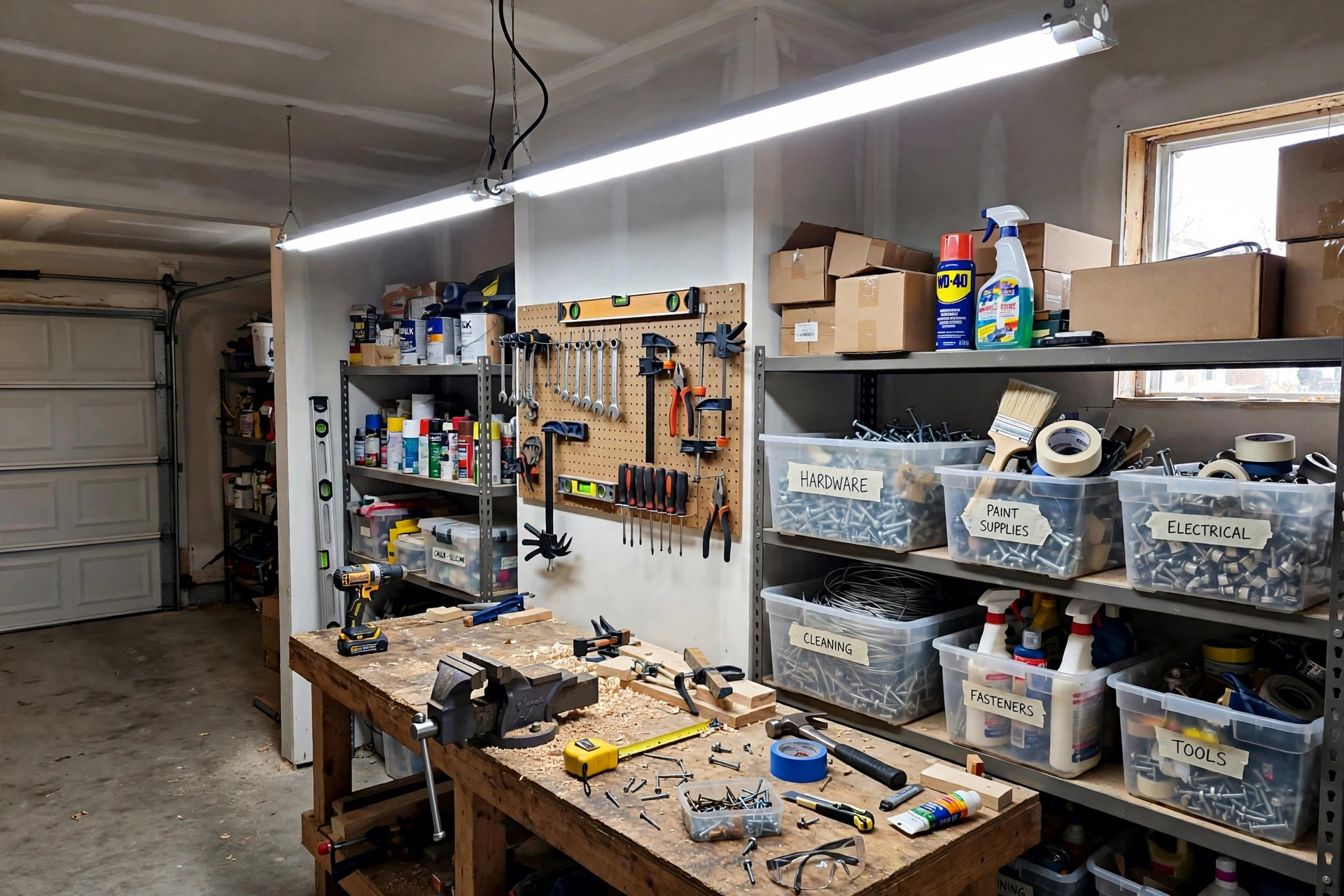
A garage is often the darkest room in the house. Many garages have one bare bulb on the ceiling. That single bulb casts deep shadows. Corners stay dark. A workbench under a dim bulb strains the eyes. Small parts roll away and vanish in the gloom. A shop light fixes this. It is a long, bright fixture made to spread light wide and even across a workspace.
Most modern shop lights use LED tubes or built-in LED panels. They give far more light than old fluorescent tubes. They turn on at once, even in cold weather. They do not hum or flicker the way old ballasts did. They use far less power. For a two-car garage, two or three LED shop lights can turn a dim cave into a space where you can read fine print on a bolt.
Better light also makes the garage safer. Trips and falls happen more often in dark rooms. A sharp tool left on a dark bench is an accident waiting to happen. Bright, even light lets you see the floor, the tools, and your hands clearly. If you do car work, woodwork, or small repairs at home, good lighting is as basic as a good wrench.
What to Look for in a Shop Light: Garage Shop Lights Deals near Me
Shopping for a shop light is not hard if you know the few terms that matter. Store labels can be confusing. The terms below are the ones worth learning.
Lumens: How Much Light
Lumens measure brightness. A typical four-foot LED shop light gives between 4,000 and 6,000 lumens. One fixture at 5,000 lumens is a good start for a single-car garage or a workbench area. A two-car garage usually wants 10,000 to 15,000 lumens in total, split across two or three fixtures. More light is better up to a point. Past that point the room just feels harsh. Aim for even coverage, not a single blinding spot.
Color Temperature: How the Light Looks
Color temperature is measured in Kelvin, marked K. A value near 5,000K looks like clean daylight. It is the most common choice for garages and shops. It renders colors well, which matters when you match paint or wire colors. A value near 4,000K is a neutral white, a little warmer and easier on the eyes. Many shop lights let you switch between 4,000K and 5,000K with a small dial. That is a handy feature if you are not sure which you prefer.
Watts and Energy Use
An LED shop light that puts out 5,000 lumens usually draws only 40 to 50 watts. The old fluorescent version of the same fixture drew twice as much and gave less light. Lower wattage means a lower power bill. Look for the ENERGY STAR mark on the box if you want proof of good efficiency. The ENERGY STAR program lists products that meet strict efficiency rules, and its lighting pages explain what the mark means.
Length and Mounting
Four-foot fixtures are the standard. Most hang from short chains or mount flush to the ceiling. Plug-in models need no electrician and no new wiring.
Linkable Fixtures
Many LED shop lights are linkable. A short cord joins one fixture to the next, so one plug powers a whole row. Check the box for the maximum number of linked fixtures. Four to eight is common. Linking keeps cords tidy and spreads light in a straight line down the middle of the garage.
Types of Garage Shop Lights
There are several shapes on the market. Each suits a different need.
LED wraparound shop lights. These are the long, low-profile fixtures that look like the old fluorescent shop lights but carry LED tubes or built-in LED strips. They throw light wide in all directions. They suit general garage lighting.
High-bay LED lights. These are round or rectangular fixtures made for high ceilings, usually ten feet or more. If your garage has a tall ceiling, a high-bay light puts strong light straight down to the floor where you need it.
LED retrofit tubes. If your garage already has old fluorescent fixtures in good shape, you can swap the tubes for LED tubes. This is the cheapest path to better light. Some retrofit tubes need the old ballast removed. Others work with it. Read the label with care.
Under-cabinet and task lights. A small LED bar above a workbench adds close-range light where detail work happens. These are cheap and easy to mount with screws or adhesive. Pair one with a general shop light and you will have light at every level.
Motion-sensor shop lights. These turn on when you walk in and off after you leave. They are handy when your hands are full of groceries or tools. They also save power in a garage you enter often but use briefly.
Where to Find Garage Shop Lights Deals Near Me
Now to the main question. Finding a genuine deal takes a little method. It is not luck. The steps below are the ones that work.
Start with the big home stores. Large chains such as Home Depot and Lowe’s carry wide ranges of shop lights and run frequent sales. Their websites show local store stock and local prices. Check the site for your nearest store before you drive. Holiday weekends bring the deepest cuts. Watch for spring sales, summer sales, and the weeks around major holidays.
Use store price matching. Many large stores match a rival’s lower price on the same item. Bring a printout or show the price on your phone. Price matching turns two stores’ deals into one better deal.
Check clearance and open-box stock. Stores mark down floor models, dented boxes, and returned items. Ask a floor associate about open-box lighting.
Look at lighting specialists. Online lighting stores such as Lamps Plus and Lumens run promotions and clearance sections of their own. Their prices sometimes beat the big chains, especially on multi-packs.
Buy multi-packs. A four-pack of LED shop lights often costs less per fixture than buying four singles. If your garage needs three and your neighbor needs one, split the pack and split the cost.
Read independent reviews first. A rock-bottom price is no bargain if the fixture fails in a year. Consumer Reports tests lighting products and rates them for brightness, life, and value. A quick check of its ratings can keep you from wasting money on a weak unit.
Watch the manufacturer. Brands such as Philips post rebates and promotions on their own sites. Sign up for the email list of the brand you favor. Rebates often stack with a store sale, which doubles the saving.
Check local utility rebates. Some power companies give rebates for buying efficient LED lighting. The U.S. Department of Energy explains federal and local efficiency programs and points to rebate finders. A ten-dollar rebate per fixture is common in many states.
Compare carefully. When you compare two deals, compare the same things: lumens, wattage, length, and warranty. A cheap fixture with a one-year warranty is often a worse deal than a slightly dearer one with a five-year warranty.
What Garage Shop Lights Should Cost
Prices move with sales, but the normal ranges are steady. A single four-foot LED shop light usually costs between twenty-five and sixty dollars. The low end covers basic single-tube models. The high end covers linkable fixtures with selectable color temperature and higher lumen output.
Multi-packs change the math. A two-pack often sells for forty to ninety dollars. A four-pack can run seventy-five to one hundred and sixty dollars.
High-bay LED lights cost more, often between sixty and one hundred and fifty dollars each. Retrofit LED tubes run five to fifteen dollars per tube, which makes them the cheapest upgrade per lumen in most garages.
Set a budget before you shop. Decide how many fixtures your space needs, multiply by a fair price, and wait for a sale that meets your number.
Installation Basics
Most plug-in shop lights install in under an hour. Hang the fixture from the ceiling with the chains or brackets in the box. Plug it into the nearest outlet. If the cord will not reach, a heavy-duty extension cord rated for the load works for a test, but a proper outlet is the right long-term answer.
Ceiling outlets are common in garages but not always where you want the light. If you must add an outlet or wire a fixture direct, and you are not sure of the work, call an electrician. Lighting is low on the risk scale as home wiring goes, but mistakes still burn houses down. A licensed electrician can add a ceiling outlet in one short visit. Over a workbench, hang the light low enough to flood the bench but high enough to stay clear of your head. Thirty to forty inches above the bench is a good rule.
Care and Upkeep
LED shop lights ask for almost nothing. Dust is their main enemy. A dusty diffuser throws less light. Wipe the fixture with a dry cloth twice a year. In a woodworking shop, wipe it more often, since fine dust coats everything.
Check the hanging hardware once a year. Chains stretch and hooks loosen over time, especially in a garage that shakes when the door opens. A fixture that sways in a breeze needs its mount tightened.
LEDs fade slowly over many years. If a fixture dims early, check the warranty. Most carry three to five years of cover. Keep the receipt or take a photo of it the day you buy.
If a linkable set stops working, check the linking cord first. It is the most common failure point. Swap it with a spare to test. If the fixture itself has failed, replace rather than repair. The electronics inside are not made for home service.
Safety Notes
Shop lights are safe when installed with sense. Keep a few rules in mind.
Do not overload one outlet with a long chain of linked fixtures. Heat builds up in crowded plugs. Follow the maker’s limit exactly.
In a damp garage, choose a fixture rated for damp locations. The rating is printed on the box.
Unplug the fixture before you clean it or change a tube. This is a small rule that prevents a large shock. For general home electrical safety guidance, the advice pages at Family Handyman and Bob Vila cover grounding, breakers, and safe DIY limits in plain language.
Ladder safety matters too. A four-foot fixture is awkward to lift overhead. Have a helper hold the ladder or hand the fixture up to you. Most mounting injuries are ladder injuries, not lighting injuries.
Frequently Asked Questions
How many shop lights does a two-car garage need? Two or three four-foot LED fixtures, each giving 4,000 to 6,000 lumens, light a standard two-car garage well. Space them evenly. Add a small task light over the workbench for detail work.
Are LED shop lights better than fluorescent? Yes, in almost every way. LEDs give more light per watt, start at once in the cold, make no hum, and last far longer. Fluorescent tubes fade and flicker as they age. The only edge fluorescents still hold is the very lowest upfront price, and LED sales have nearly closed that gap.
Can I link several shop lights together? Most modern LED shop lights are made for linking. Check the box for the maximum number, often four to eight, and use the maker’s linking cords. One plug then powers the whole row.
Do shop lights work in cold garages? LED shop lights work well in the cold. Unlike old fluorescents, they reach full brightness at once, even below freezing. If your garage is unheated, LEDs are the clear choice.
What color temperature is best for a garage? 5,000K daylight is the most popular choice. It shows true colors and feels bright and alert. 4,000K neutral white is a fine second choice if you find 5,000K too stark. Fixtures with a selectable switch give you both.
How do I find the best garage shop lights deals near me? Check the websites of Home Depot and Lowe’s for local stock and sale prices, look at clearance and open-box items in the store, compare lighting specialists like Lamps Plus, and time your purchase around holiday sales. Old-house renovation guides such as This Old House also cover lighting upgrades and where to buy them.
A Short Final Word
The search for garage shop lights deals near me ends well when you shop with a plan. Learn the few terms that matter: lumens, color temperature, watts, and warranty. Decide how many fixtures your space needs. Set a fair price per fixture. Then watch the big stores, check clearance stock, and wait for a holiday sale. The light you gain will pay you back every time you walk into a bright garage instead of a dark one. And if your lighting project grows beyond the garage, our guides to outdoor wall lanterns, kitchen track lighting, and wifi smart bulbs can help with the next room.
References
Bob Vila. (n.d.). Home improvement advice. https://www.bobvila.com Consumer Reports. (n.d.). Product reviews and ratings. https://www.consumerreports.org ENERGY STAR. (n.d.). Energy efficient products. https://www.energystar.gov Family Handyman. (n.d.). DIY home repair and maintenance. https://www.familyhandyman.com Lamps Plus. (n.d.). Lighting and home decor. https://www.lampsplus.com Lowe’s. (n.d.). Home improvement products. https://www.lowes.com Lumens. (n.d.). Lighting and ceiling fans. https://www.lumens.com Philips. (n.d.). Lighting products. https://www.philips.com The Home Depot. (n.d.). Home improvement products. https://www.homedepot.com This Old House. (n.d.). Home renovation guidance. https://www.thisoldhouse.com U.S. Department of Energy. (n.d.). Energy efficiency and renewable energy. https://www.energy.gov
Was this guide helpful?

About Michael Thompson
The My Garden US editorial team writes practical, in-depth home and garden guides for American homeowners — tested advice, no fluff.
You May Also Like
WiFi Smart Bulbs: Reviews and Buying Guide for USA Homes
January 21, 2026 0 views
Deck Cap Lights for Sale USA: A Plain Guide to Bright, Safe Decks
March 17, 2026 0 views
Dining Room Chandeliers USA Online Deals: A Complete Buying Guide
April 15, 2026 0 views