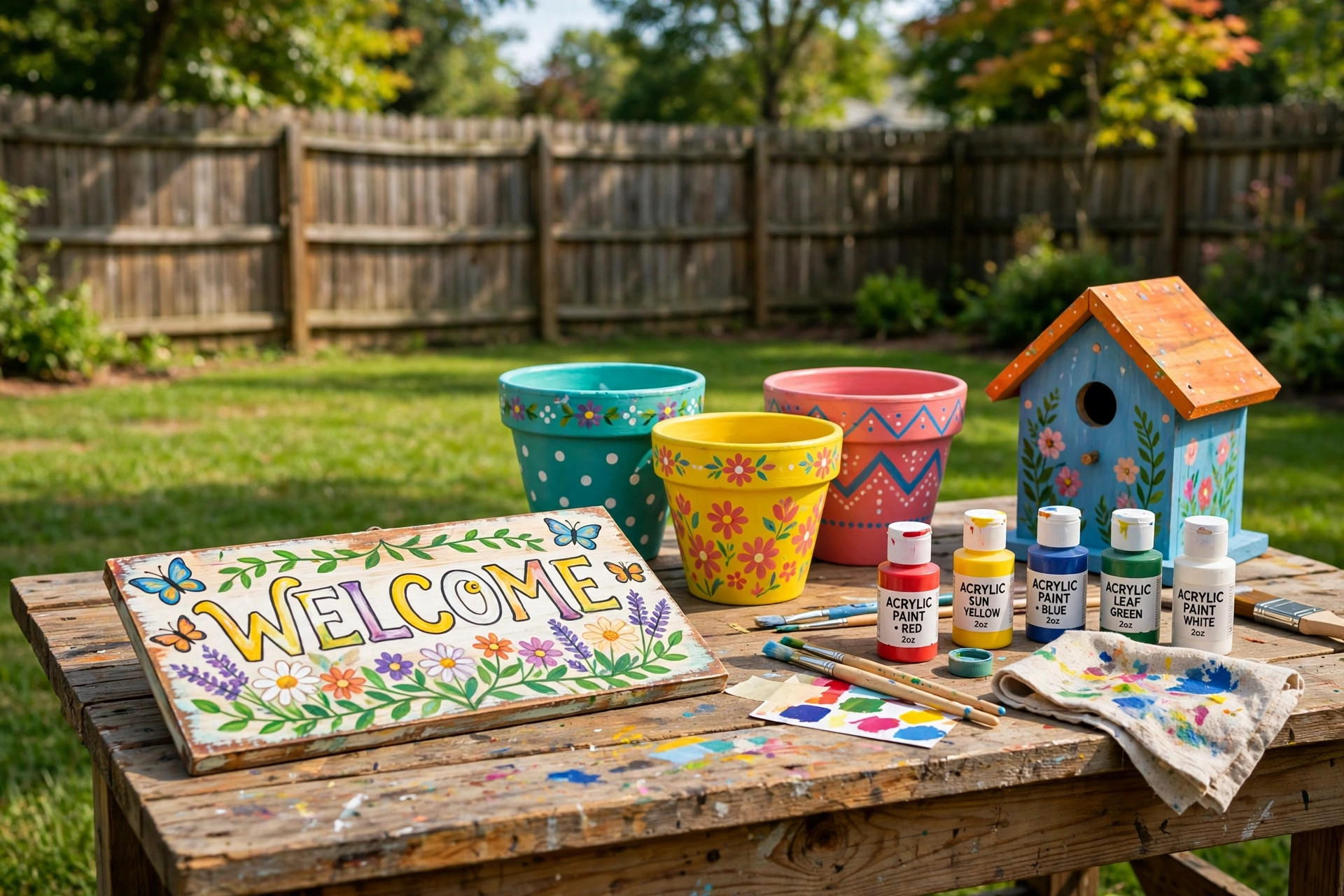

Finding the best acrylic paint for outdoor crafts that stays weatherproof can feel harder than the craft project itself. Shelves are full of small bottles and bold labels. Many of them work fine on a canvas in the living room. They do not survive a season on a porch rail. The difference lies in the binder, the pigment load, and the way the paint is sealed. This guide walks through each point in plain terms so you can buy with confidence and keep your work bright for years.
Why Weatherproof Paint Matters for Outdoor Crafts
A craft that lives outdoors faces a rough life. Summer sun bleaches weak color. Autumn rain soaks into bare wood and swells the grain. Winter freeze and thaw push paint loose from the surface. Wind drives grit across the finish like sandpaper. An ordinary craft paint may look fine in June and peel by October.
Weatherproof acrylic paint resists all of these forces. Acrylic is a plastic-based paint. When it dries, it forms a flexible film that bonds to wood, terra cotta, metal, stone, and concrete. A good outdoor formula adds ultraviolet blockers to hold color and a tougher binder that sheds water. The result is a painted birdhouse, garden sign, or flower pot that still looks fresh after two or three summers.
There is also a simple money reason. Outdoor crafts take real hours. A painted welcome sign can take a full weekend. If the paint fails in one season, you repeat the work. A paint that costs a dollar or two more per bottle and lasts three years is the cheaper choice by far.
What to Look for When You Choose: Best Acrylic Paint for Outdoor Crafts Weatherproof
Start with the label. Look for the words outdoor, exterior, or weatherproof printed plainly. If the bottle only says multi-surface or all-purpose, it may still fade outside. Some makers sell a patio paint line made just for the yard. Those are worth the search.
Check the finish. Satin and semi-gloss finishes stand up to weather better than flat matte. A slight sheen sheds water and wipes clean. Very glossy paint can show brush marks, so most crafters settle on satin. It looks soft from a few feet away and still protects well.
Look at the pigment strength. Cheaper bottles can be thin and watery. You can often feel this by tilting the bottle. Paint that moves like water will need four or five coats. Paint with body covers in two coats. Read reviews on trusted craft sites such as Michaels and JOANN where buyers often note how many coats they needed.
Pick the right size. Small two-ounce bottles suit fine detail work like flower petals on a sign. For a whole bench or a set of fence boards, buy eight-ounce jars or larger craft bottles. Large projects drink paint fast, and running out mid-project leads to mismatched color.
Think about color choice too. Deep reds and bright yellows fade fastest in direct sun. Whites and light colors hold up longest. This does not mean you must paint everything white. It means you should expect to add a clear sealer coat over bold colors, which we will cover below.
Types and Options on the Shelf
Craft stores carry several families of acrylic paint. Each has a place.
Patio and outdoor acrylics. These are made for the yard. The binder is stronger, and most resist water once cured. They brush on thick and keep their sheen. For signs, pots, and garden stakes, this is the easiest choice. You can find project ideas and paint charts at Dick Blick, which stocks a wide range of craft acrylic lines.
Multi-surface acrylics. These bottles promise to stick to glass, ceramic, fabric, and more. Many do survive outdoors, but their strength is adhesion, not weather. They work well on mixed-media crafts where the piece sits under a covered porch. For full sun and rain, an outdoor formula is safer.
Chalk paint and milk paint. These give a soft, aged look that many crafters love. By themselves they are not weatherproof. They need a wax or clear topcoat made for exterior use. If you already have chalk paint you love, pairing it with the right sealer can work. For more on furniture-style finishes, see our guide to the /best-chalk-paint-for-furniture-diy-projects/.
Spray acrylics. Spray cans cover large areas fast and reach into cracks. They are useful for garden sculptures and metal chairs. Outdoor-rated spray acrylics exist, but overspray is hard to control. Use them for base coats, then add detail by brush.
Acrylic paint pens and markers. These are handy for lettering and small designs on stones or pots. Many are water-resistant once dry. They rarely match the weather life of brushed paint, so treat them as detail tools rather than the main coat.
When you compare lines, also note drying time. Most acrylics dry to the touch in twenty to thirty minutes. Curing takes longer. Paint may feel dry in an hour but still be soft inside for a day or two. Do not place a fresh craft in heavy rain for at least 48 hours.
Cost and Price: What You Should Expect to Pay
Acrylic paint is one of the cheapest craft supplies per hour of use. Small two-ounce bottles of basic craft acrylic often cost one to three dollars. Outdoor and patio formulas run two to five dollars for the same size. Larger eight-ounce jars run five to ten dollars. A clear exterior sealer in a spray can or brush-on bottle costs eight to fifteen dollars and covers many projects.
A typical garden sign project needs three or four colors plus a sealer. Expect to spend fifteen to twenty-five dollars on paint if you buy small bottles. That is modest for a piece that lasts years. Buying a basic set can cut the per-color cost. Our roundup of the /acrylic-paint-set-for-beginners-canvas-art/ explains what a starter set should hold.
Watch for sales. Craft chains run paint sales often, and buying during a sale lets you stock outdoor colors cheaply. Store paint in a cool room away from freezing. A bottle that freezes can separate and never mix smooth again.
How to Apply Paint for the Best Outdoor Life
Good paint still needs good method. The steps below add years to any outdoor craft.
Clean the surface. Wash away dirt, dust, and old loose paint. For wood, a light sanding opens the grain so paint grips. For terra cotta pots, scrub off the white salt crust that forms on old clay. For metal, sand rust spots to bare metal and wipe with a dry cloth.
Prime when it matters. Raw wood, raw metal, and concrete drink paint. A primer blocks this thirst and gives color a smooth base. Use a primer rated for exterior use. On small crafts a spray primer saves time. On detailed work, brush primer keeps edges sharp.
Paint in thin coats. Two or three thin coats outlast one thick coat. Thick paint skins over while the layer below stays soft, and that soft layer cracks later. Let each coat dry to the touch before adding the next. Most acrylics need about thirty minutes between coats.
Work in mild weather. Paint between 50 and 85 degrees in low wind. Hot sun dries the brush line too fast and leaves marks. Damp, cold air slows drying and weakens the bond. A dry garage or shaded patio makes a fine paint room.
Use the right brush. A good brush set makes detail work cleaner. Stiff synthetic brushes suit acrylics well because they do not soak up water and go limp. Rinse brushes at once when you finish. Dried acrylic ruins a brush for good.
Seal the finished piece. This step matters most. Even weatherproof paint lasts longer under a clear exterior sealer. Brush or spray two light coats of a polyurethane or acrylic sealer made for outdoor use. Satin sealers keep the look natural. Gloss sealers add shine and extra water shedding. Pay special care to edges, joints, and the bottom of pieces where water sits.
Care and Upkeep Through the Seasons
A few small habits keep outdoor crafts looking new.
Bring light pieces under cover during hard storms when you can. A hanging sign that swings in a gale takes more beating than one on a sheltered wall. Store seasonal crafts, like painted pumpkins and holiday stakes, indoors between seasons.
Wash pieces once or twice a year with mild soap and a soft cloth. This clears pollen, bird droppings, and road dust that can dull the finish. Skip the pressure washer. Its force can lift paint edges even on well-sealed work.
Touch up small chips early. A chip in the sealer lets water reach the paint film. A dab of matching paint and a fresh coat of sealer on the spot takes five minutes and stops the damage from spreading.
Check wooden pieces each spring. Wood moves with moisture, and screws or joints can loosen. Tighten hardware before the paint cracks around it. If a board has rotted, replace the board rather than painting over rot.
Safety Notes for Craft Painters
Acrylic paint is among the safer craft paints, but a few rules still apply. Work where air moves. Open a window or paint in the garage with the door up. Wear a dust mask when sanding old paint, since old layers may hold lead. Wear gloves when you handle mineral spirits or spray primers.
Keep paint away from small children and pets. Many bottles carry a non-toxic mark, but they are still not food safe. Wash hands after painting, and keep brushes out of cups that anyone might drink from.
Dispose of paint with care. Let leftover liquid paint dry out in the can before you throw it away, or take it to a local household waste program. Never pour paint down a storm drain. The EPA offers plain guidance on safe disposal of household paint and chemicals.
Store spray cans away from heat. Read each product label before you start. Labels carry the maker’s own safety notes for that formula.
Frequently Asked Questions
Can I use regular indoor acrylic paint outside?
You can, but expect a short life. Indoor acrylic lacks strong ultraviolet blockers and a weather-grade binder. On a covered porch it may last a season or two. In open sun and rain it often fades and peels within months. For anything you want to keep, buy paint labeled for outdoor use and seal it.
How long does weatherproof acrylic paint last on outdoor crafts?
With good prep and a sealer, expect two to four years before a touch-up is needed. Sheltered pieces last longer. Pieces in full southern sun and driving rain wear faster. Light colors and satin finishes tend to hold up best.
Do I need to prime before painting outdoor crafts?
On raw wood, raw metal, concrete, and old terra cotta, primer is worth the step. It evens out thirsty spots and locks the color down. On clean, sound surfaces that are already painted, a light sanding is often enough. When in doubt, prime. It is the cheapest insurance in the whole project.
What is the best sealer for outdoor acrylic crafts?
Look for a clear sealer made for exterior use, either brush-on polyurethane or an acrylic spray sealer. Two light coats beat one heavy coat. Satin gives a natural look, while gloss adds shine and water shedding. Recoat every year or two on pieces that face hard weather.
Will weatherproof acrylic paint stick to plastic pots?
It can, with the right prep. Sand glossy plastic lightly so the paint has tooth. Clean off any mold release or oils with soap and water. Use a primer made for plastic, then paint and seal. Cheap thin plastic flexes a lot, and even good paint can crack on it over time.
Is outdoor acrylic paint safe for birdhouses and feeders?
Yes, once it is fully cured. Let paint and sealer cure for at least a week before birds move in. Paint the outside only. Leave the inside of a birdhouse bare so nesting birds are not exposed to the finish. The same rule fits feeders: paint the outside, keep food surfaces clean and unpainted.
A Short Final Word
The best acrylic paint for outdoor crafts that stays weatherproof is not a mystery. It is an outdoor-rated acrylic, bought in a satin finish, laid on a clean primed surface in thin coats, and sealed against the weather. Follow that simple chain and your garden signs, painted pots, and yard art will hold their color through sun, rain, and frost. The paint costs a little more than the cheapest bottle on the shelf. The extra years of life are worth every cent.
For more background, see This Old House, Bob Vila, and The Home Depot. See Family Handyman for more detail.
References
Blick Art Materials. (n.d.). Art and craft supplies. https://www.dickblick.com Bob Vila. (n.d.). Home improvement advice. https://www.bobvila.com Family Handyman. (n.d.). DIY home repair and maintenance. https://www.familyhandyman.com JOANN. (n.d.). Fabric and craft supplies. https://www.joann.com Michaels. (n.d.). Arts and crafts supplies. https://www.michaels.com The Home Depot. (n.d.). Home improvement products. https://www.homedepot.com This Old House. (n.d.). Home renovation guidance. https://www.thisoldhouse.com U.S. Environmental Protection Agency. (n.d.). Protecting human health and the environment. https://www.epa.gov
Was this guide helpful?

About Lisa Anderson
The My Garden US editorial team writes practical, in-depth home and garden guides for American homeowners — tested advice, no fluff.
You May Also Like
The Best Sublimation Printer for a Home Craft Business
August 21, 2026 0 views
The Best Yarn for Baby Blankets: Soft, Washable Choices That Last
April 25, 2026 0 views
DIY Welcome Sign Kit for Front Porch Decor: How to Make One That Lasts
March 7, 2026 0 views