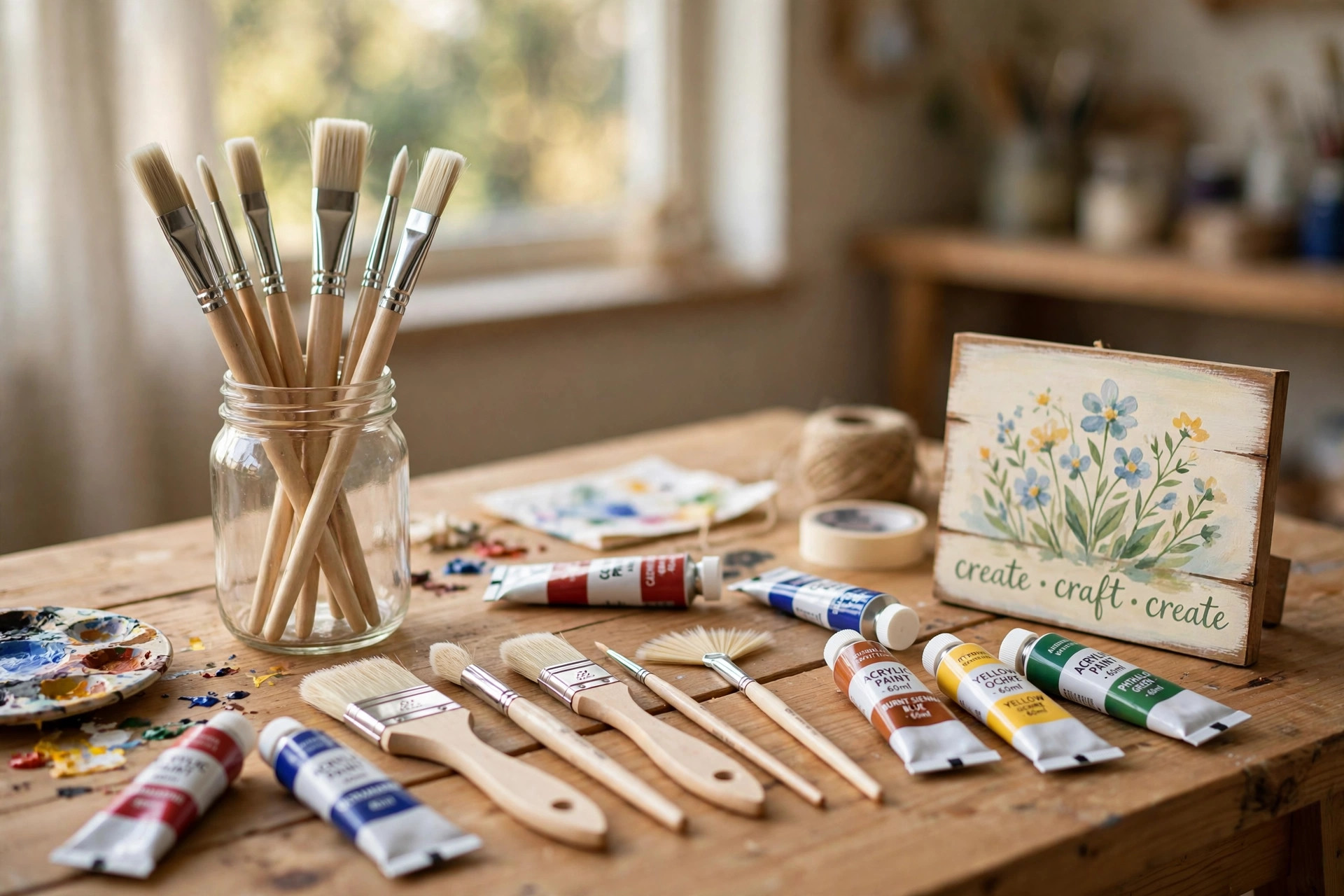

Anyone who wants to paint with acrylics needs good tools. The paint itself gets most of the praise. The brushes do most of the work. A weak brush leaves streaks. A good brush lays paint down smooth and even. This guide will help you find the best craft paint brushes set for acrylics for your home projects. It covers what matters, what to avoid, what to pay, and how to care for your brushes. By the end, you will know exactly what to buy and how to keep your set in good shape for years.
Why the Right Brush Set Matters
Painting should be a joy. The wrong brushes turn it into a chore. Cheap brushes shed hairs into the paint. They leave stray marks across your work. They lose their shape after one or two uses. A pointy tip that fans out on the first wash is no bargain, even at a low price.
Acrylic paint dries fast. That is one of its strengths. It is also a test for brushes. Paint hardens in the bristles if you wait too long to rinse. A well-made brush survives this better. Its bristles hold paint well. Its ferrule, the metal band that holds the bristles, stays tight through many cleanings.
A complete set also saves money. Single brushes cost more per piece. A set gives you flats, rounds, filberts, liners, and fan brushes in one box. Each shape has a job. With a set on hand, you can paint broad backgrounds, fine lines, soft blends, and small details without a trip back to the store. Many home crafters find that a complete acrylic paint set for beginners pairs well with a good brush collection, since both teach the basics side by side.
What to Look For in a Brush Set: Best Craft Paint Brushes Set for Acrylics
Bristle Type
For acrylics, synthetic bristles are the rule. Acrylic paint is water-based. It is rough on natural hair. Hog bristle and sable brushes belong with oil paint. Synthetic fibers, usually nylon or a nylon blend, stand up to acrylic paint and wash clean with soap and water.
Look for soft, springy fibers. Press the tip gently with your finger. It should bend and snap back into shape at once. If the tip stays bent, put the set down. That brush will not paint a straight line for long. Good sets use fibers with fine tips that hold paint well. Retailers such as Blick art materials sell sets where each brush lists its fiber type on the package. That label is worth reading.
Handle Length and Comfort
Handles come short or long. Short handles suit close work at a table. They give you control for small crafts, signs, and detail painting. Long handles suit easel work. They let you stand back and see the whole picture.
For most home crafters, short handles are the best choice. A short handle fits in a jar on your desk. It feels like a pencil. It gives you a steady hand for fine work. Check that the handles are smooth and sealed. Raw wood soaks up water and paint. Sealed or painted handles last much longer.
The Ferrule
The ferrule is the metal collar between the handle and the bristles. It should be seamless or tightly crimped. It should sit flush against the handle with no gap. A loose ferrule wobbles. Paint seeps under it. The brush falls apart in a few months.
Nickel-plated ferrules resist rust. That matters because brushes live in water. After rinsing, the ferrule is the wettest part. Rust stains bristles and weakens the bond. Guides from paint makers like Winsor & Newton explain how ferrule design affects brush life. Their advice applies to craft sets as well.
Shape Variety
A good set covers the main shapes. Flat brushes fill large areas and paint sharp edges. Round brushes handle detail and outlines. Filbert brushes, with their rounded flat heads, blend soft curves. Liner or rigger brushes paint long thin lines. Fan brushes create texture, such as grass or clouds.
You do not need fifty brushes. Twelve to twenty-four brushes in a good mix of shapes and sizes will cover nearly every craft project. Count the shapes on the back of the box before you buy. Some sets pad the count with near-duplicates. A set with six flat brushes and no liner is not a true full set.
Size Range
Sizes run from tiny detail brushes, marked 0 or 00, up to broad one-inch flats. A set for acrylic crafts should span that range. Tiny rounds paint dots and lettering. Medium flats cover signs and boxes. Broad flats fill canvases and furniture pieces.
Think about what you paint most. If you paint wood blanks for painted signs, you need medium flats and a liner for lettering. If you paint canvas art, you need broad flats for backgrounds and rounds for detail. Match the set to your real projects.
Types of Brush Sets You Can Buy
Student and Beginner Sets
Student sets cost the least. They use basic synthetic fibers and painted wooden handles. The quality is fair. They suit children, school projects, and first-time crafters. Buy one if you are still learning and are not sure how far the hobby will go.
These sets often sell for five to fifteen dollars. They work fine for simple crafts. Their limits show in fine detail work and in how long they last. If a beginner set feels like a chore, upgrading the brushes often solves the problem before new paint does.
Mid-Range Craft Sets
This is the sweet spot for most buyers. Mid-range sets use better fibers and stronger ferrules. They hold their shape through many washings. They usually include a wider mix of shapes. Prices run from about fifteen to forty dollars.
Craft stores such as Michaels and JOANN carry many sets in this range. You can feel the difference in the store. Compare a budget set with a mid-range set side by side. The mid-range bristles feel fuller and spring back faster. That spring is what paints smooth lines.
Professional Artist Sets
Professional sets use the finest synthetic fibers. They are built for daily use by working artists. Prices start around forty dollars and climb past one hundred for large sets. The fibers keep a sharp edge wash after wash. The handles balance well in the hand.
Most crafters do not need this tier. If you sell your work or paint every day, it is worth the cost. The brushes last years with proper care. Paint makers like Liquitex and GOLDEN offer brush care guides aimed at daily painters. Their tips on cleaning apply to any good set.
Specialty Sets
Some sets serve one purpose. Lettering sets hold many liners and scripts. Wash sets hold broad flats for backgrounds. Travel sets come in a roll or pouch with short handles. Buy a specialty set only after your main set leaves a gap. A main set plus one specialty set covers almost everything.
If you also enjoy watercolor work, note that acrylic brushes and watercolor brushes differ. A set of professional watercolor brushes uses softer fibers that hold more water. Keep the two types apart in storage so you grab the right tool.
Cost and Price Guide
Prices vary by brand, size, and where you shop. The ranges below cover most home craft sets sold in the United States.
– Under $10: Basic student sets, often 10 to 15 brushes. Fine for kids and simple crafts. – $10 to $25: Decent beginner sets with more shapes. Good for learning. – $25 to $45: Strong mid-range sets. The best value for most home crafters. – $45 to $80: High-quality sets with fine fibers. Good for serious hobbyists. – Over $80: Professional sets. Worth it only for daily painters.
Watch for sales. Craft chains run frequent coupons. Online art stores bundle brushes with paint for less than the separate prices. Big-box stores like Home Depot also stock craft brush sets in their paint aisles. Their prices on basic sets can beat craft stores during holiday sales.
Do not judge a set by brush count alone. A 24-brush set at ten dollars uses thin fibers and weak ferrules. A 12-brush set at thirty dollars often paints better and lasts longer. Quality of fiber matters more than quantity of brushes.
Care and Upkeep
Brushes last years if you treat them right. They die in weeks if you do not. Acrylic paint is the main danger. It dries hard and fast. A brush left in paint for an hour may never wash clean again.
Washing
Rinse brushes while you work. Keep a jar of water at your table. Swish each brush in the water before the paint skins over. When you finish, wash with mild soap and lukewarm water. Work the soap through the bristles with your fingers. Rinse until the water runs clear.
Never use hot water. Heat sets acrylic paint into the fibers. Never leave brushes soaking overnight. Soaking bends the tips and loosens the glue that holds the bristles. Guides on tool care from This Old House and Bob Vila stress the same rule for all paint tools: clean promptly, and never soak.
Drying
Shake off extra water. Reshape each tip with your fingers while it is damp. Lay brushes flat or stand them bristles-up in a jar. Never store them bristles-down in a cup. The weight bends the tips over time.
Keep brushes away from heat. Do not dry them on a radiator or with a hair dryer. Room air is enough. A rack that holds brushes tip-down at a slight angle works best, since water drains away from the ferrule instead of into it.
Storage
Store dry brushes in a case, a roll, or a tall jar with the bristles up. Keep them away from dust. Dust grinds into the fibers and dulls the tips. If your set came with a plastic case or a canvas roll, keep using it. Those cases are made to protect the shapes.
Check your brushes now and then. Pull each one from the jar. Look at the tip. If a brush has lost its shape, try reshaping it with a mild soap lather and leaving it to dry. If it still splays, retire it to rough jobs like glue or varnish. A worn brush can still serve.
Safety Notes
Acrylic paints are mostly safe, but they are not food. Do not use craft brushes for cooking or for anything that touches food. Wash your hands after painting. Keep small brushes away from young children, since the tips can break off.
Some pigments contain metals such as cadmium. Read the paint label. Work in a ventilated room if you spray paint or use large amounts. Brushes themselves pose little risk, but paint residue on a brush can irritate skin or eyes. Rinse splashes with clean water.
Keep brush cleaner soaps mild. Strong solvents are not needed for acrylics and can damage synthetic fibers. Plain hand soap or a brush cleaner made for acrylics is enough. Workshop safety guides from Family Handyman remind readers to store all craft chemicals out of reach of children. That advice fits a craft corner as well.
Frequently Asked Questions
How many brushes do I really need? Most crafters do fine with twelve to eighteen brushes. That count should include flats, rounds, a filbert, a liner, and a fan brush in several sizes. Start with a mixed set. Add single brushes later for shapes you use most.
Can I use watercolor brushes for acrylics? It is better not to. Watercolor brushes use soft fibers that hold a lot of water. Acrylic paint is heavy and rough on those fibers. The brush wears out fast. Use synthetic brushes made for acrylics. Your watercolor brushes will thank you.
Why do my brushes get stiff after washing? Paint dried deep in the bristles. It happens when rinsing waits too long. Try a brush restorer made for acrylics, or soak the bristles in mild soap and water for ten minutes, then wash well. If the stiffness stays, the brush is spent. Replace it and rinse sooner next time.
Are expensive brushes worth it for crafts? Often yes, if you paint often. Mid-range sets in the twenty-five to forty-five dollar range paint noticeably better than ten-dollar sets. They also last longer, which lowers the cost per project. For occasional crafts, a basic set is fine.
Should I buy a set or single brushes? Start with a set. A set gives you many shapes at a lower price per brush. Once you know your favorite shapes, buy single replacements in those shapes. Serious painters end up with a set plus a handful of favorite singles.
How do I keep liner brushes sharp? Rinse liners the moment you finish a line. Do not press hard with a liner. Let the tip do the work. Reshape the tip with your fingers after washing. Store liners with their tips protected, either in a case or with the brush lying flat.
Final Word
The best craft paint brushes set for acrylics is the one that fits your projects, your budget, and your habits. A mid-range synthetic set with a full mix of shapes serves most home crafters well. Check the bristles for spring. Check the ferrules for a tight fit. Buy for the work you actually do.
Care for the brushes and they will care for your work. Rinse often. Wash with soap. Store them bristle-up. Replace worn brushes before they spoil a project. Painting is one of the simplest joys a home can hold.
References
Blick Art Materials. (n.d.). Art and craft supplies. https://www.dickblick.com Bob Vila. (n.d.). Home improvement advice. https://www.bobvila.com Family Handyman. (n.d.). DIY home repair and maintenance. https://www.familyhandyman.com GOLDEN Artist Colors. (n.d.). Acrylic paints and mediums. https://www.goldenpaints.com JOANN. (n.d.). Fabric and craft supplies. https://www.joann.com Liquitex. (n.d.). Acrylic paints. https://www.liquitex.com Michaels. (n.d.). Arts and crafts supplies. https://www.michaels.com The Home Depot. (n.d.). Home improvement products. https://www.homedepot.com This Old House. (n.d.). Home renovation guidance. https://www.thisoldhouse.com Winsor & Newton. (n.d.). Fine art materials. https://www.winsornewton.com
Was this guide helpful?

About Sarah Mitchell
The My Garden US editorial team writes practical, in-depth home and garden guides for American homeowners — tested advice, no fluff.
You May Also Like

Best Fabric Paint for Shoes and Clothes DIY: A Complete Guide
March 28, 2026 0 views
Best Wood Burning Kit for DIY Crafts: A Simple Buying Guide
April 22, 2026 0 views
Best Sewing Thread Set for Machine Quilting: A Complete Buyer’s Guide
July 4, 2026 0 views