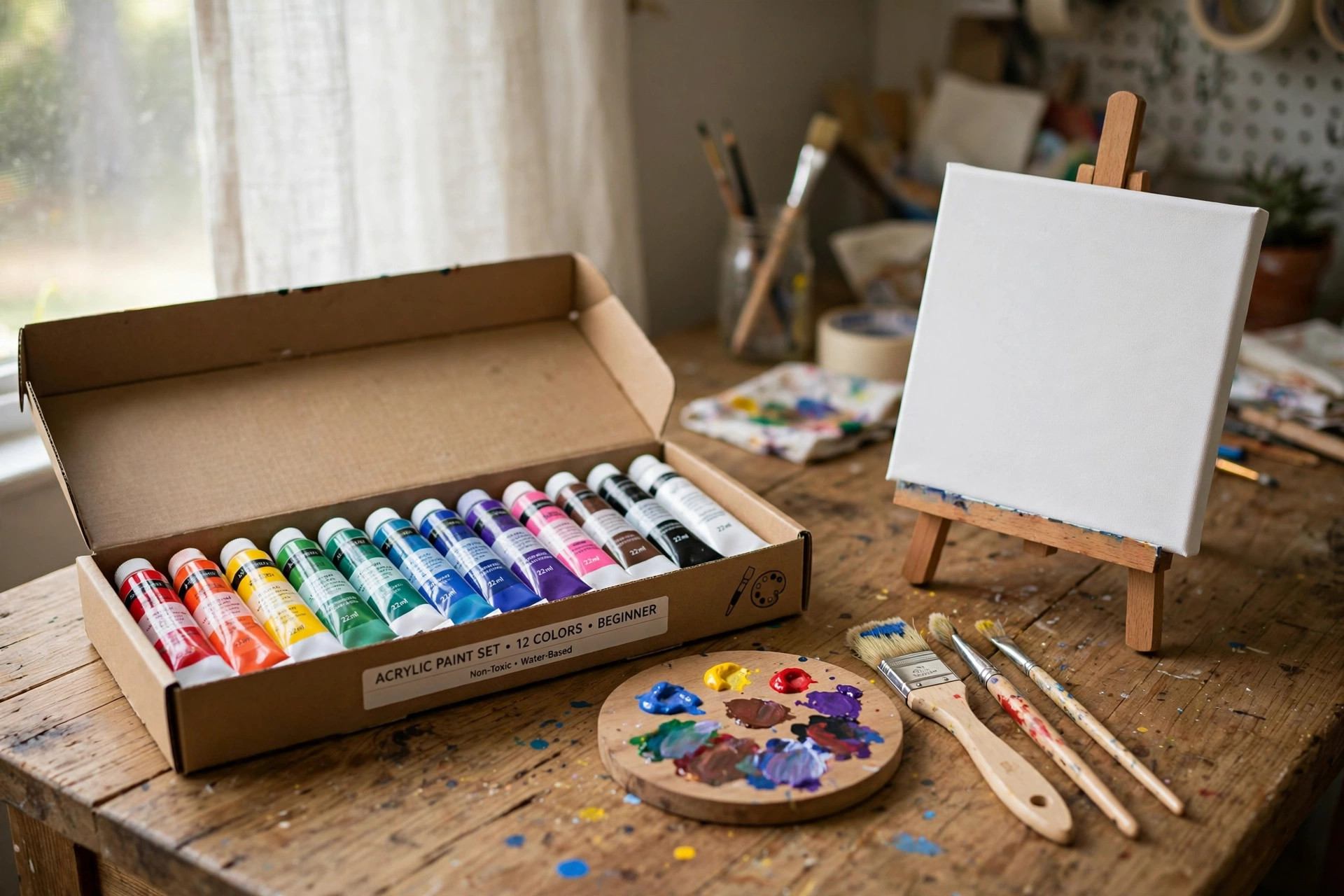

An acrylic paint set for beginners canvas art is one of the kindest gifts you can give yourself. It asks little of you. It costs little. And it opens a door that stays open. Many people think that painting is only for the gifted. This is not true. With a modest set of paints, a few brushes, and a plain canvas, anyone can learn to paint. The first strokes may be rough. The colors may not mix as you hoped. That is fine. Every painter you admire began in the same place, with the same doubt, and the same first tube of paint.
Why It Matters
A good start shapes a whole habit. When a beginner picks up a poor set of paints, the work fights back. The colors look dull. The paint dries before it can be moved. The brushes shed hair onto the canvas. The new painter then blames his own hands. He quits. This is a waste of a fine interest.
A well chosen acrylic paint set for beginners canvas art removes these walls. Acrylic paint is forgiving. It dries fast, so you can fix a mistake within the hour. It cleans up with plain water, so you do not need strong solvents. It works on canvas, paper, wood, and board. For a beginner, this freedom is worth more than any fine paper or rare pigment.
There is another reason to start now. Painting trains the eye. You begin to notice the color of late light on a wall, or the gray inside a shadow. You look longer at the world. A simple paint set is a small price for a deeper way of seeing.
Craft stores that serve beginners, such as Michaels, keep whole aisles of starter sets so that a first purchase is not a puzzle.
What to Look for When You Choose: Acrylic Paint Set for Beginners Canvas Art
A beginner set need not be grand, but it should meet a few plain tests.
Pigment count. Look for sets that list their colors by pigment name on the tube. A set of twelve colors is enough for most first paintings. Six colors can also serve, if the set includes a good red, yellow, and blue. More tubes do not always mean more color, because many cheap sets fill their line with mixes that add nothing new.
Tube size. Sets for beginners often come in 22 ml or 60 ml tubes. The larger tube is the better buy when you plan to paint on canvas, because canvas drinks paint. Small 12 ml tubes vanish after two or three small paintings.
Body of the paint. Acrylics come in heavy body and soft body forms. Heavy body paint is thick and holds brush marks. Soft body paint flows like cream. For canvas art, a medium body or heavy body set is usually best. It sits well on the weave of the canvas.
Brushes in the box. Many sets add a few brushes as a bonus. Check that the handles are straight and the bristles are glued firm. Pull gently on the bristles. If they shed at once, set the box down and look elsewhere. You do not need many brushes to start. One flat brush, one round brush, and one small detail brush will carry you far.
A canvas to match. Some sets pair with a small stretched canvas or a canvas pad. If yours does not, buy one separately. A primed cotton canvas with a medium texture suits most beginners. Test guides from BLICK explain the common canvas weights in plain terms.
Labels worth reading. Tubes often carry two small marks that help a buyer. One is the lightfastness rating, which tells you how well the color will hold in daylight. Ratings of excellent or very good are best for work you plan to hang. The other is a round seal that says the product meets the art material safety standard. This mark means the paint has been tested and found safe for normal use. Beginner sets that carry it are a sound choice for a home table. Paint makers such as Liquitex print these marks clearly on their student lines.
Types of Acrylic Paint Sets
Not all sets are built alike. The main kinds are student grade, artist grade in small tubes, and craft grade.
Student grade sets are the natural first buy. They are made for learning. The pigment is less dense than artist grade, so colors may need two coats to cover. The price is low, and the range of colors is wide. For a first year of painting, a student set is honest value.
Artist grade small sets cost more per tube. The pigment load is high, so the color stays bright with thin coats. A beginner who knows he will keep painting may jump straight to these. A box of six artist grade tubes can outlast a box of twenty-four student tubes.
Craft acrylic sets come in small pots rather than tubes. They are made for wood, cloth, and paper craft. They can work on canvas in a pinch, but the color range is flat and the body is thin. If canvas art is your aim, choose tubes over pots.
Some sets are built around a theme, such as skin tones, earth tones, or metallic shades. These are pleasant as a second set. They are not the best first set, because you still need the plain primaries first.
Reviews of starter craft supplies at JOANN often note which sets pair best with canvas boards and pads.
Cost and Price
A starter acrylic paint set for beginners canvas art usually costs between ten and forty dollars. A twelve tube student set sits near the low end. A twenty four tube set with brushes and a canvas sits near the high end. Artist grade sets start higher and climb with the size of the tube.
You do not need to spend much to begin. A set near the middle of the range, plus two or three decent brushes and a small canvas, will keep a beginner busy for months. Beware of sets that cost very little and promise forty colors. The savings are often paid for in weak pigment and bad brushes.
Buy paint by the project, not by the shelf. One canvas at a time is enough. When a color runs out, replace it with a single tube of better quality. Over a year, this habit builds a fine working set for less than the cost of one large gift box.
Shoppers who compare prices across big retailers, such as Home Depot, will see how far a modest budget can stretch.
Care and Upkeep
Acrylic paint rewards simple care. It also punishes neglect.
Keep the caps tight. Acrylic dries by loss of water, and a tube left open for an afternoon can form a skin. Squeeze out only what you need for one sitting. A pea sized drop of each color is plenty for a small canvas.
Wash brushes before the paint dries on them. Rinse in cool water, work the bristles with a mild soap, and shape them to a point before you set them down. Never leave brushes standing on their tips in a jar. The bristles bend and never stand straight again.
Store canvases flat or upright in a dry room. Fresh paintings need a day or two to cure fully, even when they feel dry to the touch. A light varnish can be added after two weeks to even out the finish and guard the color.
If you plan to paint with children or in a shared craft room, the upkeep tips in guides like those at Family Handyman on keeping a tidy work table apply well to a painting corner.
Safety
Acrylic paint is among the safest paints in the home, but a few rules still hold.
Work in a room with fresh air. The paint is water based, but the air still clears the mind and helps paint dry evenly. Keep paint, water jars, and drink cups far apart. A dark jar of rinse water looks much like a cup of tea, and mistakes happen.
Wear old clothes or an apron. Acrylic stains cloth for good once it dries. Cover the table with newspaper or a plastic cloth. Wash your hands when you finish. Keep paint tubes away from small children who might squeeze them.
Some metallic and fluorescent paints carry stronger pigments. Read the label. If a label warns against use by children, honor it. For a first set, plain matte colors are the safest and the most useful.
Project safety notes from sources like Bob Vila remind crafters that even water based supplies deserve a clean, well aired space.
Frequently Asked Questions
How many colors does a beginner need? Twelve is plenty. With a red, a yellow, a blue, a white, and a black or brown, you can mix most of the colors you see. Larger sets are a comfort, not a need.
Can I use acrylic paint on any canvas? Use canvas that is primed for acrylic, often called gessoed canvas. Most store bought stretched canvases and canvas pads are already primed. Raw cloth will drink the paint and weaken the color.
Why does my paint dry so fast on the palette? Acrylic dries by water loss, so warm dry air speeds it up. Use a stay wet palette, or mist your palette with water from a spray bottle. Work in small amounts and remix as you go.
Should I thin my paint with water? A little water is fine for smooth washes. Too much water breaks the binder and leaves weak color. For thin glazes, use an acrylic medium made for the job instead of plain water.
How do I mix clean colors? Mix with a clean brush or a palette knife, and add small amounts of the dark color to the light one. Rinse the brush between mixes. Muddy color usually comes from a dirty brush or from mixing more than three paints at once. The GOLDEN color mixing guides show how two primaries can yield a full range.
Do I need an easel to start? No. A table is fine for small canvases. An easel helps with larger work because it lets you step back and judge the painting. Buy one when your canvases grow.
How long will one set last? A twelve tube student set usually covers ten to twenty small canvases, depending on how thick you paint. White runs out first, because it goes into nearly every mix. When white runs low, buy a single large tube of white rather than a whole new set. This one habit can double the life of your first purchase.
A Final Word
Start simple and paint often. A modest acrylic paint set for beginners canvas art, three good brushes, and a plain canvas are all the tools the task demands. The rest is practice, patience, and the quiet joy of watching a blank surface turn into something of your own. Hang the first painting where you will see it. In a year, you will smile at its flaws and keep it anyway.
If painting leads you to other crafts, you may enjoy a diy string art kit for wall decor beginners for your walls, a best craft knife for vinyl weeding cricut for clean cutting work, or the best fabric glue for patches and repairs when cloth projects call.
References
Blick Art Materials. (n.d.). Art and craft supplies. https://www.dickblick.com Bob Vila. (n.d.). Home improvement advice. https://www.bobvila.com Family Handyman. (n.d.). DIY home repair and maintenance. https://www.familyhandyman.com GOLDEN Artist Colors. (n.d.). Acrylic paints and mediums. https://www.goldenpaints.com JOANN. (n.d.). Fabric and craft supplies. https://www.joann.com Liquitex. (n.d.). Acrylic paints. https://www.liquitex.com Michaels. (n.d.). Arts and crafts supplies. https://www.michaels.com The Home Depot. (n.d.). Home improvement products. https://www.homedepot.com
Was this guide helpful?

About Sarah Mitchell
The My Garden US editorial team writes practical, in-depth home and garden guides for American homeowners — tested advice, no fluff.
You May Also Like

A Practical Guide to the DIY Bird Feeder Kit for Backyard Crafts USA
May 30, 2026 0 views
Best Transfer Paper for Cricut Vinyl Crafts
May 21, 2026 0 views
A Calligraphy Pen Set for Beginners Lettering: A Simple Guide
August 26, 2026 0 views