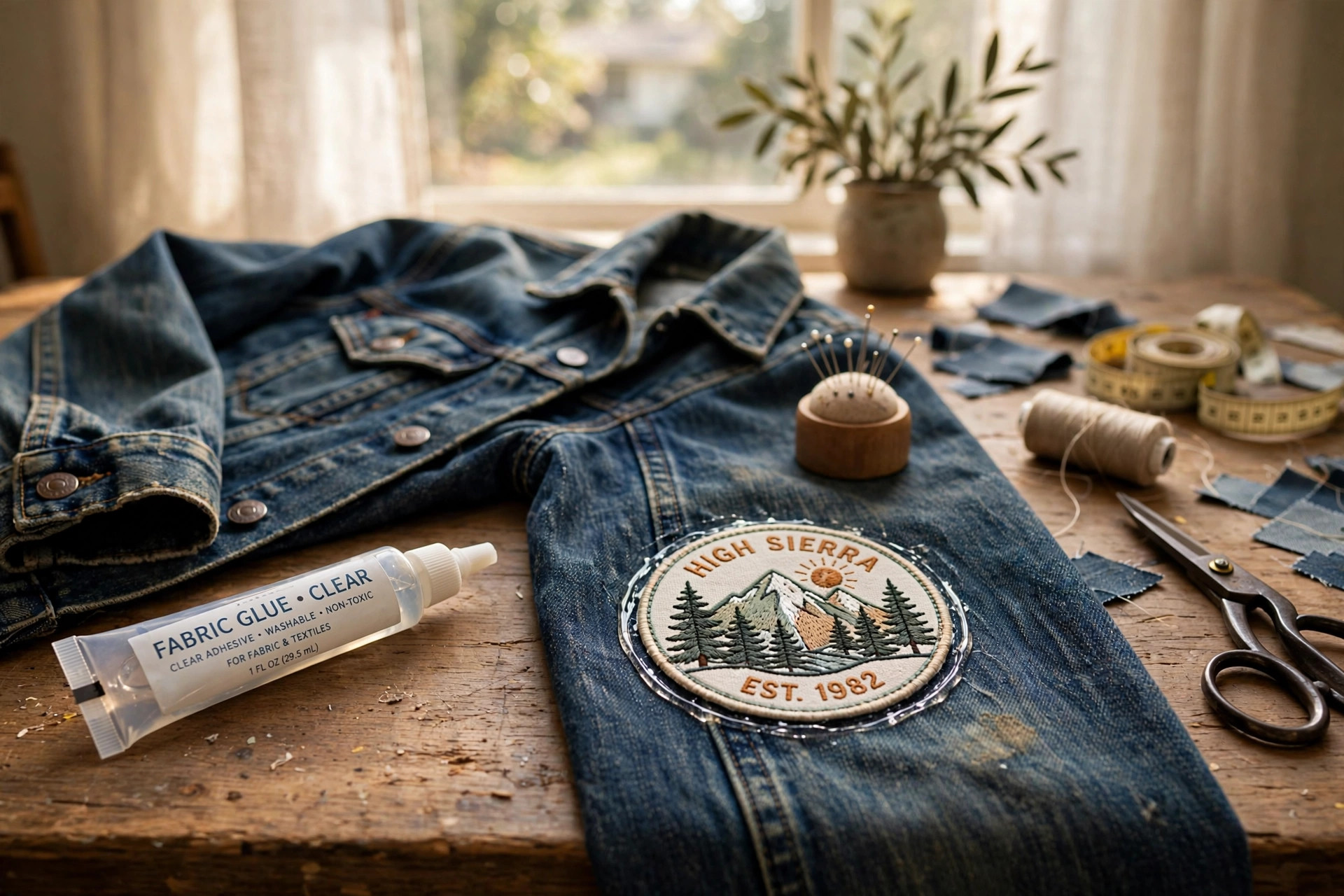

A torn jacket, a loose hem, a patch that needs to stay put. These small problems show up in every home. A needle and thread used to be the only answer. The best fabric glue for patches and repairs can hold cloth together in minutes, and the repair can last through wash after wash.
Fabric glue is not the same as the white glue used in school art projects. It is made to bond cloth, to flex with it, and to survive the washer and dryer. But not every tube on the shelf does the job. Some turn stiff. Some fail after one wash. Some leave a dark stain. This guide explains how to pick the right one and use it well.
Why Fabric Glue Matters for Patches and Repairs
Sewing is a fine skill, but it is not for everyone. Many people do not own a sewing machine, and hand stitching takes time. A good fabric glue lets anyone fix a garment. It takes minutes. There is no thread to match and no needle to thread.
Fabric glue also works where sewing cannot. Thin patches inside a coat lining, small tears in upholstery, appliques on a childs quilt. In these spots a stitch would show, or the fabric is too thick for a home needle. Glue gives a smooth, flat bond.
There is a money side too. A simple tear taken to a tailor can cost more than the tube of glue. Patches for uniforms and team gear often say “iron on” on the pack, but the iron bond can fail. A layer of fabric glue behind the patch makes it stay. For families that mend instead of replace, the savings add up fast.
For those who work with cloth every day, the right adhesive belongs next to the scissors and the pins. A fabric scissors guide often reminds readers that clean cuts matter. Clean bonding matters just as much.
What to Look for in a Fabric Glue: Best Fabric Glue for Patches and Repairs
Wash Resistance
This is the first test. If the repair will go through a washer and dryer, the glue must be washable once it cures. Read the label. It should say “permanent,” “washable,” or “machine washable.” Some glues are meant for craft projects that never wash, like felt decorations. Those will not hold on a pair of jeans.
Flexibility
Cloth moves. It bends at the knee and stretches over a shoulder. A glue that dries hard will crack along the bend. The best fabric glue for patches and repairs stays soft and flexible after it sets. It should feel like part of the fabric, not like a hard shell on top of it.
Drying Time and Tack
Two numbers matter here. The tack time is how fast the glue grabs. The full cure time is how long before the bond reaches full strength, often one day. Fast tack is good for holding a patch, and a little working time lets you adjust it before it sets.
Color and Clarity
Glue should not show. Many fabric glues dry clear. Some dry with a slight yellow tint, which can show on light cloth. If you work on white shirts, test on a scrap first. A stain from glue is worse than the tear it was meant to fix.
Application Tip
A narrow nozzle gives control. Thin lines are stronger than thick blobs. Some glues come with a precision tip or a spreader. For patches, you want an even, thin layer near the edges. A tube with a clogged or wide tip makes a mess.
Types of Fabric Glue
Permanent Fabric Glue
This is the workhorse. It forms a strong, washable bond and is made for clothing repairs. It works on cotton, denim, canvas, polyester, and most blends. Most repair jobs call for this type.
Heat-Set Fabric Glue
Some glues set faster with heat. You apply the glue, place the patch, and press with a warm iron. The heat activates the bond. This type is popular for iron-on patches that need extra strength. It gives a firm hold and a thin glue line. Be careful on heat-sensitive fabrics like nylon, which can melt.
Washable but Temporary Glue
These are made for fitting and basting. They hold cloth while you sew, then wash out. They are not for permanent repairs. The labels look alike, so check for the word “temporary.”
Spray Fabric Adhesive
Spray adhesives cover large areas fast. They work well for big patches, quilt layers, and upholstery. The bond is usually light, meant for positioning rather than strength. They give off fumes, so use them outdoors or in a room with open windows. For small repairs, a tube gives more control.
Hot Glue for Craft Cloth
A hot glue gun is a fine tool for craft felt, costumes, and decorations. But hot glue is not the best fabric glue for patches and repairs on clothing. It dries stiff, it fails in heat, and it can melt through thin cloth. Save the hot glue for crafts and use true fabric glue for repairs.
How to Choose for Your Project
Start with the fabric. Denim and canvas take almost any permanent fabric glue. Silk, satin, and lace need a thin, clear glue that will not stain. Stretch knits like jersey need a flexible glue made for stretch. Leather and vinyl need a glue that grips smooth surfaces, and many labels say if they work on leather.
Then think about wash. A uniform patch needs a washable bond. A Halloween costume may not. If the item will see a washer, pick a glue marked permanent and washable.
Then think about size. Small tears need a precision tip. Big patches need even coverage. If you do a lot of patching, a larger tube is worth it. Small tubes dry out fast once opened.
Color is the last check. On dark denim, most clear glues are fine. On white or pastel cloth, look for a glue that dries clear with no tint. When in doubt, test on a hidden seam or a scrap from the same fabric.
How to Apply Fabric Glue for a Strong Repair
Good results come from good prep. Follow these steps, and the repair will hold.
First, wash and dry the garment if you can. Dirt and fabric softener keep glue from gripping. Do not use softener on this load, since it coats fibers and weakens the bond.
Second, trim loose threads. Lay the patch where it will go. Check the fit before any glue comes out. If the tear has frayed edges, trim them clean with a rotary cutter and place a slightly larger patch behind the tear.
Third, apply a thin, even layer of glue to the back of the patch, not to the garment. Keep the glue near the edges but not past them. Squeeze-out makes a hard ridge that shows on the outside.
Fourth, press the patch in place. Smooth it flat from the center out to push out air bubbles. Place a piece of wax paper under the repair so glue does not stick the garment to itself.
Fifth, add weight. A heavy book or a flat weight on top keeps the patch flat while it tacks. Leave it for the time the label says.
Sixth, let it cure. Full strength takes about a day. Do not wash the item for at least 24 hours. After that, wash inside out on a gentle cycle.
Seventh, check the edges. If a corner lifts, add a small dot of glue under it and press again. A quick touch-up beats a full redo.
Cost and Price
Fabric glue is one of the cheapest repair supplies you can buy. A standard tube of permanent fabric glue costs about two to five dollars. Larger tubes and premium brands run five to ten dollars. Spray fabric adhesives cost more, usually eight to fifteen dollars a can.
Brand name does not always mean better. Store brands from craft shops often work as well as big names. What matters is the type: permanent, washable, flexible. A two-dollar tube with the right label beats a ten-dollar tube made for crafts.
Buy the size you will use in a few months. Once opened, fabric glue slowly thickens. If the glue comes out lumpy, it is past its best. Throw it out and open a fresh tube.
Care and Upkeep of Repaired Items
A glued repair needs gentler care than a sewn one. Wash repaired garments inside out. Use cold or warm water, not hot. Hot water and high dryer heat soften some glues over time. Tumble dry on low, or better yet, hang dry.
Skip the bleach on glued areas. A mild detergent is enough. If the item needs pressing, press from the inside, and keep the iron moving. Do not rest a hot iron on a glued patch.
Check repairs now and then. Look for lifting edges or small cracks. A quick touch of glue keeps a small problem from growing. With kind care, a glued patch can last as long as the garment around it.
Safety Tips
Fabric glue is safe when used with common sense. Still, a few rules keep the work pleasant.
Work in a room with fresh air. Many glues have a mild odor as they cure. Open a window or turn on a fan. Spray adhesives need outdoor use or a very well aired space.
Keep glue off skin when you can. It washes off hands with soap and water while still wet. Wear thin gloves if you work with it often. Keep tubes capped and away from small children.
Some people have sensitive skin. If you react to adhesives, wear gloves and test on a small spot first. The cured glue is usually fine, but the wet glue can irritate.
Heat-set glues need care with the iron. Use the setting the label says. Too much heat can scorch cloth or melt synthetic fibers. Press with a cloth between the iron and the patch.
Store tubes upright in a cool, dry spot. Heat breaks down glue in the tube. Keep them out of reach of children and pets.
Safety agencies also give general advice on household chemical products. The federal safety site at U.S. Consumer Product Safety Commission carries guidance on safe use of adhesives and craft supplies at home.
Where to Buy Fabric Glue
Fabric glue is sold in many places. Craft stores carry the widest range. The craft chain at Www.michaels.com stocks tubes, pens, and spray adhesives from the main brands. The sewing and fabric chain at Www.joann.com also carries a full line, often with staff who can answer questions about cloth.
Home centers carry the basics. The home improvement site at Www.homedepot.com lists fabric glue alongside other adhesives. Big general stores like Walmart and Target sell it in the craft aisle and online. The art supply site at Www.dickblick.com stocks fabric glue with full product details.
Home project sites like Www.familyhandyman.com, Www.thisoldhouse.com, and Www.bobvila.com publish guides on repairs and adhesives that can help you pick the right product.
When you shop, compare labels, not just prices. Look for the words permanent, washable, and flexible. Read a few user reviews if you shop online. A glue that works on denim may not be the pick for silk, and reviews often say which fabrics a glue suits best.
FAQ
Will fabric glue survive the washing machine?
Yes, if the label says permanent and washable. Let the glue cure a full 24 hours before the first wash. Wash inside out on gentle with cold or warm water. Avoid hot water and high heat drying, since heat weakens many bonds over time.
Is fabric glue as strong as sewing?
For light and medium repairs, it can be. A well-glued patch on a shirt or a pair of jeans holds through normal wear and many washes. For heavy stress points, like a ripped seam on work pants, sewing is still stronger.
How long does fabric glue take to dry?
Most grab in minutes and reach full strength in about 24 hours. Heat-set types can bond in under a minute with an iron. Check the label for exact times. Do not rush the cure. A patch washed too soon can fail.
Can I use fabric glue on leather or vinyl?
Some fabric glues say they work on leather and vinyl. The bond depends on the finish. Smooth, sealed leather is hard for glue to grip. Rough the surface lightly with fine sandpaper, clean it, and test on a hidden spot first. For heavy leather goods, a glue made for leather is the safer pick.
Does fabric glue stain clothes?
It can, if you use too much or pick the wrong type. Thick beads dry with a ridge that shows. Apply thin layers, keep glue inside the patch edges, and test on a scrap of light cloth first. Clear-drying glue is the best choice for visible areas.
Can I remove fabric glue if I make a mistake?
Sometimes. While still wet, wipe it with a damp cloth. Once dry, soak the spot in warm soapy water and gently peel the glue away. A little rubbing alcohol on a cotton swab can help on sturdy fabrics. Delicate cloth may not survive the process, so test in a hidden spot first.
A Short Final Word
The best fabric glue for patches and repairs is the one that fits your fabric, survives the wash, and stays flexible. Pick a permanent, washable glue, apply it thin, and give it a full day to cure.
Mending is a quiet habit that saves money and keeps good clothes in use. A small tube of glue and a few minutes of care are all it takes. Start with one patch. You may find the rest of the mending pile goes faster than you thought.
References
Blick Art Materials. (n.d.). Art and craft supplies. https://www.dickblick.com Bob Vila. (n.d.). Home improvement advice. https://www.bobvila.com Family Handyman. (n.d.). DIY home repair and maintenance. https://www.familyhandyman.com JOANN. (n.d.). Fabric and craft supplies. https://www.joann.com Michaels. (n.d.). Arts and crafts supplies. https://www.michaels.com Target. (n.d.). Retail store. https://www.target.com The Home Depot. (n.d.). Home improvement products. https://www.homedepot.com This Old House. (n.d.). Home renovation guidance. https://www.thisoldhouse.com U.S. Consumer Product Safety Commission. (n.d.). Product safety information. https://www.cpsc.gov Walmart. (n.d.). Everyday low prices. https://www.walmart.com Www. (n.d.). Home and garden information. https://www
Was this guide helpful?

About David Wilson
The My Garden US editorial team writes practical, in-depth home and garden guides for American homeowners — tested advice, no fluff.
You May Also Like
DIY Tie Dye Kit for Shirts and Crafts: A Simple Guide
July 26, 2026 0 views
The Best Stamp Set for Card Making Crafts: A Complete Buyer’s Guide
March 2, 2026 0 views
A DIY Keychain Kit for Resin and Crafts Gifts: A Complete Guide
June 20, 2026 0 views