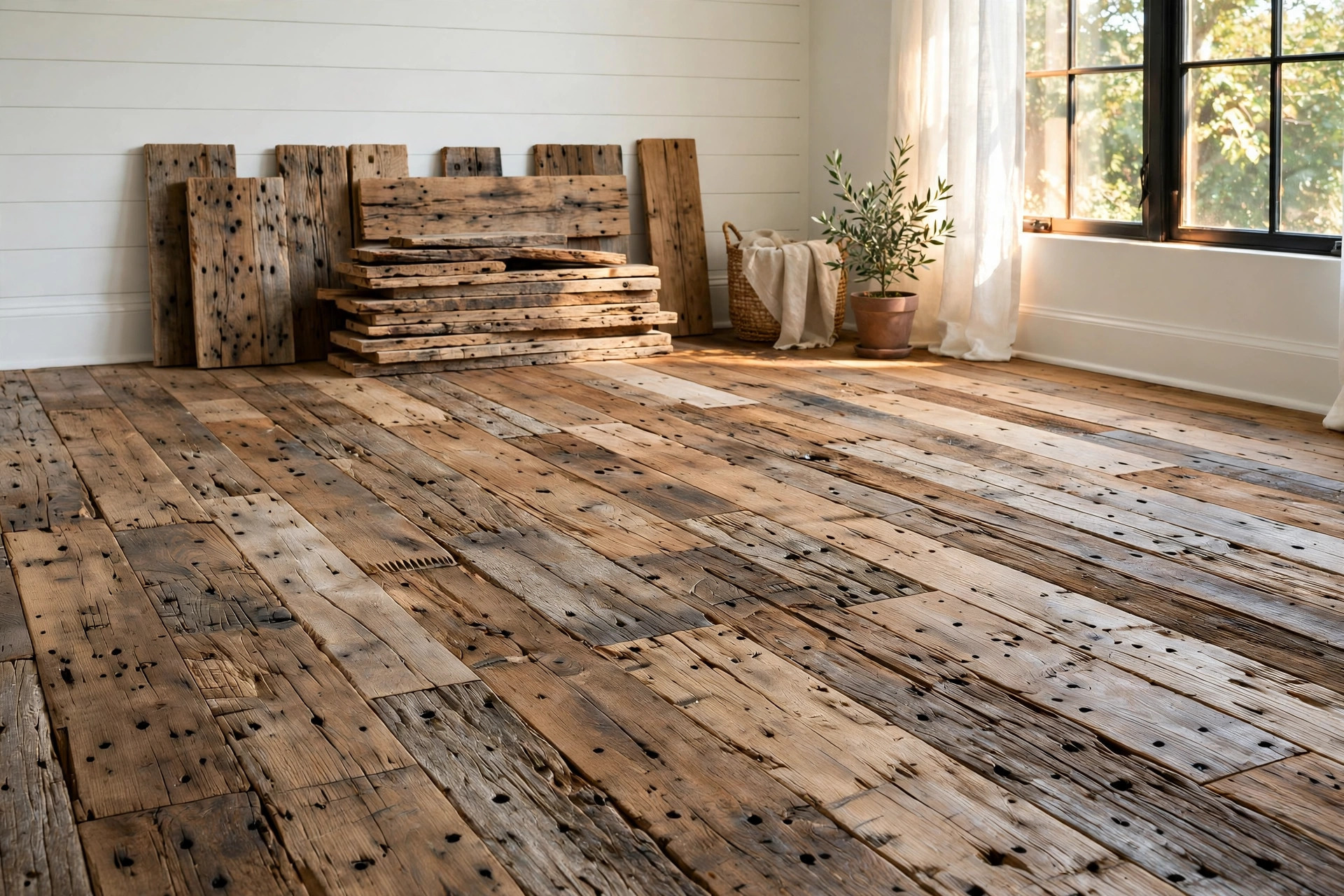
A search for reclaimed wood flooring for sale near me often starts with a simple wish. A homeowner wants floors with a story. New boards look clean but flat. Old boards carry marks of a past life. That is the draw of reclaimed wood. It is also why buying it takes care. This guide walks through what to know, what to ask, and what to pay.
Why Reclaimed Wood Flooring Matters
Reclaimed wood flooring comes from old buildings. Barns, factories, warehouses, and schoolhouses all supply it. When these structures come down, the lumber gets a second life. Instead of going to a landfill, it goes back into homes. That is good for the wallet and good for the earth. Fewer trees get cut. Less waste piles up.
The wood itself has value. Old lumber was often cut from slow-growth forests. The grain is tighter. The boards are harder. Species like heart pine, white oak, and American chestnut were common in old buildings. Some of these species are now rare or gone.
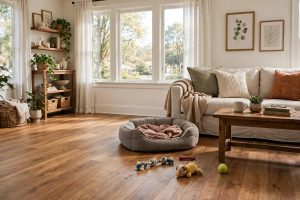
There is also the look. No two reclaimed floors are alike. Color shifts from plank to plank. Some boards are dark with age. Others are pale from sun. Small gaps and tool marks tell of hand work. New floors try to copy this look. The copies cost less, but they lack the real texture. A genuine reclaimed floor has a presence that copies miss.
What to Look for When You Buy: Reclaimed Wood Flooring for Sale near Me
Not all reclaimed wood is equal. Some lots are clean and dry. Others hide rot or nails. A careful buyer learns to check a few key points.
Ask About the Source
Ask where the wood came from. A barn beam is different from a factory floor. Barn wood may be rough and full of nail holes. Factory flooring was built to take weight. It is often thick and hard. A good seller knows the story of each lot. If the seller cannot say where the wood came from, be cautious.
Check Moisture Content
Wood must be dry before it goes in a home. Wet boards will shrink and warp. Ask for the moisture content. For indoor floors in most American homes, it should read between 6 and 9 percent. A seller with a hand-held meter can test a board in front of you. If no meter is used, ask why. Kiln drying is the best path. It pulls out moisture and kills insects. Air-dried wood can work too, but it takes longer and needs proof of dryness.
Look at the Milling
Reclaimed boards must be milled to fit together. Tongue and groove edges are the standard for a tight floor. Check that the milling is even. Hold two boards together. They should meet with no wide gap. Uneven milling makes for a rough install. Ask who did the milling. Some sellers mill in house. Others sell raw boards. Raw boards cost less but need more work.
Measure the Width and Length
Reclaimed lots often mix widths. That can be a charm or a problem. Know what your rooms need. Measure each room before you shop. Write down the square footage. Add ten percent for waste and cuts. Ask the seller for a board foot count. Make sure the lot is big enough for the job. Short lots force you to splice many boards. Long boards look better in open rooms.
Types and Options on the Market
Reclaimed wood flooring comes in several forms. Each has its own cost and look.
Solid reclaimed plank. These are the classic boards. They are thick, often three quarters of an inch. They can be sanded many times. They suit homes where the floor will take heavy use. Solid planks need a skilled installer.
Engineered reclaimed veneer. A thin layer of reclaimed wood sits on a plywood base. It is more stable in damp rooms. It costs less than solid stock. For buyers comparing new and old options, engineered hardwood flooring cost per square foot can serve as a useful price baseline.
Reclaimed barn siding as flooring. Some buyers use wall boards on floors. These boards are thinner and softer. They show more wear. They work best in low-traffic rooms like guest bedrooms. The look is rustic and bold.
Species also matter. Heart pine is warm and golden. It dents more easily than oak. White oak is hard and pale. It takes stain well. Hickory is very hard. It shows strong grain lines. Old chestnut is dark and rare. It costs the most. Pick a species that fits your home and your budget.
Finish choices change the feel. A clear oil finish keeps the wood natural. Polyurethane is harder. It stands up to dogs and kids. Test a sample board with your chosen finish before you commit.
Cost and Price: What to Expect
Reclaimed wood flooring costs more than most new flooring. Prices in the United States often run from eight to twenty dollars per square foot for the wood alone. Rare species can go higher. Installation adds four to ten dollars per square foot. A full job can thus reach thirty dollars a square foot or more.
Why so much? The wood must be pulled, de-nailed, dried, and milled. Each step takes labor. Metal detectors find hidden nails. Kiln time costs money. Small lots cost more per foot than large ones. Local sellers may charge less than national dealers because shipping is short. That is one reason a local search pays off.
Watch for hidden costs. Delivery fees can be steep for heavy loads. Acclimation time matters. The wood should sit in your home for one to two weeks before install. If the subfloor needs repair, that adds cost. If you hire a crew, get three bids. For a sense of labor rates in your area, hardwood floor installation cost near me lays out what installers typically charge.
Ways to save exist. Buy a full lot instead of a partial one. Sellers often discount full lots. Choose a common species like oak over rare chestnut. Use reclaimed wood in one or two rooms, not the whole house. Mix reclaimed boards with new boards in closets and halls. Do the tear-out of old flooring yourself. Each step trims the bill.
Care and Upkeep
Reclaimed floors need steady care. They are old wood. They will show wear. That is part of their charm. But neglect will shorten their life.
Sweep or dry mop each week. Dirt acts like sandpaper under shoes. It grinds the finish away. Use a soft broom or a microfiber mop. Avoid wet mopping. Too much water seeps into seams. It can cup the boards.
Place mats at every door. Mats catch grit before it reaches the wood. Use felt pads under chair and table legs. They stop scratches. Lift furniture to move it. Never drag it.
Humidity control is key. Wood swells in damp air and shrinks in dry air. Keep indoor humidity between 35 and 55 percent. A small humidifier helps in winter. An air conditioner or dehumidifier helps in summer. Wide gaps in winter are normal. They close in summer.
Refinishing brings old boards back. A solid reclaimed floor can be sanded and refinished several times. Each sanding takes off a thin layer. After many sandings, the boards grow thin. To plan this work, a refinishing hardwood floors cost calculator can help you budget the job. Between full refinish jobs, a screen and recoat refreshes the top coat. It costs far less and takes a day.
Spills need quick action. Wipe them up at once. Water rings can be buffed out with fine steel wool and oil. Deep stains may need a spot sand. Keep a small can of matching finish on hand for touch-ups.
Safety Points to Keep in Mind
Old wood can carry old hazards. A wise buyer checks these before the boards enter the home.
Lead paint. Some reclaimed boards were once painted. Old paint may hold lead. Lead dust harms children and adults. Ask if the lot was tested for lead. If paint remains, have it tested. A home test kit costs little. If lead is found, do not sand the boards yourself. Hire a certified lead-safe crew.
Chemicals and treatments. Wood from old factories or rail yards may hold oils or creosote. These can smell and may be unsafe indoors. Ask the seller about the source building. Barn and house wood is usually clean. Industrial wood needs care. When in doubt, skip the lot.
Nails and metal. Good sellers pull all nails and run boards past a metal detector. Still, check the boards yourself. Run a small magnet along each plank. A hidden nail can ruin a saw blade or hurt a foot. Wear gloves when handling rough boards. Splinters are common.
Insects. Powder post beetles and termites can hide in old wood. Kiln drying kills them. Ask for proof of kiln treatment. Look for tiny holes and fine dust on the boards. These are signs of beetle work. Do not bring infested wood into your home.
Structural strength. Reclaimed boards can be brittle at the ends. Check for cracks and splits. Short, cracked boards work as cut pieces. Long, sound boards go in the field. A floor full of weak boards will not last.
For general home safety guidance on building materials, the U.S. Consumer Product Safety Commission offers plain-language fact sheets. The National Wood Flooring Association also posts installer standards that apply to reclaimed stock.
Where to Find Sellers
A local search turns up several kinds of sellers. Each has pros and cons.
Architectural salvage yards. These yards buy from demolition crews. They carry beams, doors, and flooring. You can see and touch the boards. Prices vary. Stock changes often. Call ahead to ask what is on the lot.
Specialty reclaimed dealers. These firms focus on old wood. They de-nail, dry, and mill in house. Their wood costs more. Their quality is steadier. Many ship nationwide. A local dealer saves you freight.
Demolition contractors. Some contractors sell wood straight from the job site. Prices are low. The wood is raw. You must arrange de-nailing and milling. This path suits buyers with time and tools.
Online marketplaces. National sites list reclaimed lots from many sellers. You get wide choice. You cannot touch the wood first. Ask for close-up photos and a sample box. Most sellers will mail samples for a small fee.
Home improvement retailers. Large chains like Home Depot and Lowe’s carry some reclaimed-style and salvaged lines. Their stock is limited. But their return policies are simple. Flooring specialists like LL Flooring also list wood options worth a look.
When you visit a seller, bring a tape measure, a magnet, and a moisture meter if you own one. Ask to see a finished sample. Ask how long the lot has been in stock. Fresh stock may not be fully dry. Ask about returns. A seller who stands behind the wood is worth more than a small discount.
Trade publications can help you learn the terms. This Old House runs guides on old-house materials. The Spruce explains flooring types in plain terms. Brand sites like Shaw Floors, Mohawk Flooring, and Daltile show how new products compare on price and wear.
Frequently Asked Questions
Is reclaimed wood flooring a good idea for kitchens? It can work, but kitchens are hard on wood. Water spills, dropped pans, and heavy traffic wear the finish fast. Choose a hard species like white oak. Use a tough polyurethane finish. Wipe spills at once. Put mats near the sink and stove. Many owners love the look in kitchens. Just plan on more upkeep.
How long does reclaimed wood flooring last? With care, it can last fifty years or more. The wood is already old and stable. Solid boards can be refinished many times. The finish is what wears out. Recoat every three to five years in busy rooms. Keep humidity steady. A well-kept reclaimed floor outlives most new floors.
Can I install reclaimed flooring myself? A skilled do-it-yourself worker can do it. You need a table saw, a miter saw, a nailer, and patience. The boards are not uniform. Each one needs fitting. Nails must be pulled first. If you have never laid a floor, hire a pro for the first room. Watch and learn. Then try the next room yourself.
Does reclaimed wood flooring add value to a home? It often does. Buyers like the look and the story. Real estate agents say wood floors help homes sell. Reclaimed floors stand out from plain new floors. Keep receipts and note the wood source. That paper trail helps at sale time.
What is the difference between reclaimed and distressed flooring? Reclaimed flooring is truly old wood from old buildings. Distressed flooring is new wood made to look old. Makers beat, scrape, and stain new boards. Distressed floors cost less. They wear like new wood. Reclaimed floors carry real history. They also carry real quirks, like nail holes and uneven tone.
How do I know the wood is truly reclaimed? Ask for the source story in writing. Look for signs of age: nail holes, saw marks, patina, and mixed tones. True reclaimed lots vary more than fakes. A seller who can name the building and show photos is more trustworthy. If every board looks the same, it may be new wood with a fake finish.
A Final Word
Searching for reclaimed wood flooring for sale near me is the start of a rewarding project. The wood brings history into your rooms. Check the source. Test the moisture. Count your square feet. Budget for wood, labor, and finish. Keep the floor dry, clean, and at steady humidity. Do that, and old boards will serve your home for decades.
References
Daltile. (n.d.). Ceramic and porcelain tile. https://www.daltile.com LL Flooring. (n.d.). Hardwood, vinyl, and tile flooring. https://www.llflooring.com Lowe’s. (n.d.). Home improvement products. https://www.lowes.com Mohawk Flooring. (n.d.). Flooring products. https://www.mohawkflooring.com National Wood Flooring Association. (n.d.). Wood flooring standards and education. https://www.nwfa.org Shaw Floors. (n.d.). Flooring products. https://www.shawfloors.com The Home Depot. (n.d.). Home improvement products. https://www.homedepot.com The Spruce. (n.d.). Home and garden advice. https://www.thespruce.com This Old House. (n.d.). Home renovation guidance. https://www.thisoldhouse.com U.S. Consumer Product Safety Commission. (n.d.). Product safety information. https://www.cpsc.gov
Was this guide helpful?

About Michael Thompson
The My Garden US editorial team writes practical, in-depth home and garden guides for American homeowners — tested advice, no fluff.