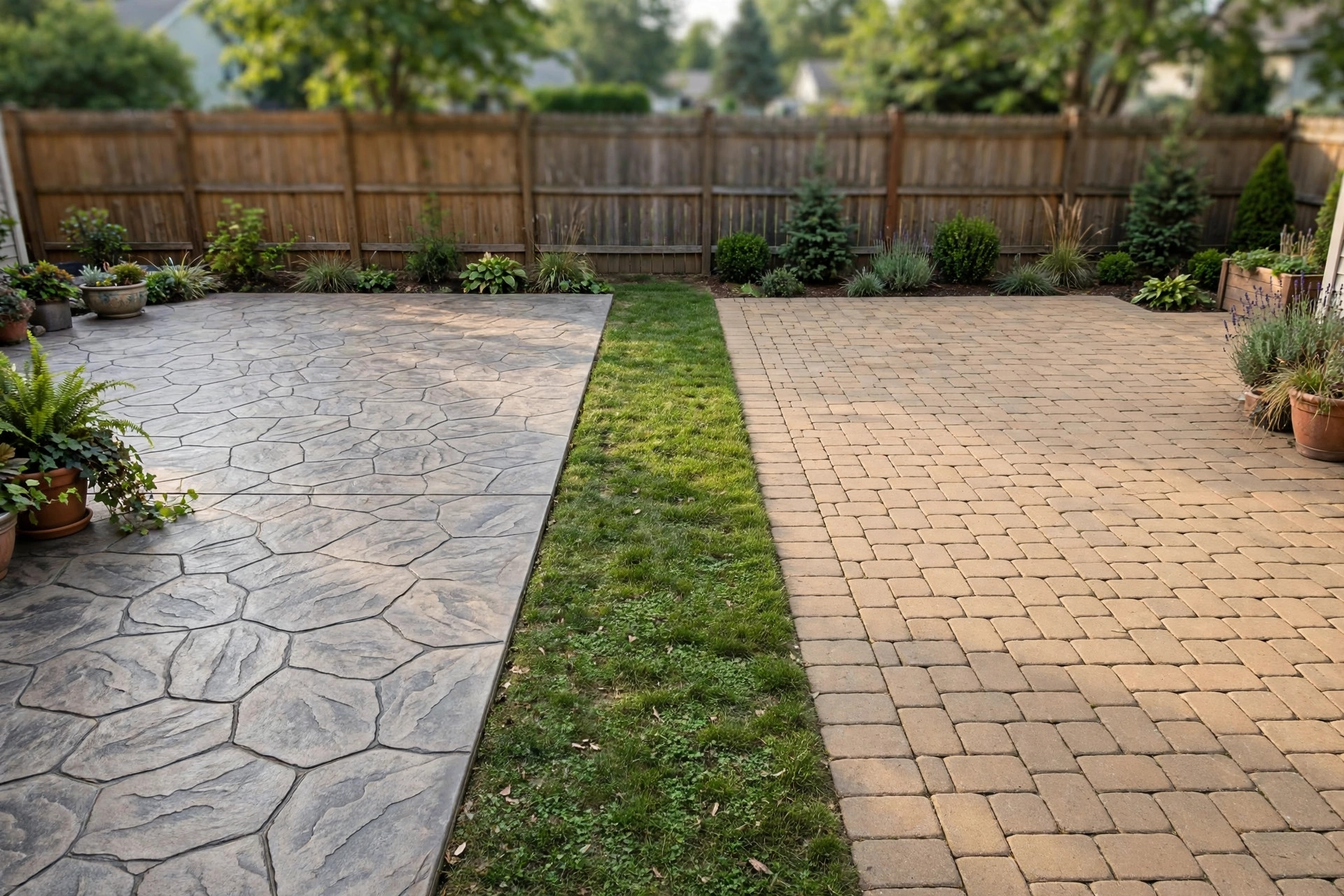

A new patio or driveway is one of the largest checks a home owner writes. Two of the most common picks are stamped concrete and pavers. This stamped concrete vs pavers cost comparison lays out the real numbers, the hidden costs, and how each surface holds up over the years. Read it before you call a contractor.
Why the Choice Matters
Stamped concrete and pavers can look alike from a distance. Stamped concrete is a solid slab that is pressed with a pattern to look like stone or brick. Pavers are single blocks set into sand in a tight grid. The look may be close, but the cost, the work, and the repair bills are very different.
Get this choice wrong and you pay twice. A slab that cracks in year three costs real money to tear out. A paver job laid on bad ground will shift and sink. The price per square foot is only the start. This guide walks through the full stamped concrete vs pavers cost comparison, from the first bid to the last repair.
Up-Front Price: What Each Option Costs: Stamped Concrete vs Pavers Cost Comparison
Price is where most people start. Here is the plain truth about installed cost in the United States.
Stamped concrete. A stamped concrete patio or walk usually runs from about 12 dollars to 25 dollars per square foot, installed. Simple patterns with one color sit at the low end. Fancy patterns with two or three colors, borders, and hand work sit at the high end. Driveways that need thicker slabs and steel can run more.
Concrete pavers. A paver patio usually runs from about 15 dollars to 30 dollars per square foot, installed. Basic interlocking concrete pavers sit at the low end. Thicker pavers for driveways, cut borders, and premium colors sit at the high end. Natural stone pavers such as bluestone or travertine can reach 30 to 50 dollars per square foot.
So on day one, stamped concrete is often cheaper by about 3 to 5 dollars per square foot. On a 400 square foot patio, that gap can be 1,200 to 2,000 dollars. But the first bid is not the whole story.
For a closer look at each surface on its own, read our guides to stamped concrete patio cost per square foot and our paver patio cost calculator for usa homes.
How the Work Is Done
The way each surface is built explains much of the price gap.
Stamped concrete starts with forms and a poured slab. The crew pours the concrete, spreads it, then presses large rubber mats into the wet surface. The mats stamp the stone or brick pattern. Color comes from a powder or liquid added at the surface. The slab cures for a few days, then gets a clear sealer.
Pavers start with a deep base. The crew digs out several inches of soil, lays crushed stone, tamps it flat, and spreads a thin bed of sand. Then each paver is set by hand in the pattern, the joints are filled with sand, and the whole field is tamped again. Nothing is glued or poured. The base and the hand labor are what cost money.
The paver job takes longer. A stamped concrete patio can be done in two or three days. A paver patio of the same size can take four to six days, because every block is placed by hand.
Cost Over Time: Repairs and Upkeep
The long view changes the math. Here is where the stamped concrete vs pavers cost comparison gets real.
Stamped concrete cracks. All concrete cracks over time. The crew cuts control joints to guide the cracks, but winter freeze, tree roots, and shifting soil can still break the slab. When a stamped slab cracks, the fix is ugly. You cannot replace one spot. Patching shows. A full tear-out and repour is the usual answer, and that costs nearly as much as the first job.
Sealing is also a steady cost. Stamped concrete needs a fresh coat of sealer every two to three years to keep its color and fight stains. A sealer coat on a 400 square foot patio runs a few hundred dollars if you hire it out.
Pavers are repaired one block at a time. This is the big win for pavers. If the ground shifts, a section can settle. The fix is simple. A repair crew lifts the sunken pavers, adds sand, and sets them back. If one block stains or chips, they swap in a new one. The repair cost is small, often a few hundred dollars, and the patio looks new again.
Pavers do need joint sand now and then. Weeds can grow in the joints if the sand washes out. A bag of polymeric sand and an afternoon of work solves it. Some owners seal their pavers for stain guard, but it is optional, not a must like stamped concrete.
Over fifteen years, many owners find the totals even out. Stamped concrete starts cheaper but may need a full redo. Pavers start dearer but repair cheaply.
Types and Options
Stamped concrete options. The most common patterns are ashlar slate, cobblestone, brick, and flagstone. Colors run from grays and tans to reds that mimic brick. You can add a stamped border in a second color, which lifts the look a lot for a small extra charge.
Paver options. Concrete pavers come in shapes that lock together, in many colors and textures. They can mimic stone at a lower price. Real clay brick pavers give a classic look and a rich color that never fades. Natural stone pavers, such as bluestone and travertine, sit at the top of the price range and the top of the looks too.
Driveways change the rules. Both stamped concrete and pavers can carry cars, but both need a thicker base and a thicker surface. For driveway pricing detail, see our article on brick paver driveway cost per square foot.
Climate and Ground: What Your Zip Code Changes
Where you live tips the balance.
In cold states with hard freezes, the ground heaves. A solid slab fights that movement and often cracks. Pavers flex with it. Each block can move a little without breaking. That is why pavers are the top pick in the northern states for long life.
In hot, dry states, the sun beats on both surfaces. Stamped concrete can get very hot underfoot, and dark colors burn bare feet. Pavers run cooler in lighter colors, and you can pick a light shade to keep the patio usable in summer.
On soft or clay soil, both need a strong base. A thin base is the number one cause of failed patios of either type. Ask your contractor how deep the base will be. For patios, four to six inches of compacted stone is the rule. For driveways, eight to twelve inches.
What to Look for in a Bid
Never take the first bid. Get three written bids, and make sure each one lists the same details so you can compare.
A good bid for stamped concrete should list the slab thickness, the steel or wire mesh inside, the pattern name, the color system, and the sealer. Four inches is the norm for patios. Five or six inches is the norm for driveways.
A good bid for pavers should list the base depth, the type of base stone, the paver thickness, the brand and color, and the edge restraint. Edge restraint is the hidden strip that holds the field together. Without it, pavers creep outward and the job fails.
Ask every bidder the same questions. How long have you done this work. Can I see three jobs from two years ago. What is the warranty on the work. A one-year work warranty is the least you should take.
Watch for bids that are far below the others. Cheap bids cut the base or skip the steel. The base is buried, so you will never see it, but you will pay for it later.
Cost and Price at a Glance
Here is the short version of this stamped concrete vs pavers cost comparison.
– Stamped concrete patio: about 12 to 25 dollars per square foot, installed. – Paver patio: about 15 to 30 dollars per square foot, installed. – Stamped concrete driveway: about 15 to 28 dollars per square foot, installed. – Paver driveway: about 18 to 35 dollars per square foot, installed. – Sealer for stamped concrete: every two to three years, a few hundred dollars per coat on an average patio. – Paver repair: small jobs of a few hundred dollars, as needed.
These are ranges, not promises. Prices move with your city, your soil, and the crew you hire. A simple job in a low-cost town lands at the bottom. A complex job with borders and steps in a big city lands at the top.
Care and Upkeep
Stamped concrete care. Sweep it clean. Wash it with a hose or a gentle pressure washer once a year. Keep oil and grease off it, because stains sink into the sealer and show. Reseal on schedule. Do not use de-icing salt on it in winter. Salt eats the surface and the sealer. Use sand for grip instead.
Paver care. Sweep the joints clear so sand stays packed. Pull weeds as they show, or treat the joints with a weed killer made for pavers. Wash once a year. Top up joint sand every few years. If a spot settles, fix it early before it spreads.
Both surfaces last longer with care. A neglected patio of either type looks tired in five years. A cared-for patio of either type looks good in fifteen.
Safety
Slip risk is real, and it differs by surface.
Stamped concrete with a glossy sealer can be slick when wet. Ask for a non-slip additive mixed into the sealer, or pick a matte sealer. Around pools, a matte finish is a must.
Pavers have natural grip from their texture and their joints. They are the safer pick for pool decks and for steps. No matter which surface you pick, keep it free of moss and algae, which turn any patio into a slide.
During the build, keep children and pets off the work site. Wet concrete is a chemical burn risk. Paver base stone and stacked pallets can tip. A good crew fences the area.
FAQ
How long does stamped concrete last? With good care and on-time sealing, stamped concrete lasts about 15 to 20 years. Cracks can show sooner in freeze zones or on weak soil.
How long do pavers last? Pavers themselves can last 25 to 30 years or more. The base and the joints need care, but the blocks are hard to wear out.
Which is better for a driveway? Pavers win for driveways in most cases. They carry car weight well, and oil stains can be fixed by swapping single blocks. Stamped concrete driveways work too, but cracks and oil stains are harder to fix.
Can I pour stamped concrete over my old patio? Sometimes. An overlay is only as good as what is under it. If the old slab is sound, a thin stamped overlay can work. If the old slab is cracked or heaving, the new layer will fail too. A full tear-out is the safe pick.
Do pavers fade in the sun? Concrete pavers can fade a little over the years. Clay brick pavers hold their color for life because the color runs through the clay. Sealing slows fading on concrete pavers.
Which adds more home value? Both add value when done well. A clean, well-built paver patio often gets a small edge with buyers because they know it repairs cheaply. But a sharp stamped patio beats a sloppy paver job every time. Quality of the work matters more than the material.
A Short Final Word
The stamped concrete vs pavers cost comparison comes down to this. Stamped concrete costs less up front and looks great for the first years, but cracks are hard and costly to fix, and sealing is a steady bill. Pavers cost more at the start, take longer to lay, and repay you with easy, cheap repairs that last decades.
If your budget is tight and your soil is stable, stamped concrete is a fair pick. If you want the patio you never think about again, pavers earn their price. Get three bids, check old work, and pick the crew you trust. The best material in weak hands is a waste of money.
For more background, see Mohawk Flooring, Daltile, and This Old House. For more background, see The Spruce, The Home Depot, and Lowe’s. Buying guides are also published by LL Flooring and Shaw Floors.
References
Daltile. (n.d.). Ceramic and porcelain tile. https://www.daltile.com LL Flooring. (n.d.). Hardwood, vinyl, and tile flooring. https://www.llflooring.com Lowe’s. (n.d.). Home improvement products. https://www.lowes.com Mohawk Flooring. (n.d.). Flooring products. https://www.mohawkflooring.com Shaw Floors. (n.d.). Flooring products. https://www.shawfloors.com The Home Depot. (n.d.). Home improvement products. https://www.homedepot.com The Spruce. (n.d.). Home and garden advice. https://www.thespruce.com This Old House. (n.d.). Home renovation guidance. https://www.thisoldhouse.com
Was this guide helpful?

About Michael Thompson
The My Garden US editorial team writes practical, in-depth home and garden guides for American homeowners — tested advice, no fluff.
You May Also Like
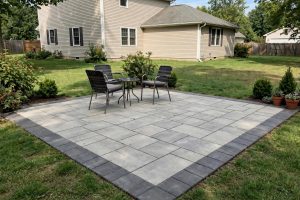
How to Use a Paver Patio Cost Calculator for USA Homes
June 4, 2026 0 views
Garage Floor Tiles Interlocking Reviews USA: What Buyers Say
June 21, 2026 0 views
Best Outdoor Tile for Screened Porch USA: A Practical Guide to Flooring That Lasts
October 4, 2026 0 views