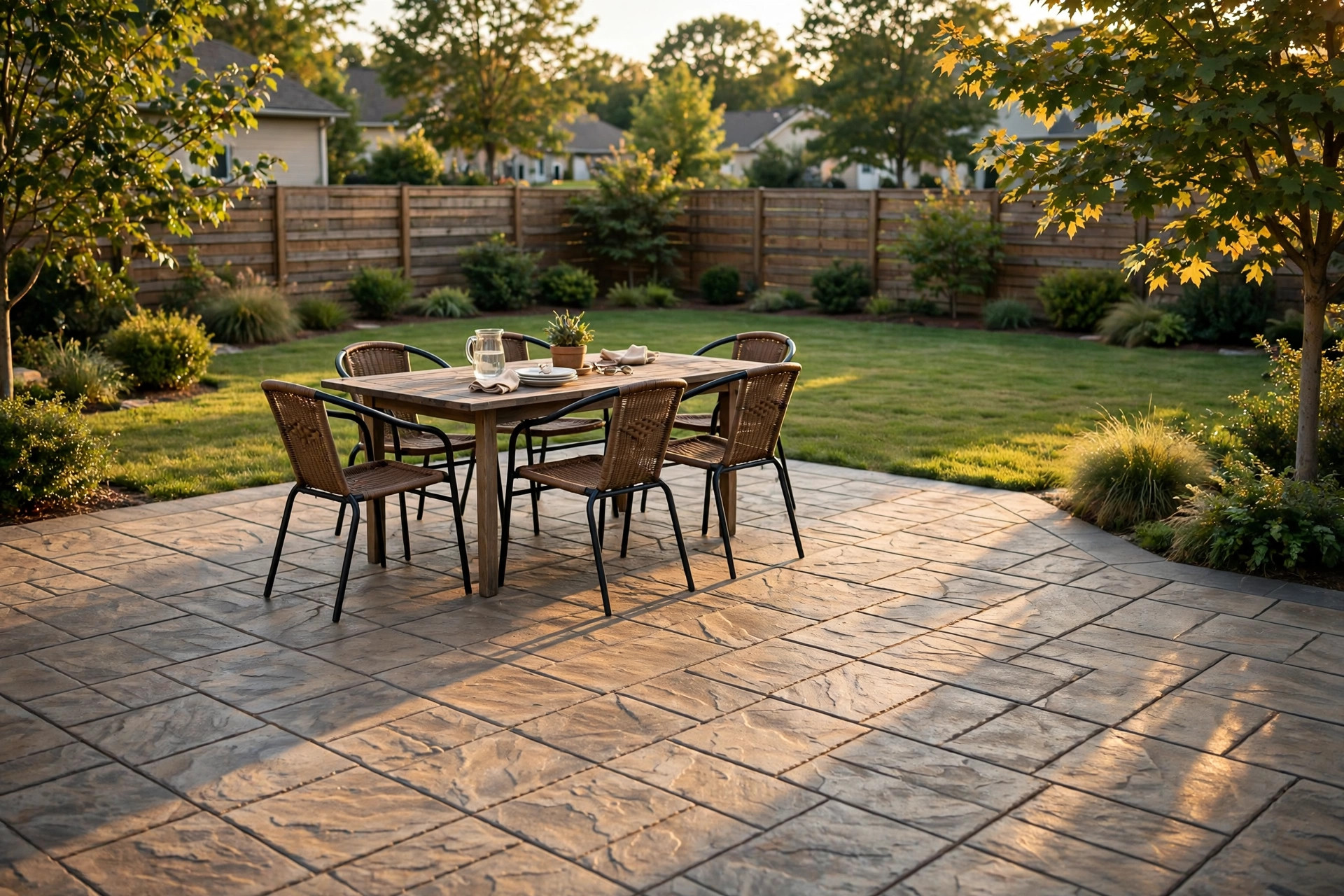

A new patio changes the way a family uses the yard. Cookouts, quiet evenings, and kids at play all happen on that slab. When homeowners start planning, the first question is nearly always about money. The stamped concrete patio cost per square foot gives a clear way to compare bids and set a budget. This guide walks through the price range, the factors that move it up or down, and how to get fair value.
Why the Cost Per Square Foot Matters
Concrete patios come in many forms. Plain concrete is the cheapest. Stamped concrete adds pattern and color to mimic stone, brick, or slate. Because every yard is different, pros quote by the square foot. That number lets a homeowner compare a 300-square-foot patio with a 600-square-foot patio on the same terms.
The stamped concrete patio cost per square foot also helps when comparing materials. A homeowner may wonder whether to choose stamped concrete or pavers. With a per-foot price in hand, the math is simple. Multiply by the size of the job. The result is the rough total before extras.
Knowing the range also protects against bad bids. A bid far below the going rate may mean thin concrete or poor base work. A bid far above it may include work the homeowner does not need. The per-foot figure is the starting point for every smart patio project.
How Stamped Concrete Gets Its Price: Stamped Concrete Patio Cost Per Square Foot
Stamped concrete is poured like regular concrete. Then, before it hardens, workers press large rubber stamps into the surface. The stamps leave patterns that look like stone or tile. Color is added through dyes or a powder called color hardener. A release agent keeps the stamps from sticking.
Several factors shape the stamped concrete patio cost per square foot. The pattern is one. Simple textures cost less than deep stone patterns that need hand work. The number of colors matters too. One base color with one accent costs less than three colors blended by hand.
Site work is another big factor. A flat yard needs little prep. A slope may need grading and retaining walls. Access matters as well. If the concrete truck cannot reach the backyard, workers must wheel the mix in by hand. That adds labor hours.
The local market plays a role too. Labor rates differ from state to state. In cities with high demand, good stamp crews charge more. In rural areas, the same work may cost less. The season can shift prices as well. Spring and summer are busy. Fall may bring lower bids.
What to Look For in a Stamped Concrete Patio
Not all stamped work is equal. A homeowner should know the signs of quality before signing a contract. Thickness comes first. Most patios need four inches of concrete. Thinner slabs crack sooner.
The base is just as important. Good crews compact crushed stone under the slab. This base stops the ground from shifting. Ask the contractor how deep the base will be. Four inches of compacted stone is a common standard.
Control joints matter too. These are cuts or grooves that let the concrete crack in straight, planned lines. Without them, cracks wander across the pattern and ruin the look. A good crew plans joints before the pour.
Color and sealer finish the job. Ask to see samples of the exact pattern and colors. Ask what sealer the crew uses and how often it must be reapplied. A clear answer shows the crew knows its trade. For general home project guidance, many homeowners read advice from This Old House before meeting contractors.
How to Choose a Good Contractor
Start with three bids. Each bid should list the square footage, the thickness, the pattern, the colors, and the sealer. Vague bids lead to surprise costs later.
Check past work. Ask for photos of patios that are at least two years old. Fresh stamps always look good. Aged patios show whether the crew used enough sealer and a solid base.
Ask about insurance and guarantees. A licensed crew with liability coverage is the safe choice. A written guarantee on workmanship, even for one year, shows confidence. To find local stamped concrete pros and read reviews, sites like Angi can help.
Types and Pattern Options
Stamped concrete offers many looks. Each has its own price point.
Ashlar slate. This is the most popular pattern. It mimics cut stone with a random layout. It suits most homes and hides wear well. Cost sits in the middle of the range.
Cobblestone. Round, old-world shapes give a classic look. It fits cottages and colonial homes. The deep texture can feel rough under bare feet.
Brick. Running bond and herringbone patterns look like real brick pavers. They suit traditional homes. The pattern is simple, so the price often runs lower.
Wood plank. Stamps copy the grain of old boards. This look fits rustic and farmhouse styles. It needs skilled coloring to look real.
Flagstone. Large, irregular shapes mimic natural stone. It pairs well with gardens. Homeowners weighing real stone should also check flagstone patio installation costs to compare the per-foot price against stamped concrete.
Single-color jobs cost less than multi-color jobs. Some crews add a second accent color by hand with a brush. This hand work raises the stamped concrete patio cost per square foot but gives a rich, natural look.
The Cost and Price Breakdown
Here is the price picture most homeowners see in 2026. Basic stamped concrete runs about $8 to $12 per square foot. This covers one pattern, one or two colors, and standard site prep.
Mid-range work runs about $12 to $18 per square foot. This includes popular patterns like ashlar slate, two or three colors, and a quality sealer. Most residential patios land in this band.
High-end work runs about $18 to $28 per square foot. This covers complex patterns, hand-applied color details, borders, steps, and difficult site access. Large or detailed projects reach this level.
So how much does stamped concrete cost for a typical patio? A 400-square-foot patio at $14 per foot comes to about $5,600. The same patio at $20 per foot comes to $8,000. Size drives the total more than any other factor.
Extra features add to the bill. A border in a contrasting color may add $2 to $4 per square foot. Steps may add $200 to $400 each. A fire pit pad or seat wall is often priced as a separate job.
Compare this with other choices. Plain broom-finish concrete often runs $6 to $10 per square foot. Real pavers often run $15 to $30 per square foot. Stamped concrete sits between them. It gives the look of stone at a lower price than real stone or pavers. Readers who want the full paver comparison can look at guides from Daltile, a maker of tile and stone products.
Site prep can add real money. Grading a sloped yard may add $500 to $2,000. Removing an old patio may add $2 to $5 per square foot. Tree roots, poor soil, and drainage fixes all add cost. Ask each bidder to list site work as a separate line.
Regional differences are real. In the South and Midwest, labor costs run lower. On the coasts and in big cities, the stamped concrete patio cost per square foot often runs 20 to 30 percent higher. Always get local bids rather than trusting a national average alone.
Care and Upkeep
Stamped concrete needs care to keep its color and pattern. The sealer is the key. Most sealers last two to three years. When water stops beading on the surface, it is time to reseal.
Cleaning is simple. Sweep the patio often. Wash it with a garden hose and mild soap once or twice a year. Avoid harsh acids and de-icing salts. Salts can eat the surface and fade the color.
Small cracks happen. Hairline cracks are normal in concrete. Control joints keep them neat. If a crack grows wide or one side lifts, call the original contractor. Early repair stops bigger damage.
Resealing costs far less than repouring. A homeowner can buy quality concrete sealer at Home Depot and apply it with a roller. For those who prefer a pro, resealing usually runs $1 to $3 per square foot. Budget guides at The Spruce often include these upkeep costs in patio planning articles.
Stains should be cleaned fast. Grease from a grill can darken the color. Blot spills, then wash with soap and water. For pool areas, some owners add a cool deck coating for pool areas over concrete to keep the surface cooler underfoot.
Safety Around the Patio
A sealed stamped patio can get slick when wet. This matters near pools and in rainy regions. Ask the contractor to mix a slip-resistant additive into the sealer. These gritty additives add grip without changing the look.
Good drainage keeps the patio safe. Water should slope away from the house. Puddles on the patio grow algae, which turns slick. A one-inch drop every eight feet is a common rule.
Furniture and grills need stable footing. Uneven stamping can rock a chair. Test the surface before placing heavy items. Keep grills away from the house wall and never under a roof overhang.
Curing time matters for safety and strength. New concrete needs about a week before foot traffic and about a month before heavy loads. A rushed schedule can weaken the slab. Plan the project so the patio cures fully before a big event.
Frequently Asked Questions
How long does a stamped concrete patio last?
With good base work and regular sealing, a stamped patio lasts 25 years or more. Neglect cuts that life short. Reseal every two to three years and keep water draining away.
Is stamped concrete cheaper than pavers?
Yes, in most cases. The stamped concrete patio cost per square foot runs $8 to $28, while pavers often run $15 to $30. Stamped concrete also installs faster, which saves labor cost.
Can I stamp concrete myself?
Small pads are possible for skilled DIYers, but patios are risky. Stamping must happen in a short window before the concrete sets. Pros also rent stamp sets that cost hundreds per day. Guides at Family Handyman explain the timing challenge, and most homeowners hire it out. Stamps, color hardener, and release agents are sold at retailers like Lowe’s for those who want to try a small test slab first.
Does stamped concrete crack more than plain concrete?
No. It cracks the same. The pattern can actually hide small cracks better than a plain surface. Control joints are the real defense. Make sure the bid includes them.
What is the cheapest stamped pattern?
Simple brick and light texture patterns cost the least. They need fewer stamps and less hand coloring. Ask the contractor which patterns in their set fall in the basic price tier.
How does the stamped concrete driveway cost per square foot compare?
Driveways often cost a bit more per foot than patios. They need thicker concrete, usually five to six inches, and stronger reinforcement for cars. Expect the top of the patio range or slightly above. Home repair writers at Bob Vila publish updated cost comparisons for driveways and patios.
A Final Word
The stamped concrete patio cost per square foot is the most useful number in patio planning. It turns vague estimates into clear math. Most homeowners pay $12 to $18 per foot for quality mid-range work. Pattern choice, color work, and site prep move the price within that band.
Get three detailed bids. Check old work, not just fresh photos. Ask about thickness, base, joints, and sealer. A careful choice now means a patio that looks good for decades. For product testing on sealers and outdoor gear, Consumer Reports offers independent reviews, and flooring trend coverage from Shaw Floors can spark ideas for matching indoor and outdoor styles. Homeowners comparing grout and tile work for adjacent projects may also find the epoxy grout versus cement grout comparison useful.
References
Angi. (n.d.). Home services marketplace. https://www.angi.com Bob Vila. (n.d.). Home improvement advice. https://www.bobvila.com Consumer Reports. (n.d.). Product reviews and ratings. https://www.consumerreports.org Daltile. (n.d.). Ceramic and porcelain tile. https://www.daltile.com Family Handyman. (n.d.). DIY home repair and maintenance. https://www.familyhandyman.com Lowe’s. (n.d.). Home improvement products. https://www.lowes.com Shaw Floors. (n.d.). Flooring products. https://www.shawfloors.com The Home Depot. (n.d.). Home improvement products. https://www.homedepot.com The Spruce. (n.d.). Home and garden advice. https://www.thespruce.com This Old House. (n.d.). Home renovation guidance. https://www.thisoldhouse.com
Was this guide helpful?

About Lisa Anderson
The My Garden US editorial team writes practical, in-depth home and garden guides for American homeowners — tested advice, no fluff.
You May Also Like
Deck Resurfacing Cost Per Square Foot USA
July 1, 2026 0 views
Concrete Paver Installation Cost Near Me: A Homeowner’s Guide
May 24, 2026 0 views
Home Gym Flooring Over Concrete: Reviews and Tips from USA Homeowners
July 31, 2026 0 views