
What Rough In Basement Bathroom Cost Means
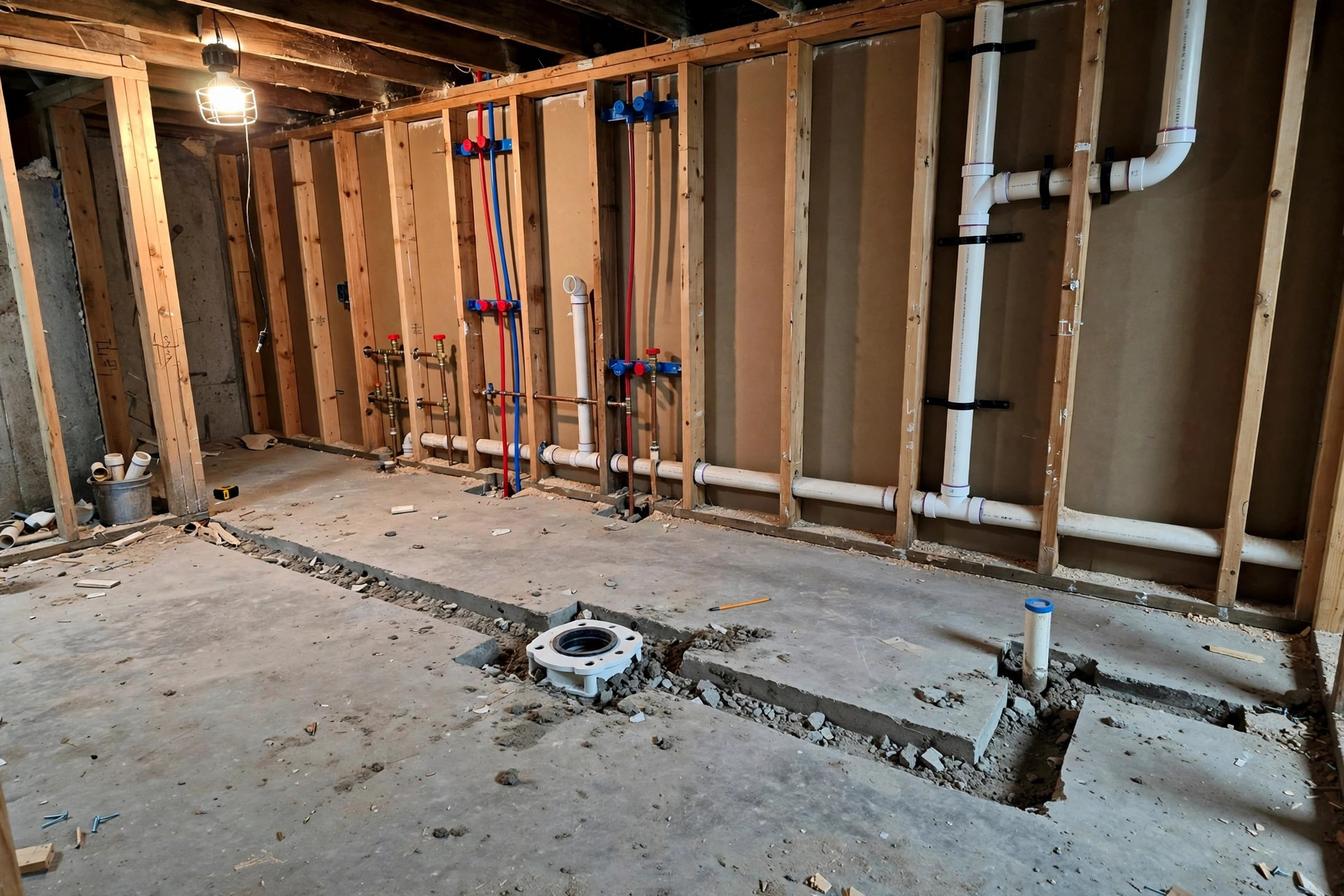
When homeowners ask about rough in basement bathroom cost USA, they want to know the price of the first stage of basement bathroom plumbing. The rough-in is the work that happens before walls go up and before any fixture is set. A plumber runs the drain lines, the vent lines, and the water supply lines. He sets the toilet flange, the shower or tub drain, and the sink stub-out. He leaves everything capped and ready. After the rough-in passes inspection, a contractor can close the walls, and the finish plumber can return later to set the toilet, the vanity, and the shower trim.
The typical range for a basement bathroom rough-in in the United States runs from about 1,500 dollars to about 6,000 dollars. Most homeowners pay near 3,000 dollars. The number changes with the location of the existing drain, the depth of the main sewer line, and whether the floor must be cut open. A simple job next to an existing stack costs less. A full bath far from the main drain, with concrete cutting and a pump system, costs more.
Why the Rough-In Matters: Rough in Basement Bathroom Cost Usa
A basement bathroom adds real value to a home. It gives guests a place to wash. It serves a finished basement living space. It can help a home sell faster. But the rough-in is the part that must be right. Drain pipes need the correct slope. Vents must reach the air. Water lines must hold pressure. Mistakes at this stage are hard and costly to fix after the concrete and drywall close them in. That is why most building departments require a plumbing permit and an inspection of the rough-in before the work is covered. The inspector checks the slope of the drains, the size of the pipes, and the layout of the vents. The fee for the permit is small, often 50 to 200 dollars, but the inspection protects the homeowner.
What to Look For Before You Start
A good plumber will walk the basement first and look at three things. First, the main drain or sewer line. Where does it leave the house? How deep is it under the floor? The basement fixtures must drain by gravity into that line, or a pump must lift the waste up to it. Second, the vent path. Every fixture needs a vent to the roof or a legal air admittance path. The plumber must find a way to run the vent without cutting into structural beams. Third, the water supply. Copper and PEX are the two common choices for supply lines. A comparison of PEX and copper plumbing costs can help a homeowner see the price gap between the two.
The homeowner should also look at the existing conditions. Is there a rough-in already? Many newer homes have capped drain stubs under the basement slab, waiting for a future bath. If the stubs are there and in the right place, the job costs far less. If the slab must be cut with a concrete saw, the job costs more and takes longer. The article on adding a bathroom to basement plumbing costs covers how these early choices shape the total project price.
Types of Basement Bathroom Rough-Ins
Not every basement bathroom is plumbed the same way. The type depends on where the main drain sits.
Gravity drain rough-in. This is the simplest type. The basement floor is high enough, and the main sewer line is low enough, that waste flows downhill by gravity. The plumber ties the new drains into the main line with proper slope, usually one quarter inch per foot of run. This type costs the least and needs the least equipment.
Sewage ejector rough-in. When the main drain is above the basement floor, waste cannot flow uphill. The plumber roughs in the drains to a sealed basin pit set in the floor. A sewage ejector pump sits in the pit and lifts the waste up to the main line. The rough-in includes the pit, the pump discharge line, the vent for the pit, and an electrical outlet for the pump. For more on this setup, see the guide to sewage ejector pump installation costs.
Upflush or macerating rough-in. In this type, no floor cutting is needed. The toilet and other fixtures drain into a macerating unit that grinds the waste and pumps it through a small pipe to the main drain. The rough-in is simpler, but the unit itself costs more and needs power. Homeowners who want to avoid breaking concrete often choose this path. The guide to the best macerating toilets for basements explains how these units work.
Each type needs a vent. Gravity systems vent through the standard stack. Ejector pits need a sealed vent. Macerating units need a vent line too. The vent work is part of the rough-in price.
Cost and Price Breakdown
The rough in basement bathroom cost USA average sits near 3,000 dollars for the plumbing labor and materials of a standard gravity job. Here is how the price breaks down.
Labor. A licensed plumber charges 75 to 150 dollars per hour in most of the country. Rates run higher on the coasts and in large cities. A simple rough-in takes one to two days. A job with concrete cutting can take three to five days.
Drain and vent pipe. PVC or ABS drain pipe, fittings, the toilet flange, and the shower drain cost 200 to 500 dollars in materials. The vent pipe adds 50 to 150 dollars.
Water supply lines. PEX tubing and fittings cost less than copper. A PEX rough-in for a three-piece bath adds 100 to 300 dollars in materials. Copper adds 300 to 700 dollars. Many plumbers now favor PEX for basement work because it bends around obstacles and resists freeze damage.
Concrete cutting. If the slab must be opened to reach the main drain, expect 500 to 1,500 dollars. The cost covers the saw cutting, the trench digging, the pipe laying, and the concrete patch. Some plumbers do this work. Others hire a concrete contractor.
Ejector pit and pump. When a pump is needed, add 800 to 2,000 dollars for the basin, the pump, the discharge piping, and the wiring for the outlet. The pump itself sells for 300 to 800 dollars at home centers such as Home Depot and Lowe’s.
Macerating unit. A quality upflush unit costs 700 to 1,200 dollars before labor.
Permit and inspection. Most towns charge 50 to 200 dollars for the plumbing permit. Some charge a flat fee. Others charge by the fixture.
Total ranges. A simple gravity rough-in with existing stubs can cost 1,500 to 2,500 dollars. A full three-piece rough-in with concrete cutting runs 3,000 to 5,000 dollars. A rough-in with an ejector system runs 4,500 to 7,500 dollars. These numbers cover the rough-in only. They do not include framing, electrical, drywall, tile, or the finish fixtures.
Homeowners can get a clearer picture by reading product and project guides from Moen, Kohler, and Delta Faucet. For how-to detail on rough-in methods, This Old House and Bob Vila publish step-by-step plumbing articles. The Spruce offers plain guides on bathroom planning, and the EPA site covers water use and safe plumbing practice. Shoppers comparing filtration add-ons for a new bath can look at Aquasana.
How to Choose a Plumber for the Job
Price is not the only factor. The plumber must be licensed in the state or city. He must pull the permit himself, not ask the homeowner to do it. He should give a written quote that lists the rough-in work, the materials, the permit fee, and the inspection. Ask for two or three quotes. Be wary of a quote that is far below the others. It may leave out the permit, the vent work, or the concrete patch.
Ask how the drains will be sloped and where they will tie in. Ask whether the price includes the water lines or only the drains. Ask who patches the concrete. A clear answer to each question is a sign of a careful plumber.
Care and Upkeep After the Rough-In
The rough-in itself needs little care before the finish work begins. Keep the capped pipes clean and dry. Do not stack heavy items on the stub-ups. If the basement is damp, check the capped lines now and then for rust or standing water. Once the bathroom is finished, the upkeep becomes normal bathroom care. Run water in seldom-used fixtures so the traps do not dry out. Listen for the ejector pump if the bath uses one. A pump that runs too often or makes new noise may need service.
For homes on well water, hard water can shorten the life of new fixtures. A homeowner adding a basement bath may want to test the water and consider treatment at the same time. The EPA publishes guidance on private drinking water systems, which is a useful starting point.
Safety
Plumbing work in a basement has real hazards. Cutting concrete makes silica dust. A mask and ventilation are needed. Breaking the slab can expose old soil or radon pathways. In some areas, the code calls for a sealed pit cover and a radon-safe vent. Sewer gas is another concern. Open drain lines release gas that is unpleasant and unhealthy. A plumber caps or plugs every open line the same day.
Electrical safety matters too. Ejector pumps and macerating units need a grounded outlet on a proper circuit. The outlet near a basin pit should have ground-fault protection. Water and power meet in a basement bathroom, so the wiring must follow code.
Homeowners should also think about backflow. A basement bath sits low in the house. During a heavy storm, a city sewer can push water back into the lowest fixtures. A backwater valve on the basement drain line can stop that flow. It is a small device with a big job. Ask the plumber about it during the rough-in, because it is far cheaper to add before the concrete closes.
Frequently Asked Questions
How much does it cost to rough in a basement bathroom in the USA? Most homeowners pay 1,500 to 6,000 dollars for the plumbing rough-in, with 3,000 dollars as a common middle number. The price depends on the drain location, concrete cutting, and whether a pump is needed. The rough-in does not include framing, electrical, tile, or finish fixtures.
What is included in a bathroom rough-in? The rough-in includes the drain lines, the vent lines, and the water supply lines for the toilet, sink, and shower or tub. It includes the toilet flange, the shower drain, and capped stub-outs. It does not include the fixtures themselves.
Does a basement bathroom rough-in need a permit? In almost every city and county, yes. The permit is cheap, and the inspection checks the drain slope, pipe size, and vent layout. Work done without a permit can cause trouble at resale and with insurance.
Can I rough in a basement bathroom without breaking the floor? Sometimes. If the builder left capped drain stubs under the slab, the plumber can use them. If not, an upflush or macerating toilet can avoid floor cutting. The trade-off is the cost of the unit and its need for power.
How long does a basement bathroom rough-in take? A simple job takes one to two days. A job with concrete cutting and an ejector system takes three to five days. The inspection adds a day or two of waiting in most towns.
Is a sewage ejector pump noisy? The pump sits in a sealed pit under the floor, so most homeowners hear only a low hum when it runs. A quality pump from a known brand, bought through a retailer like Home Depot, runs for years with little noise.
A Final Word
The rough in basement bathroom cost USA question has no single answer, but the range is clear. A simple gravity job costs a few thousand dollars. A job with pumps and concrete work costs more. The money spent on a careful rough-in is money well spent. It passes inspection. It protects the home from leaks and sewer gas. It sets up the finish work to go smoothly. Get written quotes, check the license, pull the permit, and let the inspector look before the walls close. The basement bathroom will serve the home for decades.
References
Aquasana. (n.d.). Water filtration systems. https://www.aquasana.com Bob Vila. (n.d.). Home improvement advice. https://www.bobvila.com Delta Faucet. (n.d.). Kitchen and bathroom faucets. https://www.deltafaucet.com Family Handyman. (n.d.). DIY home repair and maintenance. https://www.familyhandyman.com Kohler. (n.d.). Bathroom and kitchen fixtures. https://www.kohler.com Lowe’s. (n.d.). Home improvement products. https://www.lowes.com Moen. (n.d.). Faucets and plumbing fixtures. https://www.moen.com The Home Depot. (n.d.). Home improvement products. https://www.homedepot.com The Spruce. (n.d.). Home and garden advice. https://www.thespruce.com This Old House. (n.d.). Home renovation guidance. https://www.thisoldhouse.com U.S. Environmental Protection Agency. (n.d.). Protecting human health and the environment. https://www.epa.gov
Was this guide helpful?

About James Carter
The My Garden US editorial team writes practical, in-depth home and garden guides for American homeowners — tested advice, no fluff.
You May Also Like
Best Instant Hot Water Dispenser Reviews USA: What to Know Before You Buy
June 6, 2026 0 views
Catalytic Carbon vs Activated Carbon Filter: Which One Fits Your Home
September 20, 2026 0 views
How Long Do Water Heaters Last? USA Guide
April 1, 2026 0 views