The sewage ejector pump installation cost USA homeowners face usually falls between $1,500 and $4,500 for a standard job. Simple replacements of an existing pump run at the low end. Full installations with new basin, new wiring, and new pipe run at the high end. Large homes and deep basements can push the bill past $5,000. The numbers move with labor rates, permit rules, and the condition of the basement.
This article breaks down the costs. It explains what a sewage ejector pump does, when a home needs one, and which parts make up the bill. It also covers how to choose a pump, how to keep it running, and how to stay safe around it. The prices reflect what licensed plumbers in the United States charged through 2025 and early 2026.
Why a Sewage Ejector Pump Matters
A sewage ejector pump moves wastewater uphill. Most homes drain by gravity. Wastewater falls through pipes into the sewer line or the septic tank. A basement bathroom sits below that line. Its drains cannot fall anywhere. They need a lift.
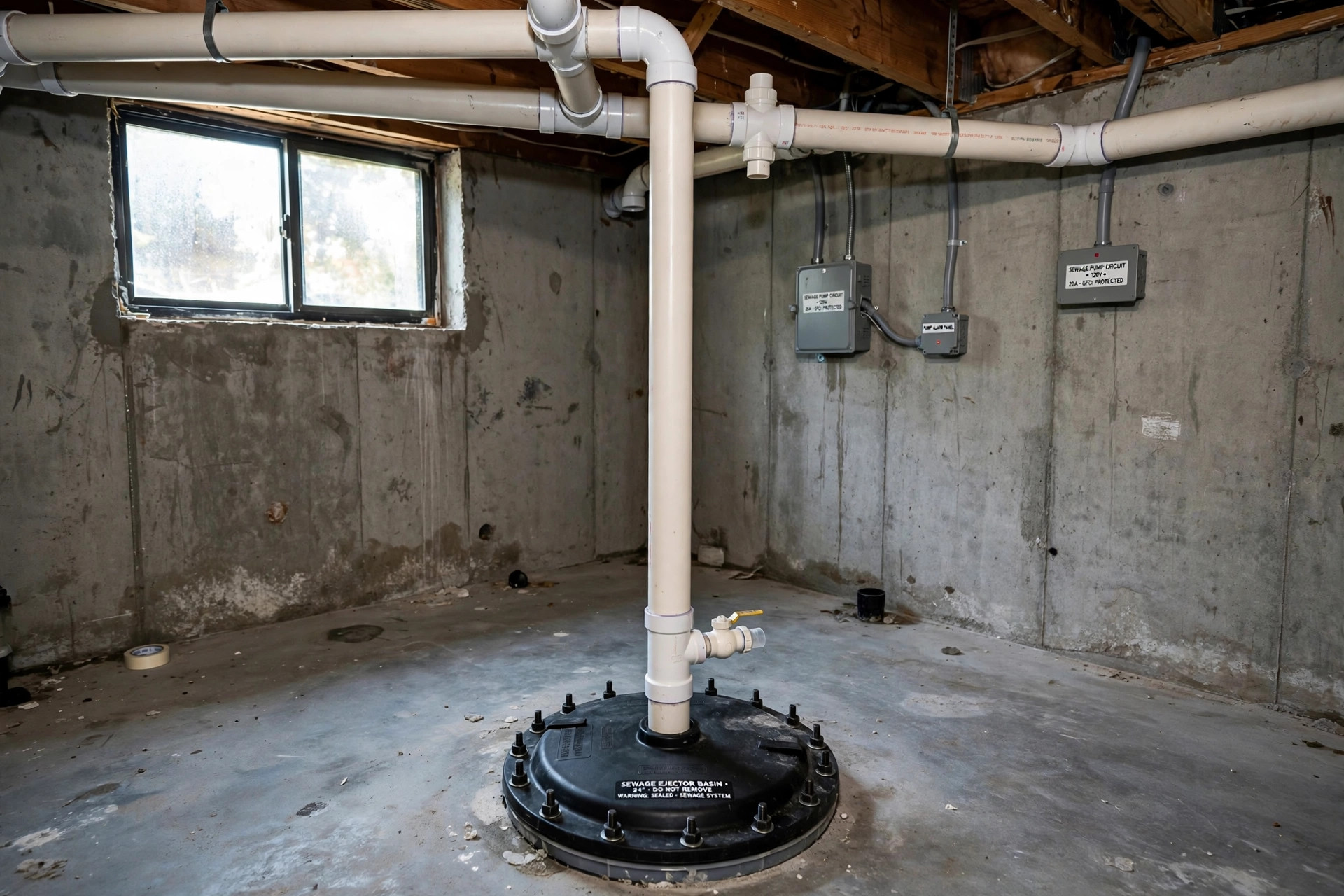
The pump sits in a sealed basin sunk into the basement floor. Water from the toilet, sink, and shower flows into the basin by gravity. A float switch senses the level. When the water rises, the pump starts. It pushes the waste up through a discharge pipe and out to the main sewer line. Then it shuts off and waits for the next cycle.
Without this pump, a below-grade bathroom cannot exist. Some older basements have no basin at all. In those homes, adding a bathroom means cutting the concrete floor, setting a basin, and wiring the pump. That work is the main reason installation costs vary so much.
A working pump also protects the house. When it fails, wastewater has nowhere to go. It backs up through the lowest drain first. Basement floors flood. Sewage spreads into carpet, drywall, and furniture. The cleanup cost often exceeds the cost of the pump many times over. Federal clean-water rules from the EPA remind homeowners that raw sewage is a health hazard, not just a mess. A reliable pump and a sealed basin are part of keeping that hazard out of the home.
What to Look For When You Choose a Pump: Sewage Ejector Pump Installation Cost Usa
Not every pump fits every job. The choice starts with the basin size and the lift height. Lift height is the vertical distance from the pump to the sewer line. Deeper basements need pumps with more head pressure. Most residential pumps handle 10 to 25 feet of lift. Check the pump’s rated head before you buy.
Horsepower and flow rate
Residential sewage ejector pumps usually run from one-half to one horsepower. A one-half horsepower pump serves a single bathroom in a normal house. A three-quarter or one horsepower pump serves two bathrooms or a laundry room. Flow rate matters when several fixtures drain at once. A stronger pump moves more gallons per minute and keeps up with a shower, a sink, and a toilet flushing at the same time.
Solids handling
Sewage pumps grind or pass solids. A grinder pump chops waste into fine particles before it lifts it. A standard ejector pump passes solids up to two inches in diameter without grinding. Grinder pumps cost more and use more power. They suit homes where the discharge pipe is narrow or the lift is very high. Standard ejector pumps serve most basement bathrooms.
Switches and alarms
The float switch is the most common failure point. Cheap switches stick and wear out. Look for a wide-angle float or a vertical float switch with a good track record. A high-water alarm adds safety. It sounds when the water level rises too far. Some alarms also send an alert to a phone. The alarm costs far less than one flooded basement.
Basin size
The basin is the plastic pit that holds the pump. Standard basins hold about 30 gallons and measure roughly 18 inches across. Deeper basins hold more and cycle the pump less often. A larger basin fits fine in most new installations. In a replacement, the new pump must fit the old basin, so measure first.
Project guides from This Old House and Family Handyman explain the parts of a basin system in plain terms.
Types of Sewage Ejector Systems
Homeowners meet three main setups. Each suits a different kind of house.
Sewage ejector pump in a basin
This is the standard system. A plastic basin sits in the basement floor. The pump rests inside. A sealed cover bolts on top. The discharge pipe runs up through the cover and out to the sewer line. A vent pipe connects the basin to the house vent stack. This setup serves toilets, sinks, showers, and laundry drains.
Grinder pump systems
A grinder pump uses a cutting blade to break waste down. It pushes the fine slurry through a smaller pipe, often one and one-quarter inches. These systems cost more up front. They also cost more to repair. They fit homes with long discharge runs or very high lifts.
Upflush macerating toilets
An upflush unit sits behind the toilet on the basement floor. It grinds waste and pumps it up to the sewer line through a small pipe. It serves one toilet and usually one sink. It costs less to install than a full basin system. It handles less volume and suits a single half bath rather than a full basement bathroom.
Sewage Ejector Pump Installation Cost USA: The Full Breakdown
The bill has five parts. Each part moves the total.
The pump itself
A quality residential sewage ejector pump costs $300 to $800 at retail. Basic one-half horsepower models sit near $300. One horsepower models with better switches run $600 to $800. Grinder pumps start around $800 and climb past $1,500. Big-box retailers such as Home Depot and Lowe’s stock the common sizes, which lets homeowners compare prices before a plumber quotes the job.
The basin and parts
A new basin, sealed cover, check valve, and fittings cost $200 to $400. The check valve stops wastewater from flowing back into the basin when the pump shuts off. The vent pipe and discharge pipe add $100 to $200 more. These parts are small in price but large in importance.
Cutting and concrete work
If the basement has no pit, the installer must cut the floor. Concrete cutting, digging, and repouring the floor costs $500 to $1,500. Thick floors, rebar, and high water tables raise the price. This step is the biggest source of surprise in the bill.
Electrical work
The pump needs a dedicated circuit and a ground-fault outlet near the basin. A licensed electrician charges $200 to $600 for this work. Some plumbers include it in their quote. Others leave it to an electrician. Ask before the job starts.
Labor and permits
Plumbing labor makes up the rest. Expect $500 to $1,500 for the plumber’s time on a full installation. Most towns require a permit for this work. Permits run $50 to $300. The permit also triggers an inspection, which protects the homeowner.
Typical totals
Put together, the sewage ejector pump installation cost USA averages look like this:
– Pump replacement only, basin already in place: $800 to $1,800 – Full new installation with basin and concrete work: $2,500 to $5,000 – Grinder pump installation: $3,500 to $6,500
Regions with high labor rates pay more. The Northeast and the West Coast sit above the national average. The South and Midwest sit below it. Homes with finished basements cost more because the installer must protect floors and walls.
How to Keep Installation Costs Down
Smart planning saves money without cutting corners.
Get three written quotes. Ask each plumber to break down parts and labor. Compare the pump models they propose. A quote that names a cheap pump with a weak warranty is not a bargain.
Do the pump replacement yourself only if you have plumbing skill. Swapping a pump in an existing basin is a manageable job for a handy homeowner. Cutting concrete and setting a new basin is not. Leave new installations to licensed plumbers.
Schedule the work with a bathroom remodel if one is planned. The concrete is already open and the plumber is already on site.
Keep the discharge run short and straight. Every bend and every extra foot of pipe adds load to the pump.
Related cost guides help put this project in context. A polybutylene pipe replacement runs far higher per foot than pump work, so bundling a pipe upgrade into the same visit makes sense. Small repairs such as a toilet flapper replacement cost little but prevent the kind of constant running that wears pumps out early.
Care and Upkeep
A sewage ejector pump needs little care. It rewards a small amount of attention with a long life.
Flush only what belongs in a toilet. Never flush wipes, paper towels, feminine products, or grease. Wipes are the worst. They do not break down. They wrap around the float switch and the impeller. Most pump failures trace back to something that should never have been flushed.
Listen to the pump. A healthy pump runs for a short burst and shuts off cleanly. A pump that runs long, cycles fast, or hums without moving water has a problem. Call a plumber before the next cycle floods the floor.
Test the system twice a year. Pour a bucket of water into the basin through the inspection port. Watch the float rise and the pump start. Confirm that the discharge flows and the pump stops. This five-minute test catches stuck floats early.
Keep the basin sealed. The cover bolts should be tight. The vent pipe should be clear. A sealed basin keeps gases out of the basement air. Those gases are not just unpleasant. Sewer gas is a real hazard in an enclosed room.
Replace the pump every seven to ten years. Even a good pump wears out. Pumps that run often wear faster. Keep the model number and the installation date in a file. When the pump nears the end of its life, replace it on your schedule rather than on the pump’s.
Safety
Sewage work carries real risks. Treat the system with respect.
Never open a live basin to look inside. The gases in a sealed basin can displace air and cause harm in seconds. If you must look, shut off the breaker first and give the basin time to air out.
Never reach into the basin. Call a plumber for anything that needs hands in the pit. Professionals have the tools and the protective gear.
Shut off power before any inspection. The pump starts without warning when the float rises. A hand near the switch or the impeller is in danger.
Keep the high-water alarm in working order. Test it with the bucket test described above. Replace its battery on a fixed schedule. The alarm is the early warning that stands between a small problem and a flooded basement.
If sewage backs up, stay out of the water. Raw sewage carries bacteria and viruses. Call a plumber and a cleanup service. Wash everything that touched the water.
Filtration and fixture brands are part of the wider plumbing picture. Companies such as Moen, Delta Faucet, and Kohler make the fixtures that drain into these systems, and Aquasana offers whole-home water treatment for homes that want cleaner supply water as well.
FAQ
How long does a sewage ejector pump last?
Seven to ten years is the normal range. Pumps that serve one bathroom and see light use reach the top of that range. Pumps that handle a laundry room and two bathrooms wear faster. A quality pump with a good switch lasts longer than a cheap one.
Can I install a sewage ejector pump myself?
A direct replacement in an existing basin is within reach for a skilled homeowner. The work needs basic plumbing and electrical knowledge. A full new installation is not a DIY job. It needs concrete cutting, pipe fitting, venting, wiring, and a permit. Mistakes flood basements. Hire a licensed plumber for new installations.
How often should the pump run?
A healthy pump cycles a few times a day in a normal house. It runs for ten to twenty seconds per cycle. If it runs every few minutes, something is wrong. A stuck float, a failed check valve, or a leak can all cause short cycling. Call a plumber.
What is the difference between a sewage ejector pump and a sump pump?
A sump pump moves clean groundwater away from the foundation. A sewage ejector pump moves wastewater and solids up to the sewer line. The two pumps look alike but are built for different jobs. A sump pump cannot handle sewage. Never substitute one for the other.
Why does my pump smell?
A sealed basin should not smell. A smell means the seal has failed. Check the cover bolts and the gaskets. Check the vent pipe for a blockage. A dry trap in a nearby floor drain can also let odors in. Pour water into the floor drain to refill the trap. If the smell persists, call a plumber. While you troubleshoot, a hard water spots guide shows how mineral buildup affects fixtures, though odors come from the basin, not the water supply.
Do I need a backup pump?
A backup matters if the basement floods when the power fails. Both cost $300 to $700 installed. For a finished basement, the backup is cheap insurance.
A Short Final Word
The sewage ejector pump installation cost USA shoppers see online covers a wide range for a simple reason. Every basement is different. The pump, the basin, the concrete, the wiring, and the labor each add their share. A standard full installation lands near $2,500 to $5,000. A simple pump swap lands near $800 to $1,800. Get written quotes, pick a quality pump with a strong switch, and keep the basin sealed and tested. Do that, and the pump will do its quiet job for a decade or more.
References
Aquasana. (n.d.). Water filtration systems. https://www.aquasana.com Delta Faucet. (n.d.). Kitchen and bathroom faucets. https://www.deltafaucet.com Family Handyman. (n.d.). DIY home repair and maintenance. https://www.familyhandyman.com Kohler. (n.d.). Bathroom and kitchen fixtures. https://www.kohler.com Lowe’s. (n.d.). Home improvement products. https://www.lowes.com Moen. (n.d.). Faucets and plumbing fixtures. https://www.moen.com The Home Depot. (n.d.). Home improvement products. https://www.homedepot.com This Old House. (n.d.). Home renovation guidance. https://www.thisoldhouse.com U.S. Environmental Protection Agency. (n.d.). Protecting human health and the environment. https://www.epa.gov
Was this guide helpful?

About Jennifer Lee
The My Garden US editorial team writes practical, in-depth home and garden guides for American homeowners — tested advice, no fluff.