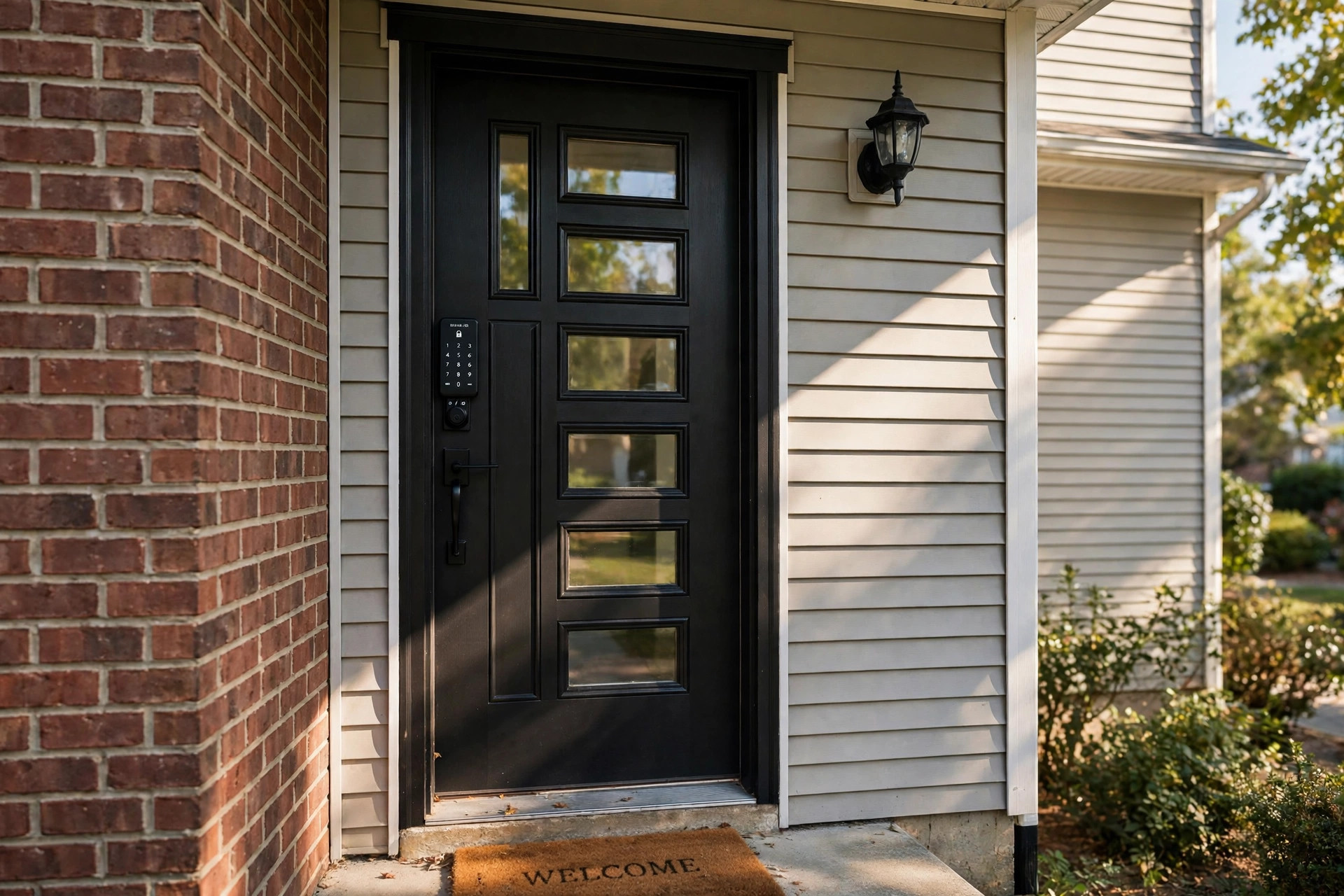

Finding the best smart deadbolt for rental property usa landlords can trust is a practical choice. A deadbolt with a keypad lets tenants enter with a code. The landlord keeps a master code. No one needs to copy keys. When a tenant moves out, the code is changed in seconds. This saves time and money. It also cuts the risk of old keys floating around town.
Rental homes change hands often. Each change of hands is a chance for keys to be lost or copied. A keyless entry door lock removes that worry. This article explains what to look for, the main types, the cost, care, and safety rules. It ends with answers to common questions.
Why It Matters for Landlords
Keys are the old way. They get lost. They get copied at hardware stores for a few dollars. A past tenant may keep a copy long after the lease ends. The landlord then pays a locksmith to rekey the door. That visit can cost eighty to one hundred fifty dollars.
A smart deadbolt changes the math. The landlord sets a unique code for each tenant. When the lease ends, the old code is deleted. A new code is made for the next tenant. There is no locksmith visit. There is no new key to cut.
Remote locks go one step further. Many connect to Wi-Fi or a phone app. The landlord can lock or unlock the door from anywhere. This helps in real cases. A maintenance worker arrives while the landlord is at work. The door is opened for them and locked behind them. A tenant is locked out at night. The landlord lets them in with a temporary code.
Smart deadbolts also keep a log. The log shows when the door was locked or unlocked and which code was used. This record helps settle disputes. It shows whether a door was left open. It shows when a tenant came and went. For a landlord who manages several units, that record is useful.
Insurance is another point. Some insurers like homes with better locks. A graded deadbolt on the door may count toward a small discount. Ask the agent. The answer varies by company and state.
What to Look for in a Rental Property Deadbolt: Best Smart Deadbolt for Rental Property Usa
Not every smart lock fits a rental. Landlords have special needs. The list below covers the points that matter most.
Simple keypad entry. A backlit keypad is the core feature. It works without a phone. Tenants of all ages can use it. Look for large keys and a light that turns on at night.
Unique tenant codes. The lock should hold at least ten to twenty codes. Each code gets a name. Codes can be set to start and end on set dates. This fits lease terms well. A code can stop working on the move-out day by itself.
Easy code management. A phone app or a web page should make changes simple. The landlord should not need to stand at the door to add a code. Remote control through Wi-Fi is the best option for this.
Physical key backup. Every smart deadbolt should take a normal key too. If the batteries die and no one is home, the key gets the door open. Keep one key in a safe place off site.
Standard fit. The lock should fit a standard American door hole. Most deadbolts use a two and one eighth inch hole. Most doors are one and three eighths to one and three quarter inches thick. Check the door before buying.
Strong grade. The American National Standards Institute rates deadbolts. Grade 1 is the strongest for homes. Grade 2 is fine for most rentals. Avoid locks with no grade at all.
Battery life and alerts. Good locks run six to twelve months on four AA batteries. The app should warn when power runs low. A lock that dies without warning is a lock that locks people out.
Weather rating. Front doors face rain and heat. Look for a lock rated for outdoor use. Cold weather drains batteries fast. In northern states, check the low temperature limit.
Tenant privacy. A lock with a camera or voice recording raises privacy questions. For rentals, a plain keypad lock is often the safer pick. Check state law before using any lock that records sound or video.
Types and Options
Smart deadbolts for rentals fall into four groups. Each has strengths and weak points.
Keypad only
These locks have a keypad and no radio inside. All codes are set at the door. They cost the least. They have no monthly fees. They suit small landlords who live near the property. The weak point is remote control. The landlord must visit the door to change codes.
Wi-Fi connected
These locks join the home Wi-Fi. The landlord adds and deletes codes from a phone app. The door can be locked or unlocked from anywhere. Alerts come in real time. The weak point is power and signal. The lock needs a strong Wi-Fi signal at the door. Battery life is shorter than keypad-only models.
Z-Wave or Zigbee locks
These locks use low-power radio networks. They need a hub in the home. They work well with full smart home systems. Battery life is long. The weak point is the hub, and setup is more complex than Wi-Fi.
Fingerprint models
Some deadbolts add a fingerprint reader. A tenant touches the lock and the door opens. This is fast and no code can be shared. The weak point is management. Fingerprints must be added at the door in most models. For a rental with high turnover, codes are easier to manage.
For most landlords, a Wi-Fi keypad deadbolt is the best balance. It gives remote control without a hub. It works for tenants who have no phone app. It fits the way rentals actually run.
Cost and Price
A smart deadbolt for a rental costs between one hundred and three hundred dollars. Keypad-only models sit at the low end. Wi-Fi models with full apps sit in the middle. High-end brands with fingerprint readers sit at the top.
Installation adds to the cost. A landlord with basic tools can install most deadbolts in thirty minutes. The old deadbolt comes off and the new one goes in the same hole; no new drilling in most cases. A locksmith charges fifty to one hundred dollars for the job.
There may be monthly fees. Some brands charge for full remote features or for extra user slots. Many do not. Read the terms before buying. A lock that needs a paid plan to change codes is a poor pick for rentals.
The real saving is over time. Rekeying a standard deadbolt costs eighty to one hundred fifty dollars per visit. Two tenant turnovers a year cost up to three hundred dollars in locksmith fees. A smart deadbolt pays for itself in the first year. After that, code changes are free.
Buy for the long term. A well-made deadbolt lasts seven to ten years. Cheap locks fail sooner. The keypad wears out. The motor grows weak. Spending a little more at the start buys years of quiet service.
Care and Upkeep
Smart deadbolts need little care. A few simple habits keep them working.
Change batteries on schedule. Do not wait for the low battery warning. Change the four AA batteries once a year. Pick the same month each year, such as when the smoke alarms get new batteries.
Clean the keypad. Dust and grime build up on keys. Wipe the keypad with a soft dry cloth once a month. Do not use harsh cleaners. They can cloud the keys or seep inside.
Check the strike plate. The metal plate in the door frame takes the bolt. Screws loosen over time. Tighten them once a year. Use long screws that reach the wall stud. This keeps the door strong against kicks.
Test codes each month. Ask the tenant to test their code, or test it during a routine visit. A code that stops working is often a low battery or a loose wire. Catch it early.
Update the app and firmware. Makers release fixes for bugs. Open the app every few months. Install updates when they appear. Updates often improve battery life and security.
Keep a key off site. Even the best lock can fail. Keep a physical key in a lockbox or with a trusted person. Never hide it under the mat. That is the first place a thief looks.
Between tenants, reset the lock. Delete all old codes. Make a fresh master code. Test the bolt. Check the batteries. This takes ten minutes and starts each tenancy clean.
Safety
A smart deadbolt is a strong tool, but it must be used with care. Safety rules protect the landlord and the tenant.
First, follow local law. Some states limit what a landlord can install on a rental door. Some require that tenants can always exit without a key or code. Fire codes in many places ban double-cylinder deadbolts on rental doors. A double-cylinder lock needs a key on both sides. That can trap people in a fire. Use a single-cylinder deadbolt. It has a thumb turn on the inside.
Second, protect the codes. Do not text a tenant code over an open channel if it can be avoided. Use the lock app to send a code through its secure link. Never reuse the same code across properties. If one code leaks, only one door is at risk.
Third, secure the landlord account. The phone app controls every lock. Use a strong password. Turn on two-step verification. If the phone is lost, change the password at once. A stranger with the app has the keys to every unit.
Fourth, think about power failures. The keypad runs on batteries, so it works when the house power is out. Wi-Fi features stop when the router dies. Make sure the tenant knows the keypad code. The code is the backup when the smart features go dark.
Fifth, give tenants a written note. The note should list the code, how to change nothing, and who to call if the lock fails. A short page at move-in prevents midnight phone calls. The Consumer Product Safety Commission offers general home safety guidance that pairs well with any lock upgrade.
For a broader look at door security hardware, see our guide to the best smart lock for front door reviews usa.
Frequently Asked Questions
Can a tenant refuse a smart deadbolt?
In most states, the landlord may install a deadbolt as part of normal upkeep. The lease should state that the lock is landlord property. The tenant gets a code, not the right to change the lock. Check local rules. A few cities have strict rules about lock changes during a tenancy.
What happens if the batteries die while the tenant is out?
The door stays locked. That is the safe failure mode. The tenant uses the physical key or calls the landlord for the backup key. This is why the key backup matters. Some locks have a port for a nine-volt battery on the outside. Touching a fresh battery to the port gives enough power for one entry.
Can the landlord see when the tenant comes home?
Most apps show a log of lock events. That log is a tool, not a spyglass. Using it to track a tenant’s daily life can break trust and may break privacy law. Use the log for security checks and disputes only. Tell the tenant at move-in that the lock keeps an entry log.
Do smart deadbolts work without the internet?
Yes. The keypad works on its own. Codes are stored in the lock. Without the internet, the lock is still a working keypad deadbolt. The tenant is never locked out by a dead router.
Are smart deadbolts hard for older tenants to use?
No. A lit keypad with big numbers is easy. Many older tenants prefer a code to a small key. Show the tenant how it works at move-in. A one-minute demo is enough. Write the code on the move-in sheet in large print.
How many codes can a rental deadbolt hold?
Most hold twenty to one hundred codes. That is more than enough. A landlord needs one master code, one code per tenant, and a few for workers. Codes for cleaners or repair staff can be set to work only on certain days. When the job is done, the code is deleted.
A Short Final Word
The best smart deadbolt for rental property usa owners is the one that fits the way they manage. For most landlords, that means a Wi-Fi keypad deadbolt with remote code control, a physical key backup, and no monthly fee. It cuts locksmith costs. It ends the lost-key problem. It gives tenants an easy way in.
Buy a graded lock from a known maker. Install it well. Change the batteries once a year. Reset the codes between tenants. Do these simple things and the lock will serve for years. The technology is no longer new or risky. It is a standard tool of the rental trade, like the lease itself.
Reviews from independent labs help narrow the choice. Consumer Reports tests door locks for strength and pick resistance. PCMag reviews smart locks for app quality and setup ease. CNET covers smart home gear with hands-on testing. The Verge reports on new lock models and standards. For system-wide security, SimpliSafe and ADT sell monitored setups that pair with smart locks. Ring makes doorbells and cameras that sit beside the deadbolt. Google’s store at store.google.com carries the Nest line of smart home devices. Landlords comparing full security setups may also read our schlage vs kwikset smart lock comparison usa guide.
References
ADT. (n.d.). Home security and automation. https://www.adt.com CNET. (n.d.). Technology news and reviews. https://www.cnet.com Consumer Reports. (n.d.). Product reviews and ratings. https://www.consumerreports.org Google Store. (n.d.). Smart home devices. https://store.google.com PCMag. (n.d.). Technology product reviews. https://www.pcmag.com Ring. (n.d.). Smart home security devices. https://www.ring.com SimpliSafe. (n.d.). Home security systems. https://www.simplisafe.com The Verge. (n.d.). Technology news and reviews. https://www.theverge.com U.S. Consumer Product Safety Commission. (n.d.). Product safety information. https://www.cpsc.gov
Was this guide helpful?

About Sarah Mitchell
The My Garden US editorial team writes practical, in-depth home and garden guides for American homeowners — tested advice, no fluff.
You May Also Like
Best Carbon Monoxide Detector Reviews 2026: A Plain Guide for American Homes
May 29, 2026 0 views
The Best Smart Plug with Energy Monitoring for USA Homes
May 9, 2026 0 views
Whole House Surge Protector Installation Cost: What You Should Know
February 26, 2026 0 views