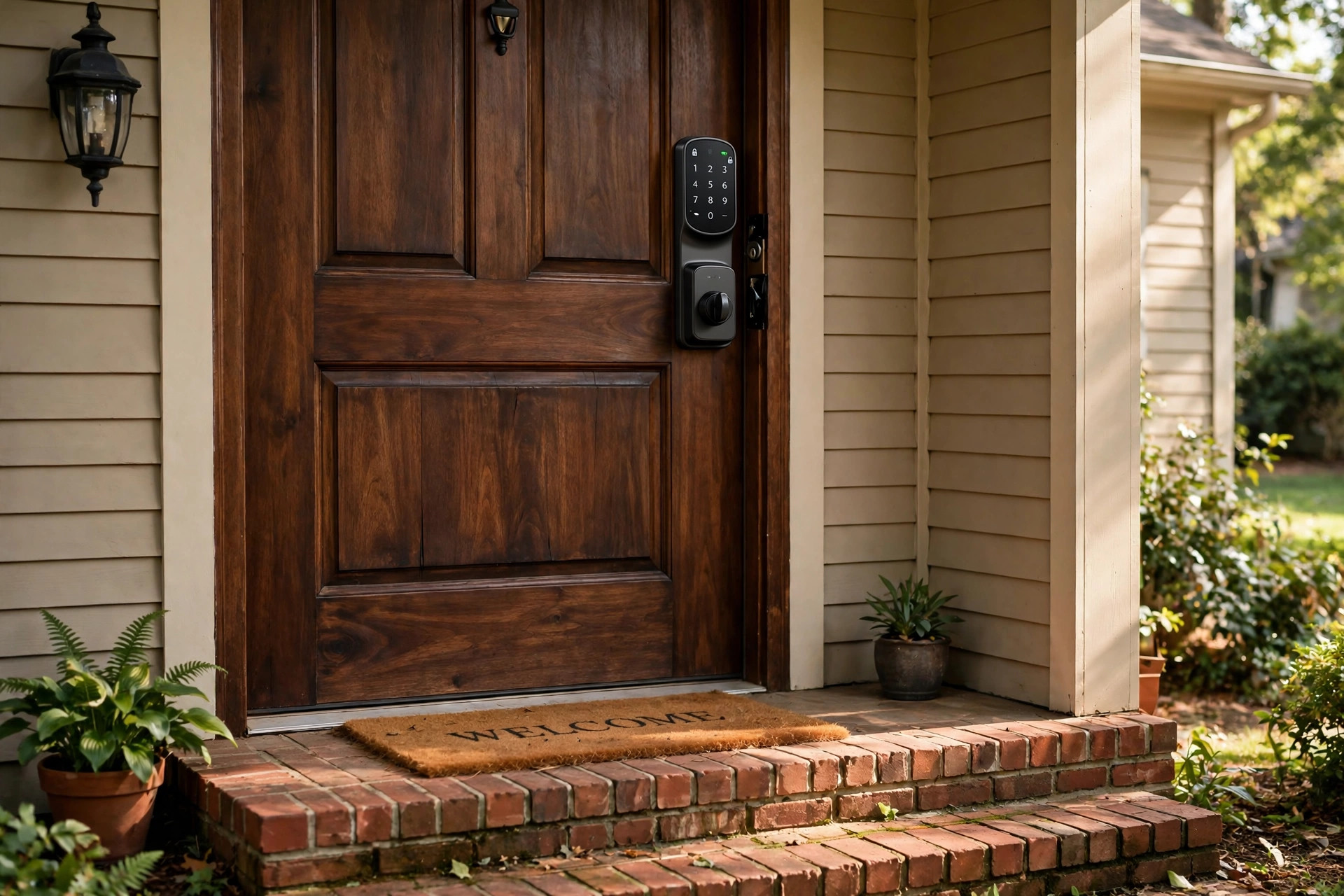

Why Homeowners Read the Best Smart Lock for Front Door Reviews USA Before They Buy
A front door lock is the one piece of hardware every visitor touches. It is also the last thing between a thief and your family room. That is why the best smart lock for front door reviews USA has become such a common search. People want to know which locks hold up in real life, not just in an advertisement.
A smart lock replaces the metal key with codes, fingerprints, or a phone app. Many models still take a key as a backup. The lock bolts and unbolts on command. It can send you an alert when the door opens. It can let a guest in with a one-time code while you are at work. For busy families, this is a real change. No more hiding a spare key under the mat. No more paying a locksmith when a teenager loses a key.
The reviews matter because lock quality varies. A cheap lock may look modern and still use a weak bolt. A strong lock may drain batteries in six weeks. The review sites and the big retailers show which models fail. They also show which brands fix problems fast. Before you spend two hundred dollars, it pays to read what long-term owners say.
Most American homes use a standard deadbolt hole. Most smart locks fit that hole. A few doors need a second hole or a different backset. Check the door first. Measure the thickness and the backset. A review often notes fit problems. Those notes save you a return trip to the store.
What to Look for When You Choose a Front Door Smart Lock: Best Smart Lock for Front Door Reviews Usa
The first choice is how you will open the door. Keypad locks ask for a four to eight digit code. They are simple and cheap. Guests can learn the code in seconds. Fingerprint locks read your thumb in under a second. They are fast but cost more. Phone and Wi-Fi locks open from an app. They add alerts and remote control. Many locks mix two or three methods.
The second choice is the power source. Almost all smart locks run on AA batteries. Good ones last a year or more. Bad ones die in three months. Look for a lock that warns you when the battery is low. Look for a backup key or a USB port that can wake a dead lock. You do not want to be locked out on a cold night.
The third choice is the connection. Bluetooth locks work within thirty feet of your phone. They are cheap and simple. Wi-Fi locks connect to your router and work from anywhere. They need a stronger signal and use more battery. Some locks use a hub that plugs into a wall outlet. The hub talks to the lock and to your home network. Reviewers often test range and speed. Read those parts of the reviews.
The Bolt and the Build
The bolt is the heart of the lock. Look for a solid metal bolt that extends at least one inch into the frame. Look for a lock body made of metal, not plastic. Reviews from testing labs break down the force a bolt can take. The Consumer Reports site is known for this kind of hard testing. Cheap plastic housings crack under a hammer. Metal housings hold.
Check the strike plate too. The strike plate is the metal piece screwed to the door frame. A long plate with three-inch screws holds far better than a short plate. Many smart locks ship with a weak strike plate. A reviewer will often replace it and say so. You can buy a better one for a few dollars.
Keypad, Fingerprint, or Both
A keypad never runs out of memory. A fingerprint reader can fail with wet hands. Many families like a lock that has both. The kids use the code. The adults use the thumb. CNET and PCMag test how fast readers work and how often they miss. Those tests help you pick the right mix.
Types of Smart Locks for the Front Door
Keypad Deadbolts
A keypad deadbolt is the most common type. You punch in a code and the bolt slides. Most models store twenty or more codes. You can give the dog walker one code and the cleaner another. You can delete a code when someone moves out. They cost from about eighty to two hundred dollars. If you want a simple start, read our guide to keyless entry door lock reviews 2026 usa.
Fingerprint Deadbolts
A fingerprint lock stores dozens of prints. It opens in under a second. It is handy when your hands are full of groceries. It costs more than a keypad, often one hundred fifty to three hundred dollars. Rain and cold can slow some readers. If this style appeals to you, see our roundup of the best fingerprint door lock reviews 2026 usa.
Wi-Fi Connected Locks
A Wi-Fi lock links to your phone through your home router. You can lock the door from the office. You get a notice each time someone opens it. You can make codes that work only on certain days. These locks cost more and need a good Wi-Fi signal at the front door. The Verge covers how these locks tie into wider smart home setups.
Retrofit Locks
A retrofit lock keeps your old deadbolt and keys. It adds a motorized box on the inside of the door. You keep your outside look. Renters like this type because it leaves the outside unchanged. Landlords often prefer it too. It is worth reading a schlage vs kwikset smart lock comparison usa before you pick a brand.
Cost and Price: What the Reviews Say You Should Pay
Prices run from about eighty dollars to over three hundred. A simple keypad deadbolt costs eighty to one hundred fifty dollars. A mid-range lock with Wi-Fi and an app costs one hundred fifty to two hundred fifty. A top fingerprint lock with a camera or a video doorbell built in can cost three hundred or more.
Do not judge by price alone. Reviews show that some hundred-dollar locks outlast two-hundred-dollar locks. Battery life and weather sealing matter more than extra features. A lock that lives in direct sun and rain needs a good gasket. The Ring brand pairs many locks with doorbell cameras, which raises the price but adds video.
There is also the cost of install. A handyman may charge fifty to one hundred fifty dollars to fit a lock. Most owners do it themselves in thirty minutes with a screwdriver. The hole pattern matches old deadbolts. If your door has no deadbolt hole, drilling one adds cost.
Ongoing costs are small. Batteries cost a few dollars a year. Some locks offer a paid plan for video history or smart alerts. Many owners skip the plan. The lock itself works fine without it. SimpliSafe and ADT sell locks as part of larger home security plans, so check what their monthly fee covers before you sign up.
Care and Upkeep
A smart lock needs little care, but small steps keep it working for years. Wipe the keypad with a soft dry cloth. Dirt can jam buttons. Keep the fingerprint reader clean with a soft cloth. Do not use harsh cleaners. They can strip the coating.
Change the batteries once a year, even if the lock still works. Pick a date you remember, like the start of fall. Use good alkaline batteries. Cheap batteries leak. A leaking battery can ruin the circuit board. Some locks use lithium batteries that last longer in cold weather.
Check the door alignment twice a year. Wood doors swell in summer and shrink in winter. A bolt that rubs the strike plate wears out fast. Loosen the strike plate screws and shift it a hair. A review of long-term use often notes this. The door moves more than the lock.
Update the app and the lock software. Makers fix bugs with updates. An old app may lose its link to the lock. Turn on automatic updates on your phone. The Google Store sells locks from the Nest line, and its app updates come through the normal phone store.
Battery Backup Habits
Keep a spare set of batteries in the house. Keep the physical key too, if your lock has one. Store it with a neighbor or in a lock box. A lock with a USB-C port can be woken with a phone charger cable. Learn where that port is before you need it.
Safety Notes Every Buyer Should Read
A smart lock is still a lock. It cannot fix a weak door. A hollow core door breaks with one kick. A solid wood or steel door holds. Check your door before you spend money on a lock. The U.S. Consumer Product Safety Commission keeps general safety guidance for home products, and its recall list is worth a look before any big hardware purchase.
Use strong codes. Do not use your street number or your birth year. Change the code when a guest no longer needs it. Most locks make this easy in the app. Teach kids not to share the code with friends.
Watch for recalls. A few smart locks have been recalled for bolts that fail to hold. The recall notices list the model numbers. Check your model number on the box before you install it. Keep the receipt. A recall usually means a free fix.
Lock makers add encryption to stop hackers. Look for a lock that uses strong wireless security. Do not buy a no-name lock from a discount site. Big brands test their software. They also fix holes fast when one is found.
Renters and Landlords
Renters should ask the landlord before changing a lock. A retrofit lock that keeps the old key is often allowed. A full deadbolt swap may break the lease. Landlords like smart locks because they can change codes between tenants. No more key copies floating around town. Some states have rules about tenant access and lock changes. Read your lease first.
Frequently Asked Questions
Do smart locks work during a power outage?
Yes. The lock runs on batteries, not house power. A power outage does not stop it. Wi-Fi features may pause if your router is down. The keypad and the key still work. Keep fresh batteries in the lock.
How long do the batteries last?
Most locks last six to twelve months on a set of AA batteries. Wi-Fi locks use more power than Bluetooth locks. Cold weather shortens battery life. The app shows the battery level. Change batteries when it drops below twenty percent.
Can a thief hack a smart lock?
It is far harder than it looks. Good locks use the same kind of encryption as online banks. Most break-ins happen through weak doors or open windows, not through hacking. Buy from a known brand and keep the software updated.
Do I need Wi-Fi for a smart lock?
No. A basic keypad lock needs no Wi-Fi at all. It works on its own. Wi-Fi adds remote control and alerts. If you only want codes at the door, skip the Wi-Fi model and save money.
Will a smart lock fit my door?
Most fit a standard American door that is one and three-eighths to two inches thick. They use the same hole as a normal deadbolt. Measure your door first. Check the backset, which is the distance from the door edge to the center of the hole. It is usually two and three-eighths or two and three-quarter inches.
Are smart locks allowed on apartment doors?
It depends on your lease. Many landlords allow a retrofit lock that keeps the original key. A full replacement may not be allowed. Always ask first. Keep the old lock so you can put it back when you move out.
A Final Word
The best smart lock for front door reviews USA point to one clear lesson. Pick the lock that fits your door, your habits, and your budget. Read the reviews from long-term owners. Check the bolt strength and the battery life. Then install it well and change the codes often. A good lock is quiet. It works every day without fuss. That is the real test, and the reviews will tell you which locks pass it.
References
ADT. (n.d.). Home security and automation. https://www.adt.com CNET. (n.d.). Technology news and reviews. https://www.cnet.com Consumer Reports. (n.d.). Product reviews and ratings. https://www.consumerreports.org Google Store. (n.d.). Smart home devices. https://store.google.com PCMag. (n.d.). Technology product reviews. https://www.pcmag.com Ring. (n.d.). Smart home security devices. https://www.ring.com SimpliSafe. (n.d.). Home security systems. https://www.simplisafe.com The Verge. (n.d.). Technology news and reviews. https://www.theverge.com U.S. Consumer Product Safety Commission. (n.d.). Product safety information. https://www.cpsc.gov
Was this guide helpful?

About Michael Thompson
The My Garden US editorial team writes practical, in-depth home and garden guides for American homeowners — tested advice, no fluff.
You May Also Like

Best Nanny Cam Hidden Camera Reviews USA: A Plain Guide for Parents
July 25, 2026 0 views
Fireproof Safe for Home Reviews 2026 USA: What Buyers Should Know
September 16, 2026 0 views
Smart Mailbox Sensor Reviews 2026 USA: Best Picks for Every Home
May 21, 2026 0 views