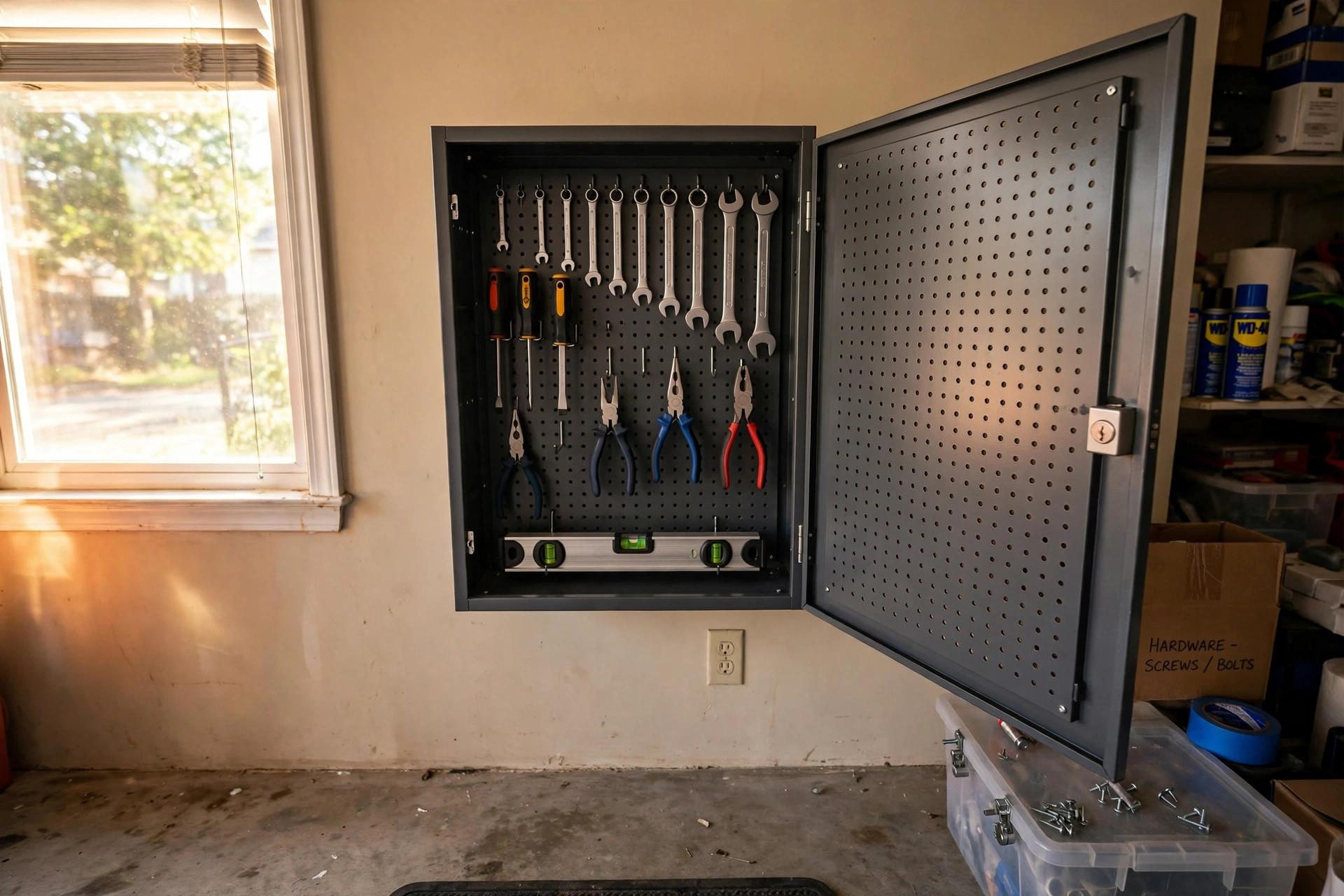

A garage full of loose tools is a problem. Tools fall off the workbench. Small parts roll away. Sharp tools lie where a child can reach them. Many homes face this. The answer for many is a lockable pegboard wall organizer. It hangs on the wall. It holds tools in plain sight. And the lock keeps them safe from curious hands and quick theft. This guide walks you through the lockable pegboard wall organizers for sale today. You will learn why they matter, how to choose one, what types exist, what they cost, and how to care for them.
Why a Lockable Pegboard Wall Organizer Matters
A plain shelf hides things. A closed box hides things. A pegboard shows everything at a glance. That is the point. You can see each tool. You can grab what you need. You can spot what is missing at the end of the day. When the board has a lock, you get one more layer of value. The tools stay where you left them. You can turn the key and walk away with peace of mind.
Shops with shared space benefit most. In a rental unit or a multi-family home, the garage is often open to others. A lockable pegboard wall organizer protects your wrenches, drills, and blades. It also helps with insurance in some cases. A secured tool cabinet shows care. The same logic works in a classroom, a maker space, or a small repair shop. Family Handyman has noted for years that visible, ordered tool storage cuts project time in half, and the lock adds security that an open board cannot give.
The trend is also about wall space. Floor space is dear in a two-car garage that must hold two cars. Walls are free. A board takes no floor space at all. For people who want secure wall storage cabinets but still want to see their tools, this is the middle path between open boards and closed lockers.
What to Look For When You Choose: Lockable Pegboard Wall Organizers for Sale
Not every board is built the same. Read the details before you buy.
Board material. Metal pegboard lasts longest. Steel boards resist dents and carry heavy tools. Hardboard panels are lighter and cheaper but bow under weight. Some boards use thick wood fiber with a metal frame. For a lockable unit, steel is the common choice because the lock housing must sit in a rigid panel.
Lock type. Most units use a small cylinder lock or a cam lock with two keys. A few offer combination locks. Check whether spare keys can be ordered. Check whether the lock turns smoothly in the store photo reviews. A flimsy latch defeats the purpose of a lockable pegboard panel for the garage.
Hole spacing and hooks. Standard pegboard holes sit one inch apart. Hooks, bins, and holders made for that pattern are easy to find at any hardware store. Some brands use their own slot system. That is fine only if the brand sells enough add-on parts. Open systems give you more choice over the years.
Size and weight. Measure your wall first. Boards come in sizes from about two by two feet up to four by eight feet. A large board full of tools is heavy. You must mount it into wall studs, not drywall alone. Note the shipping weight too. Some units arrive in one box. Others need two people to lift.
Finish. Powder-coated steel resists rust in a damp garage. Look for a finish rated for indoor or garage use. Light colors make small tools easy to see. Dark colors show less dust.
Types of Lockable Pegboard Wall Organizers
The market offers several forms. Each suits a different room.
Lockable pegboard cabinets. These look like shallow wall cabinets. The front door is a pegboard panel, or the door opens to reveal a pegboard back. You hang tools on the door and on the back wall inside. Close the door and lock it. This is the most secure form and a good pick when children are in the house.
Sliding-door pegboard units. Two panels slide past each other on a track. Only one panel is open at a time. A lock holds the panels closed. These fit narrow walls where a swing door would hit a car or a shelf.
Framed pegboard with lockable cover. A metal frame holds a standard board. A mesh or solid cover hinges over it and locks at the side. These are lighter than full cabinets and often cheaper. The Spruce covers many such wall storage ideas and notes that a simple lockable cover can secure an existing board without replacing it.
Benchtop and rolling units. Some small lockable pegboards sit on a workbench or roll on casters. They suit renters who cannot drill into walls. The trade-off is size. They hold hand tools and small parts, not a full shop set.
Cost and Price Ranges
Prices vary with size, material, and lock quality. As a rough guide for what you will find among lockable pegboard wall organizers for sale in the United States:
– Small steel boards (about 24 by 24 inches): 40 to 90 dollars. – Mid-size cabinets (about 36 by 24 inches): 90 to 180 dollars. – Large wall cabinets (about 48 by 32 inches or bigger): 180 to 350 dollars. – Heavy-duty shop-grade units with thick steel and multi-point locks: 350 dollars and up.
Hooks and bins often sell separately. A starter hook kit can add 15 to 40 dollars. Factor that in when you compare prices. Sale events at big home stores can cut these prices by a quarter. Check Home Depot and Lowe’s for seasonal deals, and compare with Wayfair and IKEA, which both carry wall storage lines with locking options from time to time. For a full parts list, The Container Store stocks pegboard bins and hooks that fit standard boards.
Buyers who want the whole garage in order often pair a board with lockable workshop tool chests for sale below the board, or with stackable basement shelving units for sale on the next wall. Small parts can go into affordable under bed storage containers buying guide options if the workshop doubles as a spare room.
Mounting and Setup
Good mounting is not optional. A falling board is dangerous.
1. Find the studs with a stud finder. Mark them. 2. Hold the board level and mark the holes. 3. Drill pilot holes into the studs. 4. Use lag screws or the bolts that came with the unit. 5. Space the board off the wall if hooks need clearance behind it. Many units include spacer blocks.
Keep the lock side easy to reach. Do not mount the board so high that you must stretch to turn the key. Leave room for long tools to hang. If you park a car nearby, make sure the door swing clears the car. For renters, freestanding or rolling boards avoid holes in the wall, though they hold less weight.
Plan the hook layout before you load the board. Place the tools you use most at chest height. Heavy items go low and near the studs. Small parts bins go at the sides where they will not snag a sleeve. Leave some empty holes. A board packed edge to edge looks neat on day one but leaves no room when you buy a new tool. A little open space keeps the board useful for years.
Care and Upkeep
Steel boards need little care. Wipe them down twice a year. A damp cloth removes garage dust. Dry the board after. Check the lock twice a year. A drop of graphite or light machine oil keeps the cylinder smooth. Do not use heavy grease. It collects dust and jams the pins.
Tighten the mounting screws once a year. Walls shift. Screws loosen. Check hooks for bends. A bent hook can drop a hammer on your foot. Replace worn bins. Sunlight fades plastic bins over years in a garage with windows. Move the unit out of direct sun if you can. Apartment Therapy often reminds readers that even garage storage lasts longer with basic cleaning, and the same rule holds here.
If the finish chips, touch it up with a matching spray paint. Bare steel rusts in humid air. This is a ten-minute job that adds years of life.
Safety Points
Lockable boards are sold for security, but safety runs deeper.
– Mount into studs. Never rely on drywall anchors for a loaded board. – Keep the key out of reach of children but known to adults in the home. – Store sharp tools points-down or in sheaths, even behind a locked door. – Do not overload hooks. Check the weight rating per hook and per board. – Keep a small fire extinguisher near the work area, away from the board itself.
Frequently Asked Questions
Are lockable pegboard wall organizers hard to install? Most take under an hour. You need a drill, a level, and a stud finder. The hard part is finding the studs. Once marked, the rest is simple. Two people make the job easier for large cabinets.
Can I add my own hooks to a lockable board? Yes, if the hole pattern is standard. One-inch spaced holes accept common hooks, bins, and holders. Brand-specific slot systems need that brand’s parts. Check the product page before you buy extra hooks.
Do these boards keep tools safe from theft? They deter casual theft and keep tools away from children. They are not safes. A determined thief with tools and time can break a light cabinet. For high-value items, a heavy safe or a locked room is still best. Think of the lock as strong everyday protection.
What is the best material for a garage? Powder-coated steel. It handles humidity, bumps, and heavy loads. Hardboard works in a dry indoor craft room. For an unheated garage in a cold state, steel with a rust-resistant finish is the safer pick.
How much weight can a lockable pegboard hold? It depends on size and mounting. Small boards hold 25 to 50 pounds. Large steel cabinets hold 100 to 200 pounds when screwed into studs. Always stay under the maker’s rating. Spread heavy tools across several hooks.
Where can I see lockable pegboard wall organizers for sale in person? Big home improvement stores often stock at least a few models in the tool storage aisle. Call ahead and ask. Seeing the lock and the door swing in person helps you judge quality better than photos. For wider choice, online retailers list dozens of models, and Walmart sometimes carries budget-friendly boards alongside its garage storage lines.
A Short Final Word
A lockable pegboard wall organizer is a simple idea done well. Your tools hang where you can see them. Your key keeps them yours. Measure your wall, pick steel for the garage, buy the hook kit with the board, and mount into studs. Do that, and the board will serve you for years. The lockable pegboard wall organizers for sale today cover every budget, from a small steel panel to a full shop cabinet. Choose the one that fits your wall and your tools, and your workshop will feel like a new room.
References
Apartment Therapy. (n.d.). Home design ideas and inspiration. https://www.apartmenttherapy.com Family Handyman. (n.d.). DIY home repair and maintenance. https://www.familyhandyman.com IKEA. (n.d.). Home furnishings. https://www.ikea.com Lowe’s. (n.d.). Home improvement products. https://www.lowes.com The Container Store. (n.d.). Storage and organization products. https://www.containerstore.com The Home Depot. (n.d.). Home improvement products. https://www.homedepot.com The Spruce. (n.d.). Home and garden advice. https://www.thespruce.com Walmart. (n.d.). Everyday low prices. https://www.walmart.com Wayfair. (n.d.). Furniture and home goods. https://www.wayfair.com
Was this guide helpful?

About Jennifer Lee
The My Garden US editorial team writes practical, in-depth home and garden guides for American homeowners — tested advice, no fluff.
You May Also Like

Budget Friendly Dresser Drawer Dividers for Sale
February 11, 2026 0 views
Top Rated Shoe Storage Racks for Sale: How to Pick the Right One
September 13, 2026 0 views
Luxury Bookcases with Storage Doors for Texas Homes
August 29, 2026 0 views