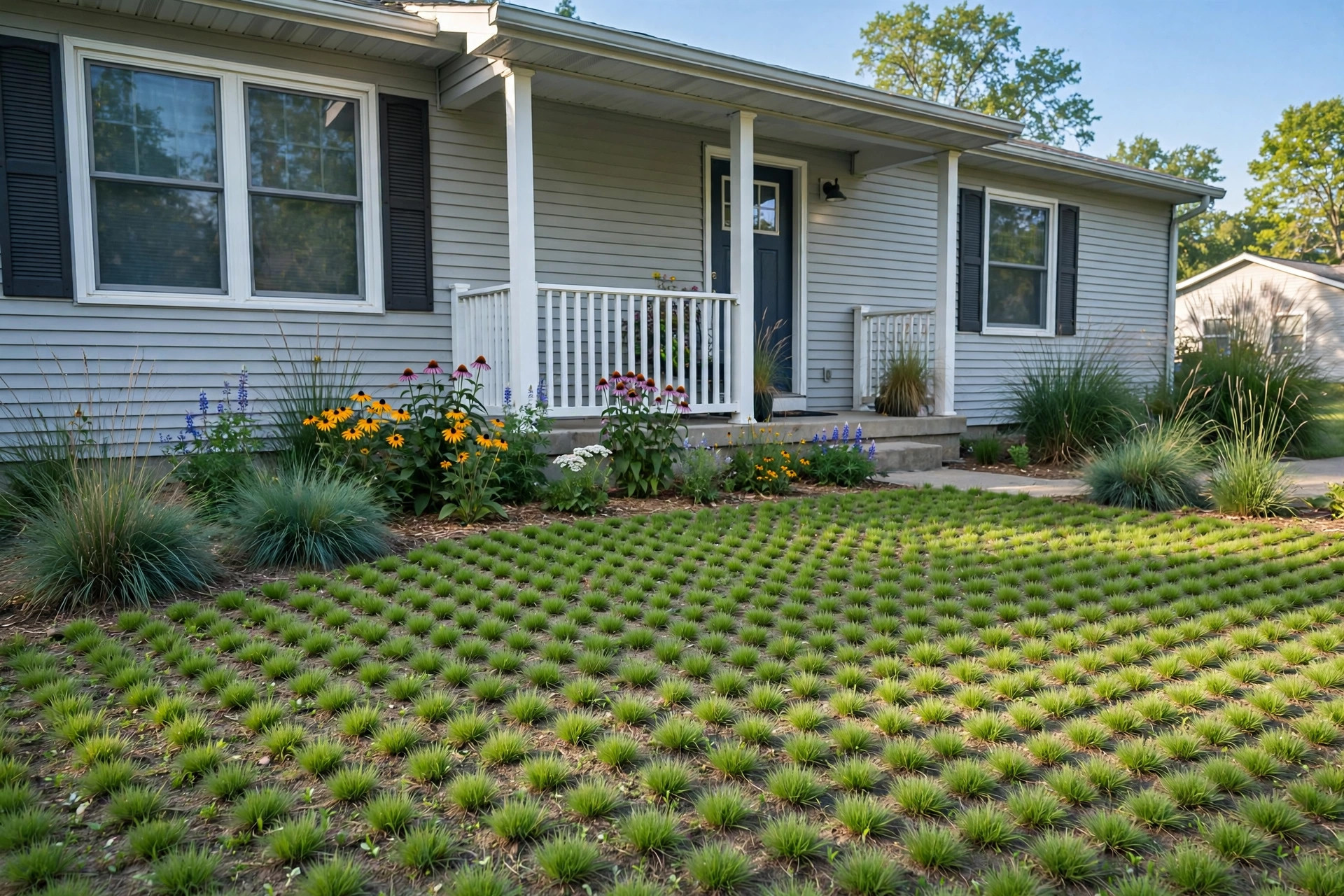

A growing number of home owners across the United States are giving up the old style lawn. They want grass that fits their land. They want grass that needs less water and less work. This native grass seed american homes guide explains the whole process in plain words. It covers how to pick the right seed, how to plant it, what it costs, and how to keep it healthy year after year.
Native grasses grew on this land for thousands of years. They spread across prairies, meadows, and woodlands. Then came the common lawn grasses from Europe and Asia. These grasses need much water. They need much food. They need regular cutting. Native grasses ask for far less. They have deep roots. They stand up to heat and cold. They feed birds and insects. A lawn made from them can look wild and soft, and it can look fine in every season.
Why Native Grass Seed Makes Sense for American Homes
The first reason is water. Many lawn grasses drink a lot. In dry states the water bill can be high. Native grasses evolved with local rain. Once their roots are set, most of them need little extra water. Some need none at all after the first year.
The second reason is work. A standard lawn asks for mowing every week. It asks for feeding several times a year. It asks for weed killers and grub killers. Native grass lawns grow more slowly. Many can go weeks without a cut. Some can be left uncut and still look fine.
The third reason is the local world of living things. Native grass gives food and cover to bees, butterflies, and birds. Seed heads feed goldfinches in the fall. Clumps of grass give shelter to toads and beetles. A yard with native grass becomes part of the local land again.
The fourth reason is cost over time. Seed for native grass can cost more at the start. But the yearly cost drops. Less water. Less food. Less fuel for the mower. After three or four years the native lawn is often cheaper than the old one.
How to Choose the Right Native Grass Seed: Native Grass Seed American Homes Guide
Start With Your Region
No single grass fits the whole country. The United States has many climates. The grass that is native to Texas may not be native to Maine. Start by learning which grasses grew in your area before the settlers came. A county map of plant zones is a good tool. The extension service in your state can also help. The National Institute of Food and Agriculture supports these extension offices, and their guides list native species by county.
Know Your Soil and Sun
Look at your yard. Note where the sun falls. Note where water stands after rain. Most native grasses want full sun. A few do well in shade. Soil type matters too. Some grasses like sand. Some like clay. A cheap soil test kit will tell you the texture and the pH. You can buy one at a garden center or online. Gurney’s and Park Seed sell seed starting supplies as well as seed, and their catalogs often give soil notes for each species.
Match Seed to Your Plan
Think about what you want. Do you want a short lawn you can walk on? Do you want a tall meadow look? Do you want a mix with flowers? Short lawn grasses include buffalograss and blue grama. Tall grasses include big bluestem and switchgrass. A mix of grasses and wildflowers can make a meadow that needs almost no care, and guides at Gardening Know How show how to blend them. If you want to compare prices before you buy, see our list of native grass seed for sale in the United States.
Popular Native Grasses for Home Yards
Buffalograss is one of the best known. It grows in the central plains. It stays short, about six inches, if left alone. It can take foot traffic. It needs little water once set. It turns a soft straw color in winter and greens up in spring.
Blue grama is another plains grass. It grows in fine clumps. It has curved seed heads that look like small flags. It mixes well with buffalograss. It asks for little water and little food.
Little bluestem is a bunch grass of the prairie. It grows to about three feet. Its leaves turn copper red in the fall. It gives a fine color all year. It likes well drained soil and full sun. It is a good choice for a meadow border or a low care bank.
Switchgrass grows tall and strong. Some types reach six feet. It has deep roots that go down ten feet or more. It can grow in poor soil. It can grow where water stands for a time. It gives winter cover for birds. It is best for large lots or for the back of the yard.
Eastern gamagrass and Indian grass are other prairie grasses. They grow tall and full. They work well in a natural meadow mix. For small city lots, the shorter types are a better fit.
How to Plant Native Grass Seed
When to Plant
Time matters. Warm season grasses do best when planted in late spring. The soil should be warm. Cold season grasses do best in early fall. Planting at the wrong time gives poor results. Read the packet before you start. Our native grass seed buying guide lists the best planting windows by region.
Prepare the Ground
Clear the old grass first. You can cut it short and cover it with black plastic for a few weeks. You can also kill it with a broad spectrum herbicide and wait two weeks. Then rake the ground smooth. Break up the top inch of soil so the seed can touch the earth. Do not add rich compost. Native grasses like lean soil. Rich soil helps weeds more than it helps the grass.
Sow the Seed
Mix the seed with sand to spread it even. Use about twice the rate the packet says for a first planting, because native seed comes up at a lower rate than common lawn seed. Rake it in light. Roll the ground or walk over it to press the seed down. Water it gentle and often for the first month. Keep the top half inch damp. Once the grass is two inches tall, water less often.
First Year Patience
Native grass grows roots before it grows leaves. The first year may look thin. Weeds may come up too. Do not feed the new grass. Do not spray weed killer on it in the first year. Mow the weeds to four inches to keep them from seeding. By the second year the grass will fill in. By the third year it will be strong. Guides at The Spruce give month by month care notes for new native lawns.
Cost and Price
Native grass seed costs more per pound than common lawn seed. A pound of buffalograss seed can cost twenty to forty dollars. A pound of common rye seed costs far less. But you use less per square foot for some natives, and you buy it once.
For a full lawn of one thousand square feet, plan on thirty to one hundred dollars for seed. A meadow mix for a larger area can cost more. Soil test kits cost about fifteen dollars. A roller or spreader can be rented for a day.
Yearly care costs drop fast. Water bills fall. You buy less seed food. You mow less, so you use less fuel. Over five years a native lawn often saves hundreds of dollars against a common lawn. Watch for native grass seed deals in late winter, when stores clear stock before the spring rush.
Care and Upkeep
Mow less. That is the main rule. A buffalograss lawn can be mowed once a month or left alone. A meadow mix should be cut once a year in late winter. Cut it high, at four inches or more. Never cut more than one third of the blade at once.
Water deep but seldom. After the first year, most native grasses need rain only. In a hard drought, water once every three weeks. Water in the early morning so leaves dry fast.
Feed little or not at all. Too much nitrogen makes weak growth and invites weeds. A light top dress of compost every two or three years is enough for most lawns. Soil tests every few years will tell you if anything is lacking.
Leave the fall leaves or mow them into the lawn. Seed heads left standing feed birds through winter. In early spring, cut the old growth down before the new green comes up. Burn or rake off the cuttings so light reaches the crowns.
Common Problems and Fixes
Weeds are the top problem in year one. Crabgrass and foxtail move in fast. Mow them before they seed. Pull large ones by hand. Do not use weed killer until the grass is well set, usually in the second year.
Bare spots happen where seed washed away or birds ate it. Sow more seed in those spots in the right season. Cover with a thin layer of straw to hold it in place.
Thin growth in shade means you picked the wrong grass. Most natives want full sun. If a spot gets less than six hours of sun, plant a shade native such as Pennsylvania sedge or switch to ground cover.
Pests are rare. Native grasses have few insect foes. Grubs can still eat roots. If patches die and pull up easy, check for grubs. Milky spore or nematodes can treat them without harsh chemicals. Proven Winners and White Flower Farm offer pest notes in their plant care pages, which apply to grasses too.
Safety Notes
Seed itself is safe. But take care when clearing old ground. Wear gloves and eye cover when using herbicides. Keep children and pets off the treated area until it is dry. Store chemicals up high and locked.
Dust from seed bags can bother lungs. Wear a dust mask when spreading dry seed. Work on a calm day so the seed and dust do not blow.
Tall meadow grasses can be a fire risk in dry lands. Cut a short strip around the house as a fire break. Check local rules before you let grass grow tall. Some towns have weed height limits. A call to your city office will tell you the rules.
FAQ
How long does native grass seed take to grow? Most native grass seed comes up in two to four weeks in warm soil. But full cover takes one to three years. The grass builds roots first. Be patient in year one.
Can I walk on a native grass lawn? Yes, if you pick the right type. Buffalograss and blue grama take foot traffic well. Tall prairie grasses do not. They are for looks, not for play.
Does native grass stay green all year? No. Most native grasses go brown in winter. This is normal. They green up again in spring. Many home owners like the winter color. The seed heads catch frost and look fine in the cold months.
Can I mix native grass with my old lawn? You can, but the mix often fails. The old grass grows faster and crowds out the new. It is better to clear the old grass and start fresh. Or plant natives in a separate bed or border.
Is native grass seed safe for pets? Yes. Native grasses are not toxic to dogs or cats. The seeds have no sharp awns in most lawn types. Keep pets off new seed until it is set so they do not dig it up.
Where can I buy good native grass seed? Buy from seed houses that list the species and the source region. Avoid bags that say only “wildflower mix” with no details. Monrovia sells native plants for home gardens, and the Old Farmer’s Almanac has planting calendars that help you time your sowing.
A Short Final Word
A native grass lawn asks for patience at the start and gives back ease for years. Pick grass that fits your land. Plant it at the right time. Water it well in year one. Then step back and let it grow. The birds will come. The water bill will fall. The yard will look like it belongs where it stands. That is the whole point of this native grass seed american homes guide: a lawn that fits your home, your land, and your life.
References
Gardening Know How. (n.d.). Gardening guides and plant care. https://www.gardeningknowhow.com Gurney’s Seed & Nursery Co. (n.d.). Seeds, plants, and garden supplies. https://www.gurneys.com Monrovia. (n.d.). Plants for home gardens. https://www.monrovia.com National Institute of Food and Agriculture. (n.d.). Agricultural research and extension. https://www.nifa.usda.gov Park Seed. (n.d.). Seeds, plants, and gardening supplies. https://www.parkseed.com Proven Winners. (n.d.). Plants and gardening inspiration. https://www.provenwinners.com The Old Farmer’s Almanac. (n.d.). Gardening calendars and advice. https://www.almanac.com The Spruce. (n.d.). Home and garden advice. https://www.thespruce.com White Flower Farm. (n.d.). Plants, bulbs, and garden supplies. https://www.whiteflowerfarm.com
Was this guide helpful?

About David Wilson
The My Garden US editorial team writes practical, in-depth home and garden guides for American homeowners — tested advice, no fluff.
You May Also Like
Garlic Bulbs Planting California Homes USA: A Plain Guide
August 22, 2026 0 views
Monstera Plants Sale California Homes USA: A Buyer’s Guide
February 20, 2026 0 views
Lavender Seed Packets Buying Guide USA: How to Choose the Best Seeds for Your Garden
March 21, 2026 0 views