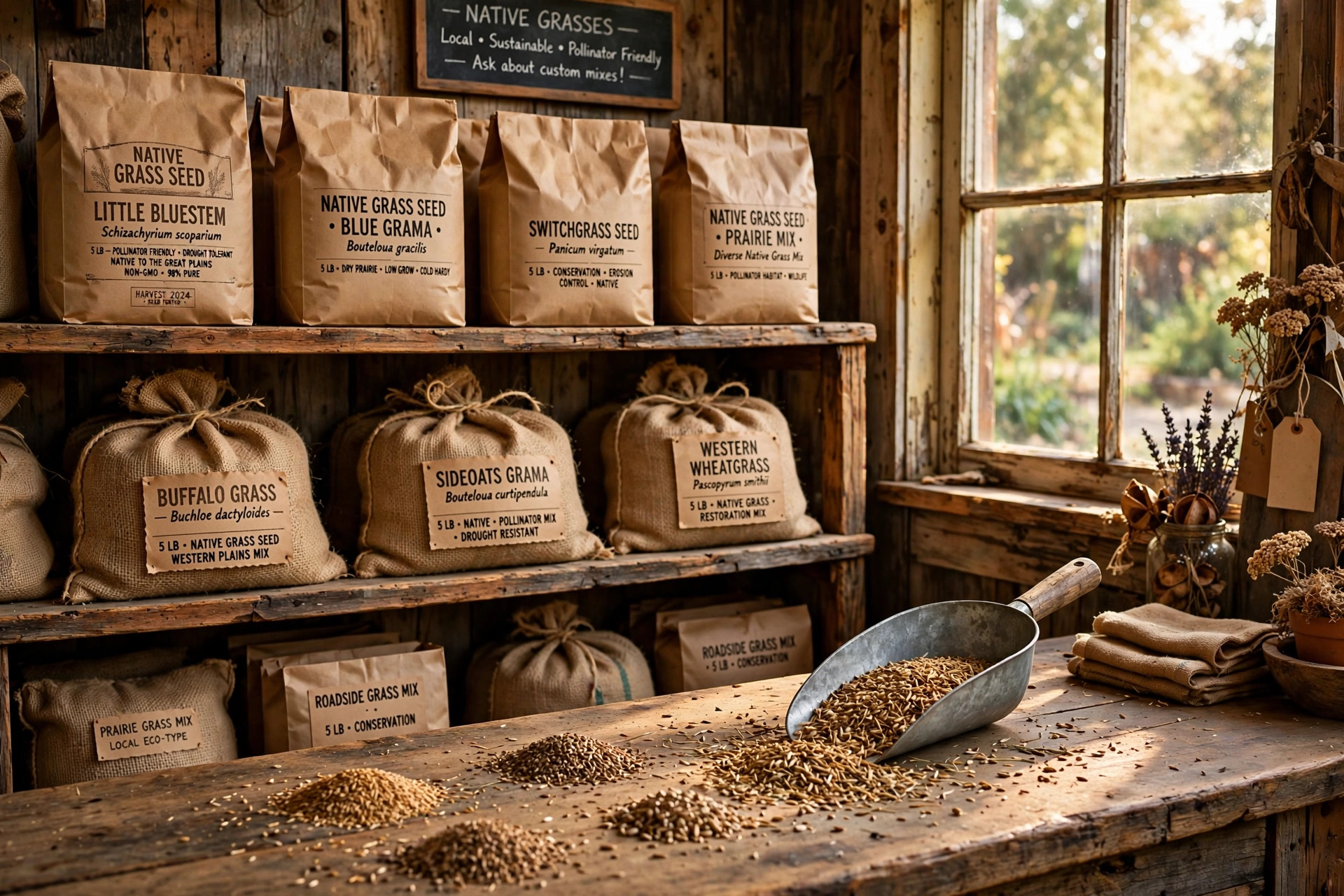

When people search for native grass seed deals near me, they want two things at once. They want seed that fits their land, and they want a fair price. Native grasses once covered much of the country. They grew without help from man, and they ask for little now. Buffalo grass, blue grama, and little bluestem are common examples. They need less water than many lawn grasses. They stand up to heat, wind, and poor soil. They also feed birds and insects that live in the area. This guide walks through what native grass seed is, what to look for on the label, what it costs, and where to find a good deal close to home. The facts here will help you buy with care and plant with confidence.
Why Native Grass Seed Deserves a Place in Your Yard
A lawn made of native grass is different from a lawn made of common turf grass. Native grass grew in your region for thousands of years. It learned to live with the local rain, the local soil, and the local weather. That long history gives it strength. Once the roots take hold, native grass needs far less water. In dry states this can cut the water bill by half or more. It also needs less fertilizer. The roots run deep, often four to six feet down, and they pull food from soil that shallow roots cannot reach.
Native grass also helps the land around it. Its deep roots hold the soil in place during heavy rain. They let water sink in instead of running off into the street. Bees and butterflies visit the flowers of grasses that bloom. A yard planted with native grass fits the land the way a wild meadow does. It asks for mowing only a few times a year. For a homeowner who wants a yard that is both handsome and easy to keep, native grass seed is worth a close look. Garden writers at The Spruce often note that native plantings reward patience with lower upkeep over time.
What to Look for When You Buy Native Grass Seed: Native Grass Seed Deals near Me
Seed is not all the same. A good deal means little if the seed does not grow. Before you compare prices, learn to read the bag.
Read the seed label first
Every bag of seed sold in the United States must carry a seed label. The label lists each grass species in the mix and the share of each by weight. It lists the germination rate, which tells you what share of the seed is likely to sprout. Look for a rate of 80 percent or higher. The label also lists weed seed content and the test date. Buy seed with a test date from the past year. Old seed loses its strength. Federal research programs described at NIFA support the seed testing work that makes these labels trustworthy.
Know your planting zone
A native grass in Texas is not a native grass in Minnesota. Buy seed of species that are native to your county or your state. Many sellers print a map on the bag or on their site. If the map shows your area in the natural range of the grass, the seed is a good match. A native grass seed buying guide can help you match species to your region step by step. Planting guides at Gardening Know How also explain how zones and frost dates shape what will grow.
Check the pure live seed number
Serious sellers price seed by pure live seed, or PLS. This number combines purity and germination into one figure. It tells you how much of the bag will actually grow. Two bags may weigh the same but hold very different amounts of living seed. The bag with the higher PLS is often the better deal, even at a higher price. Seed catalogs such as Park Seed print PLS figures so buyers can compare bags on equal terms.
Common Types of Native Grass Seed
Native grass seed comes as single species or as mixes. Single species bags suit a uniform lawn. Mixes suit meadows and rough areas. Here are the grasses most homeowners meet.
Buffalo grass grows short and spreads by runners. It forms a soft turf that needs mowing only once a month in summer. It suits the Great Plains and the Southwest. It handles foot traffic well for a native grass.
Blue grama is a bunch grass with fine leaves and curved seed heads that look like eyelashes. It mixes well with buffalo grass. It stands up to drought and poor soil. It grows from the northern plains down to Texas.
Little bluestem grows two to three feet tall and turns copper red in fall. It works best in meadow plantings and along borders. It needs full sun and well drained soil. Growers such as White Flower Farm carry ornamental grasses of this kind for home landscapes.
Sideoats grama bears oat like seeds along one side of the stem. Birds love it. It grows across much of the central United States and mixes well with wildflowers.
Switchgrass grows tall, up to six feet, and suits the back of a large yard or a screen planting. It tolerates wet soil better than most native grasses.
Many mixes blend three or four of these grasses with wildflower seed mixes for color. A mix costs more per pound than a single species, but it covers the ground faster and looks natural sooner. Growing advice for ornamental and native grasses appears at Monrovia, where nursery growers share planting tips.
The Cost of Native Grass Seed: What Counts as a Good Deal
Native grass seed costs more per pound than common lawn seed. That fact surprises many buyers. There is a reason for it. Native grass seed is harder to harvest. The seed heads shatter, the seed is light and fluffy, and cleaning it takes care. Small harvests mean higher prices.
Expect these rough price bands at retail. Buffalo grass seed often sells for 20 to 40 dollars per pound. Blue grama runs 15 to 35 dollars per pound. Little bluestem runs 12 to 30 dollars per pound. Mixes run 15 to 40 dollars per pound depending on the species inside. Bulk bags of 25 or 50 pounds cut the per pound price by 20 to 40 percent. That is where the real deals hide.
A good deal is not just a low price. Compare the price per pound of pure live seed, not the price per bag. A 10 pound bag at 30 dollars with 50 percent PLS gives you 5 pounds of living seed at 6 dollars per pound of living seed. A 10 pound bag at 40 dollars with 85 percent PLS gives you 8.5 pounds of living seed at about 4.70 dollars per pound. The second bag is the better deal. Seed packets and germination facts from Burpee can help you run these numbers before you buy.
Watch for these signs of a true bargain. End of season sales in late summer and fall often cut prices by a quarter or more. Farm and ranch supply stores sell larger bags at lower per pound prices than garden centers. Local native plant sales, often run by garden clubs, sell regional seed at fair prices with expert advice thrown in. Online listings for native grass seed for sale let you compare prices across many sellers before you drive anywhere.
Where to Find Native Grass Seed Deals Near You
The search for native grass seed deals near me starts at home and moves outward. Begin with a phone call. Local garden centers often stock regional seed that big chain stores do not carry. Ask if they sell native grass seed in bulk. Ask which species sell best in your county. The staff at a good garden center know the local soil and can steer you away from seed that will fail.
Farm supply stores are the next stop. Stores that serve ranchers often sell native grass seed in 25 and 50 pound bags for pasture planting. The per pound price is usually the lowest you will find. The species may be sold under farm names, so bring your list and check the label.
Native plant societies hold spring and fall sales in many states. The prices are fair, the seed is local, and the volunteers know the plants well. County extension offices can point you to these sales. They can also tell you which grasses are truly native to your area.
Online sellers fill the gaps. National seed houses ship anywhere, and their sites list the natural range of each species. When you shop online, add the shipping cost to the price before you compare. A cheap bag with costly shipping is no deal at all. Planting calendars and frost date charts at The Old Farmer’s Almanac help you time an online order so the seed arrives before planting season.
A last tip: buy one season ahead when you can. Seed bought in fall for spring planting often costs less, and you avoid the spring rush when popular species sell out. Store the bag in a cool, dry place. A sealed bag kept cool holds its germination for two to three years.
Planting and Care for New Native Grass
Good seed still needs good planting. Native grass seed is small, and it needs firm contact with the soil. Clear the planting area of weeds first. Till lightly or rake the top inch of soil. Spread the seed with a hand spreader or a broadcast spreader at the rate on the label. Most native grasses need 2 to 5 pounds of pure live seed per 1,000 square feet for a lawn, and less for a meadow.
Press the seed into the soil with a roller or by walking over it. Do not bury it deep. Most native grass seed needs light to sprout, so a quarter inch of cover is plenty. Water gently and keep the soil moist until the seedlings stand two inches tall. This may take three to six weeks. Native grass grows slowly at first because it builds roots before top growth. Do not judge it by the speed of common lawn grass.
Mow the new planting high, at three to four inches, to shade out weeds. Pull weeds by hand in the first year rather than using weed killer, which can harm young native grass. By the second year the roots run deep and the grass crowds out most weeds on its own. Water only during long dry spells after the first season. Fertilizer is rarely needed. Too much nitrogen makes native grass floppy and invites weeds.
Seed starting wisdom from Gurneys applies here as well: steady moisture and patience matter more than fancy products. And garden trial results shared by Proven Winners remind us that plants tested in real gardens tell the truest story about performance.
Safety and Handling Notes
Grass seed is safe to handle, but a few care points apply. Wear gloves and a dust mask when pouring large bags, since seed dust can irritate the nose and throat. Store bags out of reach of children. Wash your hands after handling seed. None of these steps are hard, and they keep a simple job safe.
Frequently Asked Questions
How much native grass seed do I need for my yard? Measure your planting area in square feet. For a lawn look, plan on 2 to 5 pounds of pure live seed per 1,000 square feet, following the label rate for your species. For a meadow look, 1 to 2 pounds per 1,000 square feet is enough. A 5,000 square foot yard at 3 pounds per 1,000 square feet needs 15 pounds of pure live seed. Divide by the PLS on the bag to get the bag weight to buy.
When is the best time to plant native grass seed? Late spring is best in most regions, after the soil warms to 60 degrees. In warm winter areas, fall planting works too. Check local frost dates before you plant. Planting too early in cold soil leads to poor sprouting.
Can I mix native grass seed with regular lawn seed? You can, but the mix often disappoints. Fast growing lawn grasses shade out slow native seedlings in the first year. It is better to plant native grass alone and let it fill in. If you want flowers too, add native wildflowers rather than turf grass.
How long does native grass seed take to sprout? Most species sprout in 10 to 21 days in warm, moist soil. Some, like buffalo grass, can take 30 days. Full cover takes one full growing season, and the planting looks its best in the second year. Patience is part of the method.
Is native grass seed safe for dogs and children? Once planted and watered in, native grass is as safe as any lawn. Keep pets and children off the area until the seed has sprouted and been mowed once, so the young plants are not trampled. Store unplanted seed where pets cannot chew the bag.
Where can I find the cheapest native grass seed near me? Farm supply stores usually have the lowest per pound prices on bulk bags. End of season sales at garden centers come next. Local native plant sales offer fair prices with local advice. Compare the price per pound of pure live seed across all three before you buy.
A Final Word
The search for native grass seed deals near me ends well when you know what you are buying. Learn the label. Match the species to your land. Compare prices by pure live seed, not by bag. Buy from sellers who know your region, and plant with care. A native grass lawn asks little and gives much: lower water bills, fewer chores, and a yard that belongs to the land it stands on. Take your time, buy smart, and enjoy the meadow you grow.
References
Burpee. (n.d.). Seeds, plants, and gardening supplies. https://www.burpee.com Gardening Know How. (n.d.). Gardening guides and plant care. https://www.gardeningknowhow.com Gurney’s Seed & Nursery Co. (n.d.). Seeds, plants, and garden supplies. https://www.gurneys.com Monrovia. (n.d.). Plants for home gardens. https://www.monrovia.com National Institute of Food and Agriculture. (n.d.). Agricultural research and extension. https://www.nifa.usda.gov Park Seed. (n.d.). Seeds, plants, and gardening supplies. https://www.parkseed.com Proven Winners. (n.d.). Plants and gardening inspiration. https://www.provenwinners.com The Old Farmer’s Almanac. (n.d.). Gardening calendars and advice. https://www.almanac.com The Spruce. (n.d.). Home and garden advice. https://www.thespruce.com White Flower Farm. (n.d.). Plants, bulbs, and garden supplies. https://www.whiteflowerfarm.com
Was this guide helpful?

About Jennifer Lee
The My Garden US editorial team writes practical, in-depth home and garden guides for American homeowners — tested advice, no fluff.
You May Also Like
Morning Glory Seeds Reviews: A Buying Guide for American Gardeners
February 22, 2026 0 views
Daffodil Bulb Packs USA Online Deals: A Full Buying Guide
February 19, 2026 0 views
Tulip Bulbs Fall American Homes Guide: Planting for a Brighter Spring
July 28, 2026 0 views