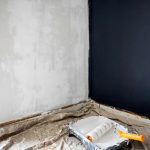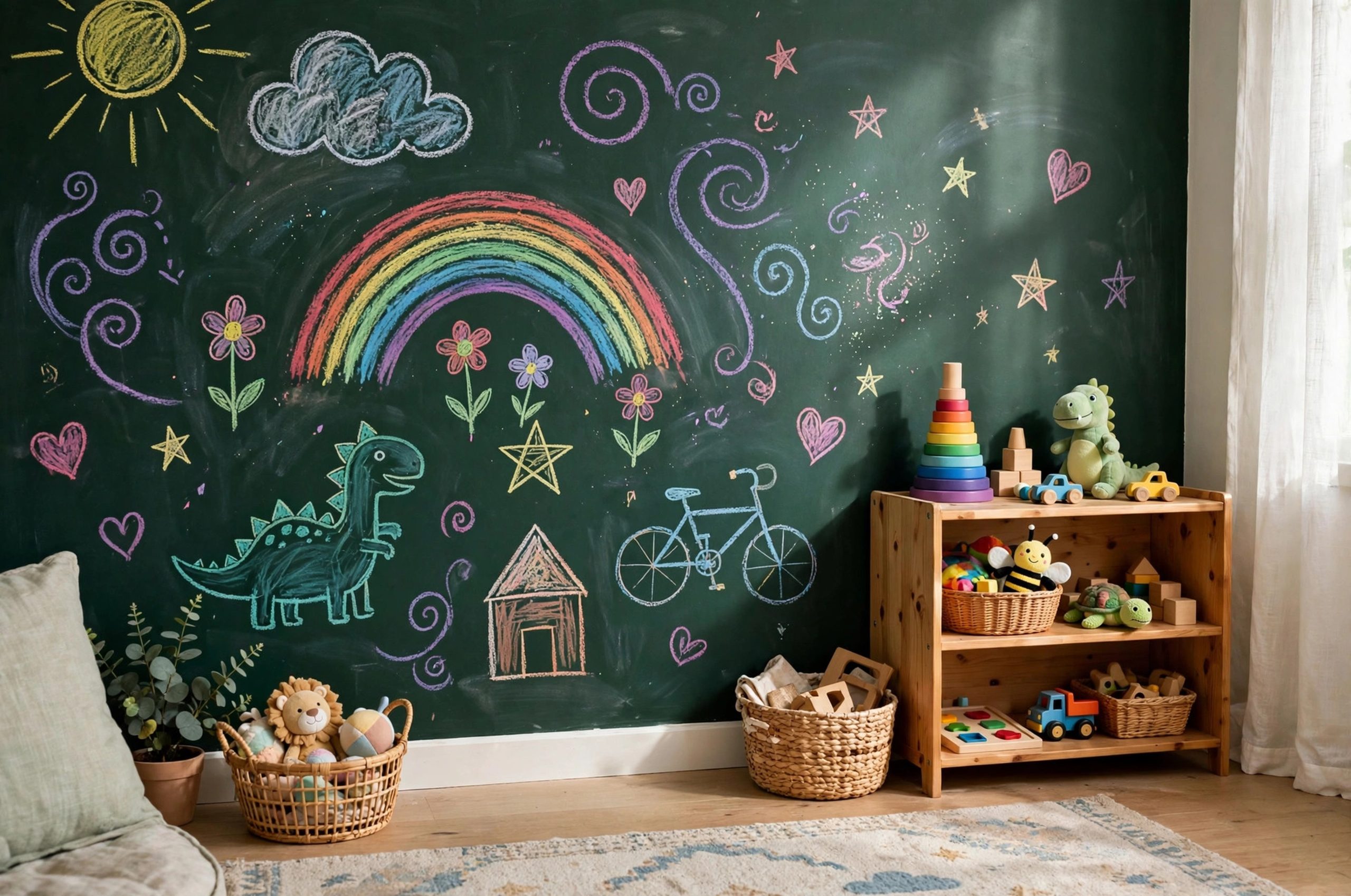
Kids draw on walls. It is one of the oldest truths of family life. You can fight it, or you can give them a wall that invites it. A chalkboard paint accent wall in a playroom does exactly that. One wall becomes a giant canvas for drawings, spelling practice, and games, while the rest of the room stays safe. The project costs little, takes a weekend, and kids love it from the first scribble. Here is what to know about chalkboard paint accent wall before you start.
Table of Contents
Table of Contents
- Chalkboard Paint Accent Wall: Why a Chalkboard Wall Works in a Playroom
- Choosing the Right Wall
- What You Will Need
- Picking the Paint Color
- Preparing the Wall
- Painting the Wall
- Seasoning the Wall
- Setting Up the Playroom Around It
- Keeping It Clean
- Styling the Rest of the Playroom
- Adding Stencils and Borders
- When Kids Outgrow It
- References
Chalkboard Paint Accent Wall: Why a Chalkboard Wall Works in a Playroom
When it comes to chalkboard paint accent wall, getting the details right makes all the difference.
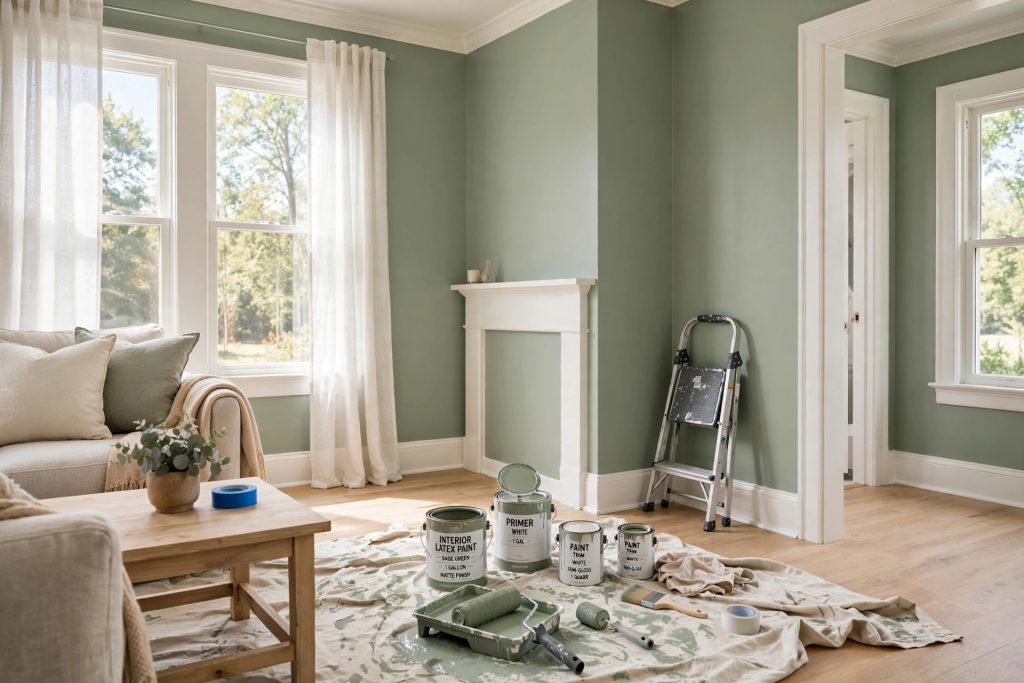
Many homeowners find that chalkboard paint accent wall is easier than they expected once they know the basics.
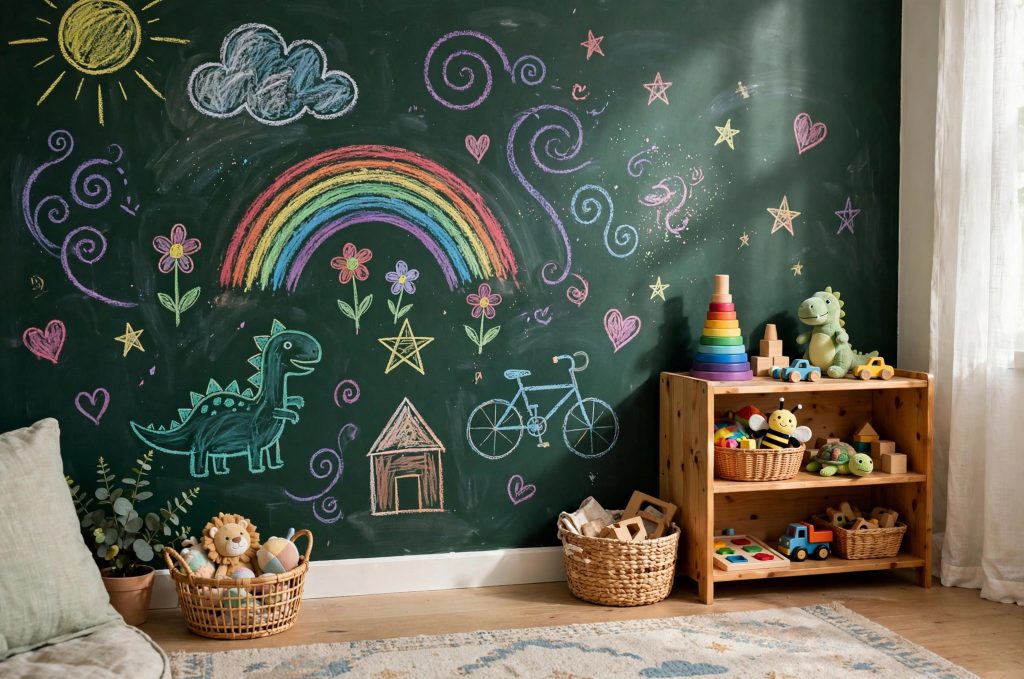
A playroom has one job: let kids be kids. A chalkboard wall fits that job perfectly. It is cheap compared to an easel or a whiteboard, it never runs out of paper, and it erases in seconds. It also teaches. Letters, numbers, and shapes can be practiced right on the wall. Elizaabeth Joan Designs describes painting a playroom accent wall and stenciling the alphabet across the top so the kids could learn while they drew.
Parents like it because it contains the mess. Kids like it because it feels big and important. One wall of chalkboard paint turns an ordinary room into a place with a purpose.
Choosing the Right Wall
Many homeowners find that chalkboard paint accent wall is easier than they expected once they know the basics.
The key to chalkboard paint accent wall is choosing the right approach for your space and budget.
Pick a wall that is smooth, or close to it. Heavy texture makes writing hard and looks bumpy. The best choice is usually the largest clear wall, away from windows where glare would hit. Avoid the wall behind a door swing. A chalkboard wall needs clear floor space in front of it so kids can stand and draw.
Think about light too. A wall that gets soft, even light is easier to write on than one in deep shadow. You do not need anything fancy. Just stand in the room and picture your kids drawing there. If it feels right, it is right.
What You Will Need
The key to chalkboard paint accent wall is choosing the right approach for your space and budget.
With a little planning, chalkboard paint accent wall can fit even a busy schedule.
- Chalkboard paint in your chosen color (black is classic, but tinted colors work)
- Painter's tape
- A smooth, small-nap roller and tray
- An angled brush for edges
- Fine sandpaper
- Spackle and a putty knife
- A damp cloth
- Chalk and a chalkboard eraser or soft cloth
- Drop cloth
Classy Clutter recommends filling nail holes, sanding the wall smooth, and taping edges before the first coat. Smooth walls make smooth chalkboards. Skipping the prep shows in every stroke of chalk.
Picking the Paint Color
With a little planning, chalkboard paint accent wall can fit even a busy schedule.
Before you start, it helps to understand how chalkboard paint accent wall works in real homes.
Black is the classic choice and gives the best contrast with chalk. But chalkboard paint comes in other colors too. Dark green looks like an old schoolroom. Navy and charcoal look sharp in a modern playroom. Some brands can be tinted to nearly any color, which lets you match the room. A DIY chalkboard guide from Urban Whip notes that you can even mix your own tinted chalkboard paint with latex paint and unsanded grout, opening up the full paint deck.
Dark colors read best with white chalk. Light colors work with colored chalk but show smudges more. For a playroom, dark and forgiving wins.
Preparing the Wall
Before you start, it helps to understand how chalkboard paint accent wall works in real homes.
A good plan for chalkboard paint accent wall saves time, money, and frustration.
Fill every nail hole and dent with spackle. Let it dry, then sand it smooth. Sand the whole wall lightly with fine sandpaper. You are not trying to strip anything. You just want to knock down bumps and give the paint something to grip. Wipe the dust off with a damp cloth and let it dry.
Tape the edges. Run painter's tape along the ceiling, baseboards, and any trim. Press it down firmly so paint does not creep under. Mighty Mrs. advises taping all edges before painting and working slowly along the border with an angled brush. Crisp tape lines are what make a DIY job look professional.
Painting the Wall
A good plan for chalkboard paint accent wall saves time, money, and frustration.
For most people, chalkboard paint accent wall comes down to a few smart choices.
Stir the chalkboard paint well. Chalkboard paint is thicker than wall paint, so stir it from the bottom up. Cut in the edges with the angled brush first, painting a neat border along the tape. Then roll the main area. Use thin, even coats. Roll in one direction, top to bottom, and keep a wet edge so you do not get lap marks.
Let the first coat dry fully. Chalkboard paint needs more drying time between coats than regular paint. Cubby at Home recommends waiting a full day between coats and using two coats for solid coverage. Rushing the second coat can pull the first coat right off the wall. When the second coat is dry, pull the tape while the paint is still slightly tacky for the cleanest line.
After painting, wait. Most chalkboard paints need several days of curing before you write on them. Check the can. Writing too early can damage the finish. This is the hardest part of the project: staring at a beautiful black wall and telling the kids to wait.
Seasoning the Wall
For most people, chalkboard paint accent wall comes down to a few smart choices.
Before the first drawing, you must season the wall. This step keeps chalk from leaving permanent ghost marks. Take a piece of white chalk on its side and rub it over the entire wall, first in one direction and then across. Then erase the whole thing with a soft cloth or chalkboard eraser. Classy Clutter calls this priming the wall with chalk and says it stops the first drawings from becoming permanent.
Do not skip seasoning. Unseasoned chalkboard paint can hold onto the first thing ever written on it. One afternoon of seasoning saves years of faint outlines.
Setting Up the Playroom Around It
If you are new to chalkboard paint accent wall, start with the simplest option and build from there.
A chalkboard wall works best with a little planning around it. Mount a small tray or ledge at the bottom to hold chalk and erasers. A piece of picture ledge or a narrow shelf does the job. Keep a small basket nearby for chalk pieces and a damp cloth for erasing big areas.
Protect the floor in front of the wall. Chalk dust falls. A washable rug or mat under the drawing zone catches most of it and shakes out easily. Dark chalk dust on light carpet is the one real downside of this project, and a rug solves it.
Add the wall to the room's routine. Morning drawing time, spelling games, tic-tac-toe tournaments. The wall becomes part of how the room gets used, not just decoration. If you are planning other kid-friendly wall updates, our guide to kids wall decal growth charts pairs well with a creative playroom.
Keeping It Clean
When it comes to chalkboard paint accent wall, getting the details right makes all the difference.
Daily erasing is easy. A dry eraser or soft cloth handles most chalk. For a deep clean, wipe the wall with a damp cloth and let it dry. Avoid soaking it. Too much water can wear the finish over time.
Ghosting happens when chalk sits for weeks. If old drawings leave faint shadows, lightly damp-wipe the wall and re-season it. House Digest notes that chalkboard surfaces may need an occasional light sanding and recoat if ghosting builds up. A fresh coat of chalkboard paint every few years keeps the wall writing like new.
Use dustless chalk if dust bothers you. It costs a bit more but keeps the air and the floor cleaner. Colored chalk works fine on dark paint and makes the wall more fun.
Styling the Rest of the Playroom
A chalkboard wall is bold, so keep the other walls calm. Soft neutrals or one gentle color keep the room from feeling busy. The black wall becomes the anchor, and everything else supports it. Elizabeth Joan Designs paired her chalkboard wall with stenciled letters for an educational touch that doubled as decor.
Storage matters in a playroom. Open bins and low shelves let kids grab toys and put them back. A chalkboard wall above a low bookcase works well: books below, drawing above. Keep furniture a few feet back from the wall so little artists have room to work.
For the walls that are not chalkboard, removable options keep things flexible. Our guides to temporary wallpaper for dorm rooms and nursery wall letters show renter-friendly ways to decorate the rest of the space.
Adding Stencils and Borders
Once the wall is seasoned, you can dress it up. Stencils made for chalkboard paint let you add permanent designs under the chalk layer, or you can chalk designs right on the surface and change them whenever you like. Cutting Edge Stencils offers chalkboard paint stencils designed for smooth walls, applied with a dense foam roller for crisp edges.
Simple ideas: a border of stars along the top, the alphabet in chalk across the middle, a permanent frame drawn in chalk that kids fill in. Because chalk erases, nothing is final. That freedom is the point.
When Kids Outgrow It
Chalkboard walls are not forever, and that is fine. When the kids get older, the wall can become a family message board, a homework zone, or a menu planner. If you ever want it gone, chalkboard paint takes regular paint over it like any other wall. Prime it first, then paint your new color in two coats. Kitch Insider mentions chalkboard paint as a fun, easy-to-change option that wipes clean and recoats simply.
Few projects give this much joy per dollar. A can of paint, a weekend, and a wall of possibility. Once you try it, chalkboard paint accent wall gets easier each time.
References
Classy Clutter. (n.d.). What I wish I knew about making chalkboard wall. https://www.classyclutter.net/diy/how-to-make-a-chalkboard-wall/
Cubby at Home. (n.d.). How to create a DIY chalkboard wall. https://www.cubbyathome.com/diy-chalkboard-wall-80031867
Cutting Edge Stencils. (n.d.). Delicata chalkboard paint stencil. https://www.cuttingedgestencils.com/products/delicata-chalkboard-paint-wall-stencil?options=cart
Elizabeth Joan Designs. (n.d.). DIY chalkboard paint and accent wall. https://elizabethjoandesigns.com/diy-chalkboard-paint-accent-wall/
House Digest. (n.d.). Breathe new life into your kitchen with these creative peel-and-stick DIY ideas. https://www.housedigest.com/1586959/renter-friendly-kitchen-diy-ideas-peel-and-stick-wallpaper-products/
Kitch Insider. (n.d.). Simple kitchen backsplash ideas: Easy and DIY friendly. https://kitchinsider.com/simple-kitchen-backsplash-ideas/
Mighty Mrs. (n.d.). Turn your hallway into a pretty chalk wall! https://www.mightymrs.com/turn-your-hallway-into-a-pretty-chalk-wall/
Urban Whip. (n.d.). Unleash your creativity with DIY chalkboard paint: A step-by-step guide. https://urbanwhip.com/blogs/news/unleash-your-creativity-with-diy-chalkboard-paint-a-step-by-step-guide
Was this guide helpful?

About My Garden US
The My Garden US editorial team writes practical, in-depth home and garden guides for American homeowners — tested advice, no fluff.
You May Also Like
Antimicrobial Wall Paint for Kitchens USA: A Plain Buyer's Guide
July 19, 2026 18 views
Orange Peel Texture Repair Kit Reviews: What Works and What Does Not
August 13, 2026 20 views
The Best Exterior Stain for a Cedar Fence in the USA
March 26, 2026 16 views