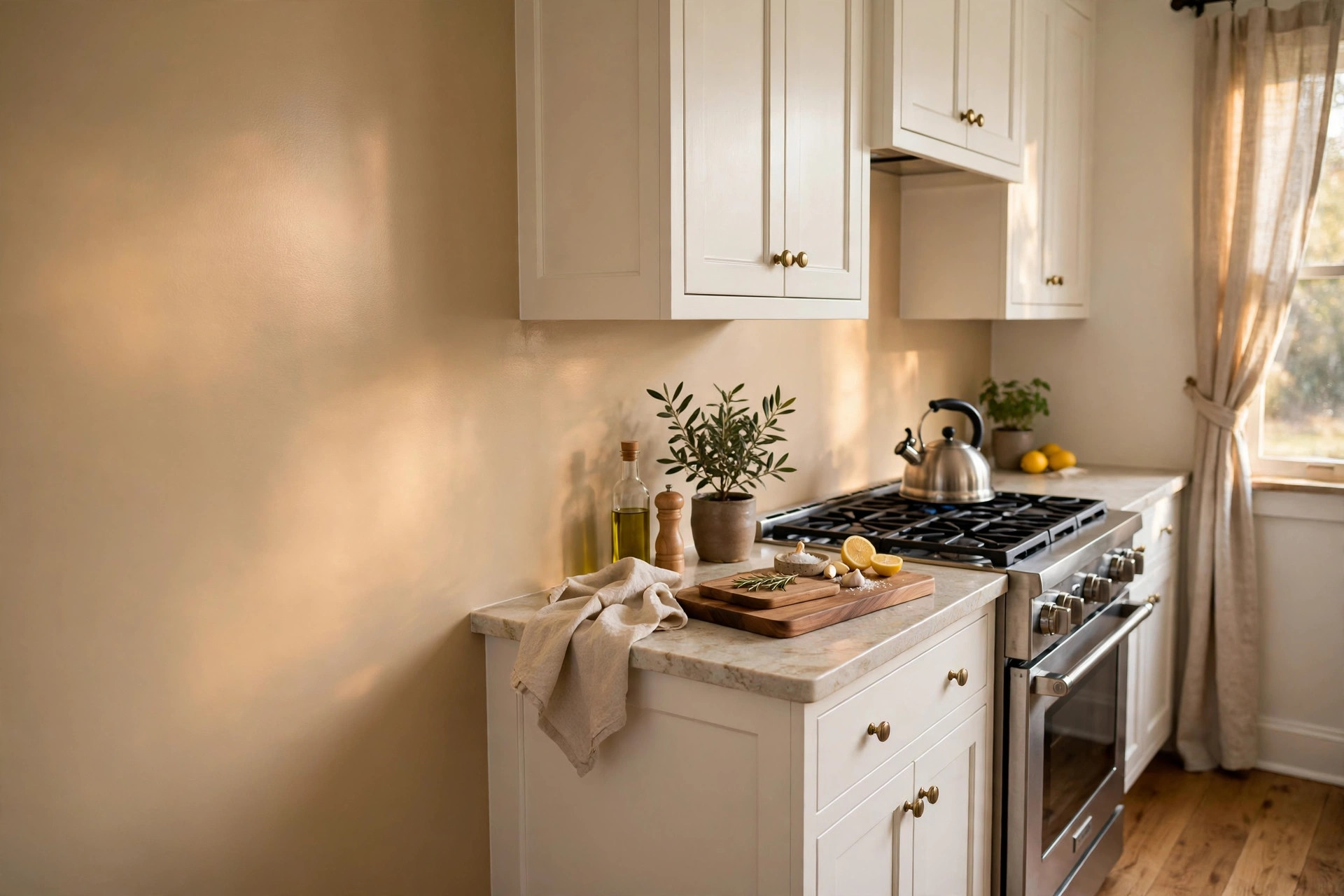

The kitchen is the hardest working room in the house. Steam rises from pots. Grease settles on every surface. Sponges, raw meat, and damp dish towels all pass through the same small space. Many shoppers who look for antimicrobial wall paint for kitchens usa want one simple thing: a wall finish that helps keep that busy room cleaner between washings. This guide explains what the paint can and cannot do, how to choose it, what it costs, and how to use it safely.
Why Kitchen Walls Need Extra Protection
Ordinary interior paint forms a thin skin over drywall. In a dry room that skin does its job for years. In a kitchen it faces heat, steam, and grease almost every day. Moisture sinks into the wall around the stove, the sink, and the dishwasher. Once dampness lives in a wall, it invites mold and mildew. Grease makes the problem worse. It coats the paint and gives germs a place to feed.
Antimicrobial wall paint for kitchens usa is made for this kind of room. It contains an agent that slows the growth of bacteria, mold, and mildew on the painted surface itself. That is an important point. The paint does not sterilize the room. It does not kill germs on counters or in the air. It simply makes the wall film a less friendly home for microbes. For a kitchen that stays warm and damp, that extra layer of defense is worth the money.
Walls behind the range and beside the sink take the worst beating. If you have ever seen small black dots along the wall behind a coffee maker, you have seen mildew trying to start. A paint that resists that growth keeps the room looking fresh longer. It also means less scrubbing with harsh cleaners, which can wear paint down over time.
How Antimicrobial Paint Works: Antimicrobial Wall Paint for Kitchens Usa
Most antimicrobial paints use a silver based additive. Silver has been used to slow microbe growth for a very long time. It was used in water jugs on ships and in medical dressings long before it reached paint cans. In paint, tiny amounts of silver ions sit locked inside the dry film. When moisture touches the wall, the ions work against bacteria, mold, and mildew that try to grow there.
Some brands use other active agents. A few rely on zinc compounds. Others use newer man made additives. The idea is the same in every case. The protection lives in the dried paint film and guards the surface it covers.
Shoppers should read labels with care. Terms on the can mean different things. “Mildew resistant” means the paint film resists mildew growth. That is the claim behind most kitchen paints. “Antibacterial” is a stronger word and should carry proof on the label. In the United States the Environmental Protection Agency watches over claims like these. A company that says its paint kills bacteria on the wall must register the product as a pesticide and show test data. Look for clear language on the can rather than vague promises.
One myth deserves a plain answer. Antimicrobial paint is not a substitute for cleaning. A greasy, dirty wall can still host germs in the layer of soil that sits on top of the paint. The additive works on the paint film, not on the dirt above it. Think of the paint as a helper, not a guard that never sleeps.
What to Look for When You Buy
Start with the finish. Kitchens need a paint that can be wiped down. Flat paint marks easily and traps grease. Eggshell is better. Satin and semi gloss are the classic picks for kitchen walls. They shed water, resist stains, and take repeated washing without going dull. Most antimicrobial lines come in these scrubbable finishes for that reason.
Next, check the coverage rate. One gallon of interior paint normally covers about 350 to 400 square feet. Kitchen walls often need two coats over primer, so buy with that in mind. A small galley kitchen may need only two gallons. A large open kitchen can take four or five.
Volatile organic compounds matter too. These are the fumes that give fresh paint its strong smell. Low VOC and zero VOC paints release far fewer of them. For a room where food is made, low VOC is the sensible choice. The room can be used again sooner, and the air stays cleaner. Many national paint brands now list their VOC levels right on the label. Helpful background on paint types and finishes can be found through paint makers such as Sherwin Williams, Behr, and Benjamin Moore.
Also look at the scrub rating. Paint cans sometimes list how many scrub cycles the film survived in testing. A high number means the wall will stand up to the sponge work a kitchen demands. Ask the store clerk if the rating is not printed on the label.
Color choice plays a small role as well. Light colors show grease sooner, which prompts faster cleaning. Dark colors hide stains but can make a small kitchen feel tight. This is a matter of taste, not health. Pick the color you will enjoy living with.
Types and Options on the Market
Antimicrobial kitchen paint falls into a few broad groups.
Acrylic latex with silver additive
This is the most common type. Water based acrylic latex is the standard for interior walls across the country. Makers add a silver ion agent to the mix. The paint goes on like any latex, cleans up with soap and water, and dries fast. For most homes this is the right choice.
Kitchen and bath formulas
Some companies sell a dedicated kitchen and bath paint. These formulas pack in extra mildew resistance and a harder, more washable film. They cost a little more than standard interior paint. In a steamy kitchen the harder film pays for itself over time.
Primer with antimicrobial agents
A few makers offer antimicrobial primer. Primer is the base coat that seals drywall and old paint. An antimicrobial primer adds protection under the top coat. It makes the most sense when painting over walls that had mildew trouble before. In most jobs a good standard primer plus antimicrobial top coats is enough.
Retailers such as Home Depot and Lowes carry several of these lines, and store staff can point out which cans on the shelf carry the antimicrobial label.
Cost and Price
Antimicrobial wall paint for kitchens usa costs more than plain interior paint. Expect to pay about 40 to 70 dollars per gallon for a quality line. Premium brands can reach 75 dollars or more. Standard interior latex runs 25 to 45 dollars a gallon, so the antimicrobial feature adds roughly 10 to 20 dollars per can.
Primer adds to the bill. A gallon of good primer runs 20 to 35 dollars. Brushes, rollers, tape, and drop cloths add another 30 to 60 dollars for a typical kitchen.
Hiring a painter raises the total. Professional interior painting often runs 2 to 6 dollars per square foot of wall, depending on the region and the condition of the walls. A medium kitchen might cost 400 to 900 dollars in labor. If the walls need heavy prep work, such as scraping old grease or fixing drywall, the price goes higher.
Doing the job yourself saves the labor cost. Two gallons of paint, one gallon of primer, and basic supplies often total under 200 dollars. For a handy homeowner the savings are large. The trade off is time. A kitchen takes a full weekend for most first timers.
How to Apply It for Best Results
Good results start with prep work. Move small appliances away from the walls. Cover counters and floors with drop cloths. Wash the walls with a mild degreaser. Kitchens hold years of cooking film, and paint will not stick well to grease. Rinse and let the walls dry fully.
Fill nail holes and cracks with spackle. Sand the patches smooth. Tape off trim, outlets, and the edges of cabinets. Take outlet covers off rather than painting around them.
Prime bare drywall and any patched spots. If the old paint is glossy, scuff it lightly with fine sandpaper so the new coat can grip. Skip the primer on walls that are already in sound shape with flat or eggshell paint, unless the maker calls for it.
Roll the paint on in even strokes. Work in three foot sections. Keep a wet edge so lap marks do not show. Two thin coats beat one thick coat every time. Let the first coat dry fully. The can will list a recoat time, often two to four hours.
Ventilate the room while you work. Open a window and run the range hood fan. Even low VOC paint needs fresh air during application. Practical step by step painting advice is easy to find in home guides such as This Old House, Bob Vila, and The Spruce.
Care and Upkeep
Antimicrobial paint lasts longer when the kitchen is kept reasonably dry. Run the range hood when cooking. It pulls steam and grease out before they settle on the walls. Fix drips and leaks fast. Water that soaks a wall can beat any paint in time.
Wipe walls down every few weeks with a soft sponge and warm soapy water. Work from the bottom up to avoid drip streaks. Avoid abrasive pads, which scratch the film and give microbes places to hide. Avoid bleach in strong mixes. Mild cleaners protect the antimicrobial additive.
Touch up nicks and chips when you see them. Bare spots in the paint film have no protection at all. Keep a small jar of leftover paint for quick repairs. Stored in a cool dry place, latex paint keeps for several years.
Plan on repainting kitchen walls every five to seven years. High use kitchens may need fresh paint sooner. The antimicrobial effect fades slowly as the film wears, so a new coat restores full protection.
Safety Notes
Antimicrobial paint is safe for home use when the label directions are followed. Still, a few cautions apply.
Keep paint away from food and food contact surfaces. Paint the walls, not the inside of cabinets where dishes sit. Do not use wall paint on countertops, cutting boards, or the inside of a pantry shelf that holds unpackaged food.
Wear a mask rated for paint fumes during application, even with low VOC products. Wear gloves. Keep children and pets out of the room until the paint dries fully. Read the safety data sheet if anyone in the home has asthma or chemical sensitivity.
Never mix paint brands or additives at home. Pouring a store bought antimicrobial additive into plain paint can ruin the finish and may not be safe. Buy the protection built into the can.
One more point on claims. No wall paint keeps a kitchen germ free by itself. Hand washing, clean sponges, and proper food storage do the heavy work. The paint is one layer in a larger system of kitchen hygiene.
Frequently Asked Questions
Does antimicrobial paint really work in kitchens?
It works as designed. Lab tests show it slows the growth of bacteria, mold, and mildew on the dried paint film. It does not disinfect the room or kill germs on contact the way a spray cleaner does. Its value is steady, quiet protection on the wall surface between cleanings.
Is it safe around food?
Yes, when used as directed on walls. The active agents are locked into the dry paint film. Do not paint surfaces that touch food directly. Keep the room ventilated during painting and wait for full cure before heavy cooking resumes.
How long does the antimicrobial effect last?
The protection lasts as long as the paint film stays intact. Most makers design it to work for the life of the paint job, often five to seven years in a kitchen. Heavy scrubbing and wear slowly reduce the effect. Repainting restores it.
Can I paint over existing paint with it?
Yes. Clean and degrease the old surface first. Dull any glossy areas with light sanding. Spot prime repairs and bare patches. Two coats of the antimicrobial paint over sound old paint give full coverage and full protection.
Is antimicrobial paint worth the extra cost?
For most kitchens, yes. The price gap over standard paint is modest, often 10 to 20 dollars a gallon. The payoff is slower mildew growth, a more washable wall, and less frequent repainting. Kitchens with heavy steam, older homes with damp walls, and homes in humid regions gain the most.
Where can I buy it in the USA?
Major paint brands sell antimicrobial lines through paint stores, home centers, and online. National home improvement coverage is wide, so most shoppers can find it locally. Design inspiration for kitchen color schemes can be browsed on sites like HGTV before you buy.
A Final Word
Antimicrobial wall paint for kitchens usa is a smart, simple upgrade for the hardest working room in the house. It will not replace cleaning, and it will not make a kitchen sterile. What it does is give the walls a built in defense against the mold, mildew, and bacteria that love warm, damp kitchens. Paired with good ventilation, regular wipe downs, and sound food habits, it keeps kitchen walls cleaner and fresher for years. If you are repainting the kitchen anyway, the small extra cost is easy to justify.
Homeowners tackling the cabinets too may want to read about the best paint for kitchen cabinets usa reviews, and those choosing wall colors can compare notes on the best white paint for interior walls usa. For application gear, see our notes on the best paint sprayer for home use reviews.
References
Behr. (n.d.). Paints, primers, and stains. https://www.behr.com Benjamin Moore. (n.d.). Paints and stains. https://www.benjaminmoore.com Bob Vila. (n.d.). Home improvement advice. https://www.bobvila.com HGTV. (n.d.). Home and garden ideas. https://www.hgtv.com Lowe’s. (n.d.). Home improvement products. https://www.lowes.com Sherwin-Williams. (n.d.). Paints and coatings. https://www.sherwin-williams.com The Home Depot. (n.d.). Home improvement products. https://www.homedepot.com The Spruce. (n.d.). Home and garden advice. https://www.thespruce.com This Old House. (n.d.). Home renovation guidance. https://www.thisoldhouse.com U.S. Environmental Protection Agency. (n.d.). Protecting human health and the environment. https://www.epa.gov
Was this guide helpful?

About Emily Rodriguez
The My Garden US editorial team writes practical, in-depth home and garden guides for American homeowners — tested advice, no fluff.
You May Also Like

Oversized Canvas Art Above Sofa: A USA Buyer’s Guide
January 9, 2026 0 views
Best Paint for Exterior Doors Fiberglass USA: A Simple Guide to Color That Lasts
July 20, 2026 0 views
Best Paint for Bathroom Vanity USA Reviews: A Homeowner’s Guide
July 27, 2026 0 views